Published: 06 July 2026. The English Chronicle Desk. The English Chronicle Online.
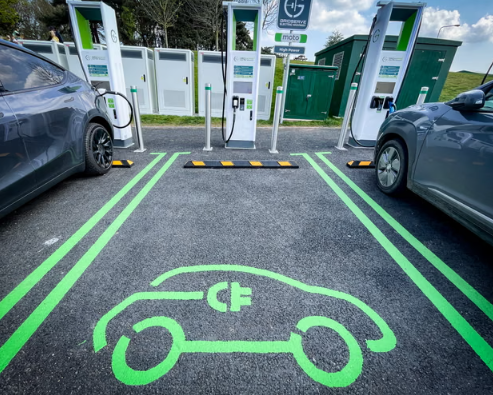
The landscape for electric vehicle charging across the United Kingdom is currently facing a period of significant transition and visible strain. Recent data from the industry analyst firm Zapmap reveals that the national rollout of new public charge points has notably decelerated over the first half of this year. While the total count of available charging units has reached a milestone of 121,171, the speed of these installations has fallen behind previous expectations. This cooling effect is evident when comparing the current growth rate of 10% against the more aggressive expansions seen throughout 2024. During that earlier period, the industry consistently achieved growth rates that exceeded 40% year on year. While some deceleration is naturally expected as the charging network reaches a greater overall maturity, the current pace remains a concern for many stakeholders. The government maintains a public target of reaching 300,000 charging points by the year 2030 to support the ongoing shift toward electric motoring. With the total number of battery electric vehicles on British roads having officially surpassed two million earlier this year, the pressure to expand this infrastructure remains immense.
The causes behind this slowdown are multifaceted and reflect a complex environment of shifting political signals and challenging economic conditions for infrastructure providers. Industry leaders point specifically to a prolonged period of uncertainty surrounding the government’s zero emission vehicle mandate, which dictates the pace at which manufacturers must transition their new car sales to electric models. While the policy was originally intended to provide a clear roadmap for investment, years of debate and repeated adjustments have created a hesitant climate for those funding the national network. The automotive sector has lobbied consistently for a weakening of these targets, arguing that the current trajectory fails to align with present market demand and economic realities. In response to such pressures, the current administration has already introduced various flexibilities that allow manufacturers to maintain a higher volume of petrol engine sales than previously planned. Government officials are even reportedly considering lowering the headline goal for electric vehicle sales from 80% to 50% by the end of the decade. This environment of legislative flux makes it difficult for private investors to commit the capital necessary for long-term infrastructure projects.
Despite these headwinds, pockets of the charging sector continue to show remarkable resilience and a focused drive toward high-performance technology. Data from the first half of 2026 highlights a strong preference among firms for the installation of ultra-rapid charging hardware. These specialized units, which are capable of delivering at least 150 kilowatts of power, have seen their numbers increase by 37% over the last twelve months. Such high-powered chargers are typically deployed in strategic locations like major motorway service areas or busy arterial roads where drivers require quick, efficient top-ups during long journeys. From a business perspective, these locations are inherently more profitable because they command higher daily usage rates and allow providers to set premium pricing models. This trend indicates that while the total volume of new installations may be lower than in previous years, the network is becoming significantly more capable and better suited for the needs of modern electric vehicle owners.
Efforts are also underway to address the critical need for more accessible charging solutions for those who reside in urban environments without access to private off-street parking. Councils across the country are finally beginning to deploy significant amounts of funding from the government’s local electric vehicle infrastructure scheme, often referred to as the Levi programme. This initiative is designed to provide essential support for on-street charging, making the transition to electric motoring a viable option for a much larger portion of the population. Industry experts note that the increased number of tenders awarded for these projects is a positive sign that local capacity is slowly catching up to national ambitions. Furthermore, there is a growing trend of collaborative efforts involving supermarkets and public car park operators who are installing more local infrastructure. When combined with council-led initiatives and the adoption of through-pavement charging technologies, these efforts serve as a vital counterweight to the wider market volatility.
The combination of intense industry competition, high equipment costs, and political unpredictability has created a difficult climate for many smaller operators within the market. Financial pressures are mounting as firms compete for prime real estate while simultaneously attempting to keep their operational costs manageable for the end consumer. Consequently, market analysts are now predicting a consolidation phase, where the sector will likely see an increase in mergers and acquisitions as larger, well-capitalized companies acquire smaller competitors to gain market share. A recent example of this shift was the announcement that InstaVolt has moved to acquire the GeniePoint network, a deal that highlights the ongoing trend of larger players absorbing existing infrastructure to strengthen their national footprints. This move suggests that the future of the UK charging market will likely be defined by a smaller number of large-scale providers who possess the financial strength to weather political and economic challenges. Whether this consolidation will lead to a more stable environment for further growth remains a key question for the remainder of the year.
The transition to electric mobility remains a central pillar of the nation’s environmental strategy, yet the path forward is clearly becoming more complicated. For the UK to meet its ambitious 2030 targets, the government and the private sector must find a way to align their objectives and restore confidence among those investing in the nation’s charging backbone. The coming months will be critical as stakeholders look for clearer signals on the future of the zero emission vehicle mandate and the long-term support available for infrastructure deployment. If the current trajectory of uncertainty persists, the risk of a sustained slowdown becomes a greater possibility, potentially affecting the country’s progress toward its net-zero goals. However, the consistent growth in ultra-rapid charging and the emerging success of local infrastructure schemes demonstrate that the appetite for electric mobility is still robust. The industry stands at a significant crossroads, needing both stability and continued investment to ensure that Britain’s charging network can meet the demands of an increasingly electrified future.
Related News:
 Virgin Trains Moves Closer to Challenging Eurostar Monopoly
 UK Bans Fake Numbers: Scammers Lose Their Trick
 Vibe coding’ named Collins dictionary’s word of the year
 Patients to Test Health at Home to Ease NHS Winter Pressure
 Britain deploys RAF specialists to assist Belgium with drone threats
 Stop using ChatGPT to write speeches, AI minister tells MPs
 Northern Lights may illuminate UK skies this week
 New laws to bolster UK’s defences against cyber attacks on NHS, transport and energy
 Hitler’s DNA Confirms He Truly Had Only One Testicle
 Working-Class Men with Prostate Cancer Left Behind by NHS
 New AI tool could cut wasted efforts in organ transplants
 How Cultures Interpreted the Aurora Through History
 Sundar Pichai Cautions on AI Hype and Market Risks
 Google Chief Urges Caution: Don’t Trust AI Blindly
 US Judge Says Meta Did Not Hold Illegal Social Media Monopoly
 Healthy Habits in Your 30s That Boost Life in Your 70s
 Coffins Now Too Large to Cremate Amid Rising Obesity Crisis
 AI Actress Creator Says Tilly Norwood Won’t Replace Actors
 AI Grok Sparks Child Safety Alarm in the UK
 Google Removes Some AI Health Summaries Over Safety Concerns
 US Clears Nvidia AI Chip Sales to China in Policy Shift
 Amazon Milton Keynes closure sparks concern for UK warehouse workforce
 Astronomers Prepare for First-Ever Movie of a Black Hole
 MPs warn AI financial risks threaten UK stability
 MPs warn AI financial risks threaten UK stability
 Pornhub blocks new UK users over age checks dispute
 Amazon mistakenly signals new global layoffs to employees
 AI breast screening cuts later cancer diagnoses by 12%, study finds
 UK Launches First Rapid-Charging Battery Train This Weekend
 UK New Car Discounts Near £6,000 as Prices Are Slashed
 Most Statin Side-Effects Are Not Caused by Drugs, Study Confirms
 BT Names New Openreach Chief Amid Major Fibre Expansion
 AI fears hit UK wealth and comparison sites
 Tech Trends Set to Transform Life in 2026
 Starmer Targets AI Chatbots Over Child Safety Concerns
 How Ancient Scottish Rocks Challenge ‘Snowball Earth’ Theory
 Ayahuasca Psychedelic DMT Shows Potential as Depression Therapy
 Stewart Brand on Musk, Bezos and a Life of Long Thinking
 Facial Recognition Error Leads to Wrongful Arrest in Milton Keynes
 Social Media Trial: Woman Says Addiction Began at Six
 Revealed: UK AI Push Faces Phantom Investment Claims
 Ministers Urged to Act Faster on Deepfakes Threat
 Tesla Enters British Energy Market Following Ofgem Approval
 Social Media Giant Trial Reaches Final Jury Decision
 Cern Prepares First-Ever Antimatter Transport Test
 The Molten Mystery of L98-59d: A New Class of Liquid Planet
 House of Lords Backs Landmark Social Media Ban for Youth
 Charity Watchdog Warns Alan Turing Institute Over Conduct
 The Woman Guarding Earth From the Threat of Asteroids
 California Defies Trump With Strict New AI Standards
 New Gmail Feature Ends Era of Embarrassing Email Names
 Tech Giants Condemn EU Over Lapse in Child Abuse Laws
 Elon Musk’s xAI Sues Colorado Over New AI Regulations
 Heavier SUVs Accelerate Britain’s Pothole Crisis
 Canadian astronaut French words ease language row
 Humanoid Robots Join Haneda Airport Baggage Teams
 Disneyland Adds Facial Recognition at Entrances
 Older Than Dinosaurs: Secrets of Mayfly Dance Revealed
 Inside the World of AI Jailbreakers
 Vodafone Seeks Full Control of UK Mobile in £4.3bn Deal
 Tatooine Dreams: 27 New Worlds Found With Double Suns
 Shivon Zilis Takes the Stand in Landmark OpenAI Trial
 Cambridge South Signals New Era for British Rail Travel
 Trump Lands in Beijing for High-Stakes Summit with Xi
 Gotta Catch an MP! The New Political Craze Sweeping Britain
 Court Upholds Landmark Win for Transgender Rights
 Canberra Tax Dispute Sparks Fears of Creative Exodus
 A Massive Legal Triumph Reshapes the Future of AI
 UN Issues Urgent Warning: Imminent Return of El Niño
 NHS Approves Landmark Ovarian Cancer Drug
 Tech Trends and the Battle Against Exam Hall Cheating
 Starmer Issues Tech Giants Ultimatum on Child Phone Protection
 SpaceX Prepares for Historic Valuation Launch
 Silicon Valley Shifts South as AI Boom Transforms City Housing
 AI to Help Botanists Win the Critical Race Against Extinction
 Cambridge Recreates Historic 336-Year-Old Garden
 MPs Demand Immediate Horizon Compensation From Fujitsu
 Trump Faces Backlash Over $2bn Earnings Since Return
 South Korea’s AI Chip Boom Sparks Wealth Inequality Debate
 Tesla Rebounds as Sales Surge Past Quarterly Targets