
Published: 6 July 2026 | The English Chronicle Desk | The English Chronicle Online
Australia’s Prime Minister has issued a public apology after making what he described as “inappropriate” comments about internationally renowned singer Kylie Minogue, acknowledging that his remarks were ill-judged and should not have been made. The apology followed growing public criticism and renewed debate over the standards expected of political leaders when commenting on public figures.
The controversy quickly became a major talking point across Australia, with politicians, commentators and members of the public weighing in on the Prime Minister’s remarks. While some dismissed the incident as an unfortunate verbal misstep, others argued that public office demands a higher standard of conduct and language, particularly when discussing individuals who have made significant contributions to national culture.
Recognising the reaction his comments had generated, the Prime Minister moved swiftly to address the matter, expressing regret and offering an unreserved apology to Minogue as well as to Australians who felt disappointed by his remarks.
Speaking to reporters, the Prime Minister admitted that his comments had been inappropriate and did not reflect the level of respect that Kylie Minogue deserved. He accepted responsibility without attempting to shift blame or minimise the controversy, saying that public figures must be prepared to acknowledge mistakes when they occur.
He emphasised that his remarks had not been intended to offend but conceded that intention alone did not lessen their impact. By apologising publicly, he said he hoped to bring the matter to a close while reaffirming his admiration for one of Australia’s most successful entertainers.

The apology was widely reported across Australian media and immediately became one of the country’s most discussed political stories.
Although political controversies often revolve around policy or legislation, this episode centred instead on public expectations regarding professionalism, personal conduct and respect shown by elected leaders toward prominent national figures.
Kylie Minogue has long occupied a unique place in Australian cultural life.
Born in Melbourne, she first rose to prominence during the 1980s through her acting role in the popular television soap Neighbours before embarking on a music career that transformed her into one of the world’s most recognisable pop stars.
Over several decades, Minogue has sold millions of records worldwide, produced numerous chart-topping singles and earned widespread acclaim for her influence on international popular music.
Her career has been marked by remarkable longevity, allowing her to remain relevant across multiple generations of audiences.
Beyond commercial success, she has become widely respected for her resilience, professionalism and charitable work. Her public battle with breast cancer in 2005 inspired countless people while helping to raise awareness about early diagnosis and treatment.
She has also received numerous honours recognising her contributions to music and the entertainment industry both in Australia and internationally.
For many Australians, Minogue represents one of the country’s most successful cultural ambassadors.
As a result, comments directed towards her often attract considerable public attention, particularly when they come from senior political leaders.
While the Prime Minister’s remarks were widely criticised, responses across Australia’s political landscape remained varied.
Opposition figures argued that elected leaders should exercise greater care in their public statements, particularly when speaking about respected public personalities.
Some critics suggested the incident reflected broader concerns regarding judgment and professionalism in political communication.
Others, however, viewed the controversy as relatively minor compared with more substantial policy issues facing the country, arguing that the Prime Minister’s prompt apology demonstrated accountability.
Political analysts observed that modern political leaders increasingly operate within an environment where every public comment is subject to immediate scrutiny through traditional media and social media platforms.
Statements made during interviews, speeches or informal conversations can rapidly become national debates, particularly when they involve well-known personalities.
Communications experts noted that the speed of modern news cycles often leaves little opportunity for public figures to clarify remarks before widespread reactions develop.
In this instance, the Prime Minister chose to respond quickly rather than allowing the controversy to escalate further.
Public apologies by senior political leaders have become an increasingly familiar feature of democratic politics.
Analysts suggest that voters generally value transparency and accountability when mistakes occur, although the effectiveness of apologies often depends on whether they are perceived as genuine.
By openly describing his comments as inappropriate, the Prime Minister sought to demonstrate that he understood why many people had objected to his remarks.
The incident also reignited discussion about the relationship between politics and celebrity.
Prominent entertainers frequently become part of political discourse, whether through advocacy, public endorsements or simply because their cultural influence attracts widespread public interest.
However, observers argue that political leaders must balance informal communication with the dignity expected of high public office.
Respectful engagement, they say, helps maintain public confidence while avoiding unnecessary distractions from important government business.
Kylie Minogue herself did not immediately issue a detailed public response following the Prime Minister’s apology.
Throughout her career, the singer has generally maintained a measured approach when responding to public controversies, preferring to focus on her professional work rather than engaging in political disputes.
Supporters praised her long-standing reputation for professionalism and dignity, noting that she has consistently avoided becoming involved in unnecessary public confrontations.
The episode also served as a reminder of Minogue’s enduring popularity.
Few Australian entertainers enjoy comparable international recognition across music, television and live performance. Her achievements have earned admiration not only at home but throughout Europe, North America and Asia, making her one of Australia’s most successful global cultural exports.
For that reason, discussions involving Minogue often resonate beyond Australia’s borders.
Media commentators observed that the controversy briefly shifted attention away from government policy debates, illustrating how issues involving high-profile personalities can dominate headlines despite their limited political significance.
While such stories rarely produce lasting political consequences on their own, they can influence broader perceptions of leadership style, communication and public image.
Political strategists frequently advise leaders that consistency, discipline and respectful language remain essential components of effective public communication.
The Prime Minister’s decision to acknowledge the mistake promptly may help prevent the controversy from developing into a longer-running political issue.
Observers noted that attempts to defend or dismiss controversial remarks often prolong public attention, whereas direct apologies can sometimes bring disputes to a quicker conclusion.
As Australia continues to navigate significant economic, international and domestic policy challenges, government officials are likely to welcome the opportunity to return public attention to substantive issues.
Nevertheless, the incident has highlighted the intense scrutiny faced by modern political leaders and the importance of careful communication in an era where every statement can be instantly amplified across multiple media platforms.

For Kylie Minogue, the controversy is unlikely to overshadow a career spanning more than four decades of remarkable achievement.
Her contributions to music, entertainment and Australian culture remain firmly established, and her reputation as one of the country’s most celebrated performers continues to command widespread respect both at home and abroad.
Meanwhile, the Prime Minister’s apology serves as a reminder that accountability remains a central expectation of public office. By accepting responsibility for comments he himself described as inappropriate, he has sought to draw a line under the controversy while reinforcing the principle that political leaders should be willing to acknowledge mistakes openly.
Whether the incident quickly fades from public memory or continues to feature in political debate, it has once again demonstrated how closely leadership, public communication and national identity can intersect when politics and popular culture unexpectedly collide.
Related News:
 Kid Rock Sparks US Army Probe After Apache Helicopters ‘Pause’ at Tennessee Estate
 Army Probes Apache Flyover at Kid Rock’s Nashville Estate
 Judge Urges Settlement in Gaza Comments Dispute
 The ‘Special Relationship’ at 250: Irrelevance or Influence?
 UK Must Act with Courage and Clarity on Israel-Palestine Conflict, Says Foreign Affairs Committee Report
 Radioactive Leak at UK’s Nuclear Warhead Base Sparks Outcry Over Safety and Secrecy
 Terence Stamp, ’60s British Film Legend and Star of Superman, Dies at 87
 Hong Kong Summons UK and Australian Envoys Following Asylum Grants to Democracy Activists
 Is the UK Ready to Put Boots on the Ground in Ukraine? Assessing Military Capacity and Challenges
 Channel Crossings Surge: Over 1,000 People Arrive in the UK in Small Boats in a Single Day
 Widow of Charlie Kirk Forgives Killer at Emotional Memorial Service
 Yvette Cooper Signals Global Momentum Towards Gaza Peace Deal Amid Humanitarian Crisis
 Russia’s Latest Push to Win US Favors Shows Deep Desperation
 I’m a Celebrity 2025 line-up revealed: Osbourne joins
 BBC to Apologise Over Edited Trump Speech Amid Backlash
 Britain deploys RAF specialists to assist Belgium with drone threats
 Trump Urges Herzog to Grant Netanyahu Full Pardon
 Indian authorities demolish Kashmir home linked to Red Fort blast
 Greene Pushes Epstein Files Amid Trump Fallout
 December Run-Off in Chile as Election Produces No Winner
 Shadow Fleet at Sea: Europe’s Battle Against Illicit Oil Shipping
 India’s COP30 Delay Raises Global Climate Concerns
 Georgians Defy Government Crackdown After Year of Protests
 EU Says US Ties Have Suffered ‘Big Blow’ After Greenland Crisis
 Australian Families Leave Syrian Camp for Home
 Starmer Weighs Fast-Tracking Defence Boost
 Nine Arrested in France Over Death of Far‑Right Student
 Andrew Arrest Sparks Republic Debate in Australia
 Australian PM Says Former Prince Andrew Has Suffered ‘Extraordinary Fall’ but That Won’t Prompt Republic Referendum
 Musk Cuts Starlink Access for Russian Forces – Giving Ukraine an Edge at the Front
 Farage Chagos Islands Row Sparks Fury
 Ukraine Negotiator Reveals What It Feels Like Facing Russia
 Chad Shuts Border With Sudan in Bid to Stop Conflict Spreading
 French Minister Moves to Block US Envoy Kushner from Government Access
 Has Europe truly learned from the failures of 2022?
 American Citizen Killed in Cuba Boat Shooting, U.S. Officials Say
 Iran’s Regime Still Intact — Coming Days Will Test Its Survival
 Trump Faces Questions Over Iran Conflict Plan
 Herzog Asio meeting sparks security storm
 Finland Plans to Lift Decades‑Old Ban on Hosting Nuclear Weapons
 Minister Meets Crews Who Will ‘Take Out’ Iranian Drones
 Nine Days of Strikes Reshape the Middle East
 Trump Pressures Congress Over Save America Act
 Iran War Puts Trump at Political Risk Amid Rising Prices
 Queensland Protest Laws Spark Free Speech Backlash
 Trump Nato threats expose Iran strategy vacuum
 Trump’s Confidence Undimmed — But Every Iran Option Carries Risk
 Israel Says Iran Security Chief Larijani ‘Killed’
 Trump Facing Backlash from Epstein Survivors Over Files
 UK Forces Ready to Seize Russian Shadow Fleet Vessels
 Trump Considers Military Operation to Seize Iran’s Uranium
 “It Ends With Trial”: Judge Tosses Blake Lively’s Sexual Harassment Claims Against Justin Baldoni
 Report Says Pezzullo Acted ‘Recklessly’ in Dealings
 Hungary Claims Plot to Target Gas Pipeline Pre-Vote
 Oil and Diplomacy: Russian Refineries Burn as Zelenskyy Secures Middle East Shield
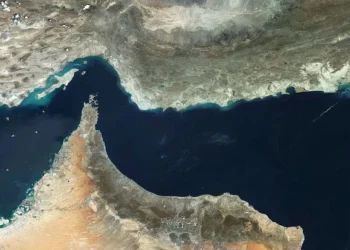 The Great Chokehold: Why the Strait of Hormuz is the Epicenter of the 2026 Crisis
 Moldova River Crisis Exposes War’s Hidden Cost
 The Frozen Frontier: Why Frostbite is the Least of Concerns for Canada’s Arctic Forces
 Diplomatic Deadlock: Lebanon Enters High-Stakes Border Talks with ‘No Cards to Play’
 The Fog of War and the Ticker Tape: Suspicious Trades Rile Washington
 Judicial Whiplash: Virginia Court Pauses Redistricting 24 Hours After Public Vote
 “Industrial-Scale Extraction”: White House Memo Accuses China of Mass AI Theft
 Capitalism ‘Suicidal’, Warns Petro at Climate Summit
 “An Endurance Test for the Mind”: British Couple Sentenced to 10 Years in Tehran
 Trump Threatens UN Budget Cuts as US Pushes ‘Trade Over Aid’ Agenda
 “Lotus Blooms in the East”: BJP Scripts History with Landslide Victory in West Bengal
 “The Pivot to Pakistan”: Trump Pauses ‘Project Freedom’ in Hormuz Amid Iran Deal Hopes
 “The New Silk Road”: India and Vietnam Forge Strategic Maritime Alliance to Counter Regional Volatility
 “The Cost of Conviction”: Palestine Action Activists Found Guilty Over ‘Clinical’ Factory Damage
 “The Tightrope Walk”: Lula and Trump Meet at White House to ‘Recalibrate’ Fractured Alliance
 “The Local Gavel”: Polls Open Across Hampshire and Isle of Wight in Delayed ‘Milestone’ Vote
 US Awaits Iran Reply on New Ceasefire Proposal
 Discontent grows around Putin amid war strain
 Israel, Lebanon Agree on Fragile Ceasefire Deal
 UK Faces Most Dangerous Era, Military Chief Warns
 Fans Bring Flags and Fire to World Cup Scenes
 Fans Invited to Share Scotland World Cup Stories
 Israel Strikes Iran After Missile Attack
 Iran Team Arrives in Mexico Amid US Visa Dispute
 Trump’s Iran Legacy Hangs on Tehran Deal