Published: 29 September 2026. The English Chronicle Desk. The English Chronicle Online
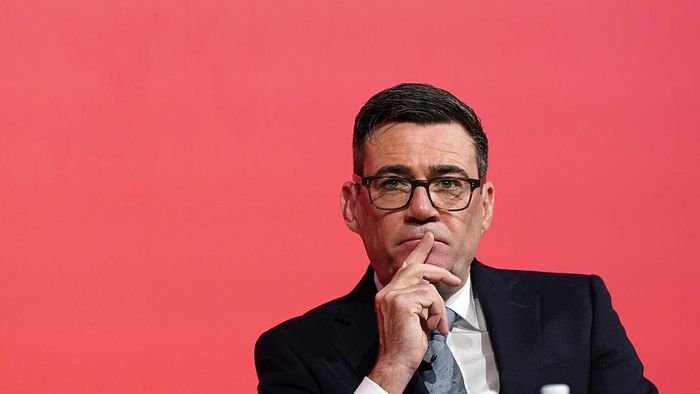
Prime Minister Andy Burnham is expected to announce that his government will move forward with plans to examine major electoral reform, potentially beginning a process that could eventually replace Britain’s first-past-the-post voting system with a form of proportional representation.
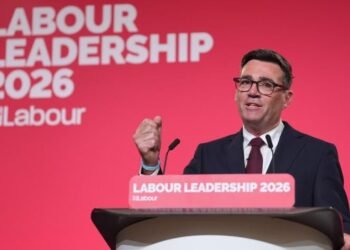
The announcement is expected during Burnham’s first Labour conference speech as prime minister and would form part of a wider programme of institutional and policy changes that his government intends to develop before the next general election.
Government sources have indicated that Burnham will set out the plans in broad terms rather than immediately presenting a final electoral model. The intention is reportedly to begin developing detailed proposals that could subsequently be included in Labour’s next manifesto and put before voters.
If ultimately implemented, a move away from first past the post would represent one of the most significant changes to the way Westminster elections are conducted in modern British political history.

Under the current first-past-the-post system, voters choose an individual candidate in their constituency and the candidate receiving the most votes wins the seat. The overall composition of the House of Commons is therefore determined by the number of constituencies won by each party rather than by its share of the national vote.
Proportional representation, by contrast, generally seeks to make the distribution of parliamentary seats more closely reflect the proportion of votes received by political parties. There are several different forms of proportional representation, meaning that any decision to move away from first past the post would still leave important questions about the precise system to be used.
Burnham has been a longstanding supporter of electoral reform. During his time as mayor of Greater Manchester, he backed the idea of establishing a process that could lead to proportional representation for Westminster elections.
At last year’s Labour conference, he argued that the party should commit in its manifesto to introducing a proportional system for elections to the House of Commons during the following parliament.
His position has remained consistent since returning to frontline national politics. Before becoming prime minister, Burnham said that significant changes to the electoral system were needed to create a political culture that placed greater emphasis on solving problems rather than political point-scoring.
The issue has also attracted support among Labour MPs. Almost 100 Labour parliamentarians backed a representation of the people bill when it passed through Parliament earlier this month.
Florence Eshalomi, the minister responsible for the legislation, has said Burnham remains committed to electoral reform while cautioning that it would be premature to legislate immediately for a particular system.
That suggests the government is likely to focus initially on consultation and the development of proposals rather than moving directly towards legislation.
One possible route would be the creation of a national commission on electoral reform. Such a commission could examine the strengths and weaknesses of the existing system, consider alternative models and make recommendations about how any future elections should be conducted.
The precise structure and remit of any commission have yet to be settled.
Public and political opinion over electoral reform remains divided. Supporters of proportional representation argue that it could make parliamentary representation more closely reflect the votes cast across the country. They also argue that it could give smaller parties a greater opportunity to secure parliamentary seats and potentially strengthen representation for different regions and political viewpoints.
Those arguments are particularly relevant to Burnham’s criticism of what he sees as an overly centralised political system.
He has frequently argued that British politics is too concentrated in London and that the existing political structure does not adequately reflect the interests of the country’s nations and regions.
Burnham has also criticised the dominance of the two largest political parties and has argued that the political system should provide greater space for different political perspectives.
The question of electoral reform is therefore closely connected to his broader plans for changing the relationship between Westminster and the rest of the country.
Opponents of proportional representation have raised different concerns. Critics argue that proportional systems can make it more difficult for a single party to win an overall parliamentary majority, potentially leading to coalition governments or other forms of cooperation between parties.
They contend that coalition governments can create uncertainty over policymaking and make it harder for administrations to pass legislation or maintain a consistent programme.
Supporters of the current first-past-the-post system also argue that it provides a direct relationship between individual MPs and clearly defined constituencies. Under that system, each constituency elects one MP, giving voters a straightforward local representative who can be held accountable at subsequent elections.
Whether those advantages outweigh the arguments for a more proportional distribution of parliamentary seats is likely to become a major subject of political debate if Burnham proceeds with his plans.
Polling among MPs conducted by YouGov suggests that there is significant support within the House of Commons for at least reviewing the existing electoral system. In the poll cited in the current debate, 53% of MPs surveyed said they supported a review of first past the post.
That figure does not necessarily indicate support for a particular proportional system. A review could lead to several possible conclusions, including retaining the existing arrangement, modifying it or adopting an alternative voting system.
The government’s approach is therefore likely to involve several stages.
Burnham is expected to use his conference speech to establish the political direction rather than settle every technical detail. A more extensive consultation or commission could then examine the options before Labour decides what specific reform it would put before voters.
The issue could ultimately become a manifesto commitment at the next general election. If Labour were to seek a mandate for proportional representation, voters would then have the opportunity to consider the proposed reform as part of the party’s wider programme.
Any subsequent legislation would require parliamentary approval, meaning the final outcome would depend on the political balance in Westminster and the details of the proposal eventually presented.
The potential scale of the change explains why the announcement is being closely watched across Westminster. Britain has used first past the post for House of Commons elections for generations, although other electoral systems are already used for certain elections within the UK.
The debate is therefore not about whether proportional representation exists anywhere in Britain, but whether it should replace first past the post for elections to the UK Parliament.
The timing of Burnham’s plans is also significant because the government is pursuing several other major reforms. Social care, closer relations with the European Union and changes to the energy system are among the areas where the prime minister has indicated that he wants to move beyond existing policies.
Electoral reform would extend that agenda from individual policy areas into the structure of British democracy itself.
Burnham is expected to argue that the country needs a different political approach after years of frustration over issues such as regional inequality, public services and economic pressures. His supporters see electoral reform as part of a wider attempt to make political institutions more responsive to the public.
Critics, however, are likely to focus on the practical consequences of changing the voting system and whether proportional representation would produce governments capable of making decisions effectively.
The debate will also involve questions about the representation of England, Scotland, Wales and Northern Ireland, as well as the political balance between different regions and nations of the United Kingdom.
For Burnham, the issue forms part of a longstanding argument that Britain’s political institutions need to better reflect the country’s geographical and political diversity. For opponents, the existing system provides a clear constituency-based structure and can produce decisive election outcomes.
The government’s immediate task will be to turn a broad commitment into a detailed proposal that voters and parliamentarians can assess.
That means answering questions about which proportional system would be used, how constituencies would be represented, how MPs would be elected and how the proposed system would affect the relationship between voters and Parliament.

Until those details are established, the announcement should be understood as the beginning of a reform process rather than a completed decision to replace first past the post.
Burnham’s conference speech is nevertheless expected to mark an important step in that process. By placing electoral reform alongside social care, energy and other major policy changes, the prime minister is signalling that he wants his government to consider changes not only to individual public services but also to the way political representation works.
Whether that ultimately leads to proportional representation at Westminster will depend on the proposals developed, the parliamentary process and, potentially, the judgement of voters at the next general election.
For now, the political debate is entering a new phase, with the government preparing to examine whether Britain’s long-established electoral system should remain unchanged or whether a different approach to parliamentary representation should be put before the public.
Related News:
 Green Party Surges Past Labour in Latest UK Poll
 Trump’s UK Ambassador Urges North Sea Drilling to Strengthen US Ties
 French Taxi Driver Cleared in David Lammy Theft Case After Fare Dispute
 Millionaires group urge Reeves to introduce wealth tax to ‘lift kids out of poverty’
 Starmer Faces Growing Dissent as Labour MPs Weigh Leadership Challenge
 Reeves rejects £1bn plea for NHS redundancy payouts
 PM Condemns Leaks, Vows Loyalty to Ministers and Stability
 Major Rent Reform Ends No-Fault Evictions in England
 Peers Flood Assisted Dying Bill with 942 Amendments
 Most Tories Expect to Support a Farage-Led Government
 Labour MP claims devolution bill is ‘blatant discrimination’ against Cornwall
 Millions Face Higher Taxes Under Reeves New Budget
 Starmer Says Labour’s Economic Plan Needs Years to Deliver
 Culture secretary to review Telegraph takeover by Daily Mail owner
 Labour Blocks Burnham as Party Rift Deepens Ahead of Polls
 Huge mistake: Labour blocks Burnham from byelection bid
 Artificial intelligence will cost jobs, admits Liz Kendall
 Labour targets Greens on drugs in Gorton Denton byelection
 Greens nominate Hannah Spencer for Gorton and Denton byelection
 Mandelson Faces Police Inquiry Over Epstein Leak
 Labour Thinktank Row Deepens Over Journalist Probe Claims
 Morgan McSweeney downfall shocks Labour leadership
 Cabinet Secretary Shake-Up Triggers Due Diligence Warning
 Starmer Faces Inquiry Calls Over Thinktank Probe
 Royal Mail Delivery Crisis Deepens Amid Weather Chaos
 UK shelves £110m border project amid trade strain
 Farage Unveils Reform UK Frontbench Team
 California Democrats Vow Trump Reckoning
 Trump Tariffs Threat Spark UK and EU Alarm
 Wales Approves Assisted Dying Bill Consent
 UK EU Trade Reset Gains Public Backing
 Green Party Stuns Labour in Gorton and Denton Byelection
 Corbyn Leads Your Party in Coordinated Left-Flank Strategy
 Labour Together scandal sparks clean break vow
 Asylum Seekers to Work After Year-Long Wait
 Starmer Row as Greens Demand Apology
 Proposed Law Leaves Gap for Children of Convicted Paedophiles
 Gordon Brown urges court for crimes against children
 Starmer Praised for Stance on Trump and Iran Conflict
 Inquiry into HMRC child benefit errors launched by NAO
 NHS Plans to Cut Overseas Workers Labeled Overambitious
 Farage Faces Backlash Over Crypto Cameo Endorsements
 Army Probes Apache Flyover at Kid Rock’s Nashville Estate
 Relationship with Trump may be beyond repair, Starmer warned
 Unions Raise Concerns Over Doctors’ Pay Dispute
 UK Government Poised to Revive Stalled Hillsborough Law
 UK Stands Firm on Falklands Amid US Rift
 Welsh Labour Faces Potential Historic Election Defeat
 Starmer Survives Mandelson Rebellion
 Silent Tracks: Rail Line Without Passengers
 Major test for Labour as polls open in Great Britain
 Labour Members Doubt Starmer Future as Burnham Leads Poll
 Reform UK Faces Crisis as Newly Elected Councillors Resign
 Farage Faces New Questions Over Private Helicopter Use
 Keir Starmer Struggles to Secure His Grip on Downing Street
 Farage Faces Standards Probe Over Cash Property Purchase
 Green Party Makerfield Candidate Resigns Over Posts
 Secret Role of UK Security Services in Troubles Amnesty Law
 Farage and Reform UK Reshape British Politics
 Starmer Leadership Under Pressure After Setbacks
 Minister Criticises Police Guidance Amid Southampton Protests
 Makerfield Voters Demand Real Change as Election Looms
 The Hidden Crisis Eroding Trust in British Communities
 Deepfake Abuse on X Sparks Safety Concerns for Dissidents
 UK Ministers Lobby Trump Over Under-16s Social Media Ban
 Labour MP Revives Blocked Assisted Dying Bill in Commons
 Starmer Set to Announce Exit Plan as Burnham Eyes No 10
 Farage Warns Sky News Following Financial Inquiry
 Burnham Pledges New Era of Open Debate for Labour MPs
 Ann Widdecombe, Formidable Political Figure, Dies at 78
 Security Row Erupts Following Tragic Death
 Burnham unveils £65m drought aid for farmers
 Unions Warn Labour Over Zero-Hours Contract Reforms
 Former Diplomats Urge UK and France to Act on Palestine
 Bayeux Tapestry Revives Franco-British Ties
 Tom Watson Takes Senior Role at Palantir
 Mahmood Warns Far Right Over Asylum Protests
 MPs Defend UK Economic Watchdog Against Critics
 The Tests Awaiting Andy Burnham After Labour Conference
 Free Speech Emerges as Key UK Election Issue