Published: 02 May 2026. The English Chronicle Desk. The English Chronicle Online
Three Australian activists released on the Greek island of Crete have accused Israeli forces of mistreatment after their aid flotilla bound for Gaza was intercepted, intensifying international scrutiny over the operation and the broader humanitarian crisis in the region.
The activists, identified as Ethan Floyd, Neve O’Connor, and Zack Schofield, were among roughly 175 participants involved in the so-called Global Sumud flotilla, a multi-ship convoy that departed from Italy with the intention of delivering humanitarian aid to Gaza.
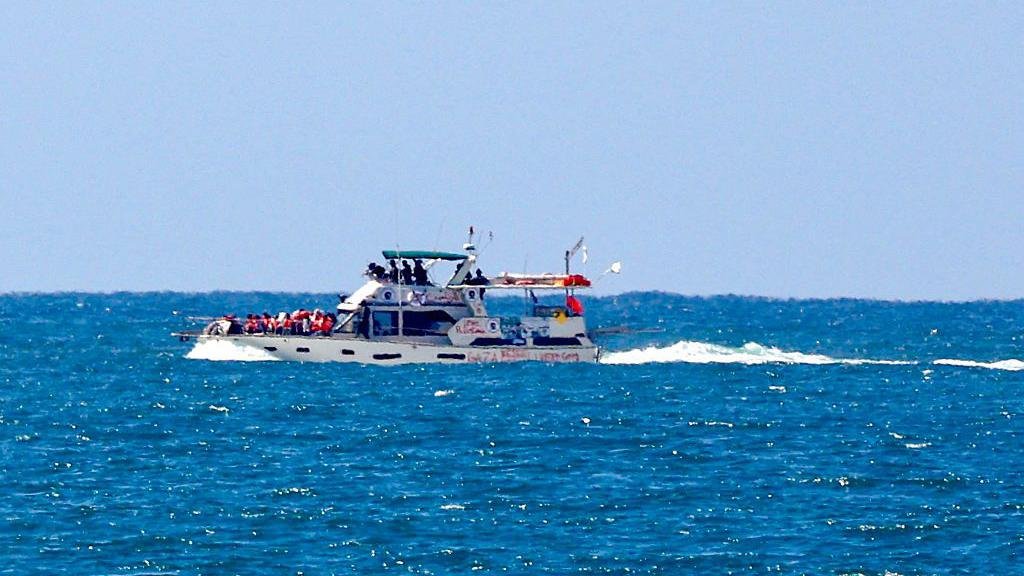
According to the group, Israeli forces intercepted 22 vessels off the coast of Crete earlier this week. The activists say they were subsequently detained aboard an Israeli-controlled ship for two days before being released and transported to Greece.
Speaking after his release, Schofield described conditions aboard the vessel as harsh and alleged that some detainees were subjected to violence. He claimed that the ship had been modified into a detention facility, with shipping containers used to confine activists and barbed wire restricting movement across the deck.

Schofield further alleged that individuals were physically assaulted during detention, including incidents involving rubber bullets and beatings. He also described the use of flash-bang devices and said detainees were forced into stress positions for extended periods. These claims have not been independently verified.
Israeli authorities have strongly rejected accusations of mistreatment. Gideon Sa’ar stated that the operation was conducted lawfully and that all participants were “taken off unharmed.” He characterised the flotilla as a politically motivated provocation intended to challenge Israel’s naval blockade on Gaza.
The Israeli government has long maintained that the blockade is a necessary security measure, designed to prevent weapons from reaching militant groups operating in the territory. Critics, however, argue that it has severely restricted the flow of humanitarian aid and contributed to worsening living conditions for civilians.
Following their release, the three Australian activists announced they had begun a hunger strike, refusing food provided by Israeli authorities in protest against the continued detention of two flotilla organisers. These individuals, Thiago Ávila and Saif Abu Keshek, are reportedly being transported to Israel for further questioning.
Flotilla organisers have condemned their detention as unlawful and have called on international governments to intervene. Several European nations have also expressed concern, urging Israel to release detained activists and comply with international legal obligations.
The situation has drawn diplomatic attention from Australia, where officials confirmed that consular staff from the Department of Foreign Affairs and Trade are on the ground in Crete providing assistance to affected nationals. The government reiterated its position that while humanitarian concerns in Gaza are serious, individuals should not attempt to breach the Israeli naval blockade due to significant risks.
Greek authorities reported that 31 activists were taken to hospital following the interception, though most have since been discharged. The incident has sparked protests and solidarity actions in several countries, including planned demonstrations in Australia.
The broader context of the flotilla mission is the ongoing humanitarian crisis in Gaza, where access to essential supplies remains a critical issue. International organisations have repeatedly called for increased humanitarian access, citing shortages of food, medicine, and basic services.
Legal experts note that the interception of civilian vessels in international waters raises complex questions under international maritime law. While Israel argues that its blockade is lawful, critics contend that enforcement actions must still comply with humanitarian standards and the rights of civilians.

The allegations made by the activists, if substantiated, could add further pressure on Israel amid growing international concern over the conduct of operations related to Gaza. Human rights organisations are likely to push for independent investigations into the incident.
For the activists themselves, the immediate focus remains on securing the release of their detained colleagues and drawing attention to the humanitarian situation that motivated their journey. Their hunger strike, they say, is intended as a symbolic act of solidarity with Palestinians facing severe shortages of food and aid.
As diplomatic discussions continue and calls for accountability grow louder, the flotilla incident underscores the increasingly volatile intersection of humanitarian activism, international law, and geopolitical conflict in the region.
Related News:
 Taliban global ties grow as rights fears mount
 Thousands Protest ICE in New York Against Trump Deportation Campaign
 Middle East Crisis Escalates as Oil Routes Shake Markets
 Trump Announces 3-Day Russia–Ukraine Ceasefire Deal
 Putin Declares Russia Victory at Scaled Victory Day Parade
 Former ICC prosecutor condemns US sanctions
 Houthis Strike Saudi Arabia as Middle East Tensions Rise
 Israeli Strike in Southern Lebanon Kills Seven
 Shock US Raid: Maduro Pleads Not Guilty in Manhattan Court
 Iran Leader Blames Protesters, Says They Serve Trump
 Machado Trump medal gesture reshapes Venezuela power struggle
 Trump Receives Machado’s Nobel Medal in White House Meeting
 Iran unrest slows under brutal crackdown and global tensions
 US Considers Asylum for British Jews Amid Rising Antisemitism
 Russia Strikes Kyiv and Kharkiv as Peace Talks Enter Day Two
 Files Link Andrew to Epstein Dinner After Prison Release
 Emails Show Epstein Funded Mandelson’s Husband After Jail
 Thousands Protest ICE Operations in Nationwide US Day of Action
 Epstein Files Reveal Trump Officials’ Emails with Financier
 Brazilian Politician Brothers Sentenced for Marielle Murder
 UK Prepares Aircraft Carrier for Middle East Crisis
 Yvette Cooper: UK Must Follow Principles, Not US Pressure
 Anti-Regime Iranians Turn Anger Toward Trump
 Slovenia Election: A Nation at a Crossroads
 A Global Voice For Justice: Stephen Lewis Dies At Age 88
 Death, displacement and military duties: children plunged into crisis
 Bondi Nanny Adriana Rivas to Face Extradition to Chile
 Ukraine Urges UK to Seize Russian Oil Tankers
 US Calls Australia Media Law “Foreign Extortion”
 Aid Crisis Grows as Hormuz War Disrupts Supply
 Oil Prices Surge Above $120 Amid Iran Blockade Fears
 Trump orders US troop pullout from Germany
 Judge halts deportation of Yemeni refugees in US
 Global order shifts amid Trump-era turmoil
 Australia pushes Pacific security pact amid China tension
 Ceasefire Standoff Deepens in Ukraine War
 Indiana Republicans Defy Trump in Key Vote Test
 Afghan Families Left in Limbo Face Risk of Deportation
 Tensions Emerge in Netanyahu-Trump Alliance
 Israeli Strikes in Lebanon Kill 10 Amid Ceasefire Strain
 US judge dismisses Kilmar Abrego Garcia indictment
 Zelenskyy warns over Oreshnik threat as Kyiv hit
 Hunger increasingly weaponised in global conflicts
 Discontent grows around Putin amid war strain
 Trump’s Iran Legacy Hangs on Tehran Deal
 Millions Gather for Khamenei’s Six-Day State Funeral
 Ukraine Creates Long-Range Strike Command
 Dreyfus Statue Finally Gets Permanent Paris Home
 Seoul proposes historic peace talks to replace Korean War armistice
 Five Years of Taliban Rule Leave Afghanistan in Crisis
 Trump dismisses concerns over 250-day carrier deployment
 BBC to Apologise Over Edited Trump Speech Amid Backlash
 Britain deploys RAF specialists to assist Belgium with drone threats
 Greene Pushes Epstein Files Amid Trump Fallout
 December Run-Off in Chile as Election Produces No Winner
 Shadow Fleet at Sea: Europe’s Battle Against Illicit Oil Shipping
 Georgians Defy Government Crackdown After Year of Protests
 Spoof “Make America Go Away” Caps Rally Denmark Over Greenland
 UK and US Drop in Global Corruption Index Rankings
 Canberra Poster Seizure Sparks Free Speech Row
 Jacinda Ardern Move Sparks Kiwi Reflection
 New Zealand Covid Response Praised Despite Lingering Scars
 Injured Mojtaba Khamenei Elevated as Iran Leader
 Air Canada CEO Faces Outcry Over Recent Language Misstep
 Relationship with Trump may be beyond repair, Starmer warned
 Reform UK Pledges To Halt Visas Over Reparations Demands
 Trump Signals Hope for New Iran Talks as Ceasefire Fades
 Trump Brokers Landmark Lebanon Ceasefire Amid Regional Hopes
 Investigation Into Anti-Trump Motives After Gala Shooting
 Trump approval plunges amid Iran war fears
 US ‘Narco Boat’ Strikes Draw Global Outcry
 FIFA Confirms Global Ban for Benfica Star Prestianni
 One Nation Candidate’s Surprising Ties to Independents
 Putin Signals War End as Russian Momentum Stalls
 Scepticism and tight security as Beijing braces for Trump
 Philippine Senator Flees After Days Under Senate Siege
 Tony Abbott Returns as New Liberal Party President
 Aukus Deal Facing Fierce Backing and Historic Criticism
 Trump’s Mount Rushmore Speech: A Divisive Anniversary
 Trump Swaps Planes Amid Iran Tensions