Published: 6 May 2026. The English Chronicle Desk. The English Chronicle Online
In a “clinical” and high-stakes diplomatic maneuver, Indian Prime Minister Narendra Modi hosted Vietnamese President To Lam in New Delhi today. The summit, held against the backdrop of a “national security emergency” in the Strait of Hormuz, focused on a “milestone” defense and maritime agreement that signals a “divergent” shift in Indo-Pacific power dynamics.

The meeting comes as India recalibrates its “Act East” policy to bypass the “resilience deficit” caused by the ongoing Middle East conflict, positioning Vietnam as a critical “golden tone” partner in a new, secure maritime corridor.
The center-piece of the summit was a major expansion of the “human-machine coordination” between the two nations’ defense industries.
The Drone Alliance: Following the launch of the EU-Ukraine Drone Alliance earlier this week, India and Vietnam have agreed to co-develop “frontier” surveillance drones to monitor critical sea lanes.
The “Hormuz” Alternative: With the Strait of Hormuz facing a “Project Freedom” pause and an “asymmetric” threat from Iranian proxies, the leaders discussed the “recalibration” of the International North-South Transport Corridor (INSTC) to ensure that the “postcode lottery” of global shipping does not paralyze Asian trade.
Cyber Resilience: Both nations signed a “clinical” memorandum on cybersecurity, aimed at preventing the “accountability rot” that has recently seen Southeast Asian infrastructure targeted by state-sponsored hacking groups.
The urgency of the New Delhi talks was underscored by the recent drone strike in Fujairah, which injured three Indian nationals—an event PM Modi today called “completely unacceptable.”
The “Safety of Navigation” Mandate: Modi emphasized that “safe and secure navigation” is not just a strategic objective but a “sacred” right for the global economy.
The South China Sea Variable: President To Lam expressed “speechless determination” regarding the protection of Vietnam’s sovereign waters, with India pledging to continue its “training and capacity building” missions with the Vietnamese Navy.
The “Medication Desert” of Supply Chains: The leaders warned that continued volatility in the Gulf is creating a “medication desert” for essential supplies in the Global South, necessitating a “160 MPH clip” of cooperation between New Delhi and Hanoi.
As China’s Wang Yi meets with his Iranian counterpart in Beijing today to urge a “complete cessation” of fighting, the India-Vietnam alliance is being viewed as a “milestone” of regional self-reliance.
The “Succession” of Power: Analysts suggest that as the US focuses on the “Project Freedom” negotiations, India is stepping into a “vacuum of leadership,” establishing its own “postcode” of influence in the East.The “Dopamine Desert” of Global Diplomacy: “While the world focuses on the ‘Hormuz pause,’ the ‘India-Vietnam pivot’ is the real long-term story,” noted one senior fellow at the Institute for Defence Studies and Analyses.
As the RHS Wisley wisteria reaches its peak and the Southbank Centre celebrates 75 years of endurance, the India-Vietnam summit marks a “golden tone” of strategic clarity.

“Justice has no expiry date, and our maritime security has no room for compromise,” PM Modi told reporters. With the King’s Speech on May 13 expected to address “Global Security Partnerships,” the New Delhi-Hanoi axis stands as a “clinical” example of how middle powers are no longer waiting for the “superpowers” to solve the “asymmetric challenges” of the 2020s.
Whether this “New Silk Road” can survive the “160 MPH clip” of modern geopolitical tension remains to be seen, but for now, the “Morning Star of the Indo-Pacific” is rising.
Related News:
 Starmer Weighs Fast-Tracking Defence Boost
 Macron Rebuked in Franco-German Defence Row
 Japan Braces as Takaichi Begins New Term with Huge Mandate for Low‑Tax, Ultra‑Conservative Agenda
 Musk Cuts Starlink Access for Russian Forces – Giving Ukraine an Edge at the Front
 UK Will Allow US to Use Bases to Strike Iranian Missile Sites, PM Says
 Cooper: Joining US Strikes on Iran ‘Not in Britain’s Interest’
 Trump’s Iran Endgame Unclear After Mixed Messaging on War Aims
 Minister Meets Crews Who Will ‘Take Out’ Iranian Drones
 UK Prepares Aircraft Carrier for Middle East Crisis
 UK–US Tensions Ease as Starmer and Trump Hold First Call Since Iran Row
 RAF Typhoons scrambled amid Russian drone threat near Nato
 Trump orders US troop pullout from Germany
 Trump likens US Navy actions to ‘pirates’
 Fog of War: US Rejects Iranian Claims of Missile Strike on Navy Frigate
 “Consolidation in Crisis”: Gen Assimi Goïta Assumes Defence Ministry After Coordinated Attacks Kill Predecessor
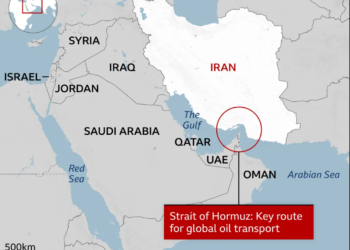 “The Pivot to Pakistan”: Trump Pauses ‘Project Freedom’ in Hormuz Amid Iran Deal Hopes
 “The Strait Scramble”: Inside Trump’s ‘Project Freedom’ and the Hormuz Naval Escort
 UK Must Act with Courage and Clarity on Israel-Palestine Conflict, Says Foreign Affairs Committee Report
 Radioactive Leak at UK’s Nuclear Warhead Base Sparks Outcry Over Safety and Secrecy
 Mutual Inconvenience: Why Alaska Was Chosen for the Trump-Putin Summit on Ukraine
 Hong Kong Summons UK and Australian Envoys Following Asylum Grants to Democracy Activists
 Is the UK Ready to Put Boots on the Ground in Ukraine? Assessing Military Capacity and Challenges
 Channel Crossings Surge: Over 1,000 People Arrive in the UK in Small Boats in a Single Day
 Yvette Cooper Signals Global Momentum Towards Gaza Peace Deal Amid Humanitarian Crisis
 Russia’s Latest Push to Win US Favors Shows Deep Desperation
 BBC to Apologise Over Edited Trump Speech Amid Backlash
 Britain deploys RAF specialists to assist Belgium with drone threats
 Trump Urges Herzog to Grant Netanyahu Full Pardon
 Indian authorities demolish Kashmir home linked to Red Fort blast
 Greene Pushes Epstein Files Amid Trump Fallout
 December Run-Off in Chile as Election Produces No Winner
 Canada Passes Carney’s First Budget in Tight Parliamentary Vote
 Shadow Fleet at Sea: Europe’s Battle Against Illicit Oil Shipping
 India’s COP30 Delay Raises Global Climate Concerns
 Georgians Defy Government Crackdown After Year of Protests
 Albanese Opens Door to Bondi Royal Commission Amid Rising Pressure
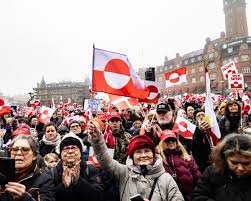 EU weighs response amid Greenland tariff crisis with Trump
 EU Says US Ties Have Suffered ‘Big Blow’ After Greenland Crisis
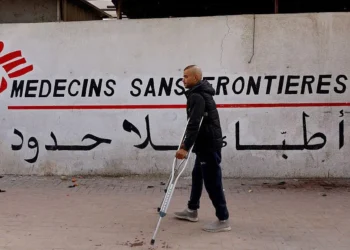 Israel Moves to Bar MSF From Gaza Operations
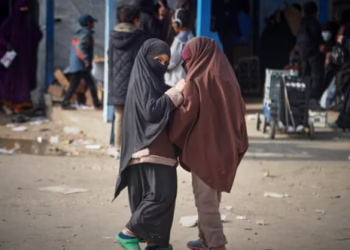 Australian Families Leave Syrian Camp for Home
 Nine Arrested in France Over Death of Far‑Right Student
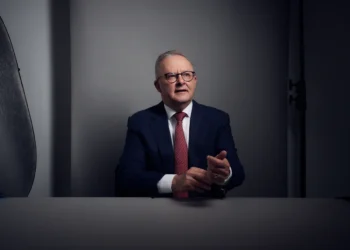 Andrew Arrest Sparks Republic Debate in Australia
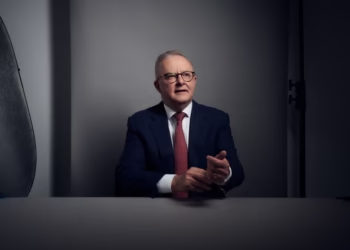 Australian PM Says Former Prince Andrew Has Suffered ‘Extraordinary Fall’ but That Won’t Prompt Republic Referendum
 Farage Chagos Islands Row Sparks Fury
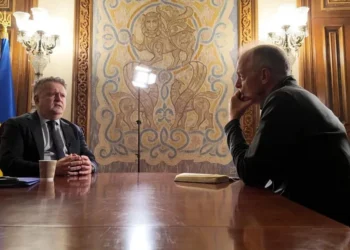 Ukraine Negotiator Reveals What It Feels Like Facing Russia
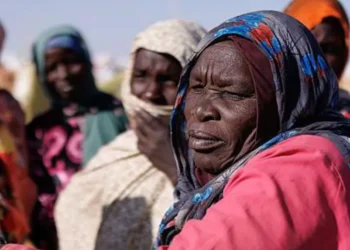 Chad Shuts Border With Sudan in Bid to Stop Conflict Spreading
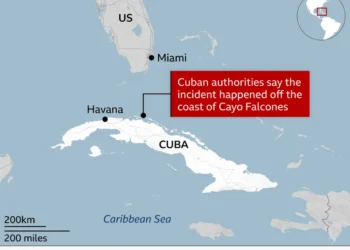 American Citizen Killed in Cuba Boat Shooting, U.S. Officials Say
 Iran’s Regime Still Intact — Coming Days Will Test Its Survival
 Herzog Asio meeting sparks security storm
 Finland Plans to Lift Decades‑Old Ban on Hosting Nuclear Weapons
 Nine Days of Strikes Reshape the Middle East
 Trump Pressures Congress Over Save America Act
 Iran War Puts Trump at Political Risk Amid Rising Prices
 Ukraine War Becomes Flashpoint in Hungarian Election
 Queensland Protest Laws Spark Free Speech Backlash
 Yvette Cooper: UK Must Follow Principles, Not US Pressure
 Trump Nato threats expose Iran strategy vacuum
 Trump’s Confidence Undimmed — But Every Iran Option Carries Risk
 Israel Says Iran Security Chief Larijani ‘Killed’
 Philippines energy emergency sparks coal power surge
 Trump Facing Backlash from Epstein Survivors Over Files
 UK Forces Ready to Seize Russian Shadow Fleet Vessels
 Trump Considers Military Operation to Seize Iran’s Uranium
 ‘Blue Helmets’ in the Crossfire: Initial Probe Points to Roadside Bomb in Killing of UN Peacekeepers
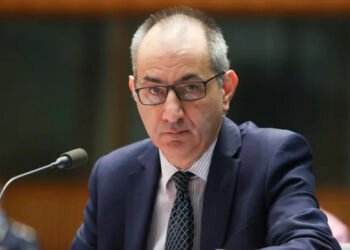 Report Says Pezzullo Acted ‘Recklessly’ in Dealings
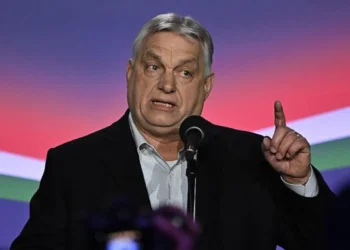 Hungary Claims Plot to Target Gas Pipeline Pre-Vote
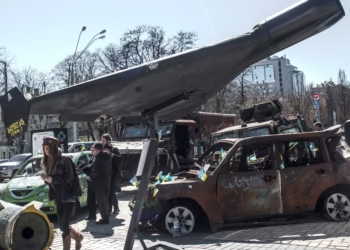 Oil and Diplomacy: Russian Refineries Burn as Zelenskyy Secures Middle East Shield
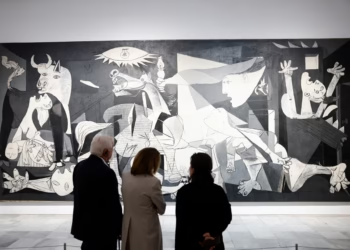 ‘The Soul of Spain’: Politicians Clash Over Renewed Push to Move Picasso’s Guernica
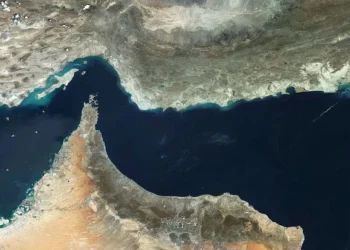 The Great Chokehold: Why the Strait of Hormuz is the Epicenter of the 2026 Crisis
 Moldova River Crisis Exposes War’s Hidden Cost
 The Frozen Frontier: Why Frostbite is the Least of Concerns for Canada’s Arctic Forces
 Diplomatic Deadlock: Lebanon Enters High-Stakes Border Talks with ‘No Cards to Play’
 Is Britain Ready? Experts Warn of ‘Bizarre’ Military Delay
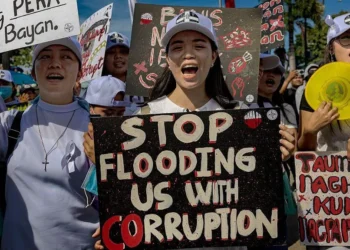 The ‘Big Fish’ Lands: Marcos Confirms Arrest of Key Figure in Flood-Control Scandal
 The Fog of War and the Ticker Tape: Suspicious Trades Rile Washington
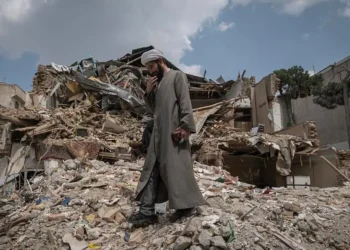 Brinkmanship in Islamabad: Tehran Vows ‘New Battlefield Cards’ as Ceasefire Wanes
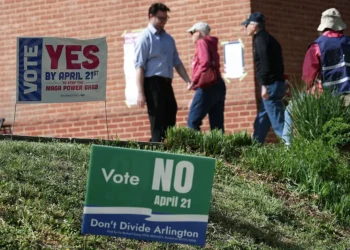 Judicial Whiplash: Virginia Court Pauses Redistricting 24 Hours After Public Vote
 “Industrial-Scale Extraction”: White House Memo Accuses China of Mass AI Theft
 Capitalism ‘Suicidal’, Warns Petro at Climate Summit
 “An Endurance Test for the Mind”: British Couple Sentenced to 10 Years in Tehran