Published: 11 May 2026. The English Chronicle Desk. The English Chronicle Online.
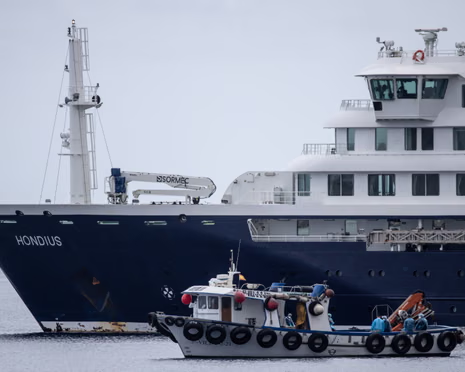
The quiet docks of Tenerife witnessed a highly coordinated international medical operation on Sunday morning. Seventeen American citizens finally disembarked from the M/V Hondius after a very stressful journey abroad. This vessel had become the centre of global attention due to a rare viral outbreak. Medical teams from the United States flew into Spain to manage this complex repatriation effort. Every passenger underwent extensive interviews with experts from the Centers for Disease Control and Prevention. These specialists wanted to understand the exact level of exposure for every single individual onboard. Officials have kept the identities of these travellers private to protect their personal medical records. The group is now travelling to Nebraska on a specially equipped private chartered aircraft today. Nebraska serves as the primary hub for federal quarantine and advanced biocontainment in America.
The Department of Health and Human Services confirmed several key details regarding the group’s health. Two specific passengers require significantly higher levels of medical care during their long flight home. One individual has reported mild symptoms commonly associated with the dangerous Andes strain of hantavirus. Another passenger tested positive for the virus through a formal polymerase chain reaction laboratory test. Both individuals are currently travelling inside specialized biocontainment units to ensure total isolation from others. The remaining fifteen passengers appear healthy but remain under very close observation by federal doctors. This airlift will transport the primary group to a specialized treatment centre in Omaha, Nebraska. The symptomatic patient will receive dedicated care at a separate high-level pathogen treatment facility nearby. Acting CDC Director Jay Bhattacharya spoke to the media about the next steps for everyone.
The government plans to assess each person for risk based on their previous onboard interactions. Passengers who avoided close contact with sick individuals will likely be deemed very low risk. Those who shared close quarters with symptomatic people face a medium or high risk level. The authorities intend to offer several different choices for those finishing their long journey home. Some may choose to stay in Nebraska under the watchful eye of federal medical experts. Others might prefer returning to their own homes if their local situation allows for safety. The government will facilitate private travel for those who can safely isolate in their home states. Local public health agencies will take over the monitoring process once the passengers reach home. Dr. Bhattacharya emphasized that the CDC will provide constant support throughout this entire recovery process.
Public health officials are working hard to manage the growing anxiety surrounding this specific outbreak. Many people naturally feel worried after living through the global events of the recent past. Dr. Bhattacharya stated clearly that this situation is not at all like a pandemic event. He urged the public to remain calm and avoid falling into a state of panic. The medical community is currently following established hantavirus protocols that have worked well before now. These specific guidelines have successfully contained several smaller outbreaks throughout previous decades of medical history. The recent health alert serves to inform doctors about the arrival of these specific passengers. It is vital that American medical professionals understand the clinical signs of this rare viral infection. The CDC issued a formal alert on Friday to prepare clinicians for potential future cases.
This guidance helps local doctors identify symptoms and manage the health of any exposed individuals. A senior CDC official clarified that the government is not currently ordering a mandatory quarantine. Testing people who show no symptoms is generally not recommended by the current federal guidelines. However, the World Health Organization has offered a slightly different perspective on the current situation. Director-General Tedros Ghebreyesus recommended a much longer period of active follow-up for all exposed people. The international agency suggests forty-two days of quarantine for anyone who was on the ship. This period could be spent in a dedicated facility or within a private family home. The World Health Organization provides advice but does not have the power to enforce laws. Each nation must decide how to best protect its citizens based on its own laws.
The M/V Hondius remains under careful observation as the remaining international passengers wait for instructions. This incident highlights the challenges of managing infectious diseases on large commercial vessels at sea. Global health experts are watching the American repatriation effort as a model for other nations. The collaboration between Spanish authorities and American medical teams has been described as very efficient. Moving patients across the ocean in specialized pods requires incredible logistical precision and expert medical staff. The Andes strain of hantavirus is particularly concerning because of its potential for human transmission. Unlike other strains, this specific version can sometimes spread between people in very close contact. This unique characteristic is why the CDC is taking such careful precautions with the passengers. The goal is to prevent any secondary infections from occurring on American soil this month.
Nebraska’s University Medical Center is uniquely prepared to handle these types of specialized medical cases. Their staff has trained for years to manage the world’s most dangerous and rare pathogens. The arrival of the chartered flight marks the beginning of a long observation period today. Families of the passengers are reportedly relieved to have their loved ones returning to America. The news has sparked a wider conversation about health safety protocols on luxury cruise ships. Many travellers are now asking for better screening measures before they board such long voyages. The cruise industry will likely face new regulations following the conclusion of this specific investigation. For now, the focus remains entirely on the health and safety of the seventeen Americans. They are expected to land in Omaha later this evening to begin their evaluations. The English Chronicle will continue to provide updates as more medical information becomes available soon.
Health reporters have noted that the Andes strain is native to parts of South America. It is unusual to see an outbreak of this nature on a vessel in Tenerife. Investigators are currently looking into the source of the initial infection on the M/V Hondius. Early reports suggest that the virus may have originated from contaminated supplies or local wildlife. Whatever the cause, the response from the international community has been swift and very decisive. The use of the National Quarantine Unit in Nebraska shows the seriousness of the situation. This facility was designed specifically for high-consequence pathogens that require the highest level of containment. The public can be assured that every possible precaution is being taken by the government. Experts believe the risk to the general public remains extremely low at this current time. The situation is being managed by the best medical minds in the field of virology.
As the sun sets over the Nebraska plains, the medical teams are ready for arrival. The specialized aircraft is equipped with the latest technology to maintain a safe sterile environment. Each mile flown brings these weary travellers closer to the expert care they urgently need. The story of the M/V Hondius will likely be studied by public health students. It serves as a reminder of how quickly modern travel can spread rare tropical diseases. However, it also shows how far medical science has come in managing these difficult threats. The passengers will soon be reunited with their families after their health is fully cleared. Until then, they remain in the best possible hands within the American medical system. The world watches and hopes for a full recovery for those currently fighting the virus. This mission represents a triumph of international diplomacy and advanced modern medicine working together. Tight controls at the borders ensure that the rest of the country stays safe today.
Related News:
 Capitol Attack Anniversary Sparks Deep Political Divide
 Saudi Officials Report Zubaidi Flee Before Yemen Peace Talks
 UK Targets in New York Bomb Threat Hoax: Man Jailed
 Gambia Supreme Court Hears Case to Overturn FGM Ban
 Trump targets Iran trade with 25% tariff warning
 US Senate rejects resolution limiting Trump military powers
 Gulf states warn Trump Iran strikes risk wider Middle East war
 Machado Trump medal gesture reshapes Venezuela power struggle
 Greenland defence seen as shared Nato duty amid troop arrivals
 Geopolitical football: Iran, Trump and the World Cup clash
 Canada-China trade gains momentum in new strategic partnership
 Trump Receives Machado’s Nobel Medal in White House Meeting
 Syria President Declares Victory as Ceasefire Reached with SDF
 US Considers Asylum for British Jews Amid Rising Antisemitism
 Shinzo Abe’s killer receives life sentence in Japan
 China General Under Investigation Amid Leadership Purge
 Philippines ferry disaster leaves 15 dead, dozens missing
 Cambridge Faces Scrutiny Over Arms Investment Transparency
 Epstein UAE Emails Shake British Royal Andrew’s Legacy
 Christchurch gunman seeks to vacate guilty plea
 Infantino Faces Russia Threat and Trump Concerns at Uefa Congress
 Concerns rise for Canberra boy amid Iran detention fears
 Ukraine Sends Drone Experts to Defend US Bases in Jordan
 Abramovich Chelsea Sale Cash Faces Jersey Probe
 Yvette Cooper: UK Must Follow Principles, Not US Pressure
 Slovenia Election: A Nation at a Crossroads
 Jury Rules Meta and YouTube Liable for Addictive Design
 Saudi Arabia Urging US to Keep Up Iran Attacks
 Trump Softens Cuba Oil Stance as Russian Tanker Nears
 The Woman Guarding Earth From the Threat of Asteroids
 IMF Predicts Global Economic Crisis Due to Gulf Unrest
 California Defies Trump With Strict New AI Standards
 Germany Grapples With AI Abuse Following TV Star Scandal
 Exiled Tycoon Warns of New Russian Attacks on UK Soil
 Labor Under Fire Over Stalled University Fee Reform
 LA 2028: Millions of Affordable Olympic Tickets Announced
 Trump Slams Europe as Transatlantic Tensions Boil Over
 Inside the Deceptive Machine: A Former Producer Speaks Out
 Italy Faces Third Successive World Cup Absence After Loss
 Starmer Urges Ambitious EU Ties Amid Middle East Conflict
 Spain Faces Backlash Over Xenophobic Chants in Egypt Draw
 A Global Voice For Justice: Stephen Lewis Dies At Age 88
 Trump Issues Stark Warning After Strike On Iran’s Largest Bridge
 Hope and Fear as Iranians Flee Across the Turkish Border
 Tragic End to Outback Search as Floods Claim a Life
 Ben Roberts-Smith Arrested Over Alleged War Crimes
 Reform UK Pledges To Halt Visas Over Reparations Demands
 US and Iran Agree to Two-Week Provisional Ceasefire
 Starmer visits Gulf as US and Iran agree ceasefire
 Gaza Child Arrives in UK for Life-Changing Care
 Israel Defies Ceasefire as Lebanon Operations Persist
 Pakistan Brokers Historic Peace Deal Amid Rising Tensions
 UK Holds Firm on Strait of Hormuz Amid Trump Pressure
 Trump Signals Hope for New Iran Talks as Ceasefire Fades
 Reeves Slams Trump Over Iran War Lack Of Exit Plan
 US and Iran Pursue Extension of Ceasefire via Pakistan
 Trump’s Islamabad Gamble: The High Stakes of a New Iran Deal
 Ian Katz to Step Down as Channel 4 Content Chief
 The General’s Gambit: Pakistan’s New Role in Global Peace
 Mexico, Spain and Brazil call for Cuba dialogue amid crisis
 Pakistan’s Ambitious Bid for Middle East Peace
 Trump Starts $166bn Tariff Refund Process
 Israeli Soldiers Jailed Over Vandalism of Lebanese Statue
 Trump Weighs Sending Afghan Allies to the Congo
 Timor-Leste Faces Tough Questions Over Resort Proposal
 Pentagon Shakes Up Navy Leadership Amid Hormuz Blockade
 Trump Threatens UK With Big Tariff Over Tech Tax
 Prominent Voices Challenge Palestine Action Ban
 Security Scrutiny After Washington Shooting Incident
 Merz Criticises US Approach in Iran Conflict
 UK Envoy Sparks Controversy Over Special Relationship Claims
 Ukraine Urges UK to Seize Russian Oil Tankers
 US Calls Australia Media Law “Foreign Extortion”
 The Billionaire’s Secretary and the £1m Fraud
 Questions Remain Over The Tragic Bondi Massacre
 Ukraine strikes Tuapse as oil disaster worsens
 Brewing Tension: Taiwan Baristas Rebrand for World Stage
 Security Failures and the Road to the Bondi Inquiry
 Tensions Emerge in Netanyahu-Trump Alliance
 Mission to the World’s Edge: A Heroic Rescue in Tristan