Published: 14 May 2026. The English Chronicle Desk. The English Chronicle Online.
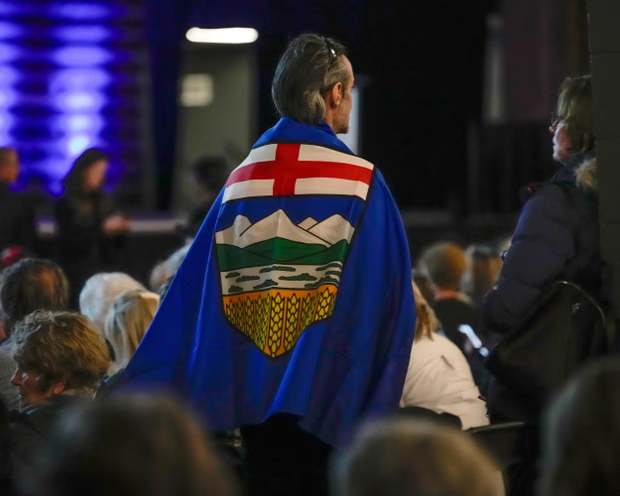
The political landscape of Canada faced a dramatic shift during a landmark court ruling on Wednesday. Justice Shaina Leonard of the Court of King’s Bench delivered a stinging blow to separatist hopes. Her decision effectively quashed a growing petition aimed at securing an independence referendum for the province. This legal intervention came at a critical moment for the movement seeking secession from the federation. The court found that the provincial government failed to consult First Nations groups during the process. This omission proved fatal to the legal standing of the recent citizen-led initiative for separation. The ruling emphasizes the enduring power of historical treaties between the Crown and indigenous communities. These agreements often predate the very existence of the western province of Alberta within the country.
The separatist movement had recently gained significant momentum across the vast and resource-rich Canadian prairies. Organizers had triumphantly delivered numerous boxes containing over three hundred thousand signatures to the provincial capital. This massive collection of support was intended to trigger a formal vote on the secession issue. However, the legal challenge brought by indigenous leaders successfully argued that such a move was unlawful. They asserted that any path toward independence must involve those who hold original land rights. Justice Leonard agreed with this perspective in a detailed and firmly worded written judicial decision. She noted that secession would undeniably impact the established rights found in Treaties Seven and Eight. These treaties represent a sacred relationship between the indigenous peoples and the sovereign Canadian state. The judge remarked that logic dictates such a massive constitutional change requires deep and meaningful consultation. This requirement applies even before organizers are permitted to begin gathering signatures for a public vote. The ruling also scrutinized recent legislation passed by the provincial government regarding these citizen-led initiatives. This specific law had removed the necessity for referendum questions to be strictly constitutional in nature. It also limited the ability of the chief electoral officer to refer proposals to the courts. Justice Leonard found these legislative changes did not override the fundamental duty to engage with tribes. Furthermore, she ruled that the separatists should not have been allowed to reapply so quickly. This followed an earlier denial of their first proposal by the provincial chief electoral officer.
The separatist effort was already reeling from a series of damaging scandals before this court ruling. Investigations were launched after revelations that a linked group accessed private and sensitive elections data illegally. Both the provincial elections officials and local police are currently looking into these serious privacy breaches. This controversy had already begun to sap some of the public enthusiasm for the independence campaign. The court’s decision now adds a massive legal hurdle to an already troubled political movement. Chief Allan Adam of the Athabasca Chipewyan First Nation welcomed the court’s decisive legal intervention. He stated that the ruling reinforces the vital importance of treaty rights for all Canadians. The chief expressed hope that this decision would finally close the chapter on separatist discussions.
However, the political leadership in Alberta does not seem ready to abandon the independence cause yet. Premier Danielle Smith expressed her deep disappointment with the ruling during a press conference on Wednesday. She characterized the judge’s decision as being both incorrect in law and fundamentally anti-democratic in nature. Smith argued that the citizen-led petition process is an essential tool for a healthy modern democracy. She vowed that her government would immediately begin the process of appealing this judicial decision today. The Premier believes that every Albertan deserves a chance to have their voice heard on this. She maintains that the government has a duty to protect the democratic rights of its citizens. This stance sets the stage for a prolonged and potentially bitter legal battle over sovereignty.
Mitch Sylvestre, the prominent leader of the separatist group, remained defiant despite the recent court loss. He plans to lobby the provincial government to bypass the petition process entirely this coming autumn. Sylvestre wants the government to use its own powers to place the question on the ballot. This would involve putting the independence question to voters during the scheduled October provincial referendum period. Such a move would likely trigger another round of intense legal challenges from indigenous community leaders. They argue that any path to separation remains barred without their explicit and informed legal consent. The lawyer for the separatists, Jeffery Rath, claimed the judge made numerous errors in her logic. He argued that the duty to consult does not apply to this specific petition process.
Rath asserted that consultation is only required when federal powers are being transferred to the provinces. From his legal perspective, no rules were broken during the gathering of the three hundred thousand signatures. This disagreement highlights the deep divide between the provincial government and the federal judicial system today. The outcome of the appeal will likely have profound implications for the future of the federation. Many people across the United Kingdom are watching these developments with great interest and some concern. The stability of Canada is seen as vital for the ongoing strength of the Commonwealth. This legal battle represents a significant test for the modern interpretation of ancient colonial era treaties. The world now waits to see how the higher courts will handle this complex constitutional issue.
Alberta has long felt a sense of economic and political alienation from the central government. This feeling has fueled various separatist movements over many decades in the western part of Canada. The recent surge in support for independence reflects a deep frustration with federal environmental and fiscal policies. Many residents feel that the wealth generated by their province is being unfairly redistributed elsewhere today. This economic tension provides the fuel for the political fire that the separatists are currently stoking. Despite the court’s ruling, the underlying grievances of many Albertans are likely to remain very strong. The provincial government continues to push for more autonomy while stopping just short of full independence. This delicate balancing act is becoming increasingly difficult to maintain under intense legal and public scrutiny.
The role of First Nations in this debate has become a central pillar of the story. Their legal standing provides a powerful check on the ambitions of the provincial separatist movement today. By focusing on treaty rights, they have shifted the conversation from simple politics to fundamental law. This strategy has proven effective in the courts and has gained support from many legal experts. The recognition of these rights is seen as a crucial step toward true national reconciliation. It ensures that the voices of the original inhabitants are not lost in modern political disputes. The court’s insistence on consultation highlights the unique constitutional framework that governs the entire Canadian nation. This framework requires a level of cooperation that often clashes with populist political movements.
As the appeal process begins, the separatist leaders are working hard to keep their base motivated. They view the court ruling as an example of judicial overreach by a distant federal elite. This narrative resonates with many people who already feel ignored by the national government in Ottawa. The upcoming weeks will likely see a series of protests and public meetings across the province. Both sides are preparing for a long fight that could take years to fully resolve. The English Chronicle will continue to provide updates on this developing situation as new information emerges. For now, the dream of an independent Alberta remains stalled by the power of the law. The intersection of indigenous rights and provincial sovereignty remains the most important story in Canada.
The international community is also weighing the potential impact of a fractured Canada on global markets. Alberta is a major global producer of energy and its political stability affects international oil prices. Any uncertainty regarding its status within Canada can lead to fluctuations in the global economy today. This adds an extra layer of complexity to what is already a very tense situation. Investors are watching the legal proceedings closely to gauge the long term risks in the region. The provincial government must balance its separatist sympathies with the need for a stable investment climate. This challenge is made even more difficult by the ongoing investigations into the data breaches. The integrity of the democratic process remains a top priority for all parties involved here.
The final resolution of this case will likely set a precedent for other provinces in Canada. It will define the limits of provincial power and the strength of indigenous treaty rights for generations. The eyes of the nation are fixed on the courtrooms where these arguments will be heard. Whether Alberta stays or goes, the relationship between its people and the law has changed forever. The conversation about independence has forced a deep reflection on what it means to be Canadian. It has also brought the history of the land and its original people to the forefront. This dialogue, while often painful and divisive, is a necessary part of a maturing democracy. The road ahead is uncertain, but the importance of this moment cannot be overstated by anyone. Alberta stands at a crossroads, and the world is watching which path it will take.
Related News:
 Capitol Attack Anniversary Sparks Deep Political Divide
 Saudi Officials Report Zubaidi Flee Before Yemen Peace Talks
 UK Targets in New York Bomb Threat Hoax: Man Jailed
 Gambia Supreme Court Hears Case to Overturn FGM Ban
 Trump targets Iran trade with 25% tariff warning
 US Senate rejects resolution limiting Trump military powers
 Gulf states warn Trump Iran strikes risk wider Middle East war
 Machado Trump medal gesture reshapes Venezuela power struggle
 Greenland defence seen as shared Nato duty amid troop arrivals
 Geopolitical football: Iran, Trump and the World Cup clash
 Canada-China trade gains momentum in new strategic partnership
 Syria President Declares Victory as Ceasefire Reached with SDF
 Shinzo Abe’s killer receives life sentence in Japan
 China General Under Investigation Amid Leadership Purge
 Philippines ferry disaster leaves 15 dead, dozens missing
 Cambridge Faces Scrutiny Over Arms Investment Transparency
 Epstein UAE Emails Shake British Royal Andrew’s Legacy
 Christchurch gunman seeks to vacate guilty plea
 Infantino Faces Russia Threat and Trump Concerns at Uefa Congress
 Concerns rise for Canberra boy amid Iran detention fears
 Ukraine Sends Drone Experts to Defend US Bases in Jordan
 Abramovich Chelsea Sale Cash Faces Jersey Probe
 Yvette Cooper: UK Must Follow Principles, Not US Pressure
 Slovenia Election: A Nation at a Crossroads
 Jury Rules Meta and YouTube Liable for Addictive Design
 Saudi Arabia Urging US to Keep Up Iran Attacks
 The Woman Guarding Earth From the Threat of Asteroids
 IMF Predicts Global Economic Crisis Due to Gulf Unrest
 Germany Grapples With AI Abuse Following TV Star Scandal
 Exiled Tycoon Warns of New Russian Attacks on UK Soil
 LA 2028: Millions of Affordable Olympic Tickets Announced
 Trump Slams Europe as Transatlantic Tensions Boil Over
 Inside the Deceptive Machine: A Former Producer Speaks Out
 Italy Faces Third Successive World Cup Absence After Loss
 Spain Faces Backlash Over Xenophobic Chants in Egypt Draw
 A Global Voice For Justice: Stephen Lewis Dies At Age 88
 Hope and Fear as Iranians Flee Across the Turkish Border
 Reform UK Pledges To Halt Visas Over Reparations Demands
 US and Iran Agree to Two-Week Provisional Ceasefire
 Starmer visits Gulf as US and Iran agree ceasefire
 Gaza Child Arrives in UK for Life-Changing Care
 Israel Defies Ceasefire as Lebanon Operations Persist
 Pakistan Brokers Historic Peace Deal Amid Rising Tensions
 UK Holds Firm on Strait of Hormuz Amid Trump Pressure
 Trump Signals Hope for New Iran Talks as Ceasefire Fades
 Reeves Slams Trump Over Iran War Lack Of Exit Plan
 US and Iran Pursue Extension of Ceasefire via Pakistan
 Trump’s Islamabad Gamble: The High Stakes of a New Iran Deal
 Ian Katz to Step Down as Channel 4 Content Chief
 The General’s Gambit: Pakistan’s New Role in Global Peace
 Mexico, Spain and Brazil call for Cuba dialogue amid crisis
 Pakistan’s Ambitious Bid for Middle East Peace
 Trump Starts $166bn Tariff Refund Process
 Israeli Soldiers Jailed Over Vandalism of Lebanese Statue
 Trump Weighs Sending Afghan Allies to the Congo
 Timor-Leste Faces Tough Questions Over Resort Proposal
 Pentagon Shakes Up Navy Leadership Amid Hormuz Blockade
 Trump Threatens UK With Big Tariff Over Tech Tax
 Prominent Voices Challenge Palestine Action Ban
 Security Scrutiny After Washington Shooting Incident
 Merz Criticises US Approach in Iran Conflict
 UK Envoy Sparks Controversy Over Special Relationship Claims
 Ukraine Urges UK to Seize Russian Oil Tankers
 US Calls Australia Media Law “Foreign Extortion”
 The Billionaire’s Secretary and the £1m Fraud
 Questions Remain Over The Tragic Bondi Massacre
 Ukraine strikes Tuapse as oil disaster worsens
 Brewing Tension: Taiwan Baristas Rebrand for World Stage
 Security Failures and the Road to the Bondi Inquiry
 Tensions Emerge in Netanyahu-Trump Alliance
 Mission to the World’s Edge: A Heroic Rescue in Tristan
 US and Mexico Face Heatwave as Floods Batter South Africa
 Mexico’s Missing: State Complicity in a Growing Crisis
 French Patient Told Hantavirus Was Just Anxiety
 The Long Way Home: Australia’s High-Stakes Virus Mission
 Putin Signals War End as Russian Momentum Stalls
 Romania’s Judicial Crisis: A System Under Siege
 Lee Lai Makes History with Landmark Stella Prize Victory
 Philippine Senator Flees After Days Under Senate Siege
 Alberta Separatist Bid Blocked by Canadian Court