Published: 15 May 2026. The English Chronicle Desk. The English Chronicle Online.
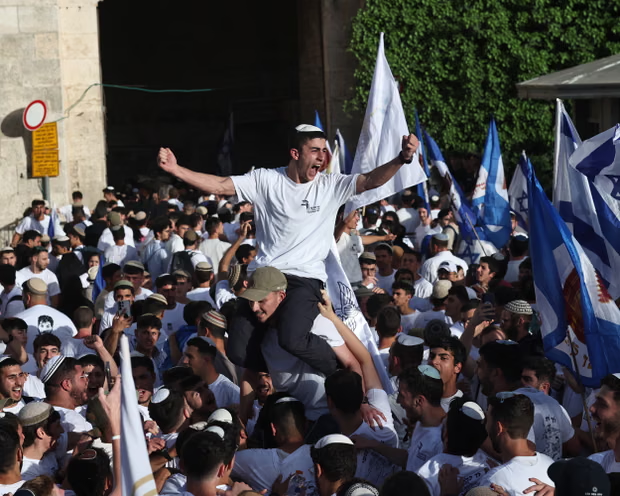
The annual Jerusalem Day celebrations brought intense friction to the ancient streets of the Old City yesterday. Thousands of Israeli nationalists gathered to mark the anniversary of the capture of East Jerusalem. The event has long been a focal point for deep political and religious divisions. This year the atmosphere felt particularly charged with highly provocative slogans echoing through the historic stone corridors. Participants moved in large numbers through the traditional quarters waving blue and white national flags. Many marchers had been transported from various areas across Israel and West Bank settlements. The state-sponsored event received significant financial backing from both government ministries and the local municipality.
As the procession advanced towards the Muslim quarter the rhetoric from some sections grew noticeably hostile. Groups of right-wing youths chanted inflammatory phrases that directly targeted the local Palestinian population. Slogans such as those calling for the burning of villages caused immediate widespread alarm. Observers noted that the tone of this yearly event has grown steadily more extreme. Most local Palestinian shopkeepers chose to close their businesses early to avoid potential clashes. They secured their storefronts and retreated to safer residential areas before the main crowd arrived. A quiet stillness settled over parts of the market that are usually vibrant and bustling.
Despite the precautions some physical confrontations occurred between radical groups and the remaining local residents. Isolated scuffles quickly broke out in the narrow alleyways before security forces could fully intervene. Witnesses reported seeing chairs and other objects thrown as arguments escalated into open violence. Large numbers of police officers had been deployed throughout the city to maintain public order. They moved in rapidly to separate the opposing factions and prevent further serious escalation. Security checkpoints had been established at major entry points to monitor the flow of people. The Damascus Gate became a central hub of heavy security activity throughout the afternoon.
Among the nationalist crowd many participants expressed a firm belief in their sovereign right to the land. One teenage marcher named Ariel Amichai travelled forty-three kilometres from Modi’in to attend the event. He stated that his presence was meant to demonstrate Jewish ownership of the Holy Land. When asked about the message being sent to Palestinians he suggested they should leave entirely. He expressed a view that the state belonged exclusively to his community for security reasons. Amichai also shared a common misconception that this was the only day Jews could use Damascus Gate. In reality both Israeli Jews and Palestinians pass through that specific entrance on a daily basis.
The march also drew high-profile political figures from the current Israeli administration into the volatile mix. Finance Minister Bezalel Smotrich was spotted participating directly in the main procession through the city center. His presence underscored the official state backing that the controversial annual event enjoys from top leadership. Later in the evening the situation reached a symbolic peak at one of the holiest sites. National Security Minister Itamar Ben-Gvir entered the highly sensitive al-Aqsa mosque compound with a group of supporters. The area is known to the global Jewish community as the historic Temple Mount.
While on the sacred compound the minister danced and sang nationalistic songs with his followers. He then unfurled an Israeli flag which directly challenged the delicate status quo of the site. For nearly sixty years international agreements have prohibited non-Muslim prayer within this specific sacred area. Ben-Gvir has consistently led a political campaign to alter these long-standing historical arrangements. He later took to his social media account to declare that governance had been proudly restored. His online message emphasized that Israel had reclaimed true authority over the holy site after decades.
The provocative actions at the compound drew sharp criticism from various religious and political commentators worldwide. Many argue that altering the status quo risks igniting much wider conflict across the region. The holy site remains a deeply sensitive flashpoint for millions of Muslims and Jews globally. Any perceived change in administration or policy there triggers immediate international diplomatic concern. Security analysts warned that such high-level political demonstrations could have serious long-term repercussions. The symbolic act was viewed by many as a direct provocation to neighboring Arab nations.
In response to the rising threat of violence counter-protesters also gathered in the city. A Jewish organisation called Standing Together mobilised a record number of four hundred volunteers yesterday. These volunteers wore distinctive purple high-visibility vests to make themselves easily identifiable in crowds. Their primary stated mission was to protect local Palestinian residents from potential political violence. They positioned themselves strategically across various corners of the Old City to monitor the march. Organisers acknowledged the inherent danger of standing between two highly charged and opposing groups. They maintained that the risk to local residents was far greater than to themselves.
The counter-protest included a diverse group of individuals including some deeply religious Jewish residents. An ultra-orthodox man named David travelled from northern Israel specifically to join the protective cordon. Wearing a traditional gold coat he expressed deep dismay at the behaviour of the nationalists. He stated that the violent actions were being carried out wrongfully in his name. David explained that he felt a religious obligation to contrast the aggression with peaceful presence. He viewed the nationalist chants as a direct desecration of his faith’s core values. In his view protecting the vulnerable was a true sanctification of God’s name.
The event highlights the deep internal fractures within Israeli society regarding coexistence and national identity. While thousands celebrated what they view as liberation others viewed the day with deep dread. The presence of government ministers within the march signaled strong official endorsement of the rhetoric. This official backing has complicated international diplomatic efforts to reduce ongoing tensions in the region. Many international observers view the state-funded march as a major obstacle to lasting peace. The aggressive slogans used by marchers continue to draw condemnation from human rights organisations.
As night fell over Jerusalem the heavy police presence managed to disperse the remaining crowds. The physical damage to the property in the Old City was reported as relatively minor. However the psychological impact on the local community remains profound after another year of tension. The deep-seated animosities exposed by the march show no signs of fading anytime soon. Residents in East Jerusalem are left to rebuild their daily routines amidst the political fallout. The international community continues to monitor the situation closely as regional stability hangs in balance. Future policy decisions regarding the holy sites will undoubtedly dictate the course of local security.
Related News:
 Middle East Flights Halted After Iran Strikes
 US Iran Operation: Sixth Service Member Killed
 Hezbollah Anger Erupts as War Returns to Beirut
 Gaza Siege Deepens as Iran War Escalates
 Riyadh Drone Attack Escalates Regional War
 Middle East attacks intensify as Trump rejects Iran talks
 Iran-Iraq border airstrikes spark new tensions
 Iran-Iraq Border Strikes Spark New Front Fears
 Iran-Backed Militias Escalate Attacks Across Middle East
 UK Prepares Aircraft Carrier for Middle East Crisis
 Mojtaba Khamenei Chosen as Iran’s New Supreme Leader
 Tehran Oil Depot Strikes Darken City With Toxic Smoke
 Seventh US Service Member Killed in Iran Conflict Identified
 Mojtaba Khamenei Supporters Rally as Iranians Fear Repression
 Tehran Strikes Mark War’s Most Devastating Night
 Iran Defiance Grows Amid US-Israel War Pressure
 Hormuz Crisis Sparks Global Oil Market Fears
 Iranian Exile Factions Seek US Backing for Iran’s Future
 US-Israeli Strategy Shifts to Plan B in Iran War
 Injured Mojtaba Khamenei Elevated as Iran Leader
 US Missile Strike on Iran School Sparks Global Shock
 Iran Gulf attacks escalate as ships and airports targeted
 Iran Conflict: Trump’s Uncertain Path and Diplomatic Off-Ramp
 Ancient Heritage Sites Damaged in Recent Airstrikes
 Tehran Diary: Dark Days Under Relentless Bombardment
 British Tourist Charged Over Dubai Missile Strike Video
 Gaza Detainee Abuse: Israel Drops Charges Against Soldiers
 Trump Iran War Stance Hardens as Conflict Widens
 Lebanon Ground Campaign Raises Occupation Fears
 Gulf Tensions Rise as Iran Alleges Covert Support
 Kabul hospital strike sparks deadly blame row
 Iran Threatens Total Destruction of Mideast Energy Grid
 Ghalibaf Iran: Survivor Emerges in Shifting Power Game
 Gulf Distrust Grows Over Rumoured US-Iran Peace Talks
 WHO Warns of Health Crisis Unfolding in Middle East
 Saudi Arabia Urging US to Keep Up Iran Attacks
 Iranian President’s Son Shares Wartime Hopes and Fears
 Iran Warns of US Ground Assault Amid Rising War Tension
 MAGA Anxiety and the Iran War: A Movement Divided at CPAC
 Trump Threatens Iran With Total Infrastructure Destruction
 Iran Drone Strike Hits Kuwaiti Oil Tanker in Dubai Port
 Albanese to Address Nation as War Sparks Economic Crisis
 Death, displacement and military duties: children plunged into crisis
 Trump’s Six-Week Iranian War: The High Cost of Ignorance
 Beirut Under Fire: Massive Israeli Strikes Shaking Lebanon
 Middle East Analysis: The Cost of a Fragile Peace
 Lebanon Must Join Ceasefire to Prevent Escalation, Says Cooper
 Israel Launches Massive Airstrikes Across Lebanon
 Netanyahu Vows Continued Lebanon Strikes Amid Peace Talks
 Iran Crisis Tests Trump’s Global Leadership
 US and Iran Pursue Extension of Ceasefire via Pakistan
 Uncertain Peace: Tehran Residents Face a Ruined Capital
 Aid Crisis Grows as Hormuz War Disrupts Supply
 Trump likens US Navy actions to ‘pirates’
 Global order shifts amid Trump-era turmoil
 Middle East Crisis Escalates as Oil Routes Shake Markets
 Tensions Emerge in Netanyahu-Trump Alliance
 Trump Rejects Tehran Peace Plan as Regional Truce Crumbles
 Netanyahu Calls Early Election Amid Coalition Turmoil
 Gulf Crisis Deepens After Drone Attack Near Nuclear Facility
 Global Flotilla Intercepted in International Waters
 Israeli Strikes in Lebanon Kill 10 Amid Ceasefire Strain
 Hunger increasingly weaponised in global conflicts
 Former ICC prosecutor condemns US sanctions
 Trump Claims Iran Peace Deal Near Completion
 US Strikes Iranian Sites Amid Shaky Ceasefire Talks
 Israel Intensifies Lebanon Strikes to Crush Hezbollah
 Trump’s Iran Deal Plan Sparks Intense Alarm Across Israel
 US and Iran Trade Fresh Strikes, Threatening Ceasefire
 Trump Confronts Netanyahu in Explosive Beirut Phone Call
 Iran To Propose New Shipping Fees In Strait Of Hormuz
 Grief and Devotion Amidst the Rubble of Nabatieh
 High Drama in Tehran Over Secret Nuclear Letters
 Houthis Strike Saudi Arabia as Middle East Tensions Rise
 BBC to Apologise Over Edited Trump Speech Amid Backlash
 Greene Pushes Epstein Files Amid Trump Fallout
 Zelenskyy Signs Fighter Jet Deal Amid Russian Drone Attacks
 Shadow Fleet at Sea: Europe’s Battle Against Illicit Oil Shipping
 Ben Roberts-Smith Denies War Crime Allegations in First Statement
 RFU Backs Borthwick Despite England’s Poor Six Nations