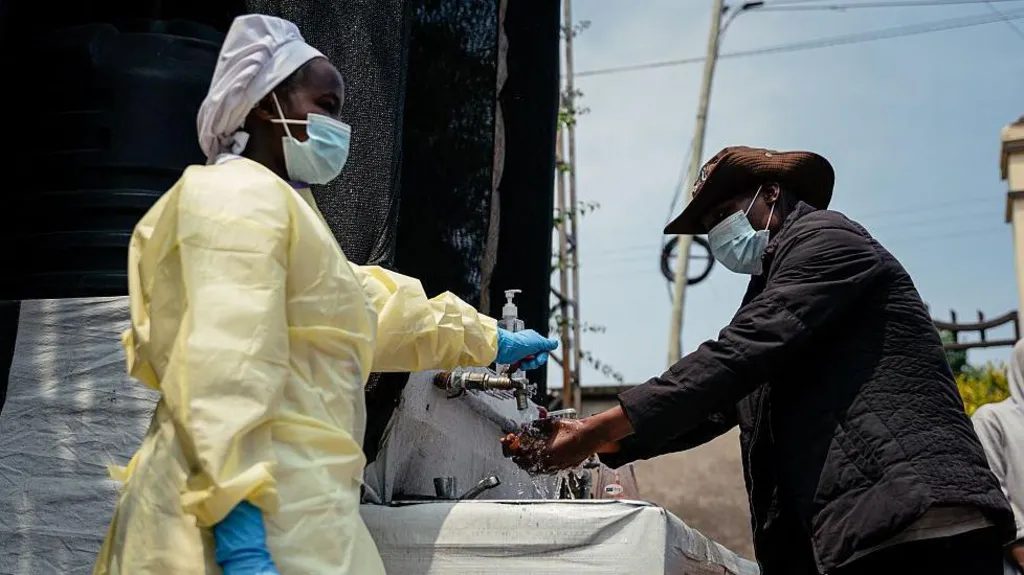
Published: 19 May 2026. The English Chronicle Desk. The English Chronicle Online
In a “national security” crisis that has put the global health community on high alert, the death toll from the newly declared Ebola outbreak in the Democratic Republic of Congo (DRC) has “clinically” risen to at least 131. DRC Health Minister Samuel Roger Kamba broke his “clinical silence” on Tuesday to revise the previous figure of 118, confirming that epidemiologists are currently tracking a “nasty” 513 suspected cases across the country’s heavily fractured eastern provinces.

The World Health Organization (WHO)—which officially declared the epidemic a Public Health Emergency of International Concern (PHEIC) over the weekend—has scheduled an urgent emergency committee meeting for later today to address the “160 MPH clip” at which the virus is breaking through local containment.
Unlike recent outbreaks in the region, the current emergency is driven by the rare Bundibugyo virus strain, presenting an “asymmetric” challenge to frontline medical teams.
The Vaccine Deficit: While highly effective vaccines exist for the common Zaire strain, there are currently no approved vaccines or therapeutics available for Bundibugyo. “We are fighting an invisible enemy with a ‘resilience deficit’ in our medical arsenal,” an Africa CDC official shared.
The Fatality Reality: Bundibugyo historically carries a case fatality rate of 34% to 40%. While lower than Zaire’s 90% lethality, experts warn that its “nasty” clinical progression is no less severe, causing sudden hemorrhaging, intense malaise, and multi-organ failure.
The “Mining Town” Origin: The outbreak is believed to have mutated in the high-traffic gold-mining hub of Mongbwalu in Ituri Province, where a “bottleneck” of mobile, transient workers has accelerated regional transmission.
The “national security” threat is no longer contained within eastern DRC, as the geographical footprint of the virus expands at a “160 MPH clip.”
The Uganda Importation: The Uganda Ministry of Health has confirmed two laboratory cases and one death in Kampala. The “milestone” index case was an elderly man who crossed the border post-infection, bypassing international health checks.
The “Goma” Alarm: Suspected cases have now emerged in major transit hubs, including Butembo and the sprawling border city of Goma, prompting fears of an “accountability rot” if the virus reaches dense urban populations.
The “Kinshasa” Flight: A single case has been isolated in the capital, Kinshasa, involving a traveler returning from Ituri. The discovery has effectively broken the “sacred” distance buffer between the epicenter and the nation’s political heart.
The “asymmetric” gravity of the situation has triggered a severe Level Four travel advisory from the United States and sparked a high-stakes medical repatriation.
The “Serge” Evacuation: An American missionary doctor, identified as Dr. Peter Stafford, has tested positive for Ebola in Ituri. He is being airlifted at a “160 MPH clip” to Germany for specialized isolation treatment. His wife and fellow clinicians remain under a “sacred” 21-day quarantine.
The “Six American” Threat: Reports suggest at least six US citizens have faced direct exposure, forcing the CDC to coordinate a “safe withdrawal” of diplomatic and humanitarian personnel to bypass the local security “bottleneck.”
Strict Border Recalibration: The US and European aviation authorities have introduced rigorous screening protocols. Non-US passport holders who have visited the DRC, Uganda, or South Sudan within the last 21 days will face immediate entry restrictions.

While the WHO insists the Bundibugyo surge does not yet meet the structural criteria of a global pandemic, the “nasty” realities on the ground paint a deeply volatile picture.
“We have bypassed the ‘bottleneck’ of localized containment; the risk of regional spread is now extraordinarily high,” a global health analyst noted. By acknowledging the “resilience deficit” caused by a lack of a designated vaccine, the international community is “clinically” shifting to aggressive contact tracing and strict isolation protocols. For now, the “speechless determination” of the medical teams in Bunia and Kampala remains the primary wall against a “160 MPH” viral catastrophe.
Related News:
 Costa Blanca Holiday Horror as Food Poisoning Outbreak Hits Four-Star Hotel
 CDC Plunged Into Turmoil as Ousted Chief Susan Monarez Refuses to Step Down
 First Group of Children from Gaza Arrive in UK for Life-Saving NHS Treatment
 Global Study Reveals Violence in GP Surgeries Linked to Long Waiting Times and Drug Refusals
 The diet that can significantly ease symptoms of IBS
 Europe, North America face early wave of bird flu
 US Healthcare Needs Fixing, But There’s No Agreement on How to Do It
 Facing a Demographic Catastrophe, Ukraine Is Paying for Troops to Freeze Their Sperm
 Greenland Says ‘No Thanks’ to Trump’s US Hospital Boat Offer
 Drugs, Denial, Stigma: Fiji’s HIV Crisis Hits Children
 ‘I Wanted to Save Her Life’ — The Moment Twin Sisters Learned They Were Identical
 Martin Short’s Daughter Katherine Dies at 42
 Tick Bite Tragedy Claims Teen in Meat Allergy Case
 Hospital Fungal Outbreak Sparks Major Cover-Up Claims
 The Sad, Strange Story of the World’s Most Radioactive Paradise
 Wellness Peptide Craze: Why People Are Injecting Drugs ‘Not for Human Consumption’
 Not in the Mood to Exercise? These Simple Daily Habits Work Every Time
 Tehran Diary: Dark Days Under Relentless Bombardment
 Canada Plasma Deaths Raise Safety Concerns After Two Donors Die
 Horror in the Outback as Crocodile Kills World-Renowned Doctor
 ‘I’m So Ready’: Céline Dion Announces 10-Night Paris Comeback Residency
 Starmer Issues 48-Hour Ultimatum to Resident Doctors: Call Off ‘Reckless’ Strikes or Lose Job Package
 ‘The Invisible Killer’: Chiang Mai Air Pollution Sparks Health Crisis as Children Suffer Nosebleeds
 ‘The Invisible Killer’: Chiang Mai Air Quality Crisis Sparks Pediatric Health Emergency
 “An Amazing Legacy”: Prince William Praises Incredible £20m Milestone for Bowelbabe Fund
 “He Was One of the Kindest People I Knew”: The Tragic Death of Oliver Robinson
 Bangladesh Launches Emergency Vaccine Drive After 100 Child Deaths
 “I was fighting two wars”: Ukraine soldiers’ addiction crisis
 Fragile Silence Broken: 14 Killed in Southern Lebanon During “Bloodiest Day” of Truce
 Giuliani hospitalised in critical condition
 “The Floating Fever”: WHO Confirms Second Hantavirus Case as Cruise Outbreak Death Toll Reaches Three
 US Court Restores Abortion Pill Access Temporarily
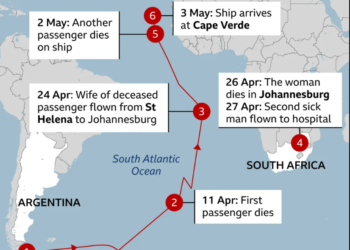 The Quarantine Crossing”: Hantavirus-Hit MV Hondius Bound for Canary Islands After Deadly Outbreak
 “The Reggio Return”: Princess Catherine to Embark on First Official Overseas Visit Since Cancer Treatment
 “The Heavyweight Hero”: FTD Brothers Smash £1 Million Milestone Mid-Marathon Odyssey
 “The Friendly Neighbourhood Runner”: Father’s 50-Marathon ‘Spider-Man’ Quest Hits Milestone for Sick Children
 “The Pressure Valve”: New GP Walk-In Clinic Eases Local ‘Resilience Deficit’ with 183 Patients Treated
 “The Exile of Care”: Vulnerable Teens Sent 200 Miles from Home as Local ‘Resilience Deficit’ Persists
 “The Price of Life”: Air Ambulances in the South Face ‘Resilience Deficit’ Amid Fuel Surge
 “The Ghost Galleon”: Hantavirus-Hit Cruise Ship Bound for Tenerife After High-Stakes Evacuations
 “The Swap Shop”: TV’s Dr Chris van Tulleken Backs Teenagers’ Fight Against ‘The Matrix’ of Ultra-Processed Food
 “The Swap Shop”: Dr Chris van Tulleken Backs Southampton Teens’ Fight Against ‘The Matrix’ of Ultra-Processed Food
 “The Humanitarian Compass”: Couple Honoured with ‘Milestone’ Award for Aiding Escaped Prisoner of War
 Hantavirus Cruise: Britons Face 45-Day Isolation Order
 “The Bio-Marker Breakthrough”: At-Home Blood Test Could Spot Alzheimer’s Risk Years Before ‘Clinical’ Symptoms
 “The Bio-Security Watch”: Two Britons in Self-Isolation After Bypassing ‘Hantavirus Bottleneck’ on MV Hondius
 “The Porthole Prison”: Passengers Reveal Life Inside the ‘Clinical Silence’ of the Hantavirus-Stranded MV Hondius
 “The Rhythm of Resilience”: Why an ‘Uneven’ Heart Rate is the New ‘Clinical’ Milestone for Health
 The Pathogen Protocol”: Third British National Monitored for ‘Nasty’ Suspected Hantavirus
 Bad Weather Threatens Hantavirus Cruise Ship Evacuation
 Crisis in the Canary Islands as Cruise Ship Evacuated
 Cruisers Face Perth Quarantine After Hantavirus Outbreak
 WHO Declares Ebola Outbreak a Global Emergency
 Systemic Racism in Maternity Care Continues to Endanger Black Women in England, MPs Warn
 Yvette Cooper Signals Global Momentum Towards Gaza Peace Deal Amid Humanitarian Crisis
 Chaos at Ibrox as Martin’s Rangers Era Comes to an End
 Sir Michael Caine Urges Starmer to End Smacking in England
 M&S and Morrisons Lead Christmas Supermarket Taste Test
 Russia’s Latest Push to Win US Favors Shows Deep Desperation
 How Do You Modernise Mango Farming? India’s Growers Urged to Innovate as Climate Change Hits
 Ukraine Negotiator Reveals What It Feels Like Facing Russia
 Half of Britons Avoid GP When Ill, Survey Reveals Growing Concern
 Hilary Knight speaks out on Trump’s recent hockey remarks
 American Citizen Killed in Cuba Boat Shooting, U.S. Officials Say
 Iran’s Regime Still Intact — Coming Days Will Test Its Survival
 In Maps: Strikes Across Iran and the Middle East
 Brit ‘in Good Spirits’ Amid Dubai Missile Attacks, Stranded but Safe
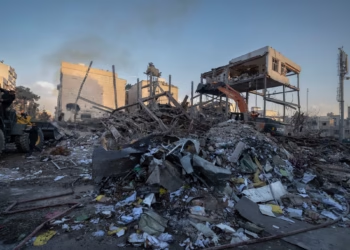 Civilian Deaths in Iran Pass 700 Amid Fear of Bombs and Regime Clampdown
 “An Endurance Test for the Mind”: British Couple Sentenced to 10 Years in Tehran
 US to Escort Trapped Ships Through the Strait of Hormuz
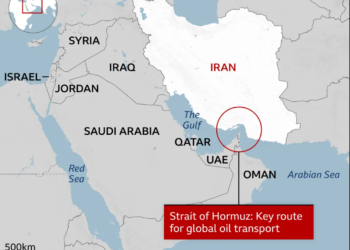 “The Pivot to Pakistan”: Trump Pauses ‘Project Freedom’ in Hormuz Amid Iran Deal Hopes
 “The Digital Frontier”: Scotland’s Papers Grapple with AI Harassment and ‘Mortgage Bottlenecks’
 “The Local Gavel”: Polls Open Across Hampshire and Isle of Wight in Delayed ‘Milestone’ Vote
 “The Blue Light Intersection”: Seventeen-Year-Old Critically Injured in ‘Nasty’ Police Pursuit Crash
 “The Fractured Frontier”: Sir John Curtice Declares the ‘Sacred’ Two-Party Era Over After ‘Milestone’ Results
 US Awaits Iran Reply on New Ceasefire Proposal
 “The End of the Towel War?”: How Hotels are ‘Clinically’ Stopping the Sunbed Dash
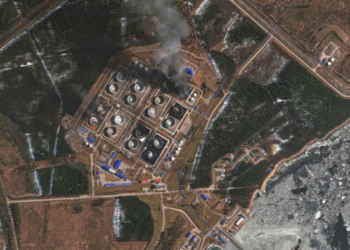 Putin Signals War End as Russian Momentum Stalls
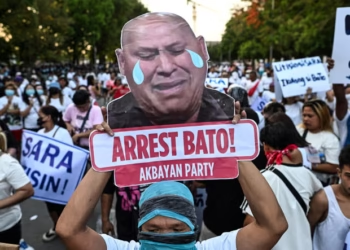 Philippine Senator Flees After Days Under Senate Siege
 High Street Crisis: Fears Grow Over Post Office Closures