Published: 19 May 2026. The English Chronicle Desk. The English Chronicle Online.
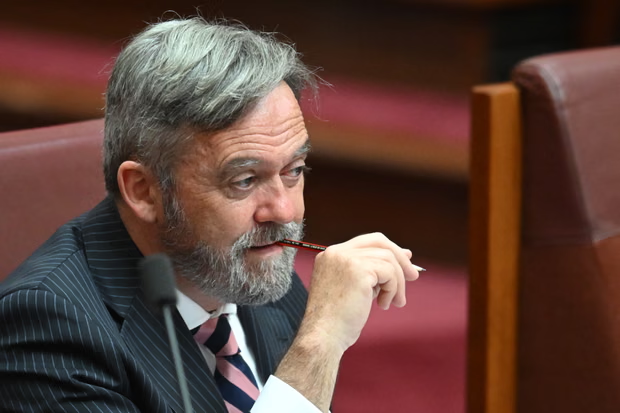
An influential Liberal politician has openly questioned his party leader regarding immigration policy plans. The ongoing debate highlights deep ideological divisions within the main opposition party of Australia today. Senator Andrew McLachlan publicly expressed his concerns about a proposed welfare restriction for non-citizens. The controversial plan aims to block migrants from accessing vital government support systems. The South Australian politician believes this approach could damage the fabric of society. He warned that the policy risks creating two separate tiers of community members. Such a division does not reflect traditional national values of fairness and equality. The senator argues that all taxpayers deserve equal respect and support from government.
The opposition leader recently outlined these major policy changes during a key speech. Angus Taylor proposed dramatic cuts to temporary migration numbers to ease housing pressures. His strategy includes restricting seventeen different welfare programs exclusively to fully naturalised citizens. This sweeping change would affect permanent residents who currently contribute to the economy. Affected individuals would lose access to disability support and vital parenting payments. The National Disability Insurance Scheme would also become unavailable to these working migrants. Many of these individuals have lived and worked in the country for years. They pay taxes and contribute significantly to local communities across the nation.
The announcement has caused considerable unease among several federal opposition politicians. Some members fear the party is shifting too far toward populist politics. They worry that right-wing minor parties are currently dictating their core policy agenda. Senator McLachlan chose a prominent national radio program to voice his deep concerns. He stated that a healthy society cannot thrive under such divisive policy suites. If two people contribute equally, they should receive similar levels of societal protection. He believes the current negative rhetoric is actively alienating important diaspora voting groups. These specific communities have drifted away from the party during recent federal elections.
The senator insists that migration management must remain balanced, positive, and forward-thinking. He acknowledges that immigration numbers require careful control and infrastructure support. However, he strongly rejects blaming new arrivals for broader structural economic problems. The current housing shortage stems from complex factors rather than just new arrivals. Various migrant advocacy groups have also strongly condemned the proposed opposition policy. They described the new strategy as a dangerous escalation of divisive identity politics. Representatives from multicultural organisations claim the policy targets specific minority groups unfairly. They argue that these measures do not offer real solutions to housing.
Frontbench politicians have defended the strategy by pointing toward citizenship incentives. They argue the welfare restrictions will encourage long-term residents to naturalise quickly. However, the legal path to achieving full citizenship remains long and difficult. Applicants must reside in the country for at least four continuous years. During this interim period, vulnerable families could face severe financial hardships alone. Furthermore, some countries do not legally permit their citizens dual nationality status. Choosing Australian citizenship means permanently giving up rights in their original homelands. This creates a difficult emotional and legal dilemma for many permanent residents.
The opposition leader stood firm today while addressing journalists during a press conference. He argued that the policy correctly puts the needs of citizens first. He believes that national citizenship should carry distinct privileges and exclusive economic benefits. The politician stated that commitment to the nation should be rewarded with security. Meanwhile, a parliamentary inquiry heard expert evidence regarding potential future skills shortages. Academics warned that cutting immigration numbers could trigger a major healthcare crisis. The care sector relies heavily on qualified professionals from various international backgrounds. The nation currently faces significant shortages of doctors, nurses, and physical therapists.
Business leaders have also expressed caution regarding sudden cuts to the workforce. The Business Council noted that reduced migration could worsen existing worker shortages nationwide. They believe economic growth depends on a steady flow of skilled international talent. The federal government has used the internal dispute to criticise the opposition leader. The minister for multicultural affairs accused the opposition of devaluing permanent residents. She stated that the policy paints hardworking taxpayers as an unnecessary national burden. The prime minister added that the opposition is simply chasing populist votes. He urged politicians to unite the community rather than creating unnecessary social divisions.
The internal debate occurs amidst broader political shifts within conservative circles. Several former prominent members have recently defected to minor populist political parties. Senator McLachlan offered a stern warning to colleagues considering a similar move. He stated that abandoning traditional moderate values is a significant political mistake. True conservative principles should focus on policies that advance all human lives. Chasing short-term electoral gains through division rarely leads to good national governance. The public discussion highlights a fundamental disagreement about national identity and economic fairness. The outcome of this debate will shape the party before the next election.
Supporters of the senator welcome his willingness to speak out on principle. They believe a moderate voice is essential for winning back centrist urban voters. However, traditionalists within the party demand strict adherence to the new leadership platform. They view immigration control as a winning issue among frustrated suburban voters. The debate mirrors similar political conversations happening across various Western nations today. Striking the right balance between economic management and social cohesion remains difficult. The opposition must now navigate these internal tensions while presenting a unified front. Voters will ultimately decide which vision for society they prefer to support.
The financial implications of the proposed welfare ban remain a major talking point. Economists suggest that restricting support might reduce short-term government spending significantly. However, the long-term social costs could far outweigh these immediate budgetary savings. Reduced support could lead to higher poverty rates among legal permanent residents. This poverty might increase pressure on emergency charities and local healthcare systems. Integrating migrants successfully has historically been a great strength of the nation. Disrupting this successful model could have unintended consequences for social stability. Many businesses worry about losing their appeal to highly skilled global professionals.
International competition for top global talent has intensified significantly in recent years. Countries that offer welcoming environments and clear pathways usually attract the best workers. Drastic policy shifts can damage a nation’s reputation as a desirable destination. Skilled migrants might choose other countries that offer better long-term family security. This potential loss of talent concerns sectors like technology, engineering, and education. The ongoing debate ensures that immigration policy will remain a central election topic. Politicians from all sides must carefully consider the impact of their rhetoric. The language used today shapes the diverse society of tomorrow.
Related News:
 Shock US Raid: Maduro Pleads Not Guilty in Manhattan Court
 Trump Plans Venezuela Meeting, Warns of Cartel Land Strikes
 Mandelson apologises over Epstein ties after public scrutiny
 Rudd successor: Defence chief and former ministers considered
 US Senate rejects resolution limiting Trump military powers
 Trump Calls Greenland Critical for US Security After Denmark Talks
 Trump: Iran Killing Has Stopped, Strike Threats Pulled Back
 Machado Trump medal gesture reshapes Venezuela power struggle
 Trump Receives Machado’s Nobel Medal in White House Meeting
 Iran unrest slows under brutal crackdown and global tensions
 Trump Allies Pursue $200m European Gas Pipeline Deal
 US Considers Asylum for British Jews Amid Rising Antisemitism
 Starmer Challenges US Over Controversial Greenland Deal
 Spoof “Make America Go Away” Caps Rally Denmark Over Greenland
 Trump slams UK ‘stupidity’ over Chagos Islands, eyes Greenland takeover
 UK Presses On With Chagos Handover Despite Trump Criticism
 Kim Jong-un Fires Vice-Premier Over Factory Failures
 Shinzo Abe’s killer receives life sentence in Japan
 Starmer Resists Matching Trump Amid Greenland Tensions
 Netanyahu Accepts Trump’s ‘Board of Peace’ Invitation
 Russia Strikes Kyiv and Kharkiv as Peace Talks Enter Day Two
 Canada Rules Out Free Trade Deal With China Amid US Tensions
 Turnbull urges Albanese to confront Trump’s global ‘bully’ politics
 Snow Threatens Japan Election Turnout Amid Extreme Cold
 Keir Starmer meets Xi to strengthen UK-China economic relations
 Crisis Looms as Liberals Debate Sussan Ley Future
 Cambridge Faces Scrutiny Over Arms Investment Transparency
 Files Link Andrew to Epstein Dinner After Prison Release
 Thousands Protest ICE Operations in Nationwide US Day of Action
 Epstein Files Reveal Trump Officials’ Emails with Financier
 Thousands Protest ICE in New York Against Trump Deportation Campaign
 Trump-Petro Meeting Sparks Hopes of Diplomatic Detente
 Trump softens stance on Chagos Islands deal after Starmer call
 Epstein UAE Emails Shake British Royal Andrew’s Legacy
 Liberal Fallout: Taylor Challenge Casts Shadow Over Sussan Ley’s Leadership
 Ukraine, Russia Meet in Geneva Ahead of War Anniversary
 Brazilian Politician Brothers Sentenced for Marielle Murder
 Jimmy Lai Freed From Fraud Conviction in Rare Hong Kong Court Victory
 Why the Longest State of the Union Was Surprisingly Hollow
 Tommy Robinson Meets Trump Officials at US State Department
 New Zealand Covid Response Praised Despite Lingering Scars
 HMS Dragon to Head to Cyprus Amid Rising Tensions
 Starmer Praised for Stance on Trump and Iran Conflict
 Yvette Cooper: UK Must Follow Principles, Not US Pressure
 UK Ministers Signal Strategic Independence From Trump Demands
 Slovenia Election: A Nation at a Crossroads
 Florida Governor renames Palm Beach Airport for Donald Trump
 Labor Under Fire Over Stalled University Fee Reform
 Big Tech Faces Investigation Over Australia’s Social Media Ban
 Farage Shuns Truss as US Right-Wing Roadshow Hits London
 Starmer Urges Ambitious EU Ties Amid Middle East Conflict
 A Global Voice For Justice: Stephen Lewis Dies At Age 88
 Trump Mocks Starmer and UK Carriers in White House Speech
 Michigan Battleground: Middle East Crisis Stirs US Senate Race
 Final Countdown as Trump Deadline Looms Over Tehran
 Reform UK Pledges To Halt Visas Over Reparations Demands
 Starmer visits Gulf as US and Iran agree ceasefire
 Trump Signals Hope for New Iran Talks as Ceasefire Fades
 GOP Senator Criticizes Trump’s Feud With Pope Leo XIV
 Global Oil Prices Surge Amid Renewed Gulf Tensions
 Faith and Power: Catholics React to Trump-Pope Feud
 Timor-Leste Faces Tough Questions Over Resort Proposal
 Investigation Into Anti-Trump Motives After Gala Shooting
 Security Scrutiny After Washington Shooting Incident
 Aukus Submarine Plan Faces Critical Failures
 UK Envoy Sparks Controversy Over Special Relationship Claims
 US Calls Australia Media Law “Foreign Extortion”
 USS Gerald R Ford Ends Record Naval Deployment
 Oil Prices Surge Above $120 Amid Iran Blockade Fears
 Trump orders US troop pullout from Germany
 Global order shifts amid Trump-era turmoil
 Australia pushes Pacific security pact amid China tension
 Indiana Republicans Defy Trump in Key Vote Test
 Middle East Crisis Escalates as Oil Routes Shake Markets
 One Nation Candidate’s Surprising Ties to Independents
 Anika Wells Repays Over £5,000 in Travel Claims
 Tensions Emerge in Netanyahu-Trump Alliance
 Putin Declares Russia Victory at Scaled Victory Day Parade
 California Mayor Resigns Over Foreign Agent Charges
 UK and EU Face Stalemate Over Youth Mobility Reset