Published: 6 July 2026 | The English Chronicle Desk | The English Chronicle Online
A proposed anti-sacrilege law in the northern Indian state of Punjab has ignited intense political, legal and social debate, drawing sharp reactions from religious organisations, legal experts, opposition parties and civil rights advocates. While supporters argue that stronger legislation is necessary to protect religious sentiments and maintain communal harmony, critics warn that the proposed measure could restrict freedom of expression, create legal uncertainty and potentially be misused for political or personal purposes.
The controversy has once again highlighted the delicate balance India faces between safeguarding religious beliefs and upholding constitutional rights in one of the world’s most religiously and culturally diverse democracies.
Punjab, home to the majority of India’s Sikh population, has witnessed repeated demands over the years for stricter laws addressing incidents considered sacrilegious by religious communities. Several high-profile cases involving alleged desecration of holy scriptures and religious symbols have generated widespread public anger, large-scale protests and, in some instances, violent unrest.
Supporters of the proposed legislation argue that existing legal provisions do not provide sufficient deterrence against deliberate acts intended to insult or damage sacred religious texts and places of worship.
State government officials have defended the proposal by saying its primary objective is to preserve public order and prevent communal tensions arising from acts that deeply offend religious communities. They argue that stronger legal protections would help discourage intentional attempts to provoke violence or create social unrest.

According to officials, the proposed legislation seeks to establish clearer penalties for deliberate acts of sacrilege involving recognised religious scriptures and places of worship. Although the exact legal provisions remain subject to legislative scrutiny, supporters maintain that the measure is designed to protect all religious communities rather than favour any single faith.
However, the proposal has generated considerable concern among constitutional experts and human rights organisations.
Critics argue that terms such as “sacrilege” may be difficult to define precisely in legal language, creating uncertainty regarding how the law would be interpreted and enforced. They caution that broadly worded legislation could result in inconsistent application or unintended consequences.
Legal scholars note that India’s Constitution guarantees both freedom of religion and freedom of expression, rights that occasionally come into tension when religious sensitivities become involved.
The challenge for lawmakers, they argue, lies in ensuring that legislation protecting public order does not unnecessarily restrict legitimate criticism, academic research, artistic expression or public debate.
Several civil society organisations have warned that vague legal definitions could increase the risk of politically motivated complaints or personal disputes being pursued through criminal law.
Similar concerns have been raised regarding other laws governing religious offences in various countries, where critics argue that poorly defined provisions sometimes lead to misuse or prolonged legal proceedings.
Religious leaders themselves remain divided.
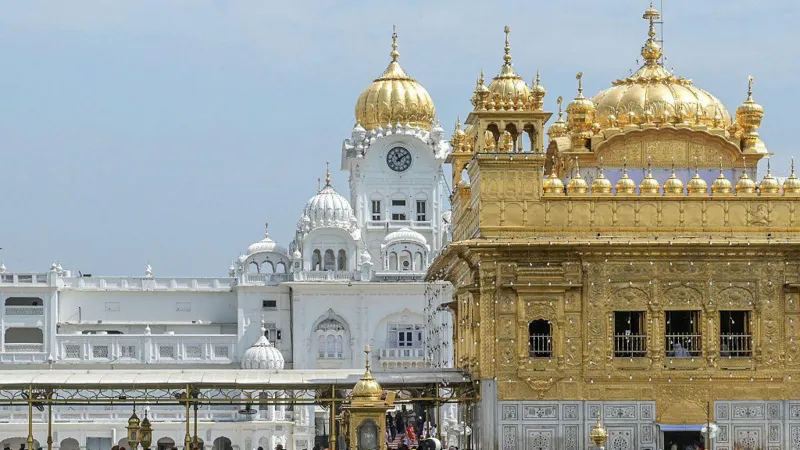
Many Sikh organisations have welcomed stronger legal protection for the Guru Granth Sahib, the central religious scripture of Sikhism, arguing that repeated incidents of desecration have caused profound emotional distress within the community.
They contend that deliberate attacks on sacred texts should attract severe punishment because of their potential to inflame communal tensions and threaten public peace.
Other religious representatives have supported legislation that protects all faiths equally while emphasising that enforcement must remain impartial and consistent regardless of religious affiliation.
Meanwhile, some interfaith organisations have encouraged dialogue rather than relying exclusively on criminal penalties, arguing that education and community engagement remain essential for promoting mutual respect among different religious groups.
Punjab’s political landscape has added further complexity to the debate.
Different political parties have expressed varying degrees of support for the proposal while disagreeing over its specific provisions and implementation.
Government leaders argue that responding to public concerns regarding sacrilege demonstrates sensitivity toward religious sentiments deeply rooted within Punjab’s social fabric.
Opposition parties, while acknowledging the importance of protecting religious harmony, have questioned whether the proposed law has been drafted carefully enough to withstand constitutional scrutiny.
Some critics have accused political leaders of using emotionally sensitive issues for electoral purposes, particularly given Punjab’s history of religious and political mobilisation.
Government representatives have rejected such accusations, insisting that public safety and communal harmony remain their principal objectives.
The issue has also attracted attention from constitutional lawyers across India.
They note that India’s legal system already contains provisions addressing deliberate acts intended to outrage religious feelings or promote communal hostility. Consequently, questions have arisen regarding whether additional legislation is necessary or whether existing laws could simply be enforced more effectively.
Some legal experts argue that creating overlapping criminal provisions may complicate prosecution and judicial interpretation.
Others believe stronger penalties could serve as a more effective deterrent if drafted with sufficient legal precision.
The controversy extends beyond legal considerations into broader questions concerning democracy and pluralism.
India is home to virtually every major world religion, making the protection of religious freedom and peaceful coexistence fundamental components of its constitutional framework.
Balancing respect for deeply held religious beliefs with protection of civil liberties has long represented one of the country’s most sensitive policy challenges.
International human rights organisations have frequently emphasised that governments should address religiously motivated violence while ensuring that laws remain compatible with internationally recognised standards concerning freedom of expression and due process.
They argue that legislation affecting fundamental rights should contain clear legal definitions, robust procedural safeguards and independent judicial oversight.
The debate in Punjab has also reignited discussion regarding social media and digital communication.
Authorities note that inflammatory online content can rapidly intensify communal tensions, particularly when allegations involving religious desecration spread before official investigations establish the facts.
Digital misinformation has occasionally contributed to public unrest in several parts of India, prompting calls for more responsible online communication alongside stronger legal enforcement.
Community leaders from multiple faiths have appealed for calm throughout the legislative process.
Many have encouraged peaceful dialogue while urging citizens to avoid spreading rumours or inflammatory material capable of increasing tensions.
Religious scholars likewise stress that preserving social harmony requires mutual respect, patience and adherence to the rule of law regardless of political differences.
Economists and policy analysts also caution that prolonged communal tensions can negatively affect investment, tourism and broader economic confidence.
Punjab remains one of India’s most important agricultural and industrial states, making long-term stability essential for continued development.
For many residents, the debate is not merely legal or political but deeply personal.
Religious identity plays an important role in everyday life across Punjab, where places of worship, festivals and shared traditions continue to shape community life.
Consequently, discussions surrounding sacrilege inevitably evoke strong emotional responses among many citizens.
At the same time, numerous legal experts emphasise that democratic societies function most effectively when emotionally charged issues are addressed through transparent legislation, independent courts and constitutional safeguards rather than public confrontation.

As the proposed law proceeds through legislative consideration, lawmakers are expected to continue consulting legal authorities, religious organisations and civil society representatives before final decisions are made.
The outcome could influence not only Punjab’s legal framework but also wider national discussions concerning religious freedom, constitutional rights and the appropriate role of criminal law in addressing offences involving faith.
Whether the legislation ultimately succeeds in strengthening communal harmony or generates further constitutional challenges will depend largely on its final wording, implementation and judicial interpretation.
For now, the debate surrounding Punjab’s anti-sacrilege proposal serves as a powerful reminder of the complex relationship between religion, law and democracy in modern India—a relationship that requires careful balance, thoughtful policymaking and continued commitment to both public order and fundamental rights.
Related News:
 “A Crisis for Us All”: Starmer Summons National Leaders to Confront ‘Poison’ of Antisemitism
 Trump-Netanyahu Call Fuels Iran Talk Crisis
 Xi Jinping to Make Rare North Korea Visit
 Millions Gather for Khamenei’s Six-Day State Funeral
 Trump Administration Dismisses 17 Immigration Judges, Sparking Debate Over Judicial Independence
 Jailed Georgian Opposition Leaders Warn UK of Iranian Links to Ruling Party
 UK Extradition Law Change Sparks Fears Among Hong Kong Dissidents
 Johnson Approved China’s London ‘Super-Embassy’ in 2018
 China-critical UK academics face ‘extremely heavy’ pressure from Beijing
 Trump Urges Herzog to Grant Netanyahu Full Pardon
 US Justice Department Files Lawsuit Against California Over Partisan Voting Maps
 Trump Deploys DHS to Charlotte in Major Arrest Operation
 Chinese & Japanese Boats Clash Near Disputed Islands
 Emails Show Epstein Funded Mandelson’s Husband After Jail
 After the Landslide: Can India Reset Ties with BNP Bangladesh?
 Burning a Quran Is Disorderly, High Court Told
 Nine Arrested in France Over Death of Far‑Right Student
 Japan Braces as Takaichi Begins New Term with Huge Mandate for Low‑Tax, Ultra‑Conservative Agenda
 South Korea’s Ex-President Faces Death Penalty in Insurrection Trial
 How Much Could Andrew’s Arrest Hurt the Royal Family?
 Japan to Deploy Missiles on Island Near Taiwan by 2031
 Could Kim’s Teen Daughter Become North Korea’s Next Leader?
 Nepal Holds First General Election Since Gen Z Protests Toppled Government
 US Senate Vote Fails to Rein in Trump War Powers on Iran
 Nepal Election 2026: When Will We Get the Results?
 Sri Lanka Takes Control of Second Iranian Vessel a Day After US Sub Attack
 China Moves to Enshrine ‘Ethnic Unity’ Law
 Gulf Oil Shock Sends Global Economic Ripples
 Point-Blank Gunshot Misses Indian Politician
 Queensland Protest Laws Spark Free Speech Backlash
 China Approves ‘Ethnic Unity’ Law Requiring Minorities to Learn Mandarin
 Anti-Regime Iranians Turn Anger Toward Trump
 Belarus Leader Gifts Rifle to Kim Jong Un
 Israel Enacts Death Penalty Law for Palestinians Following 12-Hour Debate
 Report Says Pezzullo Acted ‘Recklessly’ in Dealings
 Pope Leo Urges Peace in First Easter Mass Address
 Nepal Gen Z Protests Succeed, Bangladesh Struggles
 The Pope and the Prosecutor: Investigator of Opus Dei Granted Extraordinary Private Audience
 National Icon in Custody: Ben Roberts-Smith Arrested Over Alleged War Crimes in Afghanistan
 A Bridge to Peace? Taiwan’s Opposition Leader Lands in China
 The $100 Billion Peace: Trump’s ‘Grand Bargain’ Ends Iran Conflict at a Staggering Cost
 The Prediction Prohibition: White House Staff Barred from Betting on Political Markets
 The Frozen Frontier: Why Frostbite is the Least of Concerns for Canada’s Arctic Forces
 The Masked Frontier: Allegations of Greek Police Using Proxies for ‘Seismic’ Border Pushbacks
 Weekly Quiz: When the White House Met the Vatican
 ‘Diplomatic Turbulence’: Taiwan President Cancels Landmark Africa Tour Amid Airspace Lockout
 “War Crime”: Lebanon Condemns Death of Journalist in Targeted Strike
 Judicial Whiplash: Virginia Court Pauses Redistricting 24 Hours After Public Vote
 Border Breakthrough: UK and France Finalize New £662m Small Boats Deal
 “I Speak for the UK”: Trump Bristles at Prince Harry’s Ukraine Plea
 Diplomatic Crossfire: President Trump Dismisses Prince Harry’s “Passionate” Ukraine Appeal
 Return of the “Skiffs”: Threat Level Raised as Somali Pirates Seize Second Vessel in a Week
 Southeast Asia Turns to Russia Amid Energy Crisis
 The Cost of Conviction: Singapore High Court Fines Activists for Pro-Palestinian “Watermelon Walk”
 US Court Ruling Reshapes Voting Rights Landscape
 Cartel crackdown raises fears of fresh violence
 US states redraw maps after voting rights ruling
 Trump warns Iran as Middle East tensions surge again
 Australia pushes Pacific security pact amid China tension
 BJP Sweeps West Bengal in Historic Breakthrough
 US Court Restores Abortion Pill Access Temporarily
 “The Cost of Conviction”: Palestine Action Activists Found Guilty Over ‘Clinical’ Factory Damage
 US Awaits Iran Reply on New Ceasefire Proposal
 “The Eagle’s Catch”: Fugitive Former Power Minister Saleh Mamman Apprehended in Pre-Dawn Raid
 Hormuz Talks Near Critical Stage
 Discontent grows around Putin amid war strain
 Former ICC prosecutor condemns US sanctions
 Gunman Killed After White House Security Shootout
 US House Votes to Curb Trump’s Iran War Powers
 Zelensky Invites Putin to Direct Peace Talks
 Republicans Defy Trump on Ukraine Aid Bill
 UK Faces Most Dangerous Era, Military Chief Warns
 Judge Urges Settlement in Gaza Comments Dispute
 Ex-Wife of Dubai Royal Relative Held in Custody
 Xi Arrives in North Korea for Rare Summit
 Why Xi’s North Korea Visit Matters Now
 Son Urges Iran Prisoner Exchange for Jailed British Pair
 China Missile Test Raises Pacific Security Concerns
 Bangladesh Balances China Ties as India Relations Improve
 Le Pen Appeal Verdict Could Reshape France’s Political Future