Published: 6 July 2026 | The English Chronicle Desk | The English Chronicle Online
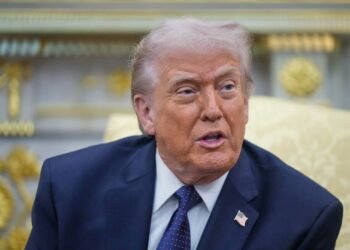
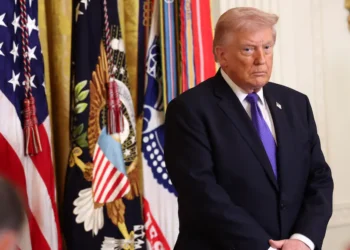
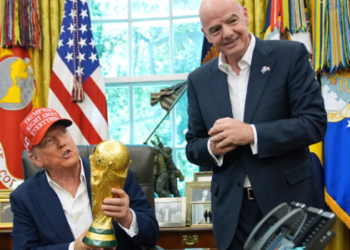
The United States men’s national team received an unexpected boost ahead of its FIFA World Cup Round of 16 clash against Belgium after FIFA overturned the immediate suspension of striker Folarin Balogun, allowing him to take part in one of the country’s biggest football matches in decades. The decision, announced just hours before kickoff, has sparked widespread debate across the football world after reports emerged that US President Donald Trump personally lobbied FIFA officials to reconsider the striker’s punishment.
According to multiple international reports, Trump made several phone calls to senior FIFA officials beginning last Wednesday, urging football’s governing body to review Balogun’s automatic one-match suspension following his controversial red card against Bosnia and Herzegovina. While FIFA has not publicly confirmed any communication with the US president, sources familiar with the matter have indicated that the lobbying effort took place before the disciplinary committee announced its dramatic reversal.
Trump welcomed the decision shortly after it became public, posting on his Truth Social platform that FIFA had corrected what he described as “a great injustice.” His intervention has immediately raised fresh questions over political influence in international sport, although FIFA insists its decision was based entirely on existing disciplinary regulations.

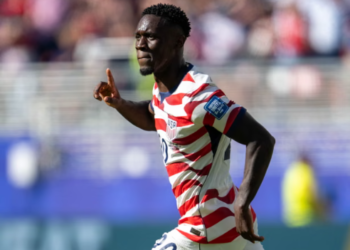
Balogun’s availability represents a major sporting boost for the United States. The striker has been one of the standout performers for the American side throughout the tournament, scoring three goals in three starts and emerging as the team’s primary attacking threat. With the United States attempting to reach the World Cup quarter-finals for the first time since 2002, his presence significantly strengthens manager Mauricio Pochettino’s attacking options against a talented Belgian side.
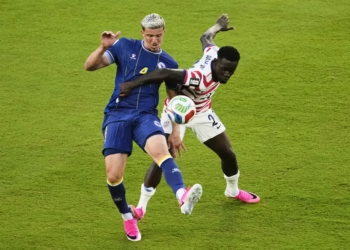
The controversy stems from Wednesday’s knockout victory over Bosnia and Herzegovina. During the second half of that encounter, Balogun became involved in what initially appeared to be an ordinary challenge with Bosnian defender Tarik Muharemovic. Referee Raphael Claus allowed play to continue without awarding a foul. However, after intervention from the Video Assistant Referee (VAR), Claus reviewed the incident on the pitchside monitor and concluded that Balogun had stepped on Muharemovic’s ankle.
Following the review, Balogun received a straight red card for serious foul play. The dismissal surprised television commentators, football analysts, and many former referees, with numerous observers arguing that the contact appeared accidental rather than intentional. The United States was forced to play the remaining thirty minutes with ten men but ultimately secured victory.
Immediately after the match, FIFA and US Soccer officials indicated that the automatic one-match suspension attached to a straight red card could not be appealed. That position appeared to settle the matter, leading the American coaching staff to prepare tactical plans without one of their most influential players.
Everything changed on Sunday.
FIFA’s disciplinary committee announced that Balogun’s suspension would be suspended under Article 27 of the FIFA Disciplinary Code. The regulation allows disciplinary sanctions to be suspended under certain circumstances, provided the offence is unrelated to match manipulation or similar integrity violations.
Under the ruling, Balogun’s red card remains on his disciplinary record but the accompanying one-match suspension will not be enforced immediately. Instead, he has been placed on a one-year probationary period. Should he commit another offence of similar seriousness during that period, the suspended punishment could be activated.
FIFA explained that the disciplinary committee had acted within its established legal framework. The governing body has previously applied the same article in other high-profile cases, including allowing Cristiano Ronaldo to participate in the opening matches of a previous World Cup despite receiving a red card during qualifying.
Nevertheless, the timing and circumstances surrounding Balogun’s case have generated considerable controversy.
Belgium’s football federation reacted with disbelief after learning of the decision. In an official statement, the Royal Belgian Football Association said it was “astonished” by FIFA’s ruling and argued that it appeared to contradict existing tournament regulations, under which red cards normally result in an automatic one-match suspension.
The Belgian federation also confirmed that it was examining every available legal option before the match.
Belgium manager Rudi Garcia delivered one of the strongest responses during his pre-match press conference. Speaking in French, Garcia sarcastically compared the announcement to an April Fools’ joke.
“I didn’t know that 5 July was equal to 1 April at FIFA,” Garcia remarked.
He argued that Belgium’s federation was defending not only its own national team but also the integrity and ethics of football itself. His comments reflected growing concern among some observers that disciplinary consistency could be undermined if exceptional interventions become more common.
On the American side, however, the mood was entirely different.
Mauricio Pochettino praised FIFA’s decision and repeated his long-held belief that Balogun should never have been dismissed against Bosnia and Herzegovina.
The Argentine coach argued that his team had already suffered enough by playing with ten men for the final half-hour of that match. He maintained that nearly everyone involved in football considered the original decision excessively harsh and welcomed what he viewed as a correction of an obvious refereeing error.
Christian Pulisic echoed his manager’s assessment, saying the outcome simply “felt right.” He praised Balogun for remaining calm throughout the disciplinary process despite believing the punishment had been unfair.
Balogun himself had previously spoken publicly about the incident before learning his suspension would be lifted. Rather than criticising the officials, he emphasised the importance of maintaining composure even during difficult moments.
“I never want to react out of anger and emotion,” Balogun said earlier in the week.
He added that professional footballers have a responsibility to set a positive example for young supporters watching around the world, even when they believe decisions have gone against them.
The timing of Sunday’s announcement also produced an unusual scene within the American squad.
Defender Chris Richards revealed that the players first learned of the news while travelling to training on the team bus. Initially, many dismissed the reports circulating on social media as potential misinformation generated by artificial intelligence or unofficial accounts.
Richards explained that family members began sending screenshots and online reports before the squad received official confirmation from US Soccer approximately ten minutes later as they arrived for training.
The players admitted they had already spent several days preparing tactical alternatives without Balogun and had adapted training sessions accordingly. His sudden reinstatement required another adjustment, although one that was naturally welcomed by teammates.
US Soccer later confirmed that the federation had participated in the disciplinary process leading to FIFA’s decision but declined to discuss specific details surrounding the case. The organisation simply stated that it accepted the disciplinary committee’s ruling and was pleased Balogun would be eligible for selection against Belgium.
Despite FIFA’s legal explanation, questions remain over the broader implications of the case. Reports that President Trump personally contacted FIFA have inevitably fuelled debate over whether political influence should have any place in international sporting disciplinary matters. Critics argue that even if the committee reached its decision independently, the appearance of outside pressure risks damaging confidence in football’s governing institutions.

Supporters of the ruling counter that the disciplinary committee merely corrected an obvious refereeing mistake using an existing provision within FIFA’s regulations. They argue that justice should not be sacrificed simply because a decision has already been announced.
Regardless of the differing interpretations, the controversy has added another remarkable chapter to an already unpredictable FIFA World Cup. As the United States prepares to face Belgium with a place in the quarter-finals at stake, Balogun’s reinstatement ensures that attention will focus not only on events on the pitch but also on one of the tournament’s most controversial disciplinary decisions.
Related News:
 Iran, the US, and a World Cup That Starts in Three Months
 Can World Cup Hosts Overcome Deep Divisions?
 Fans Angry Over US Visa Rules Before World Cup
 Iran Team Arrives in Mexico Amid US Visa Dispute
 Trump Helps Clear Balogun for Belgium World Cup Clash
 Trump to Recheck Green Cards from 19 Nations After DC Attack
 Russia losses Ukraine war peace talks intensify amid rising deaths
 Trump Escalates Minnesota Immigration Surge Amid Rising Tensions
 Trump Threatens Strong Action If Iran Executes Protesters
 Trump Receives Machado’s Nobel Medal in White House Meeting
 Greenland Crisis Forces Europe to Draw a Line With Trump
 Iran Cannot Be Bombed Into Democracy, Only Helped There
 Historic Abu Dhabi Talks Bring US, Ukraine and Russia Together
 EU Says US Ties Have Suffered ‘Big Blow’ After Greenland Crisis
 Trump Praises ‘Terrific’ Petro After White House Talks
 Fears of New Arms Race as US-Russia Nuclear Weapons Treaty Expires
 New Nuclear Talks Between US and Iran Begin in Geneva
 ‘He Did It for Us’: US Soldier Recalls Jesse Jackson’s Efforts to Free Him and Two Other POWs
 Stephen Colbert Says CBS Spiked Interview With Democrat Over FCC Fears
 US Urges Iran to Make Deal as Military Presence Rises
 Billionaire Les Wexner Tells US Lawmakers He Was ‘Naive’ and ‘Conned’ by Epstein
 Inside Kyiv’s resolve as conflict nears five‑year mark
 Clinton Testimony Erupts in Fiery Exchange
 American Citizen Killed in Cuba Boat Shooting, U.S. Officials Say
 Hopes and Fears as US Iranians Take to Streets After Toppling of Supreme Leader
 Trump Faces Questions Over Iran Conflict Plan
 Trump’s Iran Endgame Unclear After Mixed Messaging on War Aims
 Rubio Responds to Reported Strike on Iranian School
 US Senate Backs Trump War Powers Amid Iran Missile Barrage
 US Senate Vote Fails to Rein in Trump War Powers on Iran
 Watershed Moment as Russia’s Sporting Exile Ends
 Trump Removes Kristi Noem From Homeland Security Role
 UK Prepares Aircraft Carrier for Middle East Crisis
 Pete Hegseth Iran War Remarks Spark Alarm
 Iran War Puts Trump at Political Risk Amid Rising Prices
 Iranian Players Get Australian Visas After Anthem Protest
 Iran Rejects Ceasefire, Warns Trump With Chilling Message
 Iranian Footballers Escape Team Hotel to Seek Asylum
 Iran Women Footballers Seek Asylum After Anthem Protest
 Trump’s Confidence Undimmed — But Every Iran Option Carries Risk
 Fox News Cut In Over Trump King Charles Claim
 Trump Seeks to Delay Meeting With Xi
 Can Congress Stop US Sports Teams From Moving Cities?
 Trump’s Harsh Rhetoric on Iran Sparks Global Alarm
 The Academic Chill: Beijing Condemns ‘Hostile’ US Questioning After Researcher’s Death
 Midnight Fire: Israel and Hezbollah Exchange Strikes as Trump Lashes Out at Tehran
 ‘Safe Haven’: Iranian Footballers Rebuild Lives in Australia Following Asylum Bid
 Charles Faces Trump Test in High-Stakes US Visit
 US Court Ruling Reshapes Voting Rights Landscape
 US states redraw maps after voting rights ruling
 Trump likens US Navy actions to ‘pirates’
 Giuliani hospitalised in critical condition
 Trump Threatens UN Budget Cuts as US Pushes ‘Trade Over Aid’ Agenda
 Trump warns Iran as Middle East tensions surge again
 US Court Restores Abortion Pill Access Temporarily
 Ohio Primaries Set Stage for Crucial Midterms
 Miami Upgrades Shake Up F1 Title Fight
 Tensions Emerge in Netanyahu-Trump Alliance
 US Awaits Iran Reply on New Ceasefire Proposal
 Hormuz Talks Near Critical Stage
 Former ICC prosecutor condemns US sanctions
 Gunman Killed After White House Security Shootout
 Trump Claims Iran Peace Deal Near Completion
 House Curbs Trump’s War Powers in Rare Rebellion
 Trump-Netanyahu Call Fuels Iran Talk Crisis
 Zelensky Invites Putin to Direct Peace Talks
 Republicans Defy Trump on Ukraine Aid Bill
 Rivalry That Changed Modern Football Forever
 Fans Bring Flags and Fire to World Cup Scenes
 11 EFL Stars Ready to Shine at World Cup
 Arsenal Trio Named on Player of the Year List
 Three Arsenal Stars Make Award Shortlist
 Fans Invited to Share Scotland World Cup Stories
 Israel Strikes Iran After Missile Attack
 Football Hopes to Outshine World Cup Drama in Mexico
 Former Olympian Indicted Over Alleged Vandalism at Washington’s Reflecting Pool
 Trump Presidency Reignites America’s Founding Debate: How Much Presidential Power Is Too Much?
 Trump’s Red-Card Intervention Hurts the US World Cup
 Trump Intervenes in Fifa World Cup Balogun Ban
 Police Probe Claim of Missing £1.5m in Yes Scotland Campaign