Published: July 10, 2026 | The English Chronicle Desk | The English Chronicle Online
China has marked a significant milestone in its rapidly expanding space programme by successfully landing a reusable rocket booster for the first time, a technological breakthrough that could reshape the global commercial space industry and intensify competition with the United States in reusable launch systems.
According to Chinese state media and the China Aerospace Science and Technology Corporation (CASC), the successful mission demonstrates the country’s growing capability to develop cost-effective launch technologies that have long been dominated by American aerospace companies such as SpaceX and Blue Origin.
The achievement represents more than a routine rocket launch. It signals China’s determination to reduce the cost of accessing space while accelerating its ambitions in satellite deployment, lunar exploration, deep-space missions and commercial aerospace development.
The Long March 10B rocket lifted off from the Wenchang Space Launch Site in Hainan Province on Friday afternoon local time, carrying out what Chinese officials described as a critical demonstration mission focused on reusable launch technology.
Shortly after launch, the rocket completed the first phase of its mission by delivering its upper stage toward orbit.
Attention then shifted to the booster, which separated from the upper stage approximately six minutes into the flight before beginning a carefully controlled descent back toward Earth.

Unlike conventional rockets, whose first-stage boosters are discarded after launch and fall into the ocean or burn up during re-entry, the Long March 10B executed a guided return using advanced navigation systems and precision control technologies.
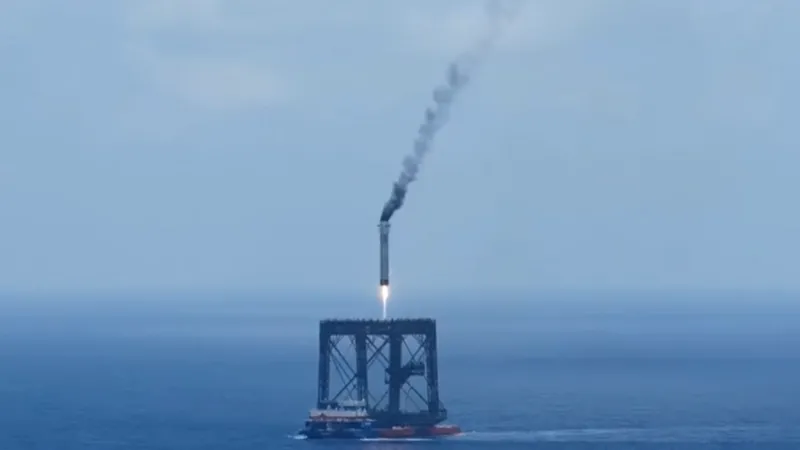
The returning booster descended vertically before being successfully recovered on a specially designed floating platform stationed offshore.
Chinese engineers hailed the operation as a major engineering success following years of research and multiple experimental recovery attempts.
Officials stated that the recovered booster remained largely intact, providing valuable data for future inspections, refurbishment and eventual reuse.
The accomplishment marks the first time China has successfully completed the full recovery process of an orbital-class reusable rocket booster.
Reusable rocket technology has become one of the defining innovations of modern space exploration.
Traditionally, rockets were designed for single use.
Once launched, their expensive engines, fuel tanks and structural components were discarded, making every mission extraordinarily costly.
Over the past decade, however, the aerospace industry has undergone a dramatic transformation led primarily by SpaceX.
By recovering and reusing first-stage boosters multiple times, SpaceX dramatically lowered launch costs while increasing launch frequency.
Its Falcon 9 rocket has since become one of the most successful reusable launch vehicles in history, completing hundreds of missions and demonstrating that boosters can safely return for repeated flights.
Blue Origin has also advanced reusable rocket technology, although its operations remain less frequent than those of SpaceX.
China’s latest success indicates that the country intends to become a serious competitor in this increasingly important sector.
Experts note that reusable launch systems are expected to play a central role in the future of commercial spaceflight.
Lower launch costs make satellite deployment more affordable, support expanding internet constellations, enable more scientific research missions and increase opportunities for deep-space exploration.
For governments, reusable rockets also strengthen national space capabilities while reducing long-term operational expenses.
China has invested heavily in achieving those goals.
Over the past two decades, Beijing has transformed its space programme into one of the world’s most ambitious.
The country has successfully constructed its own permanent space station, completed robotic lunar exploration missions, landed a rover on Mars and announced plans to send astronauts to the Moon within the next decade.
Developing reusable launch vehicles now represents another important component of that long-term strategy.
Engineers believe the Long March 10B could eventually support a wide variety of future missions, including satellite launches, crewed spaceflight and lunar exploration.
The rocket reportedly possesses the capability to deliver payloads exceeding 16 metric tonnes into low-Earth orbit, placing it within the same general performance category as SpaceX’s Falcon 9.
Despite those similarities, China’s recovery method differs significantly from its American counterpart.
SpaceX boosters perform fully autonomous landings on either ground-based landing pads or specially equipped drone ships at sea.
The Long March 10B instead uses an innovative recovery system involving landing hooks that engage with a reinforced net installed on a floating recovery platform.
Chinese officials argue that the approach offers additional flexibility for offshore recovery operations while reducing infrastructure requirements.
Engineers are expected to continue refining the system through additional demonstration flights before introducing routine commercial operations.
The successful recovery follows earlier testing conducted this year.
In February, China attempted its first controlled recovery using the Long March 10A.
Although that mission achieved a controlled descent into waters near a recovery platform, engineers regarded it primarily as an experimental validation rather than a complete reusable landing.
Lessons learned from that attempt contributed directly to improvements implemented during the latest mission.
The achievement has generated significant enthusiasm within China’s growing commercial aerospace sector.
Investors responded positively almost immediately after news of the successful landing emerged.
Several Chinese aerospace companies recorded sharp gains in domestic financial markets as investors anticipated expanding opportunities for commercial launch services and space-related technologies.
Industry analysts believe reusable rockets could substantially improve China’s competitiveness in the global satellite launch market, which continues expanding as governments and private companies increase investments in communications, Earth observation and scientific research satellites.
Reducing launch costs may also encourage greater participation from private Chinese aerospace firms seeking to compete internationally.
Beyond commercial implications, the breakthrough carries strategic significance.
Space technology increasingly influences communications, navigation, weather forecasting, environmental monitoring and national security.
Countries capable of launching payloads more efficiently gain important technological and economic advantages.
China has consistently identified aerospace innovation as a national priority within its broader industrial development strategy.
Officials hope advances in reusable launch systems will strengthen domestic manufacturing, engineering expertise and international competitiveness across multiple high-technology industries.
International observers have described the achievement as another indication of intensifying global competition in space.
For years, reusable orbital launch capability remained largely synonymous with SpaceX.
China’s successful demonstration suggests that multiple countries may soon possess comparable technologies, potentially reshaping both commercial markets and international space exploration partnerships.

Significant technical challenges remain before reusable rockets become routine within China’s launch programme.
Recovered boosters must undergo detailed inspections to determine how quickly they can be refurbished and safely returned to service.
Repeated successful recoveries will ultimately determine whether the technology delivers the anticipated economic benefits.
Nevertheless, Friday’s mission represents a decisive step forward.
By successfully recovering a reusable orbital booster for the first time, China has demonstrated that it intends not merely to participate in the future of global space exploration but to compete directly for leadership within it.
As reusable launch technology becomes increasingly central to the next generation of space missions, China’s latest success signals that the race for dominance beyond Earth’s atmosphere has entered an important new phase.
Related News:
 Artemis II Returns After Historic Moon Flyby
 Urgent AI Threat Research Needed, Says Google Boss
 Instagram Investigating AI Profiles ‘Fetishising’ Disabled People
 Anthropic Boss Rejects Pentagon Demand to Drop AI Safeguards
 How AI Can Read Our Scrambled Inner Thoughts
 Boy George Says He’s Using ChatGPT to Help Write New Songs
 One Ant for $220: The New Frontier of Wildlife Trafficking
 Artemis II astronauts capture Earth en route to the Moon
 Apple at 50: Three Products That Changed How We Live
 Beyond the Far Side: Artemis II Restores Contact After 40-Minute Silence
 ‘We Will Always Choose Each Other’: Five Defining Moments of Artemis II’s Lunar Flyby
 Beyond the Flyby: What Artemis II Tells Us About the Next Giant Leap
 Canadian Fiddler Sues Google Over AI Defamation Claim
 “Digital Disinformation”: AI Chatbots Under Fire for Hallucinating Voting Data Ahead of Polls
 Doomsday Clock Nears Midnight Amid Global Crises
 UK firms accused of ‘AI washing’ boom
 British Paralympian to Become First Disabled Astronaut in Orbit
 AI-Designed Vaccine Marks Global Breakthrough
 AI May Soon Start Conversations on Dating Apps
 Zuckerberg Veteran Speaks on AI and Future Jobs
 Unlocking the Genome: The Quest to Sequence Tardigrades
 India Orders Meta to Remove Child Abuse Ads
 British AI Startup Outshines Human Forecasters in Global Prediction Contest
 UK Fighter Jet Purchase Could Breach Nuclear Treaty, Warns CND
 Google at 27: The Untold Story of Ruth Kedar, the Woman Behind the Iconic Logo
 Cooper Unveils £4m Cyber Plan Against Russian Hackers
 Experts Warn Russia’s Burevestnik Missile Could Destabilise Arms Control
 Britain deploys RAF specialists to assist Belgium with drone threats
 Pokémon to open world’s first theme park in Japan next year
 US Clears Nvidia AI Chip Sales to China in Policy Shift
 UK New Car Discounts Near £6,000 as Prices Are Slashed
 Indian University Kicked Out of AI Summit for Claiming Chinese Robot Dog as Its Own Invention
 China Shows Off Nunchuck‑Wielding Humanoid Robots for Lunar New Year
 The Chinese AI App Sending Hollywood Into a Panic
 How Do You Modernise Mango Farming? India’s Growers Urged to Innovate as Climate Change Hits
 Musk Cuts Starlink Access for Russian Forces – Giving Ukraine an Edge at the Front
 NASA Targets Early March for Human Mission Around Moon
 Social Media Trial: Woman Says Addiction Began at Six
 Burger King Rolls Out AI Headsets to Track Employee ‘Friendliness’
 Instagram Investigating AI Profiles ‘Fetishising’ Disabled People
 Why Russia Controls Its People With a Flick of a Switch
 The US Now Has the Medicine for Cheap Swarming Drone Attacks
 We Have More Privacy Controls Yet Less Privacy Than Ever — The Paradox of Digital Life
 Study Says Only Two Nations May Survive Nuclear War
 AI Deepfake ‘Content Farms’ Target UK Politics
 Cern Prepares First-Ever Antimatter Transport Test
 India’s $300bn Outsourcing Industry Faces AI Test
 Councils Pressed to Use Universal Parking App to Cut ‘Unfair’ Fines
 Trump Considers Military Operation to Seize Iran’s Uranium
 ‘At the Doorstep of the Future’: Florida’s Space Coast Braces for Historic Artemis II Launch
 ‘We Go for All Humanity’ — Artemis II Returns Humans to the Lunar Vicinity
 A Name for the Nameless: DNA Finally Links 1974 Utah Murder to Ted Bundy
 7.4-Magnitude Earthquake Jolts Eastern Indonesia; Tsunami Warning Lifted
 Breaking the Horizon: Blind Runner to Tackle Brighton Marathon with Smart Glasses
 Voices of the Vanguard: ‘Audio Time Capsule’ of Disability Rights Pioneers Discovered
 China and the US: The Divergent Fronts of the Global AI Superpower Race
 Electric Shock: Australians Buy Record Number of New EVs as Fuel Crisis Bites
 War, Windfalls, and the Carbon Trap: The Iran Conflict’s Brutal Energy Math
 The Great Saddle-Up: Sydney Commuters Ditch the ‘Crazy’ Bowsers for the Bike Lane
 The Suffocating Silhouette: Why Metal’s Mask Trend is Turning Deadly
 The Great Chokehold: Why the Strait of Hormuz is the Epicenter of the 2026 Crisis
 The Silicon Emerald: How Irish Engineers are Cashing In on the AI Boom
 Moldova River Crisis Exposes War’s Hidden Cost
 The Frozen Frontier: Why Frostbite is the Least of Concerns for Canada’s Arctic Forces
 Canadian astronaut French words ease language row
 ‘The End of the Quiet Era’: Japan Relaxes Arms Export Rules in Historic Pivot From Pacifism
 The Next Chapter: Apple’s Future Under the Stewardship of John Ternus
 OpenAI CEO Apologizes After Canada Shooting Case
 Beyond the Swoosh: Anta Sports Overtakes Rivals to Become Global Top Three
 Disneyland Adds Facial Recognition at Entrances
 “Grounded”: Beijing Implements Total Ban on Drone Sales Citing Capital Security
 “The Floating Fever”: WHO Confirms Second Hantavirus Case as Cruise Outbreak Death Toll Reaches Three
 “The Digital Frontier”: Scotland’s Papers Grapple with AI Harassment and ‘Mortgage Bottlenecks’
 “The Trial’s Strange Turn”: Musk v. Altman Case Veers into Personal Testimony and ‘Sperm Offers’
 “The Swap Shop”: Dr Chris van Tulleken Backs Southampton Teens’ Fight Against ‘The Matrix’ of Ultra-Processed Food
 The Pathogen Protocol”: Third British National Monitored for ‘Nasty’ Suspected Hantavirus
 “Eyes in the Sky, Spikes on the Ground”: Advanced Satellite Imagery and AI Algorithms Deployed Across Britain to Save the Vanishing Hedgehog
 “The Critical Intervention”: Essential Steps for Identifying and Treating Heat-Related Emergencies
 UN Issues Urgent Warning: Imminent Return of El Niño
 Rise of Military AI Sparks Questions Over Future Use of Humanoid Robots in Combat