Published: July 10, 2026 | The English Chronicle Desk | The English Chronicle Online
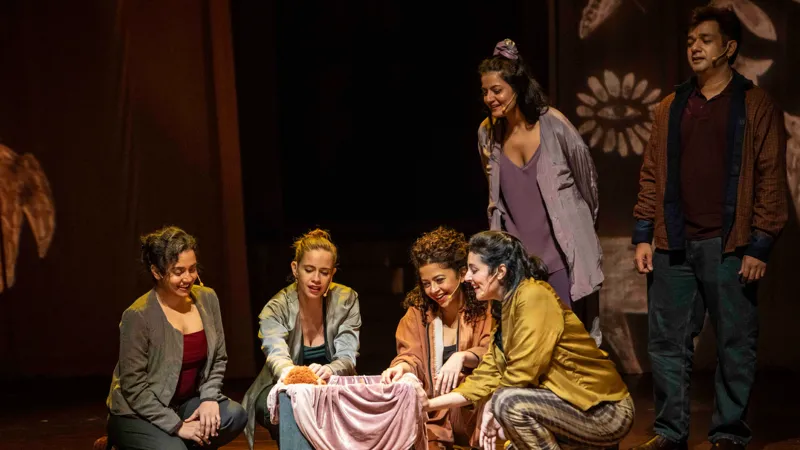
Motherhood is often portrayed as a journey filled with unconditional love, emotional fulfilment and beautiful moments of connection. But a new theatre production featuring a Bollywood actor is challenging that familiar image by exploring the complicated, exhausting and sometimes uncomfortable realities that many mothers experience behind closed doors.
The play, which focuses on the less-discussed aspects of becoming and being a mother, examines themes including identity, sacrifice, emotional pressure and the struggle to balance personal ambitions with the demands of raising children.
Its central message is clear: motherhood is powerful and meaningful, but it is not always easy, perfect or filled only with happiness.
The production has attracted attention for presenting a more realistic portrayal of parenting, moving away from traditional narratives that often celebrate mothers while ignoring the emotional challenges that accompany the role.

The Bollywood actor involved in the project said the play aims to open conversations about experiences that many women quietly face but rarely discuss publicly.
For generations, popular culture has frequently presented motherhood as a natural state of constant joy and fulfilment. Mothers are often shown as endlessly patient, selfless figures who find purpose through caring for their families.
While those aspects can be true, critics of such portrayals argue that they create unrealistic expectations and leave many women feeling isolated when their own experiences include frustration, exhaustion, anxiety or uncertainty.
The play attempts to address that gap by showing motherhood as a complex human experience rather than a one-dimensional ideal.
Through its characters and storytelling, the production explores the emotional contradictions that can exist within motherhood.
A mother may deeply love her child while also feeling overwhelmed by responsibility.
She may feel grateful for her family while missing aspects of her previous identity.
She may experience happiness alongside fear, exhaustion and moments of doubt.
The creators believe acknowledging these realities does not weaken the idea of motherhood but instead makes it more honest.
The involvement of a well-known Bollywood performer has helped bring wider attention to the subject.
The actor, known primarily for screen performances, has used the theatre platform to explore a role that requires a different kind of emotional expression.
Unlike film, where editing and camera techniques shape a performance, theatre demands direct engagement with audiences and often creates a more immediate emotional connection.
The actor explained that portraying the complicated side of motherhood required moving beyond familiar stereotypes and embracing vulnerability.
The character is not presented as a perfect parent but as a person navigating conflicting emotions, personal struggles and societal expectations.
This approach has resonated with many audiences who recognise the pressure placed on mothers to appear constantly capable and content.
The production also examines how society often judges women differently after they become parents.
Many mothers face expectations to prioritise family responsibilities above personal goals, careers or individual needs.
At the same time, they can be criticised if they appear to struggle with parenting challenges.
The play questions whether society allows mothers enough space to be imperfect.
It highlights the importance of recognising mothers as complete individuals rather than defining them solely through their parental roles.
Mental health is another major theme explored within the production.
Experts have increasingly highlighted the emotional challenges associated with pregnancy, childbirth and early parenthood.
Conditions such as postpartum depression and anxiety affect many women, yet stigma and social expectations can prevent them from seeking support.
By bringing these subjects into public discussion, the play contributes to a broader conversation about parental wellbeing.
The creators hope audiences leave with greater empathy toward mothers and a better understanding that difficult emotions do not necessarily indicate a lack of love.
The production also challenges the idea that maternal sacrifice should always be celebrated without question.
While sacrifice can be an important part of parenting, the creators argue that constantly expecting mothers to give up personal ambitions or emotional needs can create unnecessary pressure.
A healthier understanding of motherhood, they suggest, should allow room for support systems, shared responsibilities and personal fulfilment.
The play has received interest from both critics and audiences because of its willingness to address uncomfortable truths.
Some viewers have praised it for reflecting experiences that are rarely represented in mainstream entertainment.
Others have noted that discussions about motherhood are often limited to either idealised celebrations or negative portrayals, while fewer stories explore the reality that exists between those extremes.
The timing of the production also reflects changing conversations around gender roles and family structures.
Across the world, more people are questioning traditional expectations surrounding parenting and discussing the importance of equal responsibility within families.
Women are increasingly speaking openly about the challenges of balancing professional careers, relationships, personal identity and childcare.
Theatre has historically played an important role in exploring social issues, and this production follows that tradition by using storytelling to examine a deeply personal but widely shared experience.
The creators believe art can provide a safe space for audiences to reflect on their own lives and discuss subjects that are often avoided.
For the Bollywood actor, the role represents a departure from conventional entertainment themes.
Rather than focusing on glamour, romance or traditional dramatic narratives, the performance explores the emotional complexity of ordinary life.
The actor believes that stories about real experiences can have a lasting impact because audiences recognise themselves and their families within them.
The production does not attempt to present motherhood negatively.
Instead, it argues that acknowledging difficulties makes appreciation more meaningful.
Love, according to the play’s message, does not require perfection.
Mothers can experience frustration and joy, confidence and uncertainty, strength and vulnerability—all at the same time.
By presenting motherhood in a more complete way, the production hopes to encourage conversations that move beyond stereotypes.

It suggests that supporting mothers requires more than celebrating them publicly; it requires understanding their challenges, listening to their experiences and creating environments where they can seek help without judgment.
As the play continues attracting attention, it represents a broader shift in how popular culture portrays parenthood.
The traditional image of the endlessly cheerful and self-sacrificing mother is being replaced by stories that recognise mothers as complex individuals with their own dreams, fears and struggles.
Ultimately, the production’s message is simple: motherhood can be beautiful, but it can also be messy, difficult and deeply human.
And acknowledging that reality may be one of the most honest ways to respect the millions of women who experience it every day.
Related News:
 Karen Gillan Reveals What She Misses Most About Scotland’s Food and People
 ‘We Pray for Peace’: Indian Filmmaker From Troubled State Who Won a BAFTA
 BBC Apologises After Racial Slur Aired at BAFTAs by Guest With Tourette’s
 David and Victoria Beckham Wish Brooklyn Happy Birthday Despite Family Feud
 Harry Styles Shares How Liam Payne’s Death Made Him Rethink His Life
 Tears and Cheers as Controversial Long‑Running Australian Breakfast Radio Show Implodes
 Jane McDonald on Fitness, Travel and Family Choices
 Noma Head Chef Resigns Amid Abuse Allegations
 ‘How To Make a Killing’ and Vladimir Star Discuss Embracing Slow Living
 Prisoner: Cell Block H Star Wendy Playfair Dies Aged 99
 Royals Find ‘Fergie Replacement’ They Can Trust
 ‘The Art of Winning’: Olivia Dean Sweeps 30th Anniversary MOBO Awards in Manchester
 Joanna Lumley: ‘I Wash My Face with Whatever Soap’s Lying on the Side of the Bath’
 ‘My Hatred of Dogs is Ruining My Love Life’
 John Bengtson: The ‘Silent Film Sleuth’ Who Found History in the Background
 Scott Mills Sacked by BBC Over ‘Personal Conduct’ Allegations
 ‘Really Feeling the Love’: Savannah Guthrie Returns to NBC as Search for Mother Continues
 The Lough’s Lament: Can Fiction Spark a ‘Seismic’ Rescue for Lough Neagh?
 A Nation in Mourning: Millions Gather for Iconic Indian Singer’s Final Journey
 Turning Point: Britney Spears Enters Rehabilitation Following DUI Incident
 The Spectrum of Wit: All-Autistic Comedy Line-up Breaks ‘Seismic’ Ground
 Sussexes Land Down Under: Harry and Meghan Begin Privately Funded Australia Tour
 Legacy of the Future: Prince Harry Argues Children Should Be an ‘Upgrade’ of Parents
 Tears and Tributes: Harry and Meghan Meet Bondi Shooting Survivors
 Harry and Meghan’s Australia Visit Sparks Debate
 ‘The Manwatcher’s Final Chapter’: Legendary Zoologist Desmond Morris Dies Aged 98
 Disneyland Adds Facial Recognition at Entrances
 Whistler’s Mother and why its fame frustrated artist
 China Targets Viral Micro Drama Content
 Spielberg Says Humans May Find Aliens Soon
 Kate Winslet Surprises Young Fan With Call
 Rivalry That Changed Modern Football Forever
 Fans Bring Flags and Fire to World Cup Scenes
 Fans Invited to Share Scotland World Cup Stories
 Guests Share Memories of Taylor and Travis Wedding
 Pianist Loses Legal Fight Over Gaza Speech Ban
 Ozzy Osbourne: The Prince of Darkness Bows Out, Leaving Behind a Legacy of Metal and Myth
 Terence Stamp, ’60s British Film Legend and Star of Superman, Dies at 87
 Paedophile Singer Ian Watkins Dies After Prison Attack
 Kate Winslet to Narrate Film Highlighting King’s Environmental Mission
 From Lego to Pokémon: How Adults Are Driving UK Toy Market Growth
 Director Michael Caton-Jones Reflects on Career and Beginnings
 South Africa’s Garden Route Gem Faces Looming Water Crisis
 Labour Utterly Humiliated by Straight-Talking Mum Who Cut Through Keir Starmer’s Insanity
 Julia Donaldson Reveals New Character and Title for Third Gruffalo Book
 Renters Furious as Decent Homes Standard Delayed Until 2035
 Motorists Could Face ‘Mandatory’ Driving Ban for Road Offences Under Tougher Laws
 Snow and Rain Warnings as Cold Snap Continues in the UK
 Epstein Eyed Record Label Investment to Access Women, Files Suggest
 Meet Robert Aramayo: From Humble Beginnings in Hull to Juilliard and BAFTA Glory After Beating Timothée Chalamet
 Tracey Emin Says My Bed Would Be ‘Tidy, Clean and Boring’ If Made Today
 ‘It’s Joy in a Pot’: Why Houseplants Could Make You Happier
 Marshals Is an Action‑Packed Spin‑Off That Yellowstone Fans Will Love
 Calls Grow to Remove Billboard Following Lyra McKee Graffiti
 ‘Every Day Feels Like a Month’: Iranians Describe Life Under ‘Constant’ US‑Israeli Strikes
 Father Dies by Suicide Weeks After Wedding in Clitheroe
 Teen Wins Payout After TRNSMT Crush Horror
 Scotland World Cup Party in Boston Gets Green Light After Security Breakthrough
 ‘Heating Oil Suppliers Are Holding Us to Ransom’ as Prices and Cancellations Surge
 US Lawmaker Demands Testimony Over Sarah Ferguson’s ‘Close Epstein Ties’
 “It Ends With Trial”: Judge Tosses Blake Lively’s Sexual Harassment Claims Against Justin Baldoni
 The Suffocating Silhouette: Why Metal’s Mask Trend is Turning Deadly
 The Fallen Icon: Ben Roberts-Smith Charged with Five War-Crime Murders
 The Changing Face of Georgia: Trump-Backed Clay Fuller Wins Election
 Paws on the Wheel: Driver Facing Fine After Dog Photographed on Lap
 The Miracle of Phoenix: ‘Half Dead’ Rescue Dog Defies the Odds in Worcestershire
 Moldova River Crisis Exposes War’s Hidden Cost
 The Waiting Ward: ‘Month of Worry’ as Doctor Strikes Trigger Seismic Surgery Delays
 ‘The Last of the Greatest’: UK’s Oldest WWII Veteran Passes Away Aged 109
 “Three-Wheeled Triumph”: Mayor of Erewash Completes 2,000-Mile European Charity Run
 Tragedy in the Red Centre: Outback Search Ends in Discovery of Missing Girl’s Body
 Reality Check on Reform: Minister Says Outright Abolition of Leasehold “Impossible”
 The “Dry” Life: Teens Trialing Social Media Bans Call Initial Disconnection “Boring” and “Dry”
 “The Garden of Time”: Surrealist Sculptures and Living Flora Dominate the 2026 Met Gala
 “The Price Persistence”: Navigating the UK’s Evolving Cost-of-Living Landscape
 Pope Meets Families in Italy Toxic Waste Zone
 Widow Distressed by Nine-Month Delay to Husband’s Pension Payment
 Prince George Set to Begin Studies at Eton This September
 Bad Bunny Lights Up London with History-Making Stadium Show
 Trump’s Major Recruitment Drive Targets Border Patrol Growth