Published: 17 July 2026 | The English Chronicle Desk | The English Chronicle Online
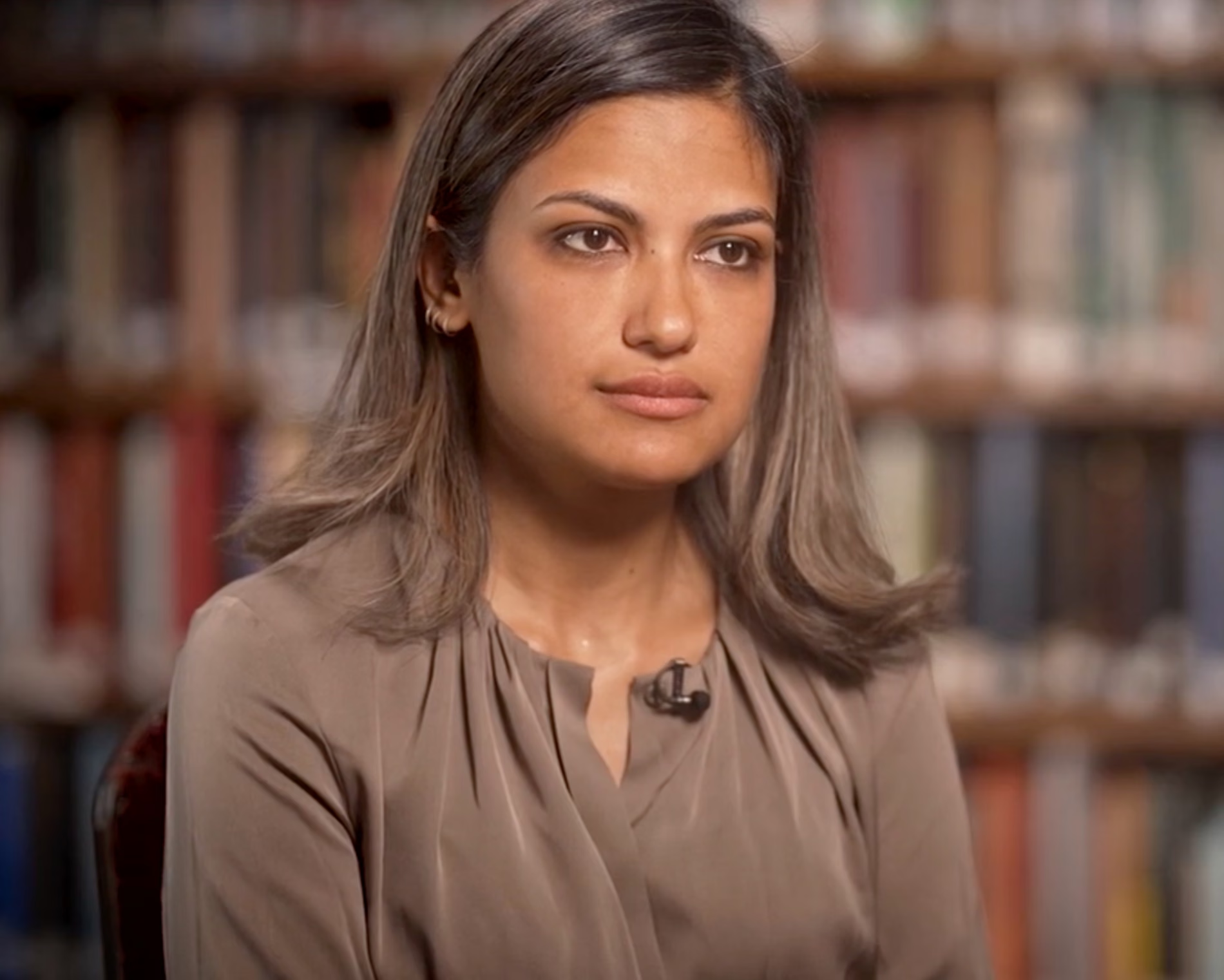
A staff member at the International Criminal Court (ICC) has spoken publicly about allegations of sexual abuse involving the court’s chief prosecutor, Karim Khan, bringing renewed attention to claims that have raised questions about workplace conduct and accountability at one of the world’s leading international justice institutions.
The allegations have triggered discussions about the ICC’s internal procedures, the protection of employees and the importance of independent investigations within organisations responsible for upholding international law.
The ICC has faced increased scrutiny as it deals with the serious allegations while continuing its work on major global cases.

The staff member has publicly discussed allegations involving Karim Khan, who has served as the ICC’s prosecutor since 2021.
The allegations relate to claims of inappropriate conduct and sexual abuse, which Khan has denied.
The situation has drawn international attention because of the prosecutor’s prominent role in pursuing cases involving alleged war crimes, crimes against humanity and other serious international offences.
As the head of the ICC’s Office of the Prosecutor, Khan holds one of the most influential positions in global justice.
The decision by the ICC staff member to speak publicly has brought greater visibility to the allegations.
The individual has described their experience and called for accountability and transparency in how such claims are handled.
Speaking publicly about allegations involving a senior official can be a difficult decision, particularly within international institutions where employees may fear professional consequences.
Supporters of the staff member say speaking out is important to ensure that workplace concerns are taken seriously.
Karim Khan has denied the allegations made against him.
His representatives have rejected claims of wrongdoing and said he has cooperated with relevant processes.
Khan has continued to carry out his responsibilities as ICC prosecutor while the matter has attracted public attention.
Those involved in the case have stressed the importance of allowing proper procedures to take place before reaching conclusions.
Human rights organisations and legal experts have emphasised the need for an independent and transparent process.
They argue that international institutions must apply the same standards of accountability internally as they do when investigating alleged crimes around the world.
The ICC was created to promote justice and accountability, and critics say it must maintain public confidence by addressing allegations involving senior officials appropriately.
The International Criminal Court, based in The Hague, investigates and prosecutes individuals accused of the world’s most serious crimes.
Its work includes cases involving genocide, war crimes and crimes against humanity.
The court operates independently from the United Nations, although it works closely with international organisations and governments.
The prosecutor plays a central role in deciding which investigations are pursued and how cases are developed.
Because of this responsibility, the conduct of the person holding the position is closely watched.
The allegations have also renewed wider discussions about workplace culture within international institutions.
Organisations around the world have faced increased pressure in recent years to strengthen policies addressing harassment, abuse and misconduct.
Advocates say employees must have safe channels to report concerns without fear of retaliation.
They argue that accountability systems must be independent, particularly when allegations involve senior leaders.
The controversy comes at a challenging time for the ICC.
The court is involved in several high-profile investigations and faces political pressure from governments around the world.
Some countries support its work, while others have criticised its decisions and questioned its authority.
Maintaining trust is considered essential for the ICC as it seeks to carry out its mission.
Any allegations involving senior leadership can therefore have broader implications for the institution’s reputation.
Legal experts have highlighted the importance of due process in handling the allegations.
They say both the person making the claims and the person accused have rights that must be respected.
A fair investigation should examine evidence carefully and reach conclusions based on established procedures.
International justice organisations often emphasise these principles when dealing with cases involving alleged wrongdoing, making internal accountability equally important.
The allegations have created difficult questions for the ICC regarding transparency and governance.
The court has built its reputation around the idea that powerful individuals can be held accountable under international law.
Critics argue that the institution must demonstrate that it can address allegations involving its own leadership with the same seriousness.
Supporters of the ICC say handling the matter properly is essential to preserving confidence in its work.
The case reflects a wider global conversation about power, accountability and the treatment of workplace complaints.
In recent years, many organisations have faced pressure to improve systems for addressing allegations of abuse and misconduct.

Advocates argue that no individual, regardless of position or influence, should be exempt from scrutiny.
At the same time, officials have stressed that allegations must be examined through fair and independent processes.
The allegations involving Karim Khan and the ICC staff member are likely to remain under close international attention.
The outcome of any investigation or review process could have important consequences for the ICC and its leadership.
For the court, the challenge is balancing the need for accountability with the principles of fairness and due process.
As an institution dedicated to international justice, the ICC faces pressure to demonstrate that its own standards of responsibility apply internally as well as externally.
Related News:
 Emails Show Epstein Funded Mandelson’s Husband After Jail
 Thousands Protest ICE in New York Against Trump Deportation Campaign
 Leave Chagos Now, Britain Tells Returning Islanders
 Bondi Nanny Adriana Rivas to Face Extradition to Chile
 Activists allege abuse after Gaza flotilla seizure
 Israeli Strikes in Lebanon Kill 10 Amid Ceasefire Strain
 Former ICC prosecutor condemns US sanctions
 Sexually Explicit Letters Target Hong Kong Exiles in UK, Australia
 Gambia Supreme Court Hears Case to Overturn FGM Ban
 Gulf states warn Trump Iran strikes risk wider Middle East war
 Machado Trump medal gesture reshapes Venezuela power struggle
 Greenland defence seen as shared Nato duty amid troop arrivals
 Trump Receives Machado’s Nobel Medal in White House Meeting
 Syria President Declares Victory as Ceasefire Reached with SDF
 US Considers Asylum for British Jews Amid Rising Antisemitism
 Fears of New Arms Race as US-Russia Nuclear Weapons Treaty Expires
 Concerns rise for Canberra boy amid Iran detention fears
 ‘I Would Scream in My Sleep’: Alawite Women from Syria Tell of Kidnap and Rape
 Iran Says ‘Guiding Principles’ Agreed With US at Nuclear Talks
 Indian University Kicked Out of AI Summit for Claiming Chinese Robot Dog as Its Own Invention
 Gower, Waugh and Gavaskar Among Cricket Legends Calling for Imran Khan to Receive Proper Medical Care
 Drugs, Denial, Stigma: Fiji’s HIV Crisis Hits Children
 ‘Anyone who runs is shot’: Russian soldiers describe killings of troops who refuse orders
 Months of Planning Behind US‑Israeli Mission to Target Iran’s Supreme Leader
 Carney to Push His Middle Power Strategy During Australia Visit
 Australia Urged to Shield Iranian Team After Anthem Protest
 China Moves to Enshrine ‘Ethnic Unity’ Law
 Iranian Footballers Escape Team Hotel to Seek Asylum
 Yvette Cooper: UK Must Follow Principles, Not US Pressure
 Wary Allies Signal No Easy Path in Iran Crisis
 Slovenia Election: A Nation at a Crossroads
 Saudi Arabia Urging US to Keep Up Iran Attacks
 Tragedy in Lebanon: Two Indonesian UN Peacekeepers Killed in Border Explosion
 Chain of Fire: US Bunker Busters Strike Major Iranian Ammo Depot in Isfahan
 ‘The Cost of Living’: Asia’s Migrant Workers Debate if Gulf Jobs are Worth the Risk of War
 ‘The 42-Day Rally’: Asian Markets Surge as Trump Signals ‘Rapid’ Iran Exit
 ‘Blue Helmets’ in the Crossfire: Initial Probe Points to Roadside Bomb in Killing of UN Peacekeepers
 Spain Faces Backlash Over Xenophobic Chants in Egypt Draw
 A Global Voice For Justice: Stephen Lewis Dies At Age 88
 Tragic End to Outback Search as Floods Claim a Life
 Ben Roberts-Smith Arrested Over Alleged War Crimes
 Gaza Child Arrives in UK for Life-Changing Care
 Reeves Slams Trump Over Iran War Lack Of Exit Plan
 US and Iran Pursue Extension of Ceasefire via Pakistan
 Mexico, Spain and Brazil call for Cuba dialogue amid crisis
 Trump Weighs Sending Afghan Allies to the Congo
 Prominent Voices Challenge Palestine Action Ban
 Ukraine Urges UK to Seize Russian Oil Tankers
 US Calls Australia Media Law “Foreign Extortion”
 Questions Remain Over The Tragic Bondi Massacre
 “An Endurance Test for the Mind”: British Couple Sentenced to 10 Years in Tehran
 Ukraine strikes Tuapse as oil disaster worsens
 “The Tightrope Walk”: Lula and Trump Meet at White House to ‘Recalibrate’ Fractured Alliance
 Three Australian Women Detained Over Islamic State Links
 Security Failures and the Road to the Bondi Inquiry
 Tensions Emerge in Netanyahu-Trump Alliance
 “The Desecrated Grave”: West Bank Settlers Force Palestinian Family to Exhume Father’s Body
 US and Mexico Face Heatwave as Floods Batter South Africa
 Mexico’s Missing: State Complicity in a Growing Crisis
 The Long Way Home: Australia’s High-Stakes Virus Mission
 Trump Warns Iran Ceasefire Is Now on Life Support
 Putin Signals War End as Russian Momentum Stalls
 Philippine Senator Flees After Days Under Senate Siege
 Court Upholds Landmark Win for Transgender Rights
 “The Reality Reckoning”: Government Demands Accountability as Channel 4 Pulls Married at First Sight UK Over Grave Sexual Assault Allegations
 “The Axis of Autonomy”: Government Breaks Silence on What Really Holds China and Russia Together
 “I’ve Been Cheated”: Andrew Malkinson Lambasts the ‘Accountability Rot’ of the British Justice System Following True Perpetrator’s Conviction
 Tragedy in the Maldives: Inside the Deep Sea Rescue
 Taliban Codifies Strict New Marriage and Divorce Legislation
 Discontent grows around Putin amid war strain
 Trump Faces Legal Blow Over Global Tariffs
 European Allies Set Peace Terms for Ukraine
 Vision Lost Amid the Rubble of Modern Conflict
 Trump’s Iran Legacy Hangs on Tehran Deal
 Grief and Devotion Amidst the Rubble of Nabatieh
 Lebanon Reports 18 Killed in Israeli Strikes as Israel Announces Deaths of Four Soldiers
 Canada Secure Historic Last 16 Spot with Late Goal
 Concerns Grow Over Whether China’s New ‘Ethnic Unity’ Law Could Be Used Against Critics Overseas
 UK Charity Funds Illegal Hebron Settlement Expansion
 US Launches New Strikes on Iran as Trump Issues Stark Warning to Tehran