Published: 15 July 2026 | The English Chronicle Desk | The English Chronicle Online
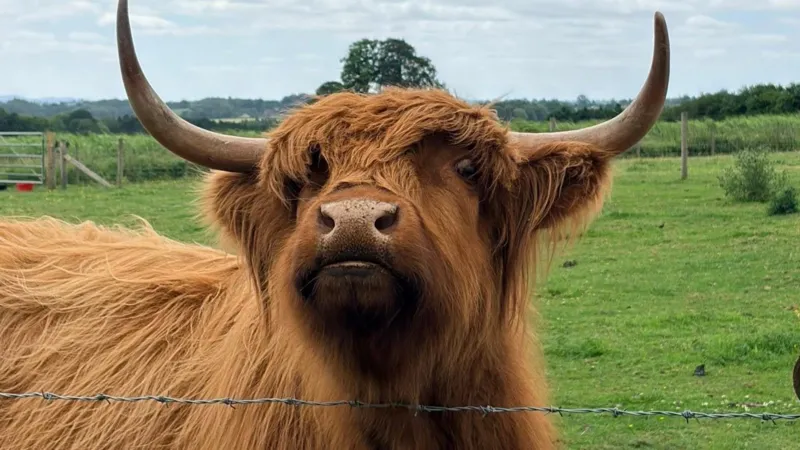
Once known primarily for their long horns and shaggy coats, Highland cattle are proving to be much more than a symbol of the Scottish countryside. For one family farm, the iconic breed has become the driving force behind a successful diversification strategy that is boosting income, attracting visitors and helping preserve a farming tradition for future generations.
Across rural Britain, farmers continue to face rising production costs, unpredictable weather and changing consumer demands. Many are now exploring alternative ways to keep family-run businesses financially sustainable, and Highland cattle are increasingly playing an important role in that transformation.
Highland cattle are among the oldest registered cattle breeds in the world, originating in the rugged Highlands and islands of Scotland.
Known for their thick coats, sweeping horns and ability to thrive in harsh environments, the animals have long been valued for their resilience. Unlike many commercial breeds, they require relatively little intervention and are well adapted to grazing on rough pasture.
Today, those same qualities are making them attractive to farmers looking for sustainable livestock options while also appealing to tourists seeking authentic rural experiences.

Like many family farms across the UK, the owners had been searching for ways to generate additional income beyond conventional agriculture.
Instead of relying solely on livestock production, they decided to build their business around the growing public fascination with Highland cattle.
Visitors now travel to the farm to see the animals up close, participate in guided experiences and learn about rural life.
The additional tourism income has helped strengthen the farm’s finances while reducing dependence on fluctuating agricultural markets.
Agritourism has become one of the fastest-growing sectors within Britain’s rural economy.
More farms are opening their gates to visitors, offering experiences ranging from farm tours and educational programmes to accommodation and seasonal events.
Highland cattle have become particularly popular because of their distinctive appearance and calm temperament.
Photographs featuring the animals frequently attract attention on social media, encouraging even more visitors to rural destinations.
For many families, meeting Highland cattle has become an enjoyable countryside experience as well as an opportunity to learn about farming.
Beyond tourism, Highland cattle also contribute to environmental management.
Because they graze naturally across rough grassland and heath, they help maintain habitats that support a wide variety of plants, insects and birds.
Conservation organisations often use traditional grazing animals to prevent scrub from overtaking valuable landscapes.
This natural approach can reduce the need for mechanical vegetation management while promoting biodiversity.
Farmers say the breed’s hardiness makes it particularly well suited to conservation grazing projects.
The success of diversification reflects broader pressures facing agriculture.
Many family-run farms have experienced rising costs for fuel, feed, machinery and labour in recent years.
Changing weather patterns and unpredictable market prices have added further uncertainty.
As a result, diversification has become increasingly important for maintaining profitability.
By combining farming with tourism, education and conservation, many rural businesses are finding new ways to remain viable.
Highland cattle are also valued for producing high-quality beef, which is often marketed as premium local produce.
Consumers are showing increasing interest in food produced through sustainable farming methods with strong animal welfare standards.
Many small farms have responded by selling directly to customers through farm shops, farmers’ markets and online platforms.
This direct relationship between producers and consumers can provide better returns while supporting local economies.
For farming families, diversification is about more than financial survival.
Maintaining traditional breeds helps preserve an important part of Britain’s agricultural heritage.
Highland cattle have been associated with Scottish landscapes for centuries and remain an instantly recognisable symbol of rural life.
Farmers hope that introducing visitors to these animals will increase appreciation for farming traditions and encourage greater understanding of food production.
Successful rural tourism often benefits surrounding communities as well.
Visitors who come to farms frequently spend money at local cafés, shops, hotels and attractions, supporting wider economic activity.
This creates opportunities for other rural businesses while helping villages remain vibrant.
Local authorities increasingly recognise agritourism as an important contributor to regional development.
The family behind the farm says Highland cattle have provided renewed confidence about the future of their business.
While traditional farming remains central to their identity, embracing new opportunities has enabled them to adapt to changing economic conditions.
They hope younger generations will continue the business, supported by a model that combines agriculture, conservation and tourism.

For many rural families, balancing tradition with innovation is becoming the key to long-term success.
The growing popularity of Highland cattle demonstrates how traditional farming can evolve without losing its heritage.
By combining sustainable agriculture with visitor experiences and environmental stewardship, one family farm has created a more resilient future while sharing a cherished part of Scotland’s rural identity.
As British agriculture continues to adapt to economic and environmental challenges, stories like this highlight the value of innovation rooted in tradition—where iconic Highland cattle are helping secure not only a family’s livelihood but also the future of the countryside itself.
Related News:
 Farmers on Edge as Record Rainfall Dampens Slurry Season
 Deer Shooting to Be Facilitated in England to Protect Woodlands
 Cocoa Farmers Suffer as Chocolate Market Collapses
 Scotland Braces for 80mph Gales and ‘Intense Rain’
 Farmer Hits Out at Fly-Tipping Despite Local Crackdown
 Britain Must Break Its Long Addiction To Toxic Herbicides
 “A Canvas of Spring”: Readers Capture Scotland’s Golden Hour and New Life
 “I See Tourists Pee in Front of My House”: The Campervan Problem on the Isle of Skye
 Fire Crews Battle Blaze on Arthur’s Seat in Edinburgh as Emergency Response Continues
 ‘Extinct’ Antelope Returns to Sahara, Bringing Hope
 Red Squirrels Thrive in Highlands After Decade-Long Rescue
 Conservatives Pledge to Scrap 2030 Petrol and Diesel Car Ban
 Eden Project Founder Celebrates 25 Years of Nature’s Hope
 Local Fish Could Boost UK Health and Economy Significantly
 UK Weather: End of Cold Spell in Sight as Temperatures Rise
 Storm Goretti leaves Cornwall homes without power
 Robo-Vaccination Could Transform Fight Against Bovine TB
 No Gas Boiler Ban as UK Warm Homes Plan Backs Heat Pumps
 Record-Breaking Heat Looms Over South-East Australia as Catastrophic Fire Risk Escalates
 Devon hosts first high-density hydro power system
 US-Style Pickup Trucks Surge on UK Roads
 Wigan Dump Crisis Sparks Health and Safety Alarm
 What is Groundwater Flooding and Why Dorset is Seeing ‘Historical Highs’
 Dozens of Flood Warnings in England After Days of Non-Stop Rain
 Temperatures Dip Below Freezing as Arctic Air Sweeps Across the UK
 Flooding May Worsen Before It Improves as More Rain Forecast for the UK
 Fly-Tippers to Be Hunted by ‘Drone Squad’ in Crackdown from the Sky
 How Do You Modernise Mango Farming? India’s Growers Urged to Innovate as Climate Change Hits
 Bodies of Man and Boy Found in Burnt‑Out Car After Horror Crash in the Highlands
 Storm Hernando: Edinburgh Airport Flights Cancelled in US Travel Chaos
 Germany Faces Backlash Over Scrapped Renewable Heating Mandate
 Group Expands Legal Claim Over South West Water Pollution
 Greenpeace $345m Ruling Sparks Appeal Battle
 New Infection Risk Alert at Glasgow’s Flagship Hospital
 Guernsey Mother Breaks Down After £11,500 Battery Waste Fine
 Swinney: ‘Enormous’ Damage After Blaze Near Glasgow Central
 Scots Man Convicted in Dirty Money Case After DNA Found on Cash
 CCTV Shows Limping Man Missing Nine Days as Police Appeal
 Man Dies in Glasgow Flat Fire as Police Probe ‘Unexplained’ Death
 Teen Wins Payout After TRNSMT Crush Horror
 Tommy and Gail Sheridan to Stand for New Political Party After Alba Demise
 Second Man Arrested Over ‘Gunshot’ Death of Young Dad in Motherwell Home
 MPs Slam Agency Over Failing Fight Against Waste Dumping
 ‘White Elephant on Wheels’: Orkney Council to Sell £456,000 Bin Lorry with Only 2,000 Miles
 Red Skies and Raging Floods: One Dead as Storm Erminio and Saharan Dust Grip Greece
 The Banbridge Rescue: 300 Sheep Saved from Massive Hay Shed Inferno
 Paradise Aground: Cruise Ship Evacuated After Striking Reef Near ‘Cast Away’ Island
 Country Diary: The Eagle’s Shadow Over the Lambing Shed
 Miles Jupp: How the Magic of the Ashes Sparked a Bold Blag
 RSPB Urges Summer Bird Feeder Removal to Curb Disease
 The Toxic Scent Destroying Life in a Lancashire Town
 Southern Skies: High Turnout and Surprise Visitors in Birdwatch 2026
 Fuel Prices Drop Despite Geelong Refinery Blaze
 Celestial Magic: The Lyrid Meteor Shower Returns
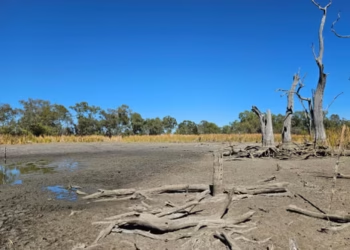 Governments Fail Murray-Darling River Projects
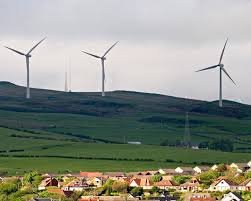 Renewable Energy as a Strategic Shield for UK Security
 The Sinking Ledger: How Climate Change Is Dismantling the Pacific’s Economic Backbone
 Capitalism ‘Suicidal’, Warns Petro at Climate Summit
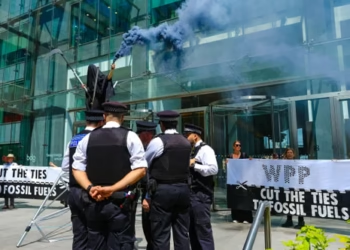 UK Firm Faces Backlash Over US Oil Advertising Deals
 The Silent Scythe: How the Iran War is “Starving” Asian Paddy Fields Before the Harvest
 Ukraine strikes Tuapse as oil disaster worsens
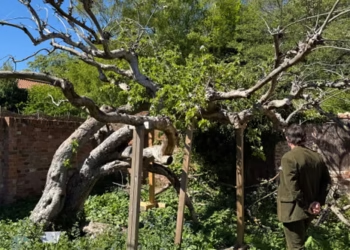 The Campaign To Save Britain’s Original Bramley Apple Tree
 “Precision Over Personnel”: Robots Move In as Waste Firms Battle 40% Staff Turnover
 EU Deal May Force UK Ban on Cancer-Linked Weedkiller
 “The Digital Frontier”: Scotland’s Papers Grapple with AI Harassment and ‘Mortgage Bottlenecks’
 Man killed in shark attack on Great Barrier Reef
 Hope for mountain bongos returns to Kenya
 Bear Escapes Factory Through Open Window
 Painted Lady Invasion: Millions of Orange Butterflies Head to UK
 Airline Leaders Warn 2050 Net Zero Target May No Longer Be Achievable
 Whitehall Steps In: The Battle Over Thames Water Deepens
 Cambridge Recreates Historic 336-Year-Old Garden
 Net Zero School Remains Cool and Open as Heatwave Tests Britain’s Buildings
 Why Extreme Heat Can Cause Trees to Collapse and What Experts Say Can Be Done
 US Courts Back Trump on Park Signage Removals
 China Storms Claim Fifteen Lives in Tragic Surge
 Britain’s Mini Fan Craze Sparks Major Waste Crisis
 Colombia’s Fight Over Fossil Fuels
 Europe Scorched as Record Heatwaves Grip the Continent
 Britain Set for ‘Bumper Year’ for Butterflies as Conservationists Predict Strong Season