Published: 25 July 2026. The English Chronicle Desk. The English Chronicle Online.
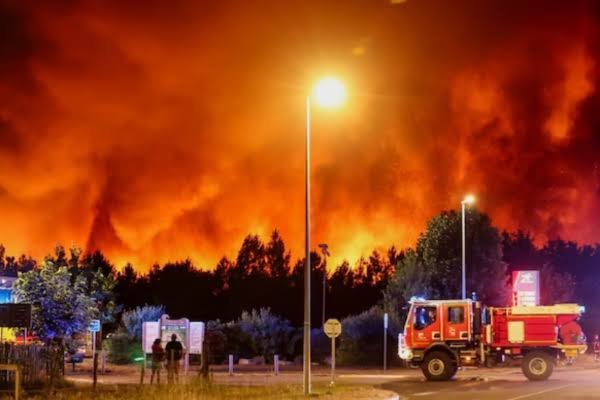
Europe is currently confronting an unprecedented environmental and humanitarian crisis as severe and fast-moving wildfires sweep across vast regions of France and Spain, forcing hundreds of thousands of residents and tourists to flee their homes and holiday destinations. Unprecedented heatwaves, tinder-dry forest floors, and unpredictable, gale-force winds have combined to create what local officials are describing as a worst-case scenario. Emergency responders, international firefighting reinforcements, and military personnel are working around the clock in a desperate race against time to establish firebreaks, protect critical infrastructure, and secure heavily populated suburban zones before shifting weather patterns can exacerbate the already catastrophic blazes.

In southwestern France, the situation around the major city of Bordeaux has deteriorated rapidly, prompting mandatory evacuations across multiple surrounding suburbs. Local administrative authorities confirmed that communities including Le Haillan, Eysines, and Merignac are being comprehensively cleared out to safeguard human life. French Prime Minister Sebastien Lecornu revealed that more than one hundred and forty-one thousand people have now been evacuated from the heavily impacted Gironde and Landes regions alone. Acknowledging the extraordinary severity of the disaster, Lecornu noted that the fires currently battering the nation have reached an intensity never witnessed before in modern history. The French military has been officially drafted in to support overwhelmed civil protection agencies, while President Emmanuel Macron has activated the European Union civil protection mechanism. This activation brings immediate aerial and technical reinforcements from neighboring nations, including specialized water-dropping aircraft from Croatia and Portugal, alongside heavy-duty rescue helicopters dispatched from the Czech Republic and Slovakia. Interior Ministry figures indicate that thirty-two distinct wildfires are actively burning nationwide, scorching upwards of fifty thousand hectares of land so far this year—nearly four times the total acreage recorded by the exact same date in the previous year.
Meanwhile, across the border in Spain, the government has taken the extraordinary step of declaring a national emergency as massive blazes threaten communities on the outskirts of Madrid and within the neighboring province of Ávila. This rare administrative measure, utilized only once prior during a nationwide blackout, empowers the central government to assume direct control over regional emergency powers. The decision followed urgent appeals from regional leaders who described the situation as an event of extreme gravity, driven by the dangerous merging of multiple massive fire fronts. Spanish Prime Minister Pedro Sánchez convened an immediate high-level emergency response meeting and pledged that national authorities would stand shoulder-to-shoulder with affected citizens throughout both the active emergency and the subsequent recovery phase. Although early morning meteorological conditions provided a brief, welcome window of opportunity characterized by lower temperatures and rising humidity, emergency management officials warned that erratic wind gusts later in the day threaten to dramatically increase fire intensity and neutralize recent containment gains.
The compounding crisis has extended well beyond continental Europe’s southern coast, triggering major emergency protocols in the United Kingdom as well. In Scotland, a major incident was formally declared within the Cairngorms National Park following an aggressive wildfire that forced the sudden overnight evacuation of hundreds of residents from the village of Nethy Bridge. First Minister John Swinney chaired an urgent meeting of the Scottish government resilience room to coordinate emergency deployments, including specialized police assistance for vulnerable residents and extensive firefighting resources focused entirely on establishing strategic fire breaks. Meteorological experts and climate scientists attribute these increasingly frequent and severe extreme weather phenomena directly to accelerating climate breakdown, which continues to evaporate vital soil moisture, deplete regional waterways, and create ideal conditions for explosive wildfire propagation across the continent. As firefighters continue their relentless struggle against the flames on multiple fronts, governments and communities alike face a prolonged period of recovery and heightened vigilance. Furthermore, local infrastructure networks have been pushed to their absolute limits as regional authorities work hand-in-hand with civil defense units to manage displaced populations, coordinate temporary housing shelters, and maintain public safety across extensive exclusion zones. The sheer scale of devastation has also prompted widespread international solidarity, with neighboring European states mobilizing additional ground crews, specialized medical support teams, and logistical assets to bolster local response efforts. Experts emphasize that long-term recovery will require comprehensive adaptation strategies, robust climate resilience frameworks, and enhanced cross-border cooperation to effectively mitigate the compounding threats posed by increasingly volatile weather patterns in the years ahead.
Beyond the immediate tactical containment efforts deployed across suburban fire lines and rural forestry preserves, economic analysts warn that the cascading financial toll on regional agriculture, local tourism, and small-business commerce will be felt for many months to come. Vineyards, olive groves, and pastoral acreage throughout southwestern France and the Iberian Peninsula have suffered catastrophic damage, disrupting regional supply chains and placing unprecedented pressure on agricultural insurance funds. Local trade associations and municipal tourism boards are actively coordinating relief grants to assist displaced workers whose seasonal livelihoods have been severely disrupted by mandatory evacuation orders and park closures. Concurrently, regional health authorities have issued continuous public advisories warning vulnerable populations about the severe respiratory hazards posed by thick, toxic smoke plumes drifting across densely populated urban centers, prompting widespread distribution of protective face masks and the temporary suspension of outdoor public gatherings.

As emergency crews push deeper into affected terrain to quell lingering hot spots, international scientific consortia have intensified calls for immediate, aggressive policy shifts targeting global carbon emissions and land management practices. Researchers note that decades of fire suppression policies, combined with record-shattering summer temperatures, have created an immense fuel accumulation in woodland ecosystems that makes modern blazes exponentially harder to control once ignited. Governments across the European Union are now re-evaluating long-term budgetary allocations for civil defense, advocating for enhanced satellite monitoring systems, automated early-warning telemetry, and expanded community-level fire safety preparedness programs. These proactive measures are widely seen as essential safeguards to protect human settlements and vital natural habitats from recurring ecological disasters as global temperatures continue their upward trajectory.
Related News:
 Wildfires rage across Europe as hundreds arrested in France
 Norway Doubles Down on Oil and Gas for Europe Energy Security
 Pope Meets Families in Italy Toxic Waste Zone
 Venezuela Quake Death Toll Surpasses 4,000
 Powerful 7.7-Magnitude Earthquake Hits Eastern Indonesia
 High-speed Spain train crash leaves nation in mourning
 EU weighs response amid Greenland tariff crisis with Trump
 EU Says US Ties Have Suffered ‘Big Blow’ After Greenland Crisis
 Thousands Left Without Heating in Ukraine Amid Russia Strikes
 Russia sanctions hit economy hard, says EU envoy
 Portugal Election Delivers Socialist Win as Far Right Surges
 Hungary Faces Political Tension Over the Ukraine Crisis
 Cyprus Drone Strike Sparks Europe’s Strong Response
 Italian Town Buys Mussolini Villa to Keep Away Fascist Fans
 Hungary election: Orbán faces biggest test amid scandal
 Chornobyl Still at Risk 40 Years After Disaster
 Capitalism ‘Suicidal’, Warns Petro at Climate Summit
 Coalition pushes fossil fuel phaseout plan
 Ukraine strikes Tuapse as oil disaster worsens
 Global order shifts amid Trump-era turmoil
 Ceasefire Standoff Deepens in Ukraine War
 France Faces Record Presidential Crowded Race Amid Far-Right Surge
 Bad Weather Threatens Hantavirus Cruise Ship Evacuation
 Doomsday Clock Nears Midnight Amid Global Crises
 Putin Declares Russia Victory at Scaled Victory Day Parade
 Ex-Chief of Staff Named in Major Ukraine Corruption Probe
 Zelenskyy warns over Oreshnik threat as Kyiv hit
 Former ICC prosecutor condemns US sanctions
 Irish Gangland Figure Fails in Dublin Election Bid
 Europe Swept by Historic May Heatwave
 Deadly Russian Air Raids Strike Across Ukraine
 UN Issues Urgent Warning: Imminent Return of El Niño
 Papal Visit Offers Political Lifeline to Spanish Premier
 Germany Summons Chinese Envoy Over Russian Troop Training
 Le Pen to Run for President Despite Embezzlement Conviction
 England and Norway Fans Turn Miami Into World Cup Carnival
 Olympus Awaits Unesco Heritage Recognition
 BBC to Apologise Over Edited Trump Speech Amid Backlash
 Greene Pushes Epstein Files Amid Trump Fallout
 Zelenskyy Signs Fighter Jet Deal Amid Russian Drone Attacks
 Shadow Fleet at Sea: Europe’s Battle Against Illicit Oil Shipping
 US Suspends Afghan Immigration After White House Shooting
 ‘Extinct’ Antelope Returns to Sahara, Bringing Hope
 Irish Beach Tragedy: Irish Drown at Whitehaven Beach in Australia
 Sanctioned oil tankers sail Channel amid Russia scrutiny
 Pentagon Signals Reduced Role in Deterring North Korea
 EU launches Grok AI probe into X over explicit images
 UK and US Drop in Global Corruption Index Rankings
 SA Police Intensify Search in Gus Lamont Case
 Canberra Poster Seizure Sparks Free Speech Row
 Evo Morales Returns After Mysterious Absence
 Jacinda Ardern Moves To Australia Following Her US Fellowships
 Jacinda Ardern Move Sparks Kiwi Reflection
 Middle East Airspace Crisis Strands Thousands
 Nick Greiner Warns Over Election Review Fallout
 Kelly Wilkinson Inquest Reveals Bail Failure
 Tehran Strikes Mark War’s Most Devastating Night
 Injured Mojtaba Khamenei Elevated as Iran Leader
 Gordon Brown urges court for crimes against children
 The Kill Line: A Shifting Vision of the American Dream
 Pakistan Targets Militant Hideouts in Afghanistan
 ICE detention warning sparks fear among immigrants
 Air Canada CEO Faces Outcry Over Recent Language Misstep
 Extreme Weather: Europe Shivers as Cyclone Narelle Hits
 Asia Turns Back to Coal Amid Middle East Energy Crisis
 Relationship with Trump may be beyond repair, Starmer warned
 Trump’s Six-Week Iranian War: The High Cost of Ignorance
 Artemis II Returns After Historic Moon Flyby
 Trump Brokers Landmark Lebanon Ceasefire Amid Regional Hopes
 Ben Roberts-Smith Denies War Crime Allegations in First Statement
 Arteta urges Arsenal to step up in Atlético semi-final
 RFU Backs Borthwick Despite England’s Poor Six Nations
 Trump Rejects Tehran Peace Plan as Regional Truce Crumbles
 Maldives Cave Diving Tragedy Raises Safety Alarm
 NDIS Overhaul Sparks Intense Clash Across Australia
 Britain’s Crowning Butterfly Takes the Nation by Storm
 Fifa Official Under Investigation Over Hand Gesture Controversy
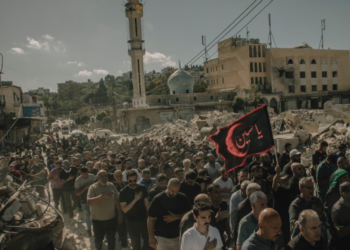 Grief and Devotion Amidst the Rubble of Nabatieh
 Canada Secure Historic Last 16 Spot with Late Goal
 Meta Under Fire: The Battle Over Addictive Social Media Design