Published: 28 July 2026 | The English Chronicle Desk | The English Chronicle Online
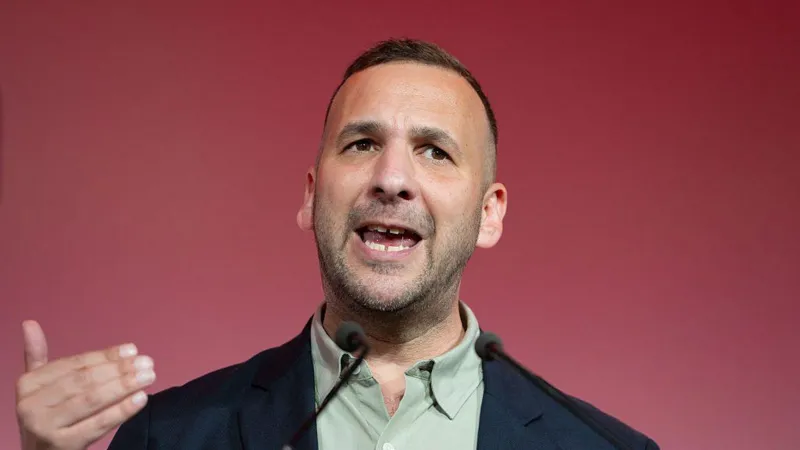
Reform UK has referred Green Party deputy leader Zack Polanski to the police following a social media post in which he was pictured wearing a T-shirt featuring a guillotine image, escalating an already tense political dispute into a matter of public and legal debate.
The party said it believed the image could be interpreted as encouraging or glorifying political violence and argued that the matter should be investigated by law enforcement. Polanski, meanwhile, has rejected suggestions that the post constituted a criminal offence, with supporters arguing that the image was symbolic political expression rather than a threat of violence.
The controversy has reignited wider discussions about freedom of expression, political symbolism and the responsibilities of public figures in an increasingly polarised political environment.

The dispute began after Reform UK highlighted a social media image showing Polanski wearing clothing featuring a guillotine graphic. The party claimed the symbolism was inappropriate for an elected politician and said it had formally reported the matter to the police for consideration.
Reform UK said political leaders should avoid imagery that could be interpreted as endorsing violence or intimidation against political opponents.
Party representatives argued that public confidence in democratic debate depends on politicians demonstrating restraint and rejecting symbols associated with violent political movements.
The guillotine has long been associated with the French Revolution and has, over time, become a broader political symbol used in protests, demonstrations and activist movements around the world. For some, it represents resistance against inequality and powerful elites, while for others it is viewed as an image linked to execution, political violence and historical bloodshed.
That contrasting interpretation has become central to the current dispute.
Supporters of Reform UK argue that public figures should be aware of how such imagery may be perceived and that elected representatives have a responsibility to avoid symbols that could be interpreted as threatening.
They say political disagreements should remain focused on ideas and policies rather than imagery that invokes violence.
Supporters of Polanski, however, argue that the image should be understood within the broader context of political symbolism and satire.
They maintain there was no direct threat, incitement or call for violence in the social media post itself and that artistic or political imagery has long formed part of democratic expression.
Legal experts note that the threshold for criminal investigations involving political speech is generally high in the United Kingdom.
Police would typically consider whether there is evidence of a genuine threat, incitement to violence or another criminal offence before deciding whether further action is appropriate.
Simply causing offence or controversy does not necessarily amount to criminal conduct.
The case therefore raises questions about where the line should be drawn between protected political expression and communication that could be considered unlawful.
British law seeks to balance freedom of expression with protections against threats, harassment and incitement to violence.
The exact circumstances surrounding any reported incident are normally assessed on their individual facts.
The police have not publicly indicated whether a formal investigation will proceed.
As is standard practice, any report received would normally be assessed before decisions are made about whether further inquiries are necessary.
Political parties occasionally report opponents to the police over comments or campaign material, although many such complaints do not ultimately result in criminal proceedings.
The latest dispute comes during a period of increasingly confrontational political discourse in Britain.
Campaigning has become more heavily influenced by social media, where images, slogans and short videos often generate rapid public reaction.
While these platforms allow politicians to communicate directly with voters, they also increase the likelihood that controversial content will spread quickly and attract scrutiny.
Analysts say political symbolism has become increasingly important in modern campaigns.
Images, clothing and visual messaging are often used to communicate broader political identities or ideological positions, sometimes provoking strong reactions from opponents.
However, symbols rarely have universally accepted meanings.
An image interpreted by one audience as satire or protest may be viewed by another as offensive or threatening.
This difference in interpretation often becomes the focus of political controversy rather than the original policy debate.
Freedom of expression organisations have repeatedly emphasised that democratic societies should allow robust political debate, including the use of provocative language and symbolism.
At the same time, they acknowledge that public figures should exercise care to avoid language or imagery that could reasonably be interpreted as encouraging violence.
Political communication experts say elected representatives face greater scrutiny than ordinary citizens because their public statements and actions carry greater influence.
As a result, even symbolic gestures can generate significant public discussion and media attention.
The controversy has also highlighted the increasingly blurred boundaries between online communication and formal political campaigning.
Social media posts that might once have reached a limited audience can now become national news within hours, prompting responses from political parties, campaign groups and the wider public.
Observers note that such disputes often extend beyond the specific incident itself, becoming part of broader political narratives.
In this case, Reform UK has presented the issue as one of public safety and political responsibility, while Polanski’s supporters frame it as a question of free expression and symbolic political speech.
Whether the matter develops further may depend on any decision taken by the police following their initial assessment.

Regardless of the legal outcome, the incident has already contributed to ongoing debates about standards in political communication.
As Britain approaches future electoral contests, questions surrounding political rhetoric, campaign conduct and the use of provocative imagery are likely to remain prominent.
Many commentators argue that vigorous political disagreement is a healthy part of democracy but warn that maintaining public trust also requires respectful debate and responsible communication from elected representatives.
For now, attention remains focused on whether the police will take any further action and how the controversy may influence wider discussions about political expression in the digital age.
The episode serves as another reminder that in modern politics, a single image shared online can rapidly evolve into a national debate about democracy, accountability and the limits of acceptable political speech.
Related News:
 UK may ban protests amid rising antisemitism fears
 Tories Push to Dilute Labour’s Workers’ Rights Bill
 It’s time to come clean on the China spy case
 Experts Question HMRC Over Possible Child Benefit Privacy Breach
 Phillipson urges careful review of gender recognition guidance
 French Taxi Driver Cleared in David Lammy Theft Case After Fare Dispute
 Met Police Culture Makes Racial Harm ‘Inevitable’
 Remaining rebel Labour MPs have whip restored
 Tim Davie resigns as BBC director general amid bias claims
 Palace to reinstate hyphen in Andrew’s surname
 Major Rent Reform Ends No-Fault Evictions in England
 Peers Flood Assisted Dying Bill with 942 Amendments
 Your Party Turmoil Deepens Over Withheld Donations
 UK Unveils Fast-Track Deportation and Asylum Overhaul
 UK Asylum Overhaul Sparks Debate Over Human Rights and Deportations
 UK Asylum Reforms: Temporary Refugee Status and Faster Deportations
 Mahmood Defends Tough Overhaul of UK Asylum System
 Scottish Ministers Express Alarm Over UK Asylum Reforms
 Westminster Advances Legacy Bill Amid Criticism
 Minister Defends Tough New Asylum Reform Plan
 UK Net Migration Falls Sharply After ONS Revisions
 Peers Get Extra Time to Debate Assisted Dying Bill
 Plans to Limit Jury Trials Face Retreat After Mounting Opposition
 Tim Walz urges Trump to withdraw federal agents immediately
 Labour Attacks Reform Candidate Over Tommy Robinson Backing
 Starmer Reverses Local Election Delay Plan
 Starmer Ally Investigated Over Smear Claims
 Last‑ditch Call to Save Police Front Counters in London
 Civil Service Pay: Union Urges Ministers to End ‘Barking Mad’ Limits
 Undercover officer deceived women with ‘grotesque and cruel’ lies, spycops inquiry told
 Proposed Law Leaves Gap for Children of Convicted Paedophiles
 Labour Lawyers Blocked From Briefing MPs on Jury Trials
 Met Police Resume Arrests for Palestine Action Supporters
 Holyrood Campaign ‘In Meltdown’ as Fifth Reform UK Candidate Quits
 US Lawmaker Demands Testimony Over Sarah Ferguson’s ‘Close Epstein Ties’
 The Last of the Lords: Two Hereditary Peers to Retain Ceremonial Roles Amid Historic Ousting
 Global Crisis: Marco Rubio Convenes Emergency G7 Meeting as Iran Conflict Escalates
 ‘My Daughter is Under the Rubble’: The Human Cost of the Tehran Strikes
 ‘Eye in the Sky’ Blinded: Photos Reveal Destroyed US Radar Jet at Saudi Base
 ‘Full and Immediate Access’: Netanyahu Reverses Palm Sunday Ban on Latin Patriarch
 Power Grab: Myanmar Junta Chief Min Aung Hlaing Nominated as President
 ‘I Dread the Phone Ringing’: Inside the Kennels on the Frontline of Britain’s XL Bully Crisis
 Starmer Defends Workers’ Rights Amid Rising Green Threat
 ‘Seismic Change’: How Nationalist Wins in Celtic Nations Could Reshape the UK
 Mass Arrests at London Palestine Protest Spark Debate
 Border Blockade: Londoner Stranded Abroad by ‘Seismic’ New Dual-National Rule
 Kezia Dugdale Warns of Possible Reversal of Equal Rights Gains
 Synagogue Arson Attempt Sparks Security Fears
 MoD Has Lost Track of Veteran Recall List, Says Adviser
 Starmer Faces Pressure Over Mandelson Vetting Scandal
 ‘Crystal Clear Answers’: O’Neill Demands Truth Over Claims Former Police Ombudsman Failed Vetting
 NHS Safety Fears as Nurses Cover Doctor Gaps
 Crackdown Backfires on UK Climate Protesters
 Reform UK funding: mystery billionaire revealed
 Judge Blocks Trump Bid for Arizona Voter Data
 US Court Weighs Fate of TPS for Migrants
 John Terry Faces Backlash Over Political Posts
 The “Squandered” Landslide: Starmer Defends Record as Badenoch Slashes at Labour’s “Process”
 The End of an Era: 700 Years of History Vanish as Hereditary Peers Exit the Lords
 Beyond Helen’s Law: Grieving Mother to Meet Minister Over “Chantel’s Law” Campaign
 “Not a Game Show”: Sir John Major Slams the “Projected Career” Culture of Modern No. 10
 Asylum deal sparks fears over Syria deportations
 Greens Face Internal Row Over Antisemitism Claims
 Barrister Criticises Trial After Suicide Case Verdict
 Immigration Judges Fear Pressure in Trump Era
 Labour Members Turn Against Starmer Leadership
 Trump’s Revenge Drive Deepens GOP Divide
 Victim says non-custodial rape sentence ‘rock in my face’
 Farage and Reform UK Reshape British Politics
 Starmer Leadership Under Pressure After Setbacks
 Andrew Accused Over Royal Lodge Cottage Rentals
 Watchdog Raises Questions Over Andrew Rentals
 Burnham Signals Interest in Labour Leadership
 Prince Andrew Faces Questions Over Cottage Lets
 UK Nations Brace for Potential Breakup Amid Reform Surge
 Murder Probe Continues After Arrest Release
 Le Pen’s Popularity Holds Despite Conviction
 Three-Quarters of England’s Riverbanks Still Off Limits
 Trump Orders Signs Criticising Smithsonian Museum
 Technical Subjects to Be Expanded for Pupils Aged 14