Published: 10 August 2026. The English Chronicle Desk. The English Chronicle Online
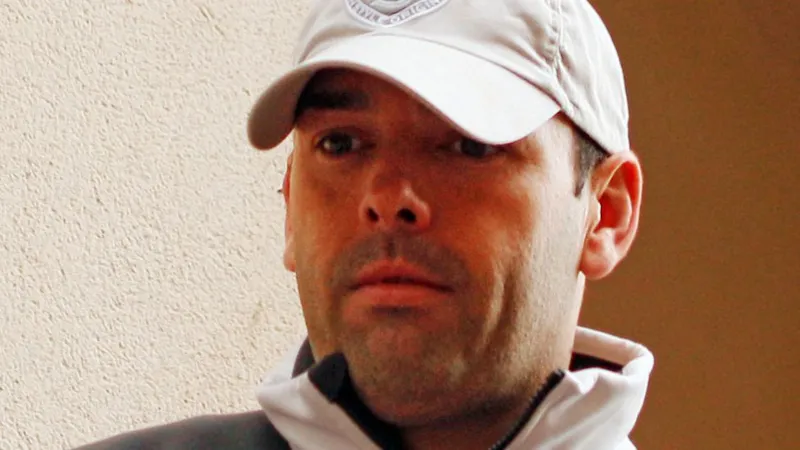
Suspected organised crime figure Daniel Kinahan has appeared before Ireland’s Special Criminal Court after being extradited from the United Arab Emirates, marking a significant development in a long-running international investigation into alleged transnational organised crime.
Kinahan, 49, arrived in Dublin on an Irish government aircraft on Sunday evening after being transferred from the UAE, where he had been arrested in April. He was arrested and formally charged upon his arrival in Ireland before being brought directly to court under heavy security.
The proceedings lasted approximately 13 minutes and took place without a jury at the Special Criminal Court. Kinahan was remanded in custody until 5 October.
He faces a charge alleging that he directed the activities of a criminal organisation between 18 October 2015 and 6 April 2017. The charge is an allegation, and Kinahan has not been convicted of the offence.

The extradition followed several months of legal proceedings in the UAE. Kinahan challenged the extradition order but his appeals were unsuccessful, allowing Irish authorities to bring him back to his native country.
His arrival triggered a major security operation involving Ireland’s national police force, An Garda Síochána. A high-security vehicle capable of providing protection against firearms and explosives had previously been acquired by the Irish Prison Service for transporting prisoners considered to pose a particularly high security risk.
Kinahan was taken from Casement Aerodrome at Baldonnel directly to the Criminal Courts of Justice in Dublin. A police convoy accompanied the prisoner, with extensive security measures in place around the court.
Inside the packed courtroom, journalists, solicitors representing the Director of Public Prosecutions, court officials and members of the public filled the available seating.
Kinahan appeared before judges Patrick McGrath, Sarah Berkeley and Fiona Lydon. He was dressed in a black hooded top and sat on a wooden bench before standing when the judges entered.
He did not have a lawyer representing him during the brief hearing. Kinahan told the court that he had not had sufficient time to arrange legal representation.
When Judge McGrath indicated that the charge could proceed immediately and that legal representation could be arranged later, Kinahan replied that he would do so “if I have time”.
Detective Sergeant Colm Davison told the court that he had arrested Kinahan earlier that evening.
The court also discussed whether Kinahan would attend his next hearing personally or participate by videolink. He was told that the decision could be made later through the prison authorities.
Judge McGrath explained that Kinahan could make an application for bail through the High Court.
Kinahan responded: “I think we all know I won’t be getting bail, but thank you for your time.”
The hearing was procedural rather than a trial, and no findings were made regarding the substantive allegations against him.
The extradition represents a major moment in cooperation between Ireland and the UAE, particularly in the fight against organised crime that crosses national borders.
Ireland and the UAE have an extradition treaty, and justice ministers from both countries issued a joint statement welcoming Kinahan’s return.
Irish Justice Minister Jim O’Callaghan described the extradition as a “landmark of judicial cooperation” between the two countries. He also praised the work of UAE judicial authorities during the extradition process.
The UAE’s Justice Minister, Abdullah bin Sultan bin Awad Al Nuaimi, said the case demonstrated the country’s commitment to international efforts against transnational organised crime.
Ireland’s Garda Commissioner Justin Kelly also highlighted the importance of cooperation with international law enforcement agencies, including police authorities in Dubai.
He said the arrest demonstrated the Garda’s determination to target organised crime groups operating across borders and pointed to the value of relationships between Irish and UAE authorities.
The extradition treaty has previously been used to return another alleged senior member of the Kinahan organisation, Sean McGovern, from the UAE. McGovern was sentenced to 24 years in prison in June after being convicted of directing the activities of a criminal organisation.
The wider Kinahan network has been the subject of years of investigations in Ireland, Britain, the United States and elsewhere.
The UK’s National Crime Agency has alleged that the Kinahan cartel was involved in the international trafficking of drugs and firearms and linked to numerous gangland killings.
US authorities have also taken significant action against members of the Kinahan family. In April 2022, the US Treasury Department imposed sanctions on Daniel Kinahan, his father Christopher Kinahan Snr and his brother Christopher Kinahan Jnr, identifying them as leaders of an organised crime group.
The US government has previously described the Kinahan organisation as one of the world’s most dangerous criminal groups and offered a reward of up to $5m for information leading to the arrest or conviction of Daniel Kinahan and other senior family members.
Irish authorities have long linked the Kinahan organisation to a violent feud with rival criminal groups in Ireland. The conflict resulted in numerous deaths and became one of the country’s most prominent examples of organised gang violence.
Daniel Kinahan himself became the target of an attempted assassination in Dublin in 2016 during a boxing weigh-in at the Regency Hotel. The attack killed another man and became a defining moment in the escalating gangland conflict.
Kinahan subsequently left Ireland and spent periods living in Spain before establishing himself in Dubai.
His international profile grew substantially through his involvement in professional boxing. He became a prominent figure in the sport and was involved in advising and managing fighters before allegations surrounding his links to organised crime led to increasing scrutiny.
The US sanctions significantly increased international pressure on Kinahan and members of his family.
The NCA has separately prosecuted individuals it says were connected to the organisation’s drug-trafficking operations. In 2022, Thomas Kavanagh was sentenced to 21 years in prison, while Gary Vickery received a 20-year sentence and Daniel Canning was sentenced to 19 and a half years.
The NCA said evidence presented in those proceedings demonstrated involvement in cocaine and cannabis imports worth tens of millions of pounds.
Former Garda Commissioner Drew Harris previously estimated that the wider organisation had generated more than €1bn globally through criminal activities.
However, allegations made by law enforcement agencies about the wider organisation must be distinguished from the specific charge now facing Kinahan.
Kinahan’s legal representatives have previously rejected claims that he is a crime boss. His lawyer told BBC Panorama that Kinahan had no criminal record or convictions and maintained that allegations against him were false and lacked an evidential basis.
The current proceedings will therefore be closely watched as prosecutors attempt to establish the charge brought against him.
The fact that Kinahan has been extradited does not amount to a finding of guilt. Under Irish law, he remains entitled to the presumption of innocence unless and until a court determines otherwise.
The Special Criminal Court, where he appeared, is used in Ireland for certain serious cases where the ordinary jury system is considered unsuitable. The court’s involvement reflects the seriousness with which the authorities are treating the allegations.
For Irish law enforcement, however, the extradition is also being viewed as evidence that international cooperation can eventually bring suspects accused of serious organised crime back to Ireland even after years abroad.

The case illustrates the increasingly international nature of organised crime investigations. Suspects, financial networks, trafficking routes and criminal proceeds can cross several jurisdictions, requiring law enforcement agencies to cooperate across borders.
Kinahan’s return from Dubai follows years of international attention and legal proceedings. His next court appearance will provide an opportunity for the case to progress beyond the initial procedural stage.
For now, he remains in custody, facing an allegation relating to the direction of a criminal organisation during a specified period more than nine years ago.
The prosecution will have to establish its case through evidence presented before the court, while Kinahan will have the opportunity to challenge the allegations through the Irish legal system.
His extradition marks the beginning of a potentially lengthy judicial process rather than its conclusion. The coming months are expected to bring further hearings as the prosecution and defence prepare for the substantive proceedings.
Related News:
 Pregnant UK Teen to Be Freed from Georgian Jail
 Just Stop Oil Protesters Convicted Amid Climate Defence Row
 British Grandmother to Return Home After Death Sentence in Bali
 Undercover officer deceived women with ‘grotesque and cruel’ lies, spycops inquiry told
 Prevent Failings Exposed After Southport Attack
 Ben Roberts-Smith Denies War Crime Allegations in First Statement
 Cartel crackdown raises fears of fresh violence
 Barrister Criticises Trial After Suicide Case Verdict
 Irish Gangland Figure Fails in Dublin Election Bid
 Murder Probe Continues After Arrest Release
 New Footage Revives Peter Falconio Mystery
 Berlin Pride Attack Suspect Killed in Police Raid
 Suzy Lamplugh Mystery Still Haunts Detectives
 Man Admits Taking Ambulance With Patient Inside
 UK Charity Watchdog Probes Settlement Donations
 Jailed Georgian Opposition Leaders Warn UK of Iranian Links to Ruling Party
 UK Gamer Recruited by Wagner Group Found Guilty of Arson
 Five More Prisoners Freed by Mistake in Essex Week
 Nearly 48,000 Zombie Knives Removed from UK Streets in a Year
 Afghan man charged with murder after west London knife attack
 Trump Speaks on Prince Andrew’s Royal Scandal Fallout
 Man Charged Over Cambridgeshire Train Stabbing
 French Taxi Driver Cleared in David Lammy Theft Case After Fare Dispute
 Met Police Culture Makes Racial Harm ‘Inevitable’
 Remaining rebel Labour MPs have whip restored
 Oklahoma Governor Grants Last-Minute Clemency to Death Row Inmate
 ‘Fake Admiral’ Sparks Outrage at Remembrance Event
 Paralegal Fired After Exposé on Illegal Worker Scam
 Dan Wootton Rejects Catfishing Allegation in Court
 Serial Rapist and Former Cop Found Guilty Again
 Gardener Guilty of Brutal Attack on Teacher Partner
 Woman Jailed for Life After Killing E-Bike Rider in Tragic Mistaken Identity Case
 Emails Show Epstein Funded Mandelson’s Husband After Jail
 How Much Could Andrew’s Arrest Hurt the Royal Family?
 Two Arrested After Woman Set on Fire in Revenge Attack
 Man on Trial for Rape That Led to Andrew Malkinson’s Wrongful Jailing
 Children’s Author Convicted in Husband Poisoning Case
 Justice Served: Nine Indian Cops Sentenced to Death for Custodial Murder
 Hungary election: Orbán faces biggest test amid scandal
 California fireworks blast: murder charges filed in case
 Mass Arrests at London Palestine Protest Spark Debate
 Iran Threats Target Journalists in UK
 Learner Driver Charged After Expo Tragedy
 Rat Poison Found in Baby Food Sparks Major Recall Row
 OpenAI CEO Apologizes After Canada Shooting Case
 Walsall Rapist Jailed After Hate-Filled Online Trail
 Two Children Die in Wolverhampton House Fire Tragedy
 “Terrorism Suspect” Arrested in Devon as Investigation into London Jewish Site Attacks Widens
 Police Suspect Help in Missing Alice Springs Girl Case
 FBI Links Brown University Shooting to Long-Term Grievances
 US states redraw maps after voting rights ruling
 Asylum deal sparks fears over Syria deportations
 US ‘Narco Boat’ Strikes Draw Global Outcry
 “The Rooftop Mystery”: Police Launch ‘Suspicious Death’ Probe After Body Found in Luxury Garden
 Search Intensifies for Missing Hiker on WA Bibbulmun Track
 China mine blast death toll rises to 90
 Ebola outbreak in DRC overwhelms health system as cases surge
 Victim says non-custodial rape sentence ‘rock in my face’
 Former ICC prosecutor condemns US sanctions
 Gunman Killed After White House Security Shootout
 Deadly Russian Air Raids Strike Across Ukraine
 Zelensky Invites Putin to Direct Peace Talks
 Man Arrested 22 Years After Leeds Teen Murder
 Teen Among Arrests at Nowak Protest as Three Charged
 Lyra McKee’s Former Partner Speaks of Lasting Grief
 Watchdog Says MI5 Knew Agent’s Violent Misogynistic Views
 Smuggler Admits Most Drug Couriers ‘Will Be Caught’
 Teen Charged After Layla Jeffery Found Dead
 French Police Launch Formal Investigation Into Woman Following Fatal Stabbing of British National
 UK’s Largest Muslim Convention Scales Up Security Amid Rising Bigotry
 Burnham Reaffirms Support for Ukraine During Zelensky Visit
 Ecuador Police Battle Gangs in Growing Drugs War
 Hong Kong Activist Allowed to Stay in UK After Threat
 Two Held After Woman Found Dead in Liverpool Hotel
 Man Jailed After Noise Dispute Ends in Fish Killing
 Burnham Considers Inquiry Into Epstein UK Connections
 Families Furious After Jailed Funeral Boss Apologises
 Harper Widow Fights Early Release of Killer’s
 Harper Case Officer Condemns Possible Early Release
 Evidence Links South African Forces to Detective’s Murder