**Published: 28 August 2026 | The English Chronicle Desk | The English Chronicle Online**
A senior nurse from Kent has been reported missing in Nepal after devastating flash flooding struck near the Nepal-Tibet border, leaving hundreds of people dead or unaccounted for and triggering an urgent search for survivors.
Sarada Simkhada, a senior nurse at Darent Valley Hospital, was travelling in the region as part of a pilgrimage to Mount Kailash when contact with her was lost. Her disappearance has caused deep concern among relatives, colleagues and members of Kent’s Nepalese community, who are waiting for information about her whereabouts.
Her brother, Shambhu, appealed publicly for his sister’s safety, writing on social media: “My dear sister, wherever you are, please stay strong. We are praying for your safety every moment and waiting desperately for you to return home.”
The message reflects the uncertainty confronting families as rescue teams struggle to reach parts of the flood-hit region, where damaged infrastructure and disrupted communications have made it difficult to establish the whereabouts of missing people.
Nepalese authorities have reported hundreds of deaths and more than 900 people missing following the disaster. The flooding has also affected international tourists, including British nationals who had travelled to the region for trekking, pilgrimage and other activities.

Simkhada was among those believed to have been visiting the area around the time of the disaster. Her reported disappearance has brought the wider humanitarian crisis closer to communities in Britain, particularly in Kent, where Nepalese and Gurkha communities have been following developments anxiously.
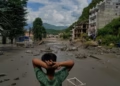
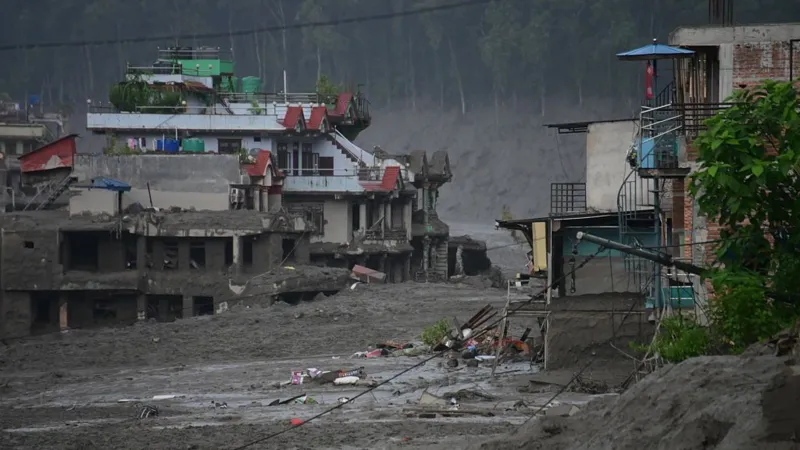
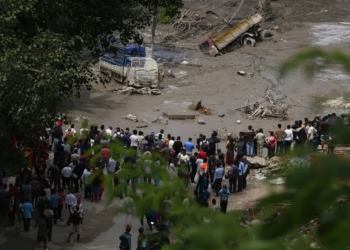
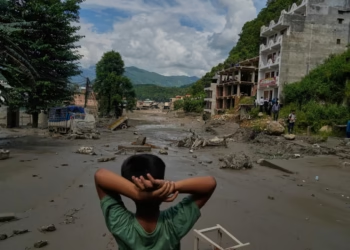
The floods struck after severe weather and a major geological event affected valleys close to the Nepal-Tibet border. Rivers burst their banks, carrying water, mud and debris through settlements and transport routes. Homes and infrastructure were damaged, while rescuers faced hazardous conditions as they attempted to reach isolated areas.
The scale of the disaster has made identifying missing people particularly difficult. Tourists were travelling in organised groups as well as independently, while some had journeyed to the region for religious reasons. Mount Kailash is regarded as a sacred site by several religious traditions and attracts pilgrims from across the world.
For families waiting for news, the lack of reliable communications has compounded the distress.
Simkhada’s case is one of several involving British nationals whose whereabouts have become uncertain following the flooding. On Thursday, a woman from Folkestone said she had been unable to contact her sister, Julija Jakovicka, who was near the Nepal-Tibet border when the flooding occurred.
Tatajana Phillips told the BBC that her sister’s last known location was in the border region about an hour before the floods struck.
“Then there is no more news,” Phillips said.
Jakovicka, a mother of two who lives in Germany, had travelled to Nepal for a yoga and meditation retreat. Her husband, Ben Phillips, described the situation as deeply worrying.
“We are terribly worried,” he said. “We just know where they were and that’s really tough.”
The accounts from the two families underline the uncertainty faced by relatives of people caught in the disaster. In many cases, the last known information comes from tour operators, family members or travel records rather than direct communication with those in affected areas.
Members of Kent’s Nepalese community have also expressed concern for those still missing.
Nina Gurung, a representative of the Gurkha-Nepalese community and a Medway councillor, described the disaster as “absolutely shocking and devastating”.
She said communications had been cut off in some areas, making it more difficult for families and authorities to establish what had happened to people who were travelling in the affected region.
“We also pray for those who are still missing to be found safe, including those who are from the UK,” Gurung said.
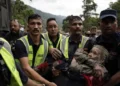
The disruption to telecommunications has been one of the major obstacles facing rescue operations. Roads and other routes have also been damaged or blocked, limiting access to areas where people may be stranded or where communities have been cut off.
Flash floods can develop with little warning, particularly in mountainous terrain. Water can rapidly accelerate through narrow valleys, carrying rocks, soil and other debris. Such flows can overwhelm riverbanks and settlements before people have enough time to move to safety.
Scientists and authorities have been examining the circumstances surrounding the disaster, with preliminary assessments pointing to a combination of geological and glacial processes. The region is vulnerable to landslides, glacier-related events and sudden changes in river conditions, particularly during periods of intense rainfall.
The disaster has also raised concerns about further flooding. Authorities have warned residents and visitors to remain away from rivers and to follow official safety instructions while conditions remain unstable.
For the families of missing people, however, the immediate priority remains locating their loved ones.
At Darent Valley Hospital, where Simkhada works, her disappearance is likely to have particular resonance among colleagues who know her professionally. The loss of contact with a healthcare worker who travelled abroad during what was intended to be a spiritual journey has added another personal dimension to a disaster already affecting communities across several countries.
The British government has been monitoring the situation and working with local authorities and travel organisations to establish the whereabouts of British citizens in the affected areas. Families with relatives in Nepal have been encouraged to seek official consular assistance if they are unable to establish contact.
The broader international response is complicated by the geography of the disaster. The affected region lies close to a major international border and includes remote mountain areas where conventional rescue operations can be difficult. Helicopters, specialist teams and other forms of emergency assistance may be required to reach isolated communities.
As search efforts continue, families are left waiting for information that could determine whether their relatives are among those rescued, displaced or still missing.
For Shambhu and Simkhada’s wider family, the wait has become an agonising period of uncertainty. His public appeal for his sister to remain strong reflects the hope shared by relatives of many missing people: that those who disappeared amid the flood will still be found alive.
The disaster has demonstrated the vulnerability of communities and travellers in one of the world’s most mountainous regions. It has also highlighted the importance of reliable emergency communications and rapid access to remote areas when extreme flooding occurs.

For now, the search continues. Rescue workers are attempting to reach affected settlements while authorities collect information from tour operators, local communities and families. Every confirmed sighting or recovered communication could provide a crucial lead.
As Nepal begins the difficult process of assessing the full consequences of the flooding, the families of missing people remain focused on one immediate question: where are their loved ones?
For the family of Sarada Simkhada, that question is especially painful. A journey intended as a pilgrimage has instead become an anxious search for news, while colleagues and members of the Kent community continue to hope that the missing nurse will be found safe.
The priority now is to locate those still unaccounted for, provide accurate information to their families and ensure that rescue teams can reach people trapped by the disaster. Until that work is completed, the uncertainty surrounding Simkhada and hundreds of others will continue.
Related News:
 Bad Weather Threatens Hantavirus Cruise Ship Evacuation
 Nepal Flood Death Toll Tops 300 as Second Flood Feared
 Costa Blanca Holiday Horror as Food Poisoning Outbreak Hits Four-Star Hotel
 CDC Plunged Into Turmoil as Ousted Chief Susan Monarez Refuses to Step Down
 First Group of Children from Gaza Arrive in UK for Life-Saving NHS Treatment
 Global Study Reveals Violence in GP Surgeries Linked to Long Waiting Times and Drug Refusals
 The diet that can significantly ease symptoms of IBS
 Europe, North America face early wave of bird flu
 Tick Bite Tragedy Claims Teen in Meat Allergy Case
 Hospital Fungal Outbreak Sparks Major Cover-Up Claims
 Middle East Airspace Crisis Strands Thousands
 Tehran Diary: Dark Days Under Relentless Bombardment
 Canada Plasma Deaths Raise Safety Concerns After Two Donors Die
 “I was fighting two wars”: Ukraine soldiers’ addiction crisis
 Two Dead in Adelaide Airport Plane Crash Fire
 Giuliani hospitalised in critical condition
 US Court Restores Abortion Pill Access Temporarily
 Hantavirus Cruise: Britons Face 45-Day Isolation Order
 Search Intensifies for Missing Hiker on WA Bibbulmun Track
 Crisis in the Canary Islands as Cruise Ship Evacuated
 Cruisers Face Perth Quarantine After Hantavirus Outbreak
 Australia Welcomes the Iconic Michelin Guide
 France Quarantines Cruise Ship After Suspected Virus Death
 Lockdown Lifted for British Cruise Ship in Bordeaux
 WHO Declares Ebola Outbreak a Global Emergency
 Deadly Ebola Outbreak Surges as Western Aid Vanishes
 Ebola outbreak in DRC overwhelms health system as cases surge
 Maldives Cave Diving Tragedy Raises Safety Alarm
 Pope Meets Families in Italy Toxic Waste Zone
 Man killed in shark attack on Great Barrier Reef
 Unflinching Witness: Doctors Document Gaza’s Medical Crisis
 Mystery Grows Over Mitch McConnell’s Health
 England and Norway Fans Turn Miami Into World Cup Carnival
 London Tube Heat Reaches Dangerous Levels
 Venezuela Quake Death Toll Surpasses 4,000
 Olympus Awaits Unesco Heritage Recognition
 Wildfires Force Mass Evacuations in France And Spain
 Powerful 7.7-Magnitude Earthquake Hits Eastern Indonesia
 Wildfires rage across Europe as hundreds arrested in France
 China Probes Alleged Formaldehyde Use on Cabbages
 Nepal-Tibet Flood Leaves 270 Dead and 1,400 Missing
 Australia Races to Find Tourists Missing in Nepal
 France Eases Cheese Rules as Drought Hits Farms
 Families Fly to Nepal in Search of 33 Missing Britons
 Systemic Racism in Maternity Care Continues to Endanger Black Women in England, MPs Warn
 Yvette Cooper Signals Global Momentum Towards Gaza Peace Deal Amid Humanitarian Crisis
 Chaos at Ibrox as Martin’s Rangers Era Comes to an End
 Sir Michael Caine Urges Starmer to End Smacking in England
 M&S and Morrisons Lead Christmas Supermarket Taste Test
 Russia’s Latest Push to Win US Favors Shows Deep Desperation
 BBC to Apologise Over Edited Trump Speech Amid Backlash
 Reeves rejects £1bn plea for NHS redundancy payouts
 Greene Pushes Epstein Files Amid Trump Fallout
 Zelenskyy Signs Fighter Jet Deal Amid Russian Drone Attacks
 Shadow Fleet at Sea: Europe’s Battle Against Illicit Oil Shipping
 US Suspends Afghan Immigration After White House Shooting
 Five-Year-Old Dies After Rare Tonsil Surgery Complication
 ‘Extinct’ Antelope Returns to Sahara, Bringing Hope
 Energy Drinks Linked to Rising Heart and Stroke Risks
 Irish Beach Tragedy: Irish Drown at Whitehaven Beach in Australia
 Greenland Crisis Forces Europe to Draw a Line With Trump
 Streeting moves on doctor pay to end strike dispute
 The Kill Line: A Shifting Vision of the American Dream
 Air Canada CEO Faces Outcry Over Recent Language Misstep
 Extreme Weather: Europe Shivers as Cyclone Narelle Hits
 Palantir Boss Defends NHS Deal Amid Government Break Clause
 Asia Turns Back to Coal Amid Middle East Energy Crisis
 Relationship with Trump may be beyond repair, Starmer warned
 Trump’s Six-Week Iranian War: The High Cost of Ignorance
 Battle of Britain Tower to House Tourists and Bats
 Ben Roberts-Smith Denies War Crime Allegations in First Statement
 Crisis in NHS Surgery Scheduling Hits Patients Hard
 RFU Backs Borthwick Despite England’s Poor Six Nations
 Trump Rejects Tehran Peace Plan as Regional Truce Crumbles
 Wes Streeting faces narrow road to Labour members’ favour
 Trump Sends 5,000 More US Troops to Poland
 Britain’s Crowning Butterfly Takes the Nation by Storm
 Fifa Official Under Investigation Over Hand Gesture Controversy
 Grief and Devotion Amidst the Rubble of Nabatieh
 Breakthrough NHS Tests for Endometriosis Patients