Published: 29 August 2026. The English Chronicle Desk. The English Chronicle Online.
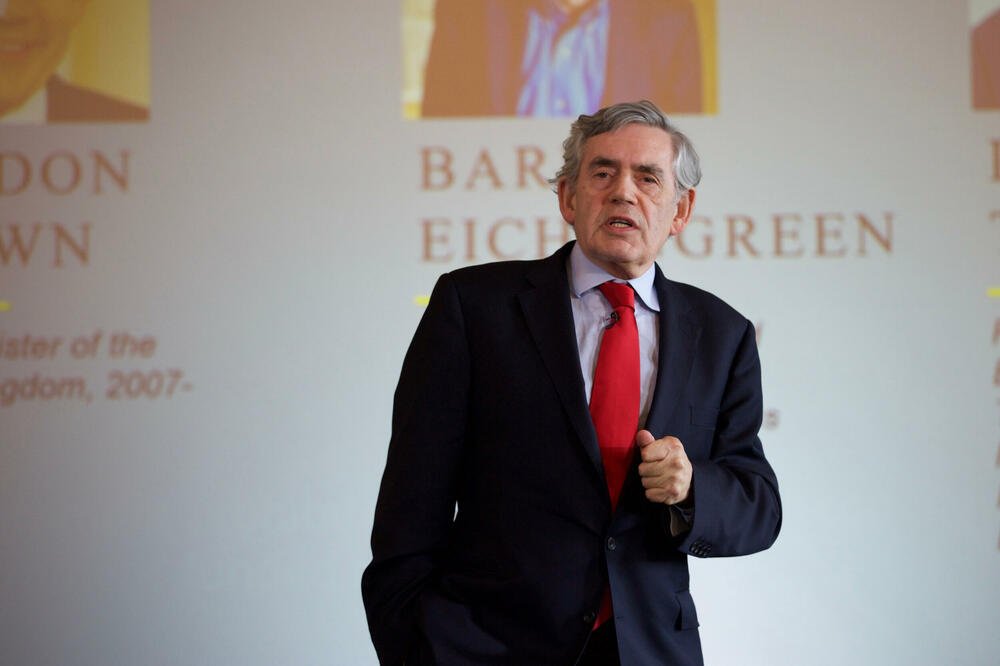
Former British prime minister Gordon Brown has said he believes the island of Ireland will eventually become united, while maintaining his strong opposition to Scottish independence.
In a wide-ranging interview, Brown said any future Irish reunification would be a lengthy process that would depend on people on both sides reaching an agreement. His comments are notable because of his contrasting positions on Scotland and Northern Ireland, two parts of the United Kingdom where questions about constitutional arrangements have remained politically sensitive for decades.
Brown, who served as prime minister from 2007 to 2010, played a significant role in the British government during a period of major political developments in Northern Ireland. He was chancellor under Tony Blair when the Good Friday Agreement was reached in 1998, helping to establish a new political framework aimed at ending decades of conflict.
During his own premiership, Brown also oversaw another important stage in Northern Ireland’s political development when justice and policing powers were devolved to the region’s power-sharing administration in 2010.

Against that background, Brown’s assessment that a united Ireland is ultimately likely carries particular significance. He stressed, however, that such an outcome could not be imposed and would require agreement between communities.
Asked about the continuing campaign for Scottish independence, Brown took a markedly different position. He argued that Scotland should remain part of the United Kingdom and develop closer cooperation with other countries without breaking away from the union.
Brown said Scotland was geographically, economically, socially and culturally connected to the rest of the United Kingdom. He argued that independence would not provide the right way forward for Scotland and suggested that cooperation within the existing constitutional framework offered a more practical path.
His position reflects a long-standing argument he has made against Scottish independence. Brown has consistently maintained that Scotland’s interests can be better protected through a reformed United Kingdom rather than through the creation of a separate state.
The former prime minister nevertheless distinguished the Scottish question from the constitutional future of Ireland. Northern Ireland shares a land border with the Republic of Ireland, while the two parts of the island have developed distinct political identities and constitutional arrangements.
When asked whether that geographical relationship made Irish reunification more logical, Brown replied that, in the long term, Ireland would be united.
He immediately qualified the prediction by stressing the importance of consensus. According to Brown, reunification would be a long process in which people would have to come together and find a way to reach an agreement.
That emphasis on consent is particularly important because the constitutional status of Northern Ireland is governed by the principle that any change must reflect the wishes of its people. The Good Friday Agreement established a framework under which Northern Ireland remains part of the United Kingdom unless a majority there decides otherwise, while also recognising the right of people in Northern Ireland to identify themselves as British, Irish or both.
Brown’s comments therefore do not amount to a call for an immediate political change. Instead, they represent his personal assessment of the long-term direction in which the island of Ireland could move if political and demographic circumstances eventually create the conditions for reunification.
The remarks come at a time when questions about the future of the United Kingdom remain prominent. Scotland’s independence debate continues to shape British politics, while Northern Ireland’s relationship with both Britain and the Republic of Ireland remains an important issue in discussions surrounding the union.
Brown also used the interview to discuss the future of Britain’s energy policy and the political challenges facing former colleagues in government.
His comments were made alongside discussion of his new book, The Future Starts With Us, in which he examines wider questions about Britain’s future and the international political and economic environment.
Brown was careful not to present himself as directing current political leaders. Referring to Andy Burnham, who previously served in Brown’s cabinet, he said he did not want to act as a “backseat driver” by telling Burnham what he should do.
However, he did offer a clear view on one of the most controversial energy questions facing Britain: the future of oil and gas production in the North Sea.
Brown argued that Britain’s energy debate had too often been presented as a simple choice between fossil fuels and renewable energy. In his view, the transition towards cleaner energy could be managed by using existing North Sea infrastructure and expertise as a bridge towards new industries.
He pointed to offshore wind, hydrogen and carbon capture and storage as areas that could eventually play a major role in the region’s energy future.
The former prime minister argued that maintaining existing oil and gas infrastructure and skills could help Britain make the transition towards these emerging industries. Rather than abandoning the existing energy sector immediately, he suggested gradually transferring its workforce, infrastructure and expertise into renewable and lower-carbon activities.
Brown also suggested that such a transition could involve cooperation between several European countries, including Norway, Germany, the Netherlands, Belgium and Denmark. A broader European consortium, he argued, could help develop the North Sea as an integrated energy region.
His position reflects a wider debate about how quickly Britain should reduce its dependence on fossil fuels while maintaining energy security and protecting jobs in communities that have historically depended on the oil and gas industry.
Brown also argued that environmental policies would have greater public support if they were presented as economic opportunities rather than simply as additional costs.
He pointed to falling costs for renewable energy as evidence that the economic case for clean energy has changed significantly. Technologies such as solar and wind power have become increasingly competitive, meaning investment in environmental measures can also generate financial benefits, he suggested.
The comments illustrate Brown’s broader approach to political questions: combining long-term structural change with measures designed to protect communities and workers during periods of transition.
His intervention on Ireland, meanwhile, adds another dimension to the continuing debate over the future of the United Kingdom. While Brown remains firmly opposed to Scottish independence, he believes the constitutional future of Northern Ireland could eventually lead to a united Ireland.
The distinction reflects the different historical, geographical and political circumstances of Scotland and Northern Ireland. Scotland’s independence movement seeks to establish a sovereign Scottish state, while the question of Irish reunification concerns whether Northern Ireland should remain within the United Kingdom or become part of a united Ireland.
For Brown, however, neither question can be settled simply through political declarations. He has stressed the importance of cooperation and agreement, particularly when constitutional change could affect communities with different identities and traditions.
His comments are likely to attract attention across Britain and Ireland because of his direct involvement in the peace process and his experience at the highest levels of government.
More than two decades after the Good Friday Agreement, Northern Ireland remains part of the United Kingdom, but the possibility of a future border poll and the wider question of Irish unity continue to feature in political debate.
Brown’s prediction that Ireland will eventually become united is therefore less a statement about an imminent political development than a reflection of how he believes the island’s long-term constitutional future may evolve.

For now, the political realities remain unchanged. Northern Ireland remains within the United Kingdom, Scotland remains part of the union, and any major constitutional transformation would require extensive political negotiation and public consent.
Brown’s contrasting views nevertheless underline how Britain’s constitutional debate has become increasingly complex. The future of the union is no longer simply a question of preserving existing arrangements. It increasingly involves questions about national identity, democratic consent, economic cooperation and how different parts of the United Kingdom see their place in the future.
As those debates continue, Brown’s assessment offers a perspective shaped by decades at the centre of British politics: the belief that political unions can survive only when they are based on cooperation and consent, while constitutional change, when it eventually comes, must be achieved through agreement rather than confrontation.
Related News:
 UK Presses On With Chagos Handover Despite Trump Criticism
 Shinzo Abe’s killer receives life sentence in Japan
 HMS Dragon to Head to Cyprus Amid Rising Tensions
 Starmer Praised for Stance on Trump and Iran Conflict
 Yvette Cooper: UK Must Follow Principles, Not US Pressure
 Trump Mocks Starmer and UK Carriers in White House Speech
 Aukus Submarine Plan Faces Critical Failures
 UK Urged to Build EU Rejoin Consensus, Says Miliband
 Former Diplomats Urge UK and France to Act on Palestine
 Trump’s UK Ambassador Urges North Sea Drilling to Strengthen US Ties
 French Taxi Driver Cleared in David Lammy Theft Case After Fare Dispute
 Millionaires group urge Reeves to introduce wealth tax to ‘lift kids out of poverty’
 Reeves rejects £1bn plea for NHS redundancy payouts
 PM Condemns Leaks, Vows Loyalty to Ministers and Stability
 Major Rent Reform Ends No-Fault Evictions in England
 Starmer Says Labour’s Economic Plan Needs Years to Deliver
 British skier killed in La Plagne avalanche tragedy
 Mandelson apologises over Epstein ties after public scrutiny
 Starmer Challenges US Over Controversial Greenland Deal
 Spoof “Make America Go Away” Caps Rally Denmark Over Greenland
 Labour Blocks Burnham as Party Rift Deepens Ahead of Polls
 Huge mistake: Labour blocks Burnham from byelection bid
 Artificial intelligence will cost jobs, admits Liz Kendall
 Labour targets Greens on drugs in Gorton Denton byelection
 Greens nominate Hannah Spencer for Gorton and Denton byelection
 Mandelson Faces Police Inquiry Over Epstein Leak
 Labour Thinktank Row Deepens Over Journalist Probe Claims
 Morgan McSweeney downfall shocks Labour leadership
 Cabinet Secretary Shake-Up Triggers Due Diligence Warning
 Starmer Faces Inquiry Calls Over Thinktank Probe
 UK shelves £110m border project amid trade strain
 Farage Unveils Reform UK Frontbench Team
 California Democrats Vow Trump Reckoning
 Wales Approves Assisted Dying Bill Consent
 UK EU Trade Reset Gains Public Backing
 Green Party Stuns Labour in Gorton and Denton Byelection
 Corbyn Leads Your Party in Coordinated Left-Flank Strategy
 Asylum Seekers to Work After Year-Long Wait
 Starmer Row as Greens Demand Apology
 Proposed Law Leaves Gap for Children of Convicted Paedophiles
 New Zealand Covid Response Praised Despite Lingering Scars
 Gordon Brown urges court for crimes against children
 Inquiry into HMRC child benefit errors launched by NAO
 Farage Faces Backlash Over Crypto Cameo Endorsements
 Big Tech Faces Investigation Over Australia’s Social Media Ban
 Relationship with Trump may be beyond repair, Starmer warned
 Unions Raise Concerns Over Doctors’ Pay Dispute
 Reform UK Pledges To Halt Visas Over Reparations Demands
 UK Government Poised to Revive Stalled Hillsborough Law
 Trump Signals Hope for New Iran Talks as Ceasefire Fades
 UK Stands Firm on Falklands Amid US Rift
 Investigation Into Anti-Trump Motives After Gala Shooting
 Welsh Labour Faces Potential Historic Election Defeat
 Oil Prices Surge Above $120 Amid Iran Blockade Fears
 Trump orders US troop pullout from Germany
 Silent Tracks: Rail Line Without Passengers
 Major test for Labour as polls open in Great Britain
 Keir Starmer Struggles to Secure His Grip on Downing Street
 Fear and Betrayal: The Chilling Case of Kouri Richins
 Farage Faces Standards Probe Over Cash Property Purchase
 Secret Role of UK Security Services in Troubles Amnesty Law
 Farage and Reform UK Reshape British Politics
 Minister Criticises Police Guidance Amid Southampton Protests
 Makerfield Voters Demand Real Change as Election Looms
 Teaching Machines Right From Wrong in the Digital Age
 US Condemns ‘Two-Tier’ UK Policing After Student Murder
 The Hidden Crisis Eroding Trust in British Communities
 Millions in British Charity Funds Linked to Illegal Settlements
 Captain in the Spotlight: The Future of England Cricket
 Labour MP Revives Blocked Assisted Dying Bill in Commons
 Starmer Set to Announce Exit Plan as Burnham Eyes No 10
 EU Slashes Steel Quotas But Grants UK Favourable Rates
 Trump’s Mount Rushmore Speech: A Divisive Anniversary
 Burnham Pledges New Era of Open Debate for Labour MPs
 Trump Swaps Planes Amid Iran Tensions
 Ann Widdecombe, Formidable Political Figure, Dies at 78
 Security Row Erupts Following Tragic Death
 Houthis Strike Saudi Arabia as Middle East Tensions Rise
 Burnham unveils £65m drought aid for farmers
 Unions Warn Labour Over Zero-Hours Contract Reforms