Published: 08 September 2026. The English Chronicle Desk. The English Chronicle Online.
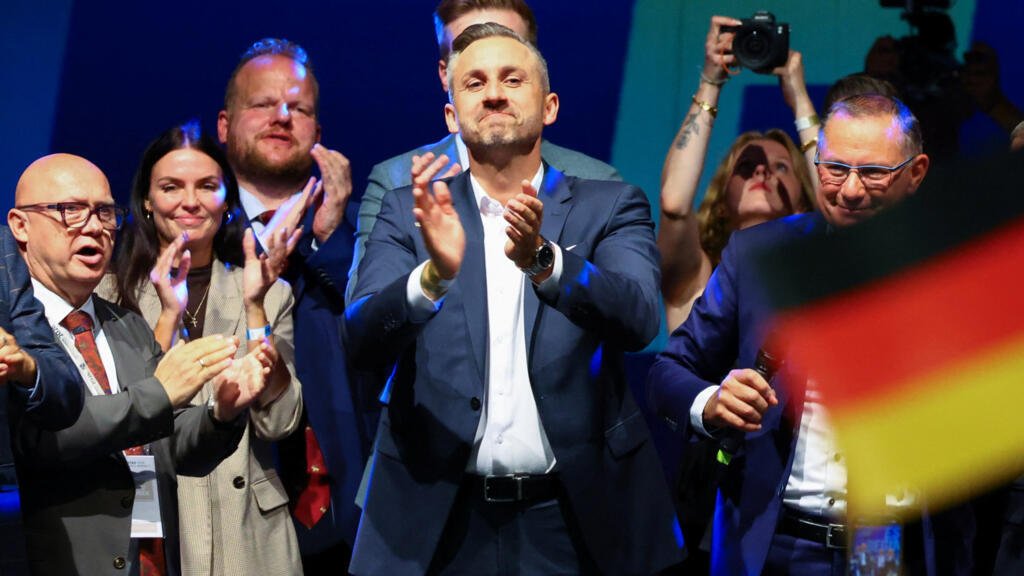
MAGDEBURG — A historic election victory by Germany’s far-right Alternative for Germany (AfD) has left residents in the eastern state of Saxony-Anhalt confronting sharply different emotions, from celebration and frustration to fear and disbelief.
The AfD secured almost 44% of the vote in Sunday’s state election, recording its strongest result in the state and raising fresh questions about the future direction of regional and national politics. In the state capital, Magdeburg, the result has become the subject of intense public discussion, particularly among immigrants, younger residents and people who remain deeply conscious of Germany’s history.
For some residents, the result represents a rejection of established political parties and a demand for change. For others, it has created anxiety about immigration, social cohesion and the possible consequences of the far-right party gaining greater political influence.
Among those worried is Maryam, a teenager from nearby Wolmirstedt whose name has been changed. Walking towards Magdeburg railway station with her best friend, she said she had been thinking constantly about the election and what it could mean for her family.

“Don’t laugh at me,” she said, recalling what she viewed as a more stable period in Germany under former Chancellor Angela Merkel. She said she wished the country could return to those days.
Maryam’s family has a migration background. Her father arrived in Germany from Syria in 2015, while she and her mother joined him two years later. The family has lived with uncertainty over residency permits, which have to be renewed periodically.
The AfD’s immigration policy has therefore become a deeply personal issue for her. The party’s proposed programme includes measures aimed at deporting people it considers irregular migrants. Maryam fears that a stronger AfD presence could eventually affect families such as hers.
“We’ve always lived in a state of uncertainty,” she said, expressing concern about the possibility of having to return to Syria. She added that she could not read or write Arabic, highlighting the distance that can develop between children raised in Germany and the countries from which their parents originated.
Her concerns contrast sharply with those of voters who supported the AfD out of frustration with Germany’s political establishment.
Doreen, a 54-year-old cleaner in Magdeburg, said she had backed the party because she felt desperate about the direction of the country. She referred to AfD supporters as “the blues” and said she hoped the party would move quickly to implement its promises on migration.
She also expressed particular resentment towards Ukrainian refugees, arguing that some appeared to have greater financial resources than she did. Her views reflect one of the increasingly contentious political debates in Germany, where the arrival of refugees from Ukraine and elsewhere has become intertwined with wider concerns about living costs, public services and government spending.
When asked about the potential human consequences of tougher policies, Doreen responded that the situation was simply a consequence of the large number of refugees who had arrived in Germany.
She rejected comparisons between the rise of the AfD and the emergence of the Nazi movement during the Weimar era, arguing that contemporary Germany faces different circumstances and challenges.
Yet the country’s history remains impossible to ignore for many residents.
In Magdeburg, Doreen was speaking near a Stolperstein, one of the brass memorial stones placed in German streets to commemorate victims of Nazi persecution. The particular memorial marks the former home of Ernst Fliess, a Jewish lawyer who was persecuted and ultimately died by suicide.
For older residents, such reminders carry an especially powerful meaning.
Ernst and Judith, both 88, have been married for 64 years. The retired couple initially said they did not want to discuss the election result. But as the conversation continued, they acknowledged that the AfD’s success had deeply affected them.
They voted for the left-wing Die Linke party. Judith said she was devastated that a party she regarded as hostile towards refugees had won such a large share of the vote.
Her own experience has shaped her view of migration and displacement. She was forced to flee her home in Silesia in 1945 and spent years living in temporary accommodation before eventually settling in Magdeburg.
That experience, she said, had made her particularly sensitive to the difficulties faced by refugees.
She described recognising a sense of vulnerability in refugees regardless of where they came from and said she found it painful to see such a large proportion of voters supporting an anti-immigration party.
Her reaction reflects a wider generational debate within Germany. The country’s post-war identity has been built partly around confronting the consequences of Nazi rule, while younger generations are increasingly focused on issues such as immigration, economic pressure, security and dissatisfaction with established political institutions.
For Franz Josef and Christiane Jäker, visitors from North Rhine-Westphalia, the AfD result was also deeply troubling.
The couple, aged 71 and 67, were visiting Magdeburg when they began discussing the election. Franz Josef accused populist politicians of undermining what Germany had rebuilt since the Second World War.
He also criticised what he saw as the AfD’s approach to Russia and the war in Ukraine. In his view, political promises and selective narratives can obscure the complexity of international conflicts and encourage voters to support policies that could have wider consequences for Germany.
The election result has also raised concerns among people from immigrant backgrounds who fear that political changes could affect their place in German society.
Eric, a 21-year-old paramedic raising money for a hospice, said he regretted not voting. His father is from Guinea and spent years applying for German citizenship.
He said he was trying not to dwell on what a future AfD government might mean for him as a dark-skinned German. His greatest concern was not only immigration policy but potential constitutional changes and the possibility that political developments in one state could influence the wider country.
That concern illustrates why the Saxony-Anhalt result has attracted attention beyond the state itself.
The AfD’s performance provides a significant demonstration of the party’s electoral strength in eastern Germany. Although state elections have their own local dynamics, the result is likely to fuel discussion about whether the party can translate regional support into broader national influence.
For Luisa, a bank teller who voted for Die Linke, the issue is also about the reputation of Saxony-Anhalt.
She fears that the election result could make foreigners feel less welcome and encourage some to consider leaving. But she pointed out that many low-paid foreign workers would have little practical ability to relocate, leaving them potentially exposed to discrimination or poor treatment.
She also referred to interviews with Holocaust survivors who have drawn comparisons between the atmosphere they experienced in the past and some aspects of today’s political climate.
Such comparisons remain highly sensitive in Germany. The rise of the AfD has repeatedly generated debate over how far historical parallels are appropriate and where legitimate political dissatisfaction ends and dangerous political rhetoric begins.
The reactions in Magdeburg demonstrate that the election has not produced a single public mood. For AfD supporters, the result represents a mandate for political change and tougher policies on immigration. For opponents, it is a warning about the potential erosion of social cohesion and democratic safeguards.

Between those positions are residents who remain uncertain about what the result will mean in practical terms.
For immigrant families, the question is often deeply personal: whether they will continue to feel secure in a country they have come to regard as home. For older Germans who remember displacement or grew up in the shadow of the country’s twentieth-century history, the election can evoke fears about lessons that should never be forgotten.
And for younger voters such as Eric and Maryam, the result has become a question about the Germany they will inherit.
The AfD’s historic performance in Saxony-Anhalt has therefore opened a debate that extends far beyond election numbers. It has brought questions about immigration, national identity, economic frustration, political trust and Germany’s historical memory directly into the everyday lives of people in the state capital.
As the political consequences of the vote begin to unfold, Magdeburg’s streets offer a picture of a society wrestling with a fundamental question: how should Germany respond to voters demanding profound change while protecting the sense of security and belonging felt by those who fear they may become its cost?
Related News:
 EU weighs response amid Greenland tariff crisis with Trump
 EU Says US Ties Have Suffered ‘Big Blow’ After Greenland Crisis
 Italian Town Buys Mussolini Villa to Keep Away Fascist Fans
 Hungary election: Orbán faces biggest test amid scandal
 Global order shifts amid Trump-era turmoil
 Ceasefire Standoff Deepens in Ukraine War
 France Faces Record Presidential Crowded Race Amid Far-Right Surge
 Norway Doubles Down on Oil and Gas for Europe Energy Security
 Putin Declares Russia Victory at Scaled Victory Day Parade
 Zelenskyy warns over Oreshnik threat as Kyiv hit
 Former ICC prosecutor condemns US sanctions
 Irish Gangland Figure Fails in Dublin Election Bid
 Deadly Russian Air Raids Strike Across Ukraine
 Le Pen to Run for President Despite Embezzlement Conviction
 Russian Missiles Intensify Pressure on Kyiv
 Ukraine Villagers Demand Answers After Deadly Arms Depot Strike
 Bayeux Tapestry Revives Franco-British Ties
 BBC to Apologise Over Edited Trump Speech Amid Backlash
 Britain deploys RAF specialists to assist Belgium with drone threats
 US Justice Department Files Lawsuit Against California Over Partisan Voting Maps
 Greene Pushes Epstein Files Amid Trump Fallout
 Trump Deploys DHS to Charlotte in Major Arrest Operation
 December Run-Off in Chile as Election Produces No Winner
 Canada Passes Carney’s First Budget in Tight Parliamentary Vote
 Shadow Fleet at Sea: Europe’s Battle Against Illicit Oil Shipping
 Pentagon Officials in Ukraine to Discuss War End
 Venezuela Threatens Nobel Winner Machado with Fugitive Status
 Georgians Defy Government Crackdown After Year of Protests
 EU plans $105bn Ukraine aid using frozen Russian assets
 Trump Policies Boost China’s Global Rise, Survey Finds
 Pentagon Signals Reduced Role in Deterring North Korea
 Thousands Protest ICE Operations in Nationwide US Day of Action
 Starmer Condemns ‘Depraved’ Russian Strikes on Ukraine
 Herzog visit sparks protests across Australian cities
 UK and US Drop in Global Corruption Index Rankings
 Tarique Rahman’s Rise Toward Bangladesh’s Top Job
 Canberra Poster Seizure Sparks Free Speech Row
 Evo Morales Returns After Mysterious Absence
 AFP Reviews Pauline Hanson Comments
 Duterte ICC Hearing Begins Amid Defiance
 Trump Tariffs Threat Spark UK and EU Alarm
 The Dangerous Rise of Remigration Across Modern Europe
 Jacinda Ardern Moves To Australia Following Her US Fellowships
 US to offer passport services in West Bank settlements
 Jacinda Ardern Move Sparks Kiwi Reflection
 Nick Greiner Warns Over Election Review Fallout
 Iran Defiance Grows Amid US-Israel War Pressure
 Injured Mojtaba Khamenei Elevated as Iran Leader
 Gordon Brown urges court for crimes against children
 Oil Prices Jump After Trump Claims Iran Oil Hub Destroyed
 Pakistan Targets Militant Hideouts in Afghanistan
 Danish Election Deadlock Shakes Frederiksen’s Grip
 Air Canada CEO Faces Outcry Over Recent Language Misstep
 Pope Rebukes Leaders for War as Middle East Tensions Rise
 Army Probes Apache Flyover at Kid Rock’s Nashville Estate
 Relationship with Trump may be beyond repair, Starmer warned
 Report Says Pezzullo Acted ‘Recklessly’ in Dealings
 Trump Employs Nixon’s Madman Theory Amid Iran Crisis
 Suspected Plot Targets Pipeline Before Hungary Vote
 Trump Brokers Landmark Lebanon Ceasefire Amid Regional Hopes
 UK Stands Firm on Falklands Amid US Rift
 Oil Prices Surge Above $120 Amid Iran Blockade Fears
 Trump orders US troop pullout from Germany
 Trump approval plunges amid Iran war fears
 Ohio’s Battle for Trust: Democrats Vying to Flip the Buckeye State
 US ‘Narco Boat’ Strikes Draw Global Outcry
 Trump Announces 3-Day Russia–Ukraine Ceasefire Deal
 US Awaits Iran Reply on New Ceasefire Proposal
 Pope Meets Families in Italy Toxic Waste Zone
 Discontent grows around Putin amid war strain
 Farage and Reform UK Reshape British Politics
 Starmer Leadership Under Pressure After Setbacks
 Meta Under Fire: The Battle Over Addictive Social Media Design
 Ukraine Creates Long-Range Strike Command
 England and Norway Fans Turn Miami Into World Cup Carnival
 Houthis Strike Saudi Arabia as Middle East Tensions Rise
 Former Diplomats Urge UK and France to Act on Palestine
 Trump Hardens Canada Trade Stance as Talks Stall
 Trump Calls Iran War ‘Small Potatoes’ Despite US Deaths
 Swedish Mining Push Puts Sami Land Rights Under Pressure