Published: 25 September 2026. The English Chronicle Desk. The English Chronicle Online
Spain will arrive at Wembley as world and European champions, but Luis de la Fuente’s team has little interest in treating its extraordinary recent success as a reason to slow down.
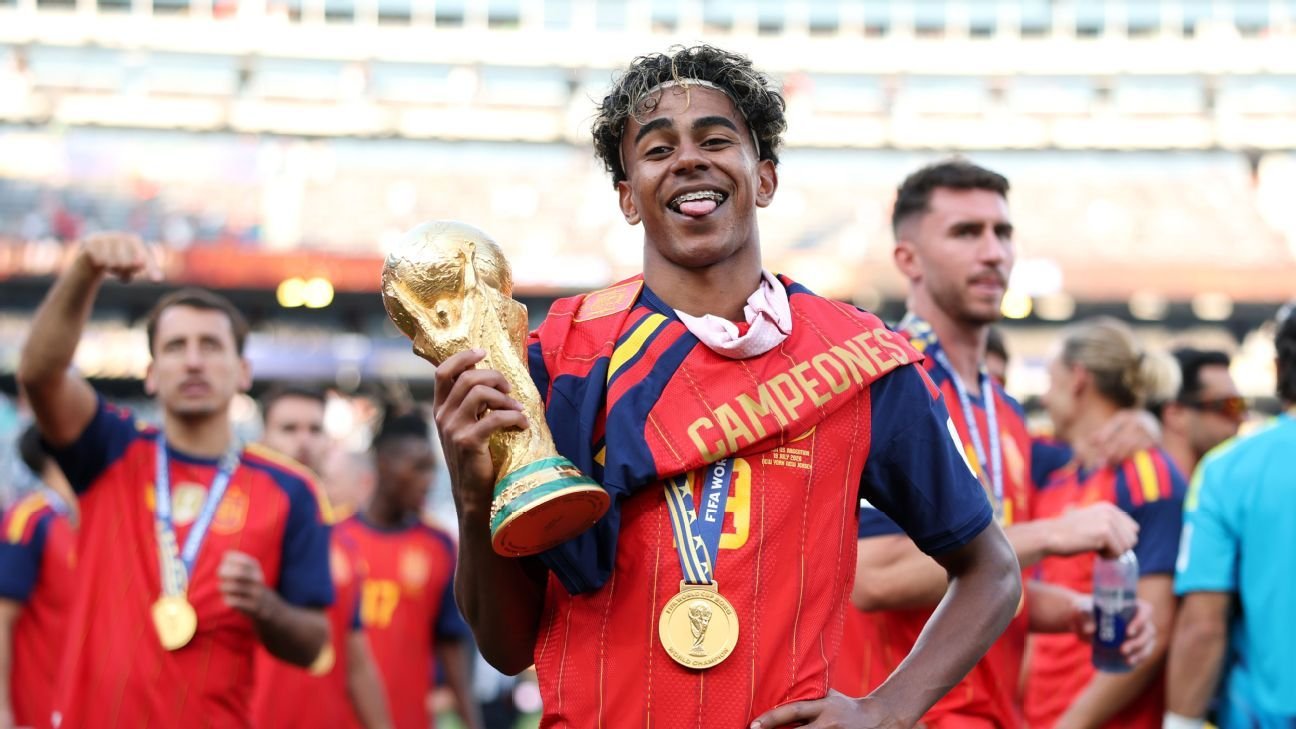
When Spain face England on Saturday, the occasion will carry the atmosphere of a celebration. It will be the Spanish team’s first match in England since lifting the World Cup, and the players will step onto the Wembley pitch carrying the confidence and expectation that come with becoming world champions.
Yet behind the celebrations lies a very different mentality.
For De la Fuente and his players, winning the World Cup did not bring the end of an era. Instead, it has created another target. The coach believes this generation can continue competing for major trophies and has repeatedly stressed that the team’s hunger must remain intact.
The Spanish manager recently recalled a conversation that took place only minutes after his side’s World Cup triumph on 19 July. While the players were still celebrating, one of the longest-serving members of the squad approached him and asked what remained to be won.
De la Fuente’s answer was immediate: England at Wembley.

The exchange captured the mentality that the Spanish coach believes has helped his team establish itself among the world’s leading international sides. Rather than allowing the World Cup victory to become a destination, Spain’s players are being encouraged to view it as another achievement within an ongoing competitive cycle.
Spain’s recent record provides the foundation for that confidence. The national team have now combined a European Championship triumph, a Nations League title and a World Cup victory, establishing a remarkable sequence of success under De la Fuente.
The current squad also carries the weight of comparison with Spain’s celebrated team of 2008 to 2012. That earlier generation won the European Championship in 2008, the World Cup in 2010 and another European Championship in 2012, creating one of the most successful periods in international football history.
The current group has already matched some of that achievement, but another major European title would be required to equal the earlier team’s three-trophy sequence.
That target gives the present generation an unusual incentive. Even after winning the biggest prize in international football, there remains an obvious historical benchmark ahead of them.
De la Fuente has responded by maintaining considerable continuity in his squad. Most of the players who travelled to the World Cup have remained involved, with only a small number absent for specific reasons.
Marcos Llorente has retired from international football, while goalkeeper Joan García is injured. Borja Iglesias has not been selected while recovering his fitness, and Gavi is suspended for the Wembley match.
Fermín López has returned after missing the World Cup because of injury. Josep Martínez, Dean Huijsen and Roberto Fernández have also been included, while Iván Fresneda was brought in after Pedro Porro withdrew.
The selection reflects De la Fuente’s belief that players who have delivered major trophies deserve continuity. The manager has indicated that new players remain capable of entering the squad, but they must demonstrate that they can displace members of a group that has already established itself at the highest level.
That approach is particularly evident in goal.
Unai Simón remains central to the manager’s plans after a highly successful World Cup. De la Fuente has defended continuity for the goalkeeper rather than treating selection as an automatic competition for places simply because younger or newer alternatives are available.
Josep Martínez’s inclusion gives Spain another option, but the squad remains built around the players who have carried the team through its recent period of success.
The sense of unity within the squad is also unusually strong. De la Fuente has developed close relationships with his players since becoming involved with the Spanish national setup more than a decade ago.
He initially joined the youth structure on a short-term contract before progressing through the national teams. He managed Spain at under-19 and under-21 level before eventually taking charge of the senior side in 2022.
His record since taking over has been closely connected to the team’s trophy-winning period. His contract has now been extended through 2032, signalling the Spanish federation’s intention to maintain continuity well beyond the current World Cup cycle.
That long-term commitment is significant because De la Fuente’s approach has relied heavily on familiarity, trust and a shared understanding between the coach and players.
The team’s success has also produced a wave of celebration across Spain. Players have been welcomed home as national heroes, while images from the World Cup triumph have appeared prominently at the team’s training headquarters.
Spain will also wear the additional star on its shirt representing its World Cup triumph. The symbol is more than a visual addition; it reflects a major achievement that had remained beyond the reach of the current generation.
Yet De la Fuente does not want his players to become distracted by their new status.
The manager has repeatedly warned that past success provides no guarantee of future results. Spain may be the team everyone wants to beat, but that status increases the demands placed upon them rather than reducing them.
England will therefore provide an immediate test of whether Spain can transfer the mentality of champions into a new competitive phase.
The match also carries particular significance because of the quality of the opposition and the setting. Wembley is one of the most recognisable stadiums in international football, and Spain’s first appearance there as world champions creates a natural sense of occasion.
For England, the match represents an opportunity to measure themselves against the reigning world champions. For Spain, it is a chance to demonstrate that the celebrations are already behind them and that the competitive standards that produced their success remain unchanged.
De la Fuente has acknowledged that the current international schedule is demanding. Spain face four matches within 11 days, a sequence that places physical and tactical demands on players following the start of the domestic season.
The Nations League remains important to the Spanish coach despite the competition sometimes receiving less attention than major tournaments.
For De la Fuente, the competition has particular significance because it was the first senior trophy won by this generation in 2023. Spain reached another Nations League final in 2025 but lost to Portugal on penalties, a result that remained painful for the squad.
That defeat reinforced the competitive character that De la Fuente wants to maintain. The team’s reaction to setbacks has become part of its development, and the coach sees winning mentality as something that must be continuously cultivated rather than assumed.
Spain’s current position is therefore unusual. They have reached the top of world football while simultaneously having a clear historical standard against which their achievements can be measured.
The players can celebrate their World Cup success, but the next challenge is already waiting.
For De la Fuente, the definition of success goes beyond simply collecting trophies. He has described success as reaching a position where a team has a genuine opportunity to win, a philosophy that places emphasis on maintaining competitive strength over time.
That philosophy explains why the Spanish coach has resisted the temptation to make major changes immediately after the World Cup. With most of his champions still available and few new players having had enough time to establish a stronger claim, continuity remains the preferred approach.
There will eventually be changes. International football is shaped by injuries, retirement, form and the emergence of younger players. De la Fuente has acknowledged that several footballers are pushing for opportunities.
But for now, the existing group remains the central part of Spain’s plans.
Their visit to Wembley will consequently be about more than one result. It will mark the beginning of life after the World Cup triumph and provide an early indication of how the champions intend to approach the next phase.
Spain will arrive carrying the expectation that comes with being the world’s leading international champions. England will be waiting with its own ambitions and a stadium capable of amplifying the significance of the occasion.

For the Spanish players, however, the message from their coach is straightforward. The World Cup is already history, even if its memories remain fresh.
The celebrations can continue, the stars can remain on the shirts and the photographs can stay on the walls. But when the whistle sounds at Wembley, none of those achievements will help Spain win the next match.
They will have to start again.
That is precisely the mentality De la Fuente wants from a team he describes as insatiable. The challenge now is not proving that Spain can win a major tournament. They have already done that.
The challenge is maintaining the standards that made them champions and continuing to compete for the trophies that remain ahead.
For a generation already carrying a World Cup, European Championship and Nations League title, Wembley offers the first opportunity to begin that next chapter.
Related News:
 England and Norway Fans Turn Miami Into World Cup Carnival
 Premier League Midfielders Cost More Than Ever
 Tension and Turmoil at Aston Villa v Maccabi Match
 Lando Norris Dominates Brazil GP to Strengthen F1 Title Bid
 Ronaldo Confirms Final World Cup and Plans Retirement
 Premier League drama defines crucial weekend
 Ceasefire Standoff Deepens in Ukraine War
 RFU Backs Borthwick Despite England’s Poor Six Nations
 Deadly Russian Air Raids Strike Across Ukraine
 Safeguarding Probe Limits West Ham Owner’s Role
 England Cruise Past Costa Rica as World Cup Warm-Up Sharpens Tuchel’s Vision
 Football Hopes to Outshine World Cup Drama in Mexico
 Inside the Three Lions: Bellingham Reveals Euro 2024 Flaws
 Declan Rice Facing Burnout as Tuchel Confronts Midfield Crisis
 Morocco Beat Dutch in Wild World Cup Penalty Drama
 England’s 10 Men Hold Firm in World Cup Thriller
 Kylian Mbappé Slams Paraguayan Senator Over Racist Attack
 Bryne Backs Haaland Before England World Cup Clash
 World Cup Fever Set to Boost UK Economy by £500m
 Lamine Yamal’s Birthday: Football, Fame, and France
 British Man Faces Deportation Threat in Sweden
 Bayeux Tapestry Revives Franco-British Ties
 British widow says deportation from Sweden feels like a death sentence
 Europe’s democracies face a growing far-right threat
 Irish PM Backs Coach in Israel Football Dispute
 Greece Pushes for Parthenon Marbles Reunification
 Elif Eralp Emerges as Berlin’s Next Political Force
 FIFA Eyes Biennial Club World Cup from 2029, Plans Possible Expansion
 Liverpool Vs outhampton Set for Carabao Cup Clash at Anfield
 Granit Xhaka Rescue Earns Everton Draw at Sunderland
 Just Stop Oil Protesters Convicted Amid Climate Defence Row
 Bellingham has ‘the edge’ among England No 10s
 Palace May Restore Hyphen to Andrew Mountbatten-Windsor’s Name
 Mary Earps’s Manchester United Return Faces Mixed Reception
 Former Lion Heskey Warns of Shortage of England Strikers
 Tiny Curacao Makes History as Smallest Nation to Reach World Cup
 Haiti Qualifies for World Cup Despite Coach Never Visiting Country
 Royal Navy Shadows Russian Warships Entering the Channel
 Starmer Condemns ‘Depraved’ Russian Strikes on Ukraine
 BBC World Cup Presenting Duties Shared Among Trio
 Trump Tariffs Threat Spark UK and EU Alarm
 Iranian Australian community divided after vigils
 UK Rescue Flight Delayed Amid Middle East War
 Gordon Brown urges court for crimes against children
 Army Probes Apache Flyover at Kid Rock’s Nashville Estate
 Relationship with Trump may be beyond repair, Starmer warned
 Italian Town Buys Mussolini Villa to Keep Away Fascist Fans
 UK Stands Firm on Falklands Amid US Rift
 Scott Parker Leaves Burnley After Premier League Drop
 Arteta urges Arsenal to step up in Atlético semi-final
 Infantino Defends Soaring World Cup 2026 Ticket Costs
 FIFA Confirms Global Ban for Benfica Star Prestianni
 Fear and Betrayal: The Chilling Case of Kouri Richins
 The Battle for Wembley Sparking Unprecedented Legal Warfare
 Pope Meets Families in Italy Toxic Waste Zone
 Farage and Reform UK Reshape British Politics
 Starmer Leadership Under Pressure After Setbacks
 Papal Visit Offers Political Lifeline to Spanish Premier
 Captain in the Spotlight: The Future of England Cricket
 Saka Playing Through Pain As England World Cup Campaign Looms
 Britain’s Crowning Butterfly Takes the Nation by Storm
 Fifa Official Under Investigation Over Hand Gesture Controversy
 Williams Sisters Reunite for Wimbledon Icon Return
 Canada Secure Historic Last 16 Spot with Late Goal
 Martinelli Strikes Late as Brazil Edge Past Brave Japan
 France Dominate Sweden as Deschamps’ New Era Takes Shape
 Kane Saves Tuchel as England Survive Dramatic Exit
 Taylor Swift and Travis Kelce Marry at Madison Square Garden
 England Triumph in Azteca World Cup Thriller
 Trump’s Red-Card Intervention Hurts the US World Cup
 Trump Intervenes in Fifa World Cup Balogun Ban
 USA World Cup Heartbreak: Belgium Ends Their Dream
 Le Pen to Run for President Despite Embezzlement Conviction
 Mbappé Brilliance Leads France Into Semi-Finals
 Spain’s Superstar Fan: Keyne Yamal Steals the Spotlight
 Wildfires Force Mass Evacuations in France And Spain
 Former Diplomats Urge UK and France to Act on Palestine
 Ukraine Villagers Demand Answers After Deadly Arms Depot Strike
 UK plans tougher Israel stance with settlement trade ban
 Royal Crown Branded Enslaved Africans in Britain’s Slave Trade