
Published: 30 April 2026. The English Chronicle Desk. The English Chronicle Online.
The British advertising giant WPP is currently facing intense scrutiny over its financial ties to the American fossil fuel industry. A recent investigation revealed that the London company helped major oil firms spend over one billion pounds on advertising. This massive expenditure occurred after the signing of the Paris agreement which aimed to resolve global climate issues. The report highlights a significant gap between corporate environmental promises and the reality of their marketing strategies. WPP emerged as the primary partner for companies like ExxonMobil and Chevron during the last decade. Its role involved creating visual identities and securing media space for these large energy producers. Analysts suggest that these efforts were designed to maintain a positive image for oil companies. This work continued despite growing concerns regarding the impact of fossil fuels on the global environment. The findings suggest that WPP handled nearly double the volume of work compared to its rivals. This dominant position in the market has sparked a debate about ethics in the British media. Many experts believe that advertising agencies share a responsibility for the messages they help to spread. The situation raises questions about how professional services firms balance profit with their stated social values. Public records show that the firm earned significant annual revenues from these controversial American contracts.
 Climate researchers have expressed disappointment in the role played by this major British institution recently. They argue that the United Kingdom often positions itself as a global leader in environmental protection. However the actions of its largest advertising group seem to contradict these national policy goals. By crafting persuasive campaigns for oil giants the agency may have slowed down climate progress significantly. The sheer scale of the advertising spend is comparable to owning every billboard in Times Square. Such a vast presence ensures that fossil fuel narratives remain prominent in the public consciousness daily. WPP utilized its extensive global network to produce a majority of these influential marketing campaigns. It was the only major group to work with all four top oil companies simultaneously. This unique position has led to accusations that the firm facilitated a widespread greenwashing campaign. Internal policies at the agency were supposedly designed to prevent work that frustrated climate objectives. Yet current and former staff members suggest that these rules were frequently ignored in practice. They claim that the push for oil and gas production remained a central focus. Some ads even used playful metaphors to make fossil fuels seem as harmless as food. Such creative strategies are now being questioned by government committees looking into deceptive media practices.
The internal culture at the British firm has also come under fire from its own employees. Staff members who raised ethical concerns were often told they were helping clients transition to green energy. Many employees felt that this explanation was simply a way to deflect valid external criticisms. They observed that the oil companies were actually weakening their own climate targets over time. Instead of moving toward renewables the companies seemed to pivot back toward promoting traditional fossil fuels. One former employee noted that the agency simply delivered whatever the oil companies requested regardless. This suggests a lack of real influence over the environmental strategies of these large corporate clients. The agency has not provided a formal response to the specific details of this report. Similarly the oil companies involved have remained silent about their advertising spend and strategic intentions. This lack of transparency is common in an industry where contracts are rarely made public. Researchers had to use social media profiles and industry awards to map these professional relationships. They combined this data with market research tools to estimate the total financial figures involved. The results show that five major holding companies dominate the global landscape of oil advertising. While WPP leads the group other firms in Tokyo and Paris also hold significant shares.

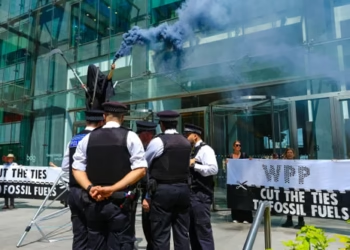
The timing of these revelations is particularly sensitive for the leadership of the British conglomerate. A new chief executive is preparing to outline a fresh strategy for the firm shortly. Investors are eager to see how the company will reverse its recent decline in profits. Early previews of the new plan have focused on technology rather than environmental sustainability goals. This shift away from climate initiatives has worried many observers in the London business community. The previous leadership had committed to reducing carbon emissions and preventing the spread of misinformation. However those close to the company say these commitments have yielded very little practical change. There is a strong feeling that ongoing work for oil majors violates internal ethical codes. New fossil fuel projects are widely considered incompatible with international goals to limit global warming. Many scientists argue that continuing such projects will lead to catastrophic changes for the planet. The United Nations has even urged advertising executives to stop supporting the fossil fuel industry. They have described the current situation as a form of madness that must be stopped. A formal complaint about the firm is currently being considered by an international economic organization. Protesters have also taken their message directly to the offices of the agency in London. They demand that the firm take responsibility for its role in the current climate crisis.
Related News:
 ‘Extinct’ Antelope Returns to Sahara, Bringing Hope
 Norfolk Coastal Graves at Risk as Erosion Deepens Family Anguish
 Eden Project Founder Celebrates 25 Years of Nature’s Hope
 Winter plant bloom signals climate breakdown in UK
 UK Homes May Skip Batteries in New Green Rules
 Avocado Crisis: The Hidden Violence Behind Exports
 Smaller farms funding prioritised in England nature plans
 Storm Goretti leaves Cornwall homes without power
 Wildlife Targets at Risk in England and Northern Ireland
 BP’s Influence Sparks Controversy in UK STEM Education
 Polycrisis Anxiety Leaves Many Feeling Trapped in the Present
 Kent Residents Continue Facing Water Supply Disruptions
 Antarctic Penguins Shift Breeding Season Amid Climate Change
 No Gas Boiler Ban as UK Warm Homes Plan Backs Heat Pumps
 Judi Dench Champions Fight to Save London’s Green Spaces
 Half the World’s Largest Cities Face Rising Water Stress
 Record-Breaking Heat Looms Over South-East Australia as Catastrophic Fire Risk Escalates
 UK joins North Sea wind grid pact with nine European nations
 Devon hosts first high-density hydro power system
 US-Style Pickup Trucks Surge on UK Roads
 Storm Chandra floods Somerset, triggers major incident declaration
 How Sandhill Ashes Rebuilt a Bushfire-Hit Rural Community
 Storm Chandra flooding leaves England on high alert
 Reform UK Taps Boris Ally to Shape Party Nature Agenda
 James Valentine Retires from ABC After Cancer Battle
 UK Pfas Action Plan Faces Criticism From Environmentalists
 Wigan Dump Crisis Sparks Health and Safety Alarm
 Norway’s Petrol Car Sales Hit Record Low Amid EV Surge
 Fish disco plan could save 90% of fish at Hinkley C
 Santos Wins Landmark Greenwashing Case in Court
 Gentoo Penguins First Birds on Australian Territory Hit by Bird Flu
 Flood risk homes surge across England builds
 Chikungunya Spread in Europe Climbs as Climate Warms
 Deer Shooting England: New Plan to Protect Woods
 Illegal Waste Dumping: New Drone Unit Launched
 Scotland’s Emissions Plans Face Criticism for Over-Reliance on Technology
 Germany Faces Backlash Over Scrapped Renewable Heating Mandate
 Group Expands Legal Claim Over South West Water Pollution
 Scotland’s Climate Plans Face Scrutiny Over ‘Science Fiction’ Targets
 Humans – not Mimmo the dolphin – need managing in Venice lagoon
 Ocean Warming Drives Massive Marine Life Loss, Study Warns
 Ancient Stepwells Revived Amid India’s Deepening Water Crisis
 Tropical Flowers Shift Blooming Due to Climate Crisis
 Death Valley Blooms Signal Potential Superbloom Year
 Greenpeace $345m Ruling Sparks Appeal Battle
 Wood burner legal threats spark council row
 South East Water Fined £22.5m for Repeated Supply Failures
 Net Zero Cheaper Than One Fossil Fuel Crisis, UK Told
 Musk’s xAI Permit Sparks Fury Over Power Plant Expansion
 London Considers New SUV Charges to Improve Road Safety
 The Truth Behind Rising Energy Costs and Fossil Fuel Myths
 ‘Drinking from a Fetid Pond’: Superbug Genes in Lough Neagh
 MPs Slam Agency Over Failing Fight Against Waste Dumping
 Middle East Deluge: Freak Storms Bangle Desert Nations
 Trump to Deploy “God Squad” Over Gulf Wildlife Protections
 Evacuations Ordered as California Wildfires Spread Fast
 UK Records Earliest Spring as Nature Awakens Fast
 Queensland Braces for Potential Second Severe Cyclone Hit
 Tragic End to Outback Search as Floods Claim a Life
 UK Fossil Fuel Expansion Risks Global Climate Collapse
 Cyclone Maila Intensifies to Category Five Strength
 Miles Jupp: How the Magic of the Ashes Sparked a Bold Blag
 Britain Must Break Its Long Addiction To Toxic Herbicides
 RSPB Urges Summer Bird Feeder Removal to Curb Disease
 The Toxic Scent Destroying Life in a Lancashire Town
 Britain Facing Sharp Decline in Rare Butterfly Species
 15 Million Oysters Set to Revive UK Marine Ecosystems
 Fuel Prices Drop Despite Geelong Refinery Blaze
 Big Tech Lobbies EU to Hide Massive Datacentre Emissions
 Medellín’s Green Revolution: A Global Climate Blueprint
 Celestial Magic: The Lyrid Meteor Shower Returns
 Ancient Cattle Breed Faces Urgent Risk of Extinction
 Nature Watchdog Accused of Halting Vital Site Protections
 Fury in Cornwall over herbicide plan to tackle weeds
 Broken Promises: Murray-Darling River Crisis Deepens
 Governments Fail Murray-Darling River Projects
 Renewable Energy as a Strategic Shield for UK Security
 Escobar’s Hippos May Be Moved to India Zoo
 Capitalism ‘Suicidal’, Warns Petro at Climate Summit
 UK Firm Faces Backlash Over US Oil Advertising Deals