Published: 07 May 2026. The English Chronicle Desk. The English Chronicle Online.
The British government faces urgent calls to implement drastic new road safety and energy measures. This proposal comes from a leading thinktank as the nation grapples with global instability today. Economic experts suggest that lowering speed limits could provide a vital cushion for struggling UK households. The Institute for Public Policy Research believes these changes will mitigate the harsh impact of conflict. Ongoing tensions in the Middle East have caused global oil prices to rise quite sharply lately. This situation creates a significant risk for the domestic economy and for many local consumers.
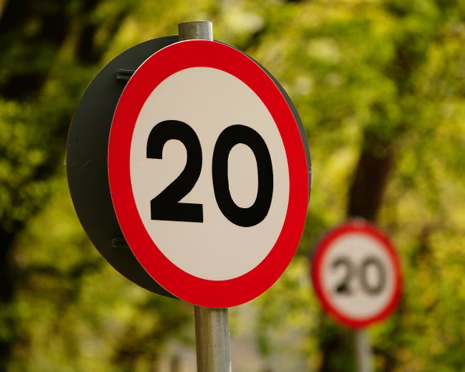
Researchers argue that capping legal speeds would reduce the overall national demand for expensive fuel. They suggest a strict limit of twenty miles per hour within all busy urban areas. Motorway speeds should also be reduced to sixty miles per hour to ensure maximum efficiency. Such measures are designed to combat the soaring prices triggered by the current Iran war. The institute claims that ministers must act now to support the British public effectively today. A temporary cut to fuel duty by ten pence is another major recommendation they made.
The thinktank also proposes a new energy price cap of two thousand pounds per year. This cap would provide much-needed stability for families facing rising heating and electricity costs now. Without intervention, experts warn that national inflation could peak as high as five percent soon. Senior economist William Ellis states that the UK cannot afford to ignore this energy shock. He believes that sitting back will only lead to further damage to the economy later. The conflict will likely hit public finances regardless of what the government chooses to do.

Mr Ellis suggests that the UK must be proactive to prevent a deep financial crisis. Lowering speed limits is described by the researchers as a significant dual win for everyone. It would lower fuel demand while making our streets much safer for many local people. Safer roads encourage more individuals to swap short car trips for walking or cycling instead. These changes should be paired with professional advice on how to drive more efficiently today. The thinktank also recommends an increase in home working and carpooling across the whole country.
These proposals are likely to spark intense debate among drivers and politicians across the UK. Reducing speed limits has historically proven to be a very controversial topic for many citizens. Wales recently lowered its default speed limit to twenty miles per hour back in late 2023. Recent polls indicate that over half of the Welsh population still opposes that specific change. However, official data shows a ten percent fall in road casualties over eighteen months there. This reduction in accidents provides a strong argument for those who support slower driving speeds.
The International Energy Agency has already issued similar advice to its many global member countries. They suggest that the UK should consider limiting when cars can drive on public roads. These emergency measures are reminiscent of the restrictions seen during the recent global health crisis. Such steps are deemed necessary in response to the escalating conflict in the Middle East. Researchers estimate the Treasury could lose eight billion pounds a year without a support package. This loss would stem from higher debt payments and much lower tax revenues overall.
Slower economic growth is a major concern for those monitoring the national budget this year. The proposed fuel duty cut would ideally remain in place until the spring of 2027. This duration provides a clear window for the economy to stabilize during these difficult times. The new energy price cap would sit above the current limit set by Ofgem today. Currently, the quarterly cap remains at one thousand six hundred and forty one pounds. The new cap would trigger automatically if prices rise above two thousand pounds very soon.
Average household bills could reach this daunting two thousand pound threshold by the coming July. Researchers admit that these various policies would cost roughly five billion pounds every single year. However, this figure is far lower than previous government responses to past energy crises. The 2022 intervention cost the British taxpayer approximately seventy six billion pounds in total then. Chancellor Rachel Reeves has indicated that any future support will be very carefully targeted now. The government aims to help those who are most in need of financial assistance today.
Targeted support is seen as a more responsible way to manage the current national budget. Implementing these measures could also reduce peak inflation by two percentage points quite quickly now. This reduction might avert the need for the Bank of England to raise rates. Interest rates are the primary tool used by the central bank to fight rising prices. Many financial analysts expect interest rates to go up later in the current year. The Bank of England recently decided to leave interest rates unchanged at three percent.
Policymakers warned that the British public must brace for potential increases in the near future. Governor Andrew Bailey noted that disruption to energy supplies creates a very difficult scenario now. He expressed concern about how long these global problems might continue to affect the UK. Mr Ellis argues that the government can act in ways that the Bank cannot. Well-designed policies can cap prices only during the most damaging economic scenarios for the country. This strategy ensures that intervention happens only when it is truly necessary for the public.

At the very worst, this plan would save about as much as it costs. If permanent economic damage is avoided, the strategy could end up saving significant taxpayer money. Avoiding sharp interest rate rises would be a massive relief for millions of UK homeowners. High rates often lead to increased mortgage payments and lower disposable income for many families. By reducing fuel and energy demand, the country can protect its most vulnerable citizens today. The thinktank believes that collective action is the only way to navigate this crisis.
The proposed shift towards walking and cycling also aligns with broader environmental goals for 2026. Reducing car usage helps to lower carbon emissions and improves the air quality in cities. This transition could lead to long-term health benefits for the entire population of the UK. While the immediate focus is on the economy, the environmental perks are also substantial. Many urban planners believe that slower speeds make cities more pleasant places to live in. The debate over these measures will likely continue in Parliament over the coming weeks.
Public reaction to the twenty mile per hour limit remains a very sensitive issue. Some motorists feel that slower speeds increase travel times and cause unnecessary frustration on roads. Others argue that the safety benefits far outweigh any minor delays to their daily journeys. The government must balance these conflicting views while managing a very complex international energy crisis. Finding a middle ground will require careful communication and transparent data from all departments involved. The coming months will be a true test of the nation’s economic resilience today.
As the conflict in the Middle East continues, the pressure on the UK increases daily. Every penny saved at the petrol pump helps a household manage its monthly budget better. The proposal for sixty mile per hour motorway limits is designed for this exact purpose. Driving at slightly lower speeds significantly improves the fuel efficiency of most modern petrol cars. This simple change could save drivers hundreds of pounds over the course of a year. It represents a practical way for individuals to contribute to the national energy saving effort.
The thinktank remains optimistic that these policies can provide a much safer path forward now. Their report serves as a stark reminder of the interconnected nature of global politics. Events happening thousands of miles away can directly affect the cost of living in Britain. By preparing now, the UK can shield itself from the worst of the volatility. The government’s next steps will be watched closely by economists and the general public. Everyone hopes for a swift resolution to the conflict and a return to stability. Until then, these radical measures remain a serious option for the British leadership today.
Related News:
 Norway’s Petrol Car Sales Hit Record Low Amid EV Surge
 Santos Wins Landmark Greenwashing Case in Court
 Yorkshire Water Funding Sparks Debate Amid Fines and Pay Row
 The Truth Behind Rising Energy Costs and Fossil Fuel Myths
 New £10bn rescue plan offered for Thames Water
 Trump to Deploy “God Squad” Over Gulf Wildlife Protections
 UK Fossil Fuel Expansion Risks Global Climate Collapse
 Capitalism ‘Suicidal’, Warns Petro at Climate Summit
 UK Firm Faces Backlash Over US Oil Advertising Deals
 Whitehall Steps In: The Battle Over Thames Water Deepens
 The Carbon Capture Con: Wasted Billions for Taxpayers
 Thames Water Future Remains Uncertain Amid Funding Crunch
 Reeves Faces Setback as Labour May Miss Homes Target
 Virgin Trains Moves Closer to Challenging Eurostar Monopoly
 Trump’s UK Ambassador Urges North Sea Drilling to Strengthen US Ties
 Ryanair Chief UK Economy ‘Doomed’ Under Labour
 M&S Profits More Than Halve After Cyber-Attack
 Millionaires group urge Reeves to introduce wealth tax to ‘lift kids out of poverty’
 From Lego to Pokémon: How Adults Are Driving UK Toy Market Growth
 Canada Passes Carney’s First Budget in Tight Parliamentary Vote
 Starmer Says Labour’s Economic Plan Needs Years to Deliver
 Virgin Media Fined £23.8m Over Telecare Safety Failures
 ‘Extinct’ Antelope Returns to Sahara, Bringing Hope
 Starmer Faces Parliamentary Battles Over UK-EU ‘Reset’ Plan
 ScottishPower Tops List of Worst UK Energy Suppliers
 Markets Slide As Gold Rally Signals Risk From Trump Greenland Tariff Plan
 City & Guilds pay surge sparks backlash amid £22m cuts
 Judi Dench Champions Fight to Save London’s Green Spaces
 Trump Fed bid heads to Supreme Court
 Half the World’s Largest Cities Face Rising Water Stress
 BT Names New Openreach Chief Amid Major Fibre Expansion
 UK Banks Plot Payment Backup Amid Trump Fears
 UK Unemployment Rate Climbs to 5.2% Peak
 Ocean Warming Drives Massive Marine Life Loss, Study Warns
 Greenpeace $345m Ruling Sparks Appeal Battle
 Rachel Reeves Faces Middle East Conflict Test
 ‘Drinking from a Fetid Pond’: Superbug Genes in Lough Neagh
 Rising Costs Force Families to Rethink Days Out
 UK inflation held at 3% before global energy price hit
 Ticketmaster Fees Rise Despite Recent US Junk Fee Crackdown
 Extreme Weather: Europe Shivers as Cyclone Narelle Hits
 M&S Demands Urgent Action on Rising Violent Retail Crime
 New Era for Sick Pay as Millions Gain Critical Rights
 US and Iran Agree to Two-Week Provisional Ceasefire
 Aegon Sells Historic UK Arm to Standard Life for £2bn
 Central Bank Chiefs Hold Crisis Simulation in Washington
 UK Staycations Rise as Travel Fears Grow
 Former Brexit Chief Calls for Rejoining the EU
 Urban Flood Crisis: A Growing Threat to English Homes
 Albanese Rejects Gas Export Tax Push
 Oil Prices Surge Above $120 Amid Iran Blockade Fears
 Silent Tracks: Rail Line Without Passengers
 Tough Fiscal Realities Await Next Scottish Government
 DeepMind Staff Vote to Unionize Over US Military Contract
 Global Conflict Hits Home As Bullock Warns Of Economic Pain
 EU Deal May Force UK Ban on Cancer-Linked Weedkiller
 US Awaits Iran Reply on New Ceasefire Proposal
 Aramco Surges as East-West Pipeline Counters Gulf Tensions
 Big Tobacco Under Fire Over Controversial New Ad Campaign
 High Street Crisis: Fears Grow Over Post Office Closures
 UK Firms Freeze Spending as Iran Conflict Bites
 Summer Shock: British Energy Bills Set for Grim July Hike
 Reeves to Fast-Track Clean Energy Amid Iran Crisis
 Oil Markets Face ‘Red Zone’ Threat Amid Iran Crisis
 Belfast Approves Pilot Extension of Sunday Trading Hours
 Albanese Defends Tax Reforms Amid Emotional Speech
 Tube Strike Brings Capital to a Standstill Over Shift Disputes
 BP Stands Firm on Amanda Blanc Amid Boardroom Storm
 UK House Prices Drop For Third Month Due To War Fears
 Top Chefs Back Andy Burnham to Save UK Hospitality Sector
 GSK Secures Landmark $10.6bn Deal for Nuvalent
 UK Economy Suffers a Sharp Downturn as Iran Conflict Bites
 AI Scams Push UK Investment Fraud Past £220m
 Rethinking the Blueprint for Youth Employment in Britain
 Sainsbury’s Boss Optimistic As Grocery Inflation Eases
 UK Households Suffer Squeeze As Disposable Incomes Drop
 US Courts Back Trump on Park Signage Removals
 Britain’s Mini Fan Craze Sparks Major Waste Crisis
 US Chemical Accidents Rise as Protections Are Rolled Back
 Ukraine Creates Long-Range Strike Command