Published: 20 May 2026. The English Chronicle Desk. The English Chronicle Online.
A Romanian fighter jet has shot down a stray Ukrainian drone over Estonian territory after suspected Russian electronic warfare diverted the unmanned aircraft off its intended course. The dramatic interception occurred on Tuesday afternoon over the skies of the Baltic nation, highlighting the growing danger of the conflict spilling into Western territory. Local residents reported a heavy military presence shortly before the vehicle was brought down near a populated area. The incident has triggered urgent discussions within the North Atlantic Treaty Organisation regarding the security of its eastern flank. Security experts believe the event demonstrates how electronic jamming can create unpredictable hazards far beyond the front lines. Both Tallinn and Kyiv have opened a joint investigation to determine the exact technical failures involved. Meanwhile, international observers are monitoring the situation closely to see how Western allies will counter these sophisticated electronic threats.
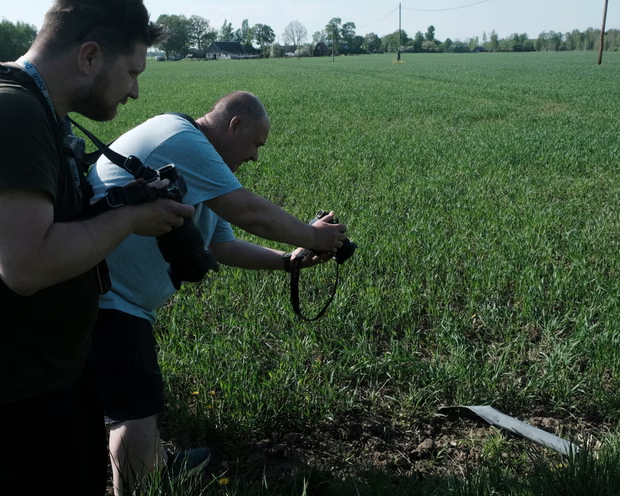
The physical reality of the war came abruptly close to Baltic citizens during the tense Tuesday afternoon operation. A local resident described the moment two fighter jets intercepted the wayward aircraft to the Estonian public broadcaster. He noted the aircraft were part of the routine alliance force policing regional skies before a loud bang occurred. The disabled drone eventually crashed approximately thirty metres away from the nearest residential home, causing immediate local alarm. Fortunately, emergency services reported no casualties or significant property damage on the ground following the impact. Debris from the shattered drone was quickly recovered by military personnel for comprehensive technical evaluation. Local authorities immediately cordoned off the crash site to ensure public safety and preserve vital evidence. This close call has renewed public anxiety across the region regarding the immediate proximity of the war.

Military commanders acted swiftly once the trajectory of the rogue drone was fully analysed by radar systems. Estonia’s defence minister explained that the decision to eliminate the threat was taken after careful calculations. Officials determined that allowing the unguided aircraft to continue its flight path posed an unacceptable risk. The Romanian F-16 detachment acted within standard alliance protocols for defending sovereign airspace against unidentified flying objects. Analysts noted that the response time was incredibly brief, demonstrating the high readiness of regional air defences. This successful interception proves the efficacy of the joint Baltic air policing mission during times of crisis. However, the necessity of destroying a friendly nation’s hardware underscores the messy reality of modern electronic combat. Technical teams are currently examining the wreckage to understand how the guidance systems were compromised.
The diplomatic response from the Ukrainian government was swift and focused on maintaining strong allied relationships. A spokesperson for the foreign ministry offered an official apology to Estonia and its Baltic neighbours. He emphasised that Ukraine remains in close cooperation with international institutions to prevent future aerospace incidents. Kyiv stressed that its forces have never intentionally targeted or utilised the airspace of friendly nations. The administration reaffirmed its commitment to transparency and shared intelligence regarding drone operations near alliance borders. Ukrainian officials expressed deep regret for the anxiety caused to the Estonian public by the crash. They also thanked the Estonian military for handling the delicate situation with immense professionalism and skill. This diplomatic agility reflects Kyiv’s reliance on the unwavering political support of the Baltic states.
The root cause of the navigational failure has been firmly attributed to hostile electronic interference. Ukrainian authorities stated that the drone was originally directed toward legitimate military targets inside the Russian Federation. They asserted that intense Russian electronic jamming altered the satellite guidance coordinates of the long-range craft. This phenomenon, often referred to as signal spoofing, can force automated systems to wander off course. Military experts confirm that Russian electronic warfare capabilities have grown increasingly potent along the border regions. By jamming global positioning frequencies, Moscow can effectively blind the navigation systems of incoming aerial threats. This creates a highly volatile environment where digital warfare alters physical realities across international borders. The incident serves as a stark reminder that electronic battlefields do not respect geographical lines.
This mid-air interception is part of a worrying pattern of border incidents across Eastern Europe. Just last week, the Latvian government collapsed following a severe crisis linked to a similar drone event. That previous disruption involved two unmanned aerial vehicles exploding at a strategic Baltic oil storage facility. The political fallout from that event exposed deep vulnerabilities regarding national readiness against hybrid warfare tactics. European leaders are increasingly worried that these frequent technical accidents could spark a wider military escalation. Each subsequent incident raises the political stakes for governments trying to protect their sovereign territory. The accumulation of these airspace violations is testing the collective patience of the Atlantic alliance. Security analysts warn that a single miscalculation could lead to direct kinetic confrontation between superpowers.
Moscow has sought to exploit the situation by launching an aggressive counter-narrative through official channels. Russia’s foreign intelligence service claimed that Ukraine is actively planning attacks from inside Baltic territory. The Kremlin issued a stern warning of just retribution against any nation assisting these operations. Baltic officials have uniformly rejected these accusations, labeling them as dangerous disinformation designed to fracture Western unity. The Latvian president used social media to state clearly that his nation does not permit such activities. He clarified that Latvia has never allowed any foreign power to launch attacks from its soil. European security agencies view the Russian statements as a classic attempt to invert blame for the crisis. This rhetorical conflict complicates the geopolitical landscape, making clear communication between nations even more vital.
Estonian officials have stood firmly beside their Ukrainian counterparts despite the obvious risks to local security. The Estonian foreign minister clarified that Russian electronic warfare remains the sole reason for these incursions. He reiterated that his country has not permitted its airspace to be used for offensive actions. Over the weekend, the minister noted that these events are direct consequences of Russia’s aggression. He described Moscow’s tactics as a desperate move to pressure Western allies into micro-managing Ukraine. The minister believes Russia wants the West to force Kyiv to halt its successful strategic strikes. Despite the disruptions, Tallinn continues to defend the legal right of Ukraine to strike Russian targets. This steadfast political stance underscores the deep historical bonds and shared security concerns of the region.
Nevertheless, the repetitive nature of these incidents has forced allies to demand greater operational caution. The Estonian defence ministry has consistently reminded Ukraine to adjust its drone pathways away from alliance borders. They argue that flight trajectories must remain as far from neutral European territory as technically possible. Western military advisers are urging Ukrainian engineers to develop better electronic counter-countermeasures for their fleet. Improving the resilience of these drones against jamming would reduce the likelihood of further stray flights. Kyiv has promised to review its routing protocols to minimise future risks to friendly populations. The balance between supporting Ukraine’s defence and protecting domestic airspace remains a delicate task for leaders. As the conflict evolves, the need for precise technological solutions becomes more urgent for everyone involved.
Related News:
 Capitol Attack Anniversary Sparks Deep Political Divide
 Saudi Officials Report Zubaidi Flee Before Yemen Peace Talks
 UK Targets in New York Bomb Threat Hoax: Man Jailed
 Gambia Supreme Court Hears Case to Overturn FGM Ban
 Trump targets Iran trade with 25% tariff warning
 US Senate rejects resolution limiting Trump military powers
 Gulf states warn Trump Iran strikes risk wider Middle East war
 Machado Trump medal gesture reshapes Venezuela power struggle
 Geopolitical football: Iran, Trump and the World Cup clash
 Canada-China trade gains momentum in new strategic partnership
 Syria President Declares Victory as Ceasefire Reached with SDF
 Shinzo Abe’s killer receives life sentence in Japan
 China General Under Investigation Amid Leadership Purge
 Philippines ferry disaster leaves 15 dead, dozens missing
 Cambridge Faces Scrutiny Over Arms Investment Transparency
 Epstein UAE Emails Shake British Royal Andrew’s Legacy
 Christchurch gunman seeks to vacate guilty plea
 Infantino Faces Russia Threat and Trump Concerns at Uefa Congress
 Concerns rise for Canberra boy amid Iran detention fears
 Ukraine Sends Drone Experts to Defend US Bases in Jordan
 Abramovich Chelsea Sale Cash Faces Jersey Probe
 Yvette Cooper: UK Must Follow Principles, Not US Pressure
 Jury Rules Meta and YouTube Liable for Addictive Design
 Saudi Arabia Urging US to Keep Up Iran Attacks
 The Woman Guarding Earth From the Threat of Asteroids
 Germany Grapples With AI Abuse Following TV Star Scandal
 Exiled Tycoon Warns of New Russian Attacks on UK Soil
 LA 2028: Millions of Affordable Olympic Tickets Announced
 Trump Slams Europe as Transatlantic Tensions Boil Over
 Inside the Deceptive Machine: A Former Producer Speaks Out
 Spain Faces Backlash Over Xenophobic Chants in Egypt Draw
 A Global Voice For Justice: Stephen Lewis Dies At Age 88
 Hope and Fear as Iranians Flee Across the Turkish Border
 Reform UK Pledges To Halt Visas Over Reparations Demands
 US and Iran Agree to Two-Week Provisional Ceasefire
 Starmer visits Gulf as US and Iran agree ceasefire
 Gaza Child Arrives in UK for Life-Changing Care
 Pakistan Brokers Historic Peace Deal Amid Rising Tensions
 UK Holds Firm on Strait of Hormuz Amid Trump Pressure
 Trump Signals Hope for New Iran Talks as Ceasefire Fades
 Reeves Slams Trump Over Iran War Lack Of Exit Plan
 US and Iran Pursue Extension of Ceasefire via Pakistan
 Trump’s Islamabad Gamble: The High Stakes of a New Iran Deal
 Ian Katz to Step Down as Channel 4 Content Chief
 The General’s Gambit: Pakistan’s New Role in Global Peace
 Mexico, Spain and Brazil call for Cuba dialogue amid crisis
 Pakistan’s Ambitious Bid for Middle East Peace
 Trump Starts $166bn Tariff Refund Process
 Israeli Soldiers Jailed Over Vandalism of Lebanese Statue
 Trump Weighs Sending Afghan Allies to the Congo
 Timor-Leste Faces Tough Questions Over Resort Proposal
 Pentagon Shakes Up Navy Leadership Amid Hormuz Blockade
 Trump Threatens UK With Big Tariff Over Tech Tax
 Prominent Voices Challenge Palestine Action Ban
 Security Scrutiny After Washington Shooting Incident
 Merz Criticises US Approach in Iran Conflict
 UK Envoy Sparks Controversy Over Special Relationship Claims
 Ukraine Urges UK to Seize Russian Oil Tankers
 US Calls Australia Media Law “Foreign Extortion”
 The Billionaire’s Secretary and the £1m Fraud
 Questions Remain Over The Tragic Bondi Massacre
 Ukraine strikes Tuapse as oil disaster worsens
 Brewing Tension: Taiwan Baristas Rebrand for World Stage
 Tensions Emerge in Netanyahu-Trump Alliance
 Mission to the World’s Edge: A Heroic Rescue in Tristan
 US and Mexico Face Heatwave as Floods Batter South Africa
 Mexico’s Missing: State Complicity in a Growing Crisis
 French Patient Told Hantavirus Was Just Anxiety
 The Long Way Home: Australia’s High-Stakes Virus Mission
 Putin Signals War End as Russian Momentum Stalls
 Romania’s Judicial Crisis: A System Under Siege
 Lee Lai Makes History with Landmark Stella Prize Victory
 Philippine Senator Flees After Days Under Senate Siege
 Alberta Separatist Bid Blocked by Canadian Court
 Canadian Court Blocks Alberta Independence Referendum Bid
 Big Tobacco Under Fire Over Controversial New Ad Campaign
 Bolsonaro Son Tape Scandal Sparks Massive Brazil Backlash
 Court Upholds Landmark Win for Transgender Rights
 Tragedy in the Maldives: Inside the Deep Sea Rescue
 Liberal Senator Criticises Immigration Rhetoric