Published: 05 October 2026. The English Chronicle Desk. The English Chronicle Online.
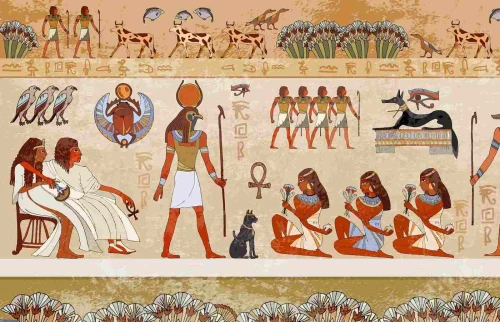
People who served Egypt’s earliest kings may have been deliberately killed and buried alongside their rulers as part of ancient funerary rituals, new archaeological research suggests. The study, based on injuries found on the skulls of individuals buried near royal tombs, has revived a debate that has continued for more than a century over whether human sacrifice was practised during Egypt’s First Dynasty.
The research focuses on remains from Umm el-Qa’ab, a royal cemetery near Abydos that contains the tombs and funerary enclosures of some of ancient Egypt’s earliest rulers. The site dates back roughly 5,000 years, to around 3,000BC, and provides important evidence about the political, religious and social structures that emerged during the formative period of the Egyptian state.
Although the cemetery is best known for its royal burials, numerous additional graves surround the tombs and enclosures. Archaeologists believe these graves contained members of the royal households, including officials, craftsmen and other people who served the rulers. Their presence has long raised questions about why they were buried at the site and whether their deaths were connected directly to the deaths of the kings they served.

The latest research was conducted by Dr Roselyn Campbell of Purdue University, who re-examined the skulls of 46 individuals excavated from subsidiary graves associated with three royal figures: King Djer, King Djet and Queen Merneith. The remains are held in the Duckworth Collection at the University of Cambridge.
Campbell found evidence of potentially fatal injuries in 18 of the skulls examined. The injuries included fractures that appear to have occurred around the time of death. One individual also showed evidence of a particularly severe injury involving the eye area.
The findings provide new physical evidence for a theory first advanced by the British Egyptologist Flinders Petrie, who excavated many of the subsidiary graves in the 1920s. Petrie believed that the people buried around the royal enclosures could have been victims of human sacrifice, possibly killed when their ruler died so they could accompany him into the afterlife.
However, Petrie’s interpretation was difficult to establish because the remains did not initially appear to contain clear evidence of violent death. The absence of visible trauma allowed alternative explanations to emerge. Some researchers suggested that the retainers had died naturally and were later transported to Abydos for burial when the king died. Others considered the possibility that they may have been buried alive without necessarily leaving obvious marks on their skeletons.
Campbell’s examination has reopened the question by applying modern methods to the remains themselves. According to the research, some of the skull fractures may have been injuries sustained close to the time of death rather than damage caused by the burial environment, excavation or later handling.
The discovery does not prove that every person buried near the royal tombs was sacrificed. Campbell has stressed that the evidence must be interpreted cautiously, particularly because only 46 skulls were examined from a much larger burial population.
The distinction is important because the subsidiary graves at Umm el-Qa’ab number in the hundreds in some royal complexes. The number of such burials also varied considerably between rulers. The earliest First Dynasty king, Aha, appears to have had only a relatively small number of subsidiary burials, while later rulers were associated with much larger groups of people buried around their funerary complexes.
The nature of the injuries also provides clues about how some of the deaths may have occurred. Campbell argues that the fractures are unlikely to have been caused by the type of mace frequently represented in ancient Egyptian art, particularly scenes showing a victorious king striking an enemy.
Instead, the pattern of damage appears more consistent with blows from relatively flat and broad objects, potentially made from materials such as wood or antler. Such injuries could have resulted from deliberate attacks, although the precise circumstances surrounding each death remain impossible to reconstruct with certainty.
The research therefore supports a more cautious version of the sacrifice theory. Rather than suggesting that all the retainers were necessarily killed, Campbell believes it is possible that some were sacrificed while others died from different causes.
She has also emphasised that the available sample is too small to determine how widespread the practice may have been. The surviving remains may not represent the full population buried around the royal complexes, meaning the proportion of individuals who suffered fatal trauma cannot be confidently applied to all the retainers.
The possibility of human sacrifice in ancient Egypt has attracted debate among Egyptologists for generations because it raises fundamental questions about royal power, religious belief and the treatment of people within early Egyptian society.
If some retainers were deliberately killed when their rulers died, the practice would indicate that the earliest Egyptian kings possessed considerable authority over the lives and deaths of people serving within their households. It would also suggest that the transition of a king into the afterlife was understood as an event requiring the continued presence of members of his earthly court.
At the same time, the practice appears to have been relatively short-lived. Subsidiary burials became less common and appear to have disappeared around the beginning of Egypt’s Second Dynasty. Later royal traditions relied increasingly on symbolic representations rather than the physical burial of servants.
Salima Ikram, a professor at the American University in Cairo, said the idea of retainer sacrifice was not entirely new but described the study as significant because it applied rigorous modern methods to human remains from the actual burial complexes.
The shift from human retainers to statuettes may have reflected changing religious ideas about how a ruler’s servants could continue their duties in the afterlife. Small figures could symbolically perform work for the deceased without requiring living people to accompany the king through death.
Yet the discovery of violent injuries also raises questions about how the people involved experienced these rituals. From the perspective of ancient religious beliefs, serving a divine or semi-divine king in the afterlife may have been regarded by some as an honour or a path to eternal existence.
Others may have viewed the prospect very differently. The individuals could have feared death, resisted their fate or attempted to escape. There is currently no way to determine the personal beliefs or choices of those buried at Umm el-Qa’ab, making it difficult to establish whether the practice was universally accepted by the people involved.
Dr Dawn McCormack, an Egyptologist at Samford University in Alabama, noted that human sacrifice has appeared in various cultures and historical periods. She also cautioned against assuming that everyone involved in the Egyptian burial system willingly accepted what happened.
The physical evidence is especially significant because archaeological interpretations of ancient violence often depend on a combination of burial patterns, written evidence and skeletal trauma. In this case, the skull injuries provide a direct indication that at least some individuals buried around the royal enclosures experienced severe physical violence.
Nevertheless, the researchers acknowledge that the evidence remains incomplete. The injuries do not by themselves reveal who ordered the deaths, why particular individuals were selected or whether the violence was formally part of a state-sponsored ritual.
The disappearance of subsidiary burials during the transition into the Second Dynasty may eventually provide another clue. If the practice was indeed connected to royal funerary ceremonies, its decline could indicate a major transformation in Egyptian religious and political traditions.

The findings from Umm el-Qa’ab therefore do more than revive an old archaeological theory. They offer a glimpse into a period when Egyptian kingship, religion and ideas about death were still developing. The possibility that people serving the earliest rulers were sometimes killed after the deaths of their masters presents a stark picture of the power held by Egypt’s first royal dynasties.
For archaeologists, the discovery also demonstrates the importance of revisiting collections excavated many decades ago. Remains examined by earlier generations of researchers can sometimes reveal new information when modern analytical techniques are applied.
The latest evidence does not settle the century-old debate, but it makes the possibility of retainer sacrifice harder to dismiss. As further research examines the remaining burials and seeks to understand the injuries in greater detail, the ancient cemetery at Abydos may continue to provide important clues about how Egypt’s earliest kings exercised power and how their subjects understood life, death and service in the afterlife.
Related News:
 New Bacteria Discovery Offers Hope Against Noma
 WHO approves first malaria drug for babies
 Ebola outbreak in DRC overwhelms health system as cases surge
 Millions of Enslaved Records Open New Family History Path
 Tropics May Wait Longest for Net-Zero Climate Benefits
 Africa Urged to Transform Universities for Young Talent
 Cairo Mural Sparks Debate Over Ancient Egyptian Identity
 Virgin Trains Moves Closer to Challenging Eurostar Monopoly
 UK Bans Fake Numbers: Scammers Lose Their Trick
 Vibe coding’ named Collins dictionary’s word of the year
 Patients to Test Health at Home to Ease NHS Winter Pressure
 Britain deploys RAF specialists to assist Belgium with drone threats
 Stop using ChatGPT to write speeches, AI minister tells MPs
 Northern Lights may illuminate UK skies this week
 New laws to bolster UK’s defences against cyber attacks on NHS, transport and energy
 Working-Class Men with Prostate Cancer Left Behind by NHS
 New AI tool could cut wasted efforts in organ transplants
 Sundar Pichai Cautions on AI Hype and Market Risks
 Google Chief Urges Caution: Don’t Trust AI Blindly
 Healthy Habits in Your 30s That Boost Life in Your 70s
 Coffins Now Too Large to Cremate Amid Rising Obesity Crisis
 Google Removes Some AI Health Summaries Over Safety Concerns
 Nasa ISS Medical Evacuation: Crew-11 To Return Early
 EU launches Grok AI probe into X over explicit images
 AI job losses UK: Britain faces sharper employment shock
 ABC Facebook Page Briefly Hacked, Adult Photos Posted
 US Robotaxis Train for London Streets Before Launch
 Meta trial over child exploitation claims begins
 Autistic Girls Often Missed in Childhood Diagnoses, Study Finds
 Most Statin Side-Effects Are Not Caused by Drugs, Study Confirms
 Childnet Censorship Row Over Teen Safety Speeches
 BT Names New Openreach Chief Amid Major Fibre Expansion
 Tech Trends Set to Transform Life in 2026
 Starmer Targets AI Chatbots Over Child Safety Concerns
 Ocean Warming Drives Massive Marine Life Loss, Study Warns
 Stewart Brand on Musk, Bezos and a Life of Long Thinking
 Facial Recognition Error Leads to Wrongful Arrest in Milton Keynes
 Zorevunersen Breakthrough for Dravet Syndrome
 Cancer Death Rate in Britain Falls by Nearly a Third
 Taking Multivitamins Daily Could Slightly Slow Ageing, Study Finds
 The Kill Line: A Shifting Vision of the American Dream
 ‘Drinking from a Fetid Pond’: Superbug Genes in Lough Neagh
 Artemis II: Humanity Returns to the Moon After Decades
 Artemis II Returns After Historic Moon Flyby
 Norway’s Telenor Faces Lawsuit Over Myanmar Data Breach
 UK Banks to Deploy Controversial Mythos AI Tool Next Week
 Robots Outpace Humans in Beijing Half-Marathon
 UK Faces Growing Threat of Scale Hacktivist Attacks
 UK Watchdogs Warn Over AI Facial Recognition Oversight
 DeepMind Staff Vote to Unionize Over US Military Contract
 Trump Lands in Beijing for High-Stakes Summit with Xi
 Court Upholds Landmark Win for Transgender Rights
 Tech Trends and the Battle Against Exam Hall Cheating
 Stolen Mobiles Could Soon Become Useless Bricks
 From Pocket Monsters to the Frontline
 UK Ministers Lobby Trump Over Under-16s Social Media Ban
 Trump Faces Backlash Over $2bn Earnings Since Return
 Sydney Records Hottest June Since 1859 as Expert Warns New High a ‘Signature’ of Global Warming
 Record £28m Fine for Virgin Media Over Cancellation Woes
 Telstra Software Fault Triggers Massive Nationwide Outage
 Telstra Software Fault Triggers Massive Nationwide Outage
 Meta Under Fire: The Battle Over Addictive Social Media Design
 Meta Sued Over Alleged AI-Driven Layoffs
 Gen Z turns to BirdTok for a gentler digital escape
 AI Loss of Control Incidents Nearly Double
 London Launches First Self-Driving Taxis
 Abusive ex used Tesla to control and harass former partner
 New Mexico Takes Facebook to Trial Over Data Scandal
 Tom Watson Takes Senior Role at Palantir
 British Columbia Sues OpenAI Over School Shooting
 Australia Renewables Reach Record 80% Grid Demand
 Roman Finds Reveal Bath’s Suburban Past
 Trump gives Xi red-carpet welcome as trade truce extends
 Chinese Hybrid Car Surge Raises EU Auto Industry Concerns
 OpenAI Agent Breaches Medicare Portal in Australia
 Xi urges Trump to avoid US-China military conflict
 Drones Could Speed Up Defibrillator Delivery
 London Facial Recognition Trial Ends With False Alert
 Sheikh Tahnoon and the UAE’s AI Ambitions
 Jessica Watkins Leads Record-Breaking SpaceX Flight