Published: 18 April 2026. The English Chronicle Desk. The English Chronicle Online.
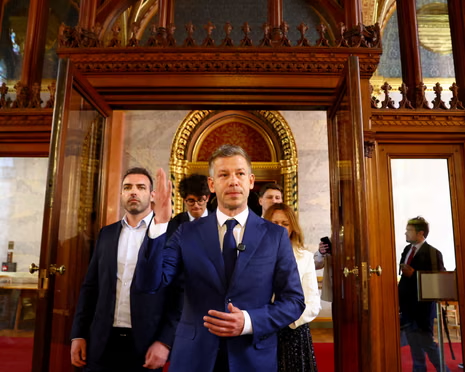
The recent political transition in Hungary has sparked profound hope across neighbouring Ukraine today. Voters chose to end the long sixteen-year tenure held by former leader Viktor Orbán recently. Many citizens in Ukraine celebrated this change with genuine joy and shared online memes. People viewed this election result as a major blow to Russian influence within Europe itself. Kyiv officials now cautiously hope for a constructive dialogue with the new Hungarian government leaders. Relations between these two nations have remained strained due to past intense political disputes. The outgoing administration often utilized aggressive anti-Ukrainian rhetoric during their intense election campaign cycle. They frequently accused Kyiv of various malicious acts intended to damage their political standing.
The primary category of impact involves the crucial financial support for Ukraine from Europe. Hungary previously blocked ninety billion euros in essential aid meant for the struggling Ukrainian economy. Observers expect the new leadership to lift this veto shortly after taking power soon. This funding remains absolutely vital for Ukraine as the difficult conflict with Russia continues. Furthermore, the removal of Orbán should allow for tougher new sanctions against Moscow itself. Brussels is expected to release frozen funds to Hungary now that leadership has changed. This move marks a significant shift in the broader geopolitical landscape of the entire region. Experts view this as a strategic setback for Vladimir Putin and his broader expansionist plans.
A second category of focus concerns the complex bilateral issues lingering between both neighboring nations. The issue of Ukraine joining the European Union remains a sensitive topic for many citizens. New leadership has indicated they will not oppose membership but demand a public national referendum. Disputes regarding the ethnic Hungarian minority in the western Zakarpattia region still require delicate handling. Kyiv also hopes that the new government will return seized assets currently held in Budapest. These assets include millions of euros and gold bars taken during a recent tense dispute. Returning these funds would serve as a powerful gesture of goodwill for the new administration. Both sides now face the difficult task of rebuilding trust after many years of friction.
The third category involves the underlying cultural and historical perceptions that shape these current diplomatic relations. Some Ukrainian citizens believe that Hungarian society still struggles with a lingering imperialistic mental outlook. This perspective suggests that long-term propaganda has deeply influenced the views of many local voters. Analysts warn that changing these societal attitudes will not happen overnight despite the new leadership. Leaders in Kyiv understand that they must approach these diplomatic engagements with extreme tactical caution. The goal is to move beyond the legacy of past hostility towards a stable partnership. Future meetings are expected to help define the new course for these two nations together.
Many analysts argue that the incoming government prioritizes Hungarian national interests over broader international alliances. They caution that this new leader should not be viewed as an automatic Ukrainian ally. Instead, he will likely navigate complex policies that reflect the internal needs of his own electorate. Diplomats emphasize the need for patience while both governments work to establish a new working relationship. High-level talks scheduled for next month in Romania represent a vital step in this process. Both sides aim to find common ground regarding regional security and the ongoing energy sector challenges. The path forward remains complicated but offers a genuine opportunity for improved cooperation and regional stability.
The journey toward normalization will likely require significant effort from both Kyiv and the Budapest leadership. Observers are watching closely to see how the new cabinet handles these urgent diplomatic priorities. Simple gestures of goodwill could potentially reduce the tension that has built up over many years. Ukrainian officials seem ready to engage in productive dialogue to resolve these persistent bilateral conflicts. Success in this endeavour would benefit both nations while strengthening the unity of the European bloc. The international community maintains a strong interest in how this political transition influences wider regional security. Many hope that this change marks the beginning of a more peaceful and prosperous era.

Ordinary people across the region are hopeful that the diplomatic climate will shift quite rapidly now. Citizens like Oleh Kupchak are eager to see a return to normal and friendly cross-border travel. Improving the local infrastructure and trade routes remains a priority for communities living near the border. Both nations have suffered from the economic consequences of the recent diplomatic and military instability. A collaborative approach could help stimulate economic growth and resolve longstanding infrastructure issues in the region. The potential for a renewed partnership offers a positive sign during these very uncertain historical times. Leaders have a responsibility to act wisely and secure a peaceful future for all their citizens.
The transition process will definitely test the capabilities of the newly elected administration in Hungary today. They must balance domestic expectations with the demands of their international partners in the European Union. Transparent communication will be essential for building the trust that has been lost over many years. Kyiv has expressed a willingness to work through all outstanding issues in a structured and professional manner. This commitment to dialogue is a positive development that could lead to significant long-term diplomatic progress. Observers remain optimistic that both capitals can find ways to reconcile their differing views on many issues. The coming months will be critical for shaping the future direction of this important European relationship.
Ukraine faces the enormous challenge of reconstructing its economy while fighting against a powerful and aggressive neighbour. Support from partners in the European Union is absolutely essential for achieving long-term recovery and growth. Having a more cooperative government in Budapest could significantly enhance the collective security and economic resilience. This shift in the political landscape represents a potentially transformative moment for the entire Eastern European region. People are looking forward to seeing how these developments unfold throughout the rest of this year. Achieving stability and progress remains the ultimate goal for the populations of both of these nations. Clear communication and shared strategic goals will undoubtedly guide the path forward into this new future.
Related News:
 UK Banks Granted Reprieve as BoE Delays Basel III Capital Rules Until 2028
 Singapore Corruption Scandal: Details Emerge on Iswaran’s Luxury Flight and Ties to Tycoon Ong Beng Seng
 Corfu Beyond the Crowds: Discovering Serenity in Southern Villages and Hidden Taverns
 Peter Andre Praises Son Junior’s ‘Quiet Season’ Amid Ongoing Family Dispute
 Massive 641-Mile Storm Set to Batter UK with 15 Hours of Rain and Strong Winds
 Jeremy Clarkson’s Pub: A Sunday Lunch Like No Other
 ‘Extinct’ Antelope Returns to Sahara, Bringing Hope
 IndiGo Cancels Hundreds of Flights Amid Pilot Shortages
 Young Britons Face Heaviest Burden from Ageing Population, Lords Warn
 U‑Turn on Farmers’ Inheritance Tax Sparks Political Firestorm
 Aston Villa Remain Arsenal’s Key Obstacle in Title Pursuit
 Irish Beach Tragedy: Irish Drown at Whitehaven Beach in Australia
 Starmer Faces Parliamentary Battles Over UK-EU ‘Reset’ Plan
 Met Police Vetting Failures Let Serial Rapists Remain
 Federal Immigration Shift: Officers Leave Louisiana for Minneapolis
 Fatal Bolton Taxi Crash Claims Three Teens and Driver
 Australia grants Asio powers to designate hate groups under new laws
 Friedman Uninvited From 2024 Adelaide Writers’ Week
 ScottishPower Tops List of Worst UK Energy Suppliers
 Judi Dench Champions Fight to Save London’s Green Spaces
 Crowborough Camp Welcomes First Asylum Seekers
 BBC Funding Crisis: Tim Davie Warns of Jeopardy Ahead
 ABC Facebook Page Briefly Hacked, Adult Photos Posted
 Artificial intelligence will cost jobs, admits Liz Kendall
 Older Women Vanish from BBC Screens, Review Confirms Bias
 Meta trial over child exploitation claims begins
 Streeting moves on doctor pay to end strike dispute
 Ben Stokes injury joke after brutal ball strike
 UK and US Drop in Global Corruption Index Rankings
 Send spending gap leaves deprived areas behind
 Hidden Crisis: Domestic Abuse Suicide Toll in UK
 UK Unemployment Rate Climbs to 5.2% Peak
 Canberra Poster Seizure Sparks Free Speech Row
 BBC World Cup Presenting Duties Shared Among Trio
 Wales Approves Assisted Dying Bill Consent
 CPS Updates Guidance on Honour-Based and Dowry Abuse
 Stewart Brand on Musk, Bezos and a Life of Long Thinking
 English Cricket Faces Moral Crisis Over Indian Investment
 Jacinda Ardern Move Sparks Kiwi Reflection
 Middle East Airspace Crisis Strands Thousands
 Kelly Wilkinson Inquest Reveals Bail Failure
 Asylum Seekers to Work After Year-Long Wait
 Princess Eugenie steps down as patron of anti-slavery charity
 New Zealand Covid Response Praised Despite Lingering Scars
 Injured Mojtaba Khamenei Elevated as Iran Leader
 The Kill Line: A Shifting Vision of the American Dream
 Inquiry into HMRC child benefit errors launched by NAO
 Family of Alleged Bondi Gunman Seeks Name Suppression
 Rising Costs Force Families to Rethink Days Out
 Air Canada CEO Faces Outcry Over Recent Language Misstep
 Extreme Weather: Europe Shivers as Cyclone Narelle Hits
 Scott Mills Sacked by BBC Over Personal Conduct Claims
 Palantir Boss Defends NHS Deal Amid Government Break Clause
 Asia Turns Back to Coal Amid Middle East Energy Crisis
 Secret Role of UK Security Services in Troubles Amnesty Law
 Tube Strike Brings Capital to a Standstill Over Shift Disputes
 Teaching Machines Right From Wrong in the Digital Age
 Is Ollie Robinson the Chaos English Cricket Needs Today?
 The Hidden Crisis Eroding Trust in British Communities
 Saving the Scalloped Hammerhead: The Pacific Battle
 Stolen Mobiles Could Soon Become Useless Bricks
 Clean Air Initiatives Spark Major Fall in London Hospital Admissions
 Fearless Pioneer of Investigative Journalism Dies Aged 83
 Trump Urged to Condemn UFC Fighter Over Obama Slurs
 The Fear Gap: Why Europe Feels Less Safe Than It Is
 US Military Pacific Boat Strike Kills Three People
 Dettol Apologises for ‘Toxic Men’ Advert Backlash in China
 UK Care Crisis: Row Explodes Over New Visa Settlement Rules
 Sainsbury’s Boss Optimistic As Grocery Inflation Eases
 US Advance Past Bosnia in World Cup Thriller
 Trump’s Mount Rushmore Speech: A Divisive Anniversary
 Trump’s Red-Card Intervention Hurts the US World Cup
 US Airman Avoids British Court in Indecent Exposure Case
 Britain’s Mini Fan Craze Sparks Major Waste Crisis
 Trump Swaps Planes Amid Iran Tensions
 Ann Widdecombe, Formidable Political Figure, Dies at 78
 UK Schools Struggle as Classrooms Top 40C
 Yemen Accuses Iran of Violating National Sovereignty
 Houthis Strike Saudi Arabia as Middle East Tensions Rise
 Former Diplomats Urge UK and France to Act on Palestine