Published: 22 April 2026. The English Chronicle Desk. The English Chronicle Online.
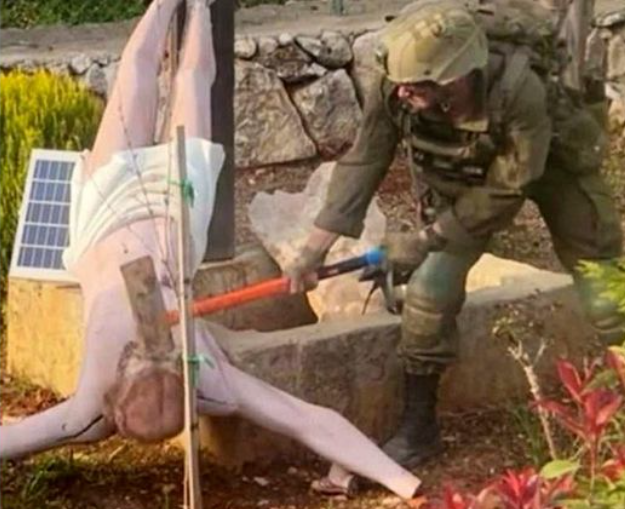
A disturbing incident recently occurred in southern Lebanon that has sparked significant international condemnation. Two Israeli soldiers have been officially sentenced to thirty days in a military detention facility. This disciplinary action follows the widely circulated footage of them desecrating a religious monument. The pair were captured on video damaging a statue depicting Jesus in a local village. This act triggered widespread anger across global Christian communities and drew sharp criticism from leaders. The Israel Defense Forces confirmed the soldiers have been permanently removed from all combat duties.
The controversy began when an image appeared on social media platforms early this past Monday. It clearly showed one soldier using a heavy sledgehammer to strike a religious statue. This statue had previously fallen from its cross within a quiet Christian Lebanese village. The village is situated very close to the shared border with the state of Israel. Many viewers were horrified by the blatant lack of respect shown to this sacred symbol. The Israel Defense Forces immediately launched an extensive investigation once the image started gaining attention.
The internal military inquiry concluded that this behavior completely deviated from established army values. Official military protocols strictly mandate respectful conduct toward all religious institutions and their associated symbols. The soldiers clearly ignored these guidelines during their deployment in the southern Lebanese region. Their actions were swiftly classified as a severe breach of professional military conduct and ethics. This decision to impose jail time is viewed as relatively rare by human rights organizations. Many observers have long argued that military accountability for such actions remains historically very inconsistent.
Data from the organization Action on Armed Violence highlights some ongoing concerns regarding military accountability. Their 2025 research suggested a high percentage of alleged misconduct cases remain entirely unresolved today. That report claimed a significant majority of similar complaints were closed without any substantial consequence. This particular case regarding the statue seems to be an exception to that ongoing trend. The military command clearly felt that a public response was necessary for this specific act.
Beyond the two primary perpetrators, the investigation identified six other soldiers present at the scene. These individuals reportedly stood by while the vandalism occurred but failed to intervene appropriately. The army stated these soldiers did not report the incident to their superiors as required. These individuals have now been summoned for mandatory clarification discussions with their commanding officers. Further disciplinary measures will likely be determined following the completion of those internal administrative meetings.

The military has since reinforced existing procedures regarding conduct around sensitive religious sites for troops. These strict protocols were allegedly communicated to forces before they entered these specific areas initially. The command has now promised to emphasize these requirements again for all active units currently deployed. They aim to prevent any future occurrences of such inflammatory behavior during the ongoing conflict operations.
In a move intended to foster some reconciliation, the military attempted a rapid response. They recently released a photograph showing a replacement crucifix installed at the original site. The army claimed this new sculpture was placed in full coordination with the local community. It appeared smaller but notably more ornate than the statue that was previously destroyed. Residents of the village of Debel noted that the statue sat outside a home. This area remains one of the few places where civilians have stayed during this war.
The ongoing conflict with Hezbollah has placed immense pressure on all civilians in southern Lebanon. The Israeli leadership issued formal statements expressing deep regret regarding the actions of the soldiers. Prime Minister Benjamin Netanyahu stated that he was personally stunned and saddened by the incident. Foreign Minister Gideon Saar issued an official apology to every Christian whose feelings were hurt. These high-level communications reflect the gravity with which the government views this specific controversy.
The desecration drew swift and intense condemnation from numerous international and regional religious figures. The Latin Patriarch of Jerusalem, Cardinal Pierbattista Pizzaballa, expressed his deep indignation this past Monday. His official statement offered an unreserved condemnation for the destruction of the important religious sculpture. The Assembly of Catholic Ordinaries of the Holy Land officially labeled the act a grave affront. They viewed it as part of a troubling pattern of reported incidents regarding Christian symbols.
Prominent religious leaders have used this moment to reflect on the broader context of violence. Archbishop Vincenzo Paglia shared powerful words regarding the historical significance of the region during broadcasts. He pointedly reminded the Israeli leadership that Jesus himself visited this specific area historically. He noted that these visits were intended to heal rather than destroy or kill people. This sentiment has resonated deeply with many observers who are mourning the loss of life.
The political reaction to this incident has been broad, spanning across several different international borders. The United States ambassador to Israel, Mike Huckabee, called for swift and severe public consequences. As a known religious figure, his response reflected the serious nature of the desecration involved. Various influential commentators in the United States also reacted quickly to the viral online imagery. High-profile individuals described the footage as horrific while sharing it across their various social networks.
Christians currently represent a significant portion of the total population residing within the Lebanese nation. Approximately one third of the five point five million people identify with this faith tradition. Thousands of families have been displaced from their homes since the war began in March. The conflict has caused significant loss of life and destroyed vital community infrastructure for many. According to Lebanese authorities, the death toll has climbed to over two thousand human lives. This figure includes many children and healthcare workers who were caught in the intense crossfire.
The focus on this statue incident highlights the fragility of coexistence during times of total war. Religious symbols often carry deep meaning that transcends the immediate political tensions of the region. The decision to jail the soldiers may offer a small measure of justice for many. However, the broader tragedy of the conflict continues to overshadow these individual moments of accountability. Maintaining respect for humanity and heritage remains a difficult challenge for all parties involved now. Future observers will likely look back at this incident as a symptom of deeper societal divisions. The path toward lasting peace remains complicated by such events occurring in the heat of war.
Related News:
 Capitol Attack Anniversary Sparks Deep Political Divide
 Saudi Officials Report Zubaidi Flee Before Yemen Peace Talks
 UK Targets in New York Bomb Threat Hoax: Man Jailed
 Gambia Supreme Court Hears Case to Overturn FGM Ban
 Trump targets Iran trade with 25% tariff warning
 Rudd successor: Defence chief and former ministers considered
 US Senate rejects resolution limiting Trump military powers
 Venezuela regime claims release of political prisoners signals new era
 Gulf states warn Trump Iran strikes risk wider Middle East war
 Machado Trump medal gesture reshapes Venezuela power struggle
 Greenland defence seen as shared Nato duty amid troop arrivals
 Geopolitical football: Iran, Trump and the World Cup clash
 Canada-China trade gains momentum in new strategic partnership
 Trump Receives Machado’s Nobel Medal in White House Meeting
 Syria President Declares Victory as Ceasefire Reached with SDF
 US Considers Asylum for British Jews Amid Rising Antisemitism
 Trump slams UK ‘stupidity’ over Chagos Islands, eyes Greenland takeover
 Trump Tightens Grip on EU and UK Energy Supply
 Shinzo Abe’s killer receives life sentence in Japan
 China General Under Investigation Amid Leadership Purge
 Philippines ferry disaster leaves 15 dead, dozens missing
 Cambridge Faces Scrutiny Over Arms Investment Transparency
 Files Link Andrew to Epstein Dinner After Prison Release
 Epstein UAE Emails Shake British Royal Andrew’s Legacy
 Christchurch gunman seeks to vacate guilty plea
 Liberal Fallout: Taylor Challenge Casts Shadow Over Sussan Ley’s Leadership
 Infantino Faces Russia Threat and Trump Concerns at Uefa Congress
 Concerns rise for Canberra boy amid Iran detention fears
 Ukraine, Russia Meet in Geneva Ahead of War Anniversary
 Caribbean Leaders Urge Dialogue Amid US Oil Embargo on Cuba
 Anthony Albanese Must Uphold Rights for All Australians
 Ukraine Sends Drone Experts to Defend US Bases in Jordan
 New Zealand Covid Response Praised Despite Lingering Scars
 Abramovich Chelsea Sale Cash Faces Jersey Probe
 Yvette Cooper: UK Must Follow Principles, Not US Pressure
 US Strike on IRIS Dena Strains Strategic Indian Security Ties
 Slovenia Election: A Nation at a Crossroads
 Jury Rules Meta and YouTube Liable for Addictive Design
 Saudi Arabia Urging US to Keep Up Iran Attacks
 Trump Softens Cuba Oil Stance as Russian Tanker Nears
 The Woman Guarding Earth From the Threat of Asteroids
 IMF Predicts Global Economic Crisis Due to Gulf Unrest
 California Defies Trump With Strict New AI Standards
 Germany Grapples With AI Abuse Following TV Star Scandal
 Exiled Tycoon Warns of New Russian Attacks on UK Soil
 Labor Under Fire Over Stalled University Fee Reform
 LA 2028: Millions of Affordable Olympic Tickets Announced
 Trump Slams Europe as Transatlantic Tensions Boil Over
 Inside the Deceptive Machine: A Former Producer Speaks Out
 Italy Faces Third Successive World Cup Absence After Loss
 Starmer Urges Ambitious EU Ties Amid Middle East Conflict
 Spain Faces Backlash Over Xenophobic Chants in Egypt Draw
 A Global Voice For Justice: Stephen Lewis Dies At Age 88
 Trump Issues Stark Warning After Strike On Iran’s Largest Bridge
 Hope and Fear as Iranians Flee Across the Turkish Border
 Tragic End to Outback Search as Floods Claim a Life
 Ben Roberts-Smith Arrested Over Alleged War Crimes
 Reform UK Pledges To Halt Visas Over Reparations Demands
 US and Iran Agree to Two-Week Provisional Ceasefire
 Starmer visits Gulf as US and Iran agree ceasefire
 Gaza Child Arrives in UK for Life-Changing Care
 Israel Defies Ceasefire as Lebanon Operations Persist
 Own an Entire Australian Town for the Price of a UK Flat
 Pakistan Brokers Historic Peace Deal Amid Rising Tensions
 Netanyahu Vows Continued Lebanon Strikes Amid Peace Talks
 UK Holds Firm on Strait of Hormuz Amid Trump Pressure
 Rory McIlroy Eyes New Horizons After Masters Defence
 Trump Signals Hope for New Iran Talks as Ceasefire Fades
 Reeves Slams Trump Over Iran War Lack Of Exit Plan
 US and Iran Pursue Extension of Ceasefire via Pakistan
 Trump’s Islamabad Gamble: The High Stakes of a New Iran Deal
 Wall Street Hits Historic High Amid Hopes for Iranian Peace
 Ian Katz to Step Down as Channel 4 Content Chief
 Middle East Conflict Risks UK Food Supply Chains This Summer
 The General’s Gambit: Pakistan’s New Role in Global Peace
 England Eye Landmark 500th Game Glory in Iceland
 Mexico, Spain and Brazil call for Cuba dialogue amid crisis
 US Forces Seize Iranian Ship Near Hormuz Blockade
 Pakistan’s Ambitious Bid for Middle East Peace
 Trump Starts $166bn Tariff Refund Process