Published: 29 April 2026. The English Chronicle Desk. The English Chronicle Online
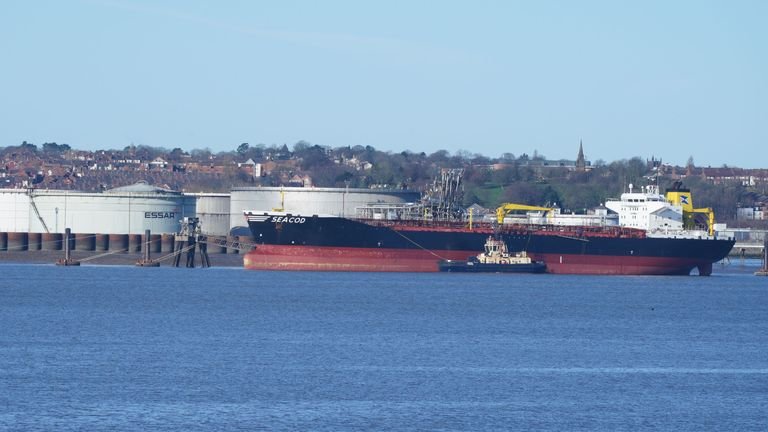
Ukraine’s sanctions chief has urged the United Kingdom to intensify its efforts against Russia’s so-called “shadow fleet” of oil tankers, arguing that Britain should follow France’s example in seizing vessels linked to Moscow’s war economy.
Vladyslav Vlasiuk, Ukraine’s commissioner for sanctions policy, said London must act more decisively in enforcing measures against Russian-linked shipping networks that continue to transport oil despite extensive Western sanctions. His remarks came during an interview in London, where he expressed frustration that several sanctioned vessels were still operating freely in international waters, including routes passing through British maritime zones.
The shadow fleet refers to a growing network of tankers used by Russia to bypass Western restrictions on oil exports imposed after the invasion of Ukraine in 2022. These ships often operate under false flags, obscure ownership structures, and complex routing systems designed to avoid detection and continue generating revenue for Moscow.

Western governments, including the UK, the European Union, and the United States, have collectively sanctioned hundreds of vessels believed to be involved in transporting Russian crude oil above the price cap introduced in late 2022. Despite these measures, analysts estimate that the fleet continues to generate tens of billions of dollars annually, providing a critical financial lifeline to the Russian economy during the ongoing conflict.
Vlasiuk argued that sanctions alone are not enough unless they are actively enforced through physical interdiction. He pointed to recent French naval operations in which sanctioned tankers were intercepted and detained as evidence that stronger action is both possible and effective. According to him, similar operations by the UK would send a powerful message and significantly disrupt Russia’s oil revenue network.
He suggested that even a limited number of seizures could have a major strategic impact by increasing risk perception among operators of sanctioned vessels, potentially discouraging future shipments. However, he acknowledged that broader enforcement would require political will and coordinated legal frameworks.
The Ukrainian official also criticised what he described as inconsistencies in enforcement, noting that despite the UK’s sanctions on hundreds of vessels, a large proportion of them continue to operate. He argued that this gap between policy and enforcement weakens the overall effectiveness of Western sanctions.
The issue has sparked debate within the UK government, where concerns have reportedly been raised about the legal, financial, and security implications of seizing foreign vessels. Some officials have warned that detaining ships could lead to expensive legal disputes, while others have highlighted the logistical challenges of holding and maintaining seized tankers.
There are also concerns about potential diplomatic and security consequences, including the risk of escalation in maritime tensions. Questions have been raised about whether detained crews could include individuals linked to Russian state operations or mercenary groups, adding further complexity to enforcement decisions.
Despite these challenges, Ukraine continues to press its allies for stronger action, arguing that economic pressure on Russia remains one of the most effective tools for limiting its military capabilities. Kyiv has consistently called for tighter enforcement of sanctions, improved monitoring of maritime trade routes, and expanded restrictions on oil and energy exports.
The shadow fleet issue has also drawn attention to the broader global impact of sanctions enforcement. While Western restrictions have disrupted parts of Russia’s energy trade, Moscow has adapted by redirecting exports to alternative markets, particularly in Asia, and by relying on opaque shipping networks to maintain supply chains.
Experts note that the effectiveness of sanctions depends heavily on coordination among allied countries, as well as consistent enforcement across maritime jurisdictions. Without such coordination, vessels can exploit gaps between national regulations to continue operations.

Ukraine’s position is that stronger enforcement would not only reduce Russian revenues but also accelerate economic pressure on the Kremlin, potentially influencing its long-term strategic decisions. However, Western governments remain divided over the extent to which direct maritime seizures should be used as a policy tool.
The debate reflects broader tensions within the international response to the war, balancing legal constraints, economic risks, and geopolitical strategy. While some policymakers advocate for more aggressive enforcement, others favour caution to avoid unintended consequences in global shipping and energy markets.
As discussions continue, Ukraine’s call for the UK to “catch up” with France highlights growing impatience among Kyiv’s leadership with what it sees as uneven implementation of sanctions policy. The outcome of this debate could shape the next phase of Western economic pressure on Russia and determine how far allied nations are willing to go in confronting the shadow fleet network.
Related News:
 Hunger increasingly weaponised in global conflicts
 Thousands Protest ICE Operations in Nationwide US Day of Action
 Abramovich Chelsea Sale Cash Faces Jersey Probe
 ABC Staff Strike Over Pay and AI Concerns
 California fireworks blast: murder charges filed in case
 Athens Mayor Moves to Tackle Overtourism Crisis
 US Calls Australia Media Law “Foreign Extortion”
 Oil Prices Surge Above $120 Amid Iran Blockade Fears
 Activists allege abuse after Gaza flotilla seizure
 Middle East Crisis Escalates as Oil Routes Shake Markets
 Putin Declares Russia Victory at Scaled Victory Day Parade
 Israeli Strikes in Lebanon Kill 10 Amid Ceasefire Strain
 China mine blast death toll rises to 90
 Trump’s Revenge Drive Deepens GOP Divide
 Former ICC prosecutor condemns US sanctions
 Japan Suffers Plastic Shortage Due to Middle East Crisis
 Le Pen’s Popularity Holds Despite Conviction
 Teen Charged After Layla Jeffery Found Dead
 Houthis Strike Saudi Arabia as Middle East Tensions Rise
 Taliban global ties grow as rights fears mount
 Just Stop Oil Protesters Convicted Amid Climate Defence Row
 US Justice Department Files Lawsuit Against California Over Partisan Voting Maps
 Trump Deploys DHS to Charlotte in Major Arrest Operation
 Canada Passes Carney’s First Budget in Tight Parliamentary Vote
 Tokyo court rules Japan’s same-sex marriage ban constitutional
 Virgin Media Fined £23.8m Over Telecare Safety Failures
 Iran unrest slows under brutal crackdown and global tensions
 ‘Black Tax’: Burden, Pride and Survival for African Workers
 India-EU Free Trade Deal Marks Historic Economic Shift
 Ukraine war briefing: Zelenskyy offers help to Saudi Crown prince on combatting Iranian drones
 The Truth Behind Rising Energy Costs and Fossil Fuel Myths
 Rising Costs Force Families to Rethink Days Out
 Oil Slides, Stocks Jump on Trump Peace Signals
 Trump to Deploy “God Squad” Over Gulf Wildlife Protections
 Iran Drone Strike Hits Kuwaiti Oil Tanker in Dubai Port
 Trump Slams Europe as Transatlantic Tensions Boil Over
 M&S Demands Urgent Action on Rising Violent Retail Crime
 Report Says Pezzullo Acted ‘Recklessly’ in Dealings
 US and Iran Agree to Two-Week Provisional Ceasefire
 Trump and Tehran Find Common Ground in Landmark Ceasefire
 Hungary election: Orbán faces biggest test amid scandal
 Suspected Plot Targets Pipeline Before Hungary Vote
 Reeves Slams Trump Over Iran War Lack Of Exit Plan
 IMF Warns Iran War Could Spark Deep Global Recession
 Ben Roberts-Smith Denies War Crime Allegations in First Statement
 Learner Driver Charged After Expo Tragedy
 Synagogue Arson Attempt Sparks Security Fears
 Capitalism ‘Suicidal’, Warns Petro at Climate Summit
 $13bn World Cup Set to Break All Revenue Records
 Judge halts deportation of Yemeni refugees in US
 Greens Face Internal Row Over Antisemitism Claims
 Trump approval plunges amid Iran war fears
 China Fireworks Factory Blast Kills 21 in Hunan
 FIFA Confirms Global Ban for Benfica Star Prestianni
 New South Wales Wetland Rescue Legislation Passes
 Florida Surgeon ‘Devastated’ Over Fatal Surgery Error
 Tensions Emerge in Netanyahu-Trump Alliance
 US Awaits Iran Reply on New Ceasefire Proposal
 Immigration Judges Fear Pressure in Trump Era
 US and Mexico Face Heatwave as Floods Batter South Africa
 The Long Way Home: Australia’s High-Stakes Virus Mission
 Putin Signals War End as Russian Momentum Stalls
 Scepticism and tight security as Beijing braces for Trump
 Philippine Senator Flees After Days Under Senate Siege
 Big Tobacco Under Fire Over Controversial New Ad Campaign
 High Street Crisis: Fears Grow Over Post Office Closures
 Fragile Truce Shattered as Violence Escapes Diplomatic Control
 Oil Markets Face ‘Red Zone’ Threat Amid Iran Crisis
 Tulsi Gabbard exits after turbulent intelligence tenure
 Pope Meets Families in Italy Toxic Waste Zone
 Discontent grows around Putin amid war strain
 Starmer Leadership Under Pressure After Setbacks
 Aukus Deal Facing Fierce Backing and Historic Criticism
 Thai Princess Bajrakitiyabha Passes Away at 47
 UK Economy Suffers a Sharp Downturn as Iran Conflict Bites
 Trump’s Mount Rushmore Speech: A Divisive Anniversary
 Ukraine Creates Long-Range Strike Command
 Trump Refuses to Sign Housing Bill, But Law Takes Effect
 Westminster Council Threatens Charing Cross Soup Kitchen
 BBC Warned About Missing Clothes of Murder Victim