Published: 30 April 2026. The English Chronicle Desk. The English Chronicle Online.
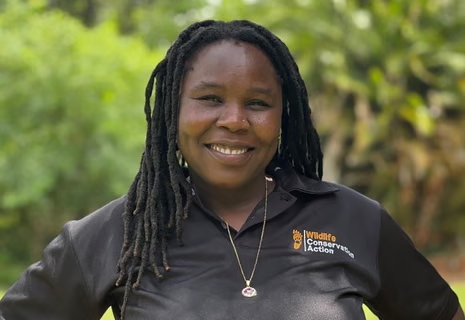
The golden light of the African sun often hides a deep and dangerous tension. For many years the relationship between humans and predators remained a fragile and broken thing. In the heart of Zimbabwe the story of conservation is now changing forever. Dr Moreangels Mbizah stands at the very centre of this vital and necessary transformation. Her journey began with a moment of profound and truly life altering professional clarity. It was during 2014 when she was tracking lions within the Hwange National Park. She was then a dedicated zoology student focused solely on the majestic big cats. A sudden GPS alert indicated that a lion had entered a nearby human settlement. Her team rushed to the scene hoping to prevent a very tragic encounter. They arrived to find a community gripped by an unimaginable and visceral local horror. A young boy of seven had been killed by the straying mountain predator. The lion sat guarding the child while the helpless villagers watched in total despair. The wildlife authorities were forced to kill the animal to recover the body. This event shattered her previous belief that animals could be saved in total isolation. She realized that protecting lions required protecting the people who live beside them daily.

This tragedy became the catalyst for the founding of Wildlife Conservation Action in Zimbabwe. Her organization now works tirelessly to foster peace between the villagers and the predators. The Zambezi valley is a lush and biodiverse corridor spanning across three different nations. It is home to some of the most precious wildlife left on the planet. However it is also a place where extreme poverty meets the natural world. People in these rural districts rely almost entirely on their livestock for basic survival. A single cow can be worth more than several months of average family income. When a lion kills a cow it is a devastating financial blow. Farmers often retaliate by killing the lions to protect their remaining valuable herds. This cycle of violence has contributed to a massive decline in lion numbers. Experts suggest that lions have lost nearly ninety percent of their historic range lately. Fewer than twenty thousand of these creatures now remain in the wide open wild. Mbizah saw that both sides were losing this desperate and ongoing silent war. Her mission became finding a way for both species to survive and thrive.
The solution lay in combining modern technology with ancient community wisdom and local trust. One of her most successful innovations is the use of the mobile boma. These are portable livestock enclosures wrapped in thick and completely opaque white plastic sheets. Lions hunt primarily using their sight and will not attack what they cannot see. Even if they smell the cattle they will not leap into the unknown. This simple yet brilliant method has proven to be one hundred percent effective locally. It provides a non-violent way to keep the hungry predators at a distance. Alongside this the organization employs dedicated community guardians to watch the vast horizon. These locals are trained to monitor GPS signals from collared lions in the area. When a predator moves too close the guardians raise a very loud alarm. This gives the villagers enough time to secure their precious goats and cattle. The results of these efforts have been nothing short of absolutely and truly remarkable. Incidents of conflict have dropped by nearly ninety-eight percent in the Mbire district. This success has saved millions of dollars in livestock for the vulnerable rural poor.

The scale of the project now covers over two million hectares of land. Nearly eighteen thousand animals are now protected by these clever and sustainable local initiatives. Mbizah herself grew up far from the wild areas in a small town. She did not even see a wild lion until she was twenty-five years. That first encounter sparked a deep and lasting connection to the natural world. She noticed early on that very few black women held leadership roles here. This gap motivated her to become a pioneer for others in her country. She now runs mentoring programs to help young African women enter the field. Her work ensures that the next generation of conservationists is diverse and local. This community-led approach is the only way to ensure long term environmental success. The people living with the lions must become their most dedicated and loyal protectors. This requires providing them with the tools and the incentives to coexist peacefully. Without the support of the locals the lions will surely face total extinction. Mbizah believes that the human element is the most critical part of science.
The memory of Cecil the lion still lingers in the minds of many. Mbizah worked closely with that famous cat during her early research years. His death at the hands of a hunter caused a global media storm. For her the loss was deeply personal and felt like losing a friend. She remembers the heartbreak of that phone call and the sadness that followed. However she also remembers the young boy who lost his life in Hwange. Her work today is a tribute to both the animals and the people. She refuses to choose one side over the other in this complex struggle. True conservation is about balance and empathy for every single living soul involved. By reducing conflict she is creating a future where lions can roam free. She is also ensuring that children can walk to school without any fear. This holistic vision is winning awards and changing lives across the entire region. The story of the Zambezi valley is now one of hope and resilience. It shows that even the deepest conflicts can be resolved with creative thinking. Moreangels Mbizah continues to lead the way with her heart and her mind. The lions roar at night but the villages now sleep in total peace. This is the new reality for wildlife and humanity in beautiful Zimbabwe.
Related News:
 Dutch Nationwide Fireworks Ban Expected to Transform New Year Traditions
 Queensland Braces for Potential Second Severe Cyclone Hit
 Tragic End to Outback Search as Floods Claim a Life
 US Waste Crisis: Mexico Branded a Toxic Garbage Sink
 Cyclone Maila Intensifies to Category Five Strength
 Broken Promises: Murray-Darling River Crisis Deepens
 ‘Extinct’ Antelope Returns to Sahara, Bringing Hope
 Eden Project Founder Celebrates 25 Years of Nature’s Hope
 Capitol Attack Anniversary Sparks Deep Political Divide
 Saudi Officials Report Zubaidi Flee Before Yemen Peace Talks
 UK Targets in New York Bomb Threat Hoax: Man Jailed
 Gambia Supreme Court Hears Case to Overturn FGM Ban
 Storm Goretti leaves Cornwall homes without power
 Trump targets Iran trade with 25% tariff warning
 US Senate rejects resolution limiting Trump military powers
 Gulf states warn Trump Iran strikes risk wider Middle East war
 Machado Trump medal gesture reshapes Venezuela power struggle
 Geopolitical football: Iran, Trump and the World Cup clash
 Canada-China trade gains momentum in new strategic partnership
 Syria President Declares Victory as Ceasefire Reached with SDF
 No Gas Boiler Ban as UK Warm Homes Plan Backs Heat Pumps
 Shinzo Abe’s killer receives life sentence in Japan
 China General Under Investigation Amid Leadership Purge
 Philippines ferry disaster leaves 15 dead, dozens missing
 Devon hosts first high-density hydro power system
 US-Style Pickup Trucks Surge on UK Roads
 Cambridge Faces Scrutiny Over Arms Investment Transparency
 Wigan Dump Crisis Sparks Health and Safety Alarm
 Epstein UAE Emails Shake British Royal Andrew’s Legacy
 Christchurch gunman seeks to vacate guilty plea
 Concerns rise for Canberra boy amid Iran detention fears
 Germany Faces Backlash Over Scrapped Renewable Heating Mandate
 Greenpeace $345m Ruling Sparks Appeal Battle
 Ukraine Sends Drone Experts to Defend US Bases in Jordan
 Abramovich Chelsea Sale Cash Faces Jersey Probe
 Yvette Cooper: UK Must Follow Principles, Not US Pressure
 MPs Slam Agency Over Failing Fight Against Waste Dumping
 Jury Rules Meta and YouTube Liable for Addictive Design
 Saudi Arabia Urging US to Keep Up Iran Attacks
 The Woman Guarding Earth From the Threat of Asteroids
 Germany Grapples With AI Abuse Following TV Star Scandal
 Exiled Tycoon Warns of New Russian Attacks on UK Soil
 LA 2028: Millions of Affordable Olympic Tickets Announced
 Trump Slams Europe as Transatlantic Tensions Boil Over
 Inside the Deceptive Machine: A Former Producer Speaks Out
 Spain Faces Backlash Over Xenophobic Chants in Egypt Draw
 A Global Voice For Justice: Stephen Lewis Dies At Age 88
 Hope and Fear as Iranians Flee Across the Turkish Border
 Reform UK Pledges To Halt Visas Over Reparations Demands
 US and Iran Agree to Two-Week Provisional Ceasefire
 Starmer visits Gulf as US and Iran agree ceasefire
 Miles Jupp: How the Magic of the Ashes Sparked a Bold Blag
 Pakistan Brokers Historic Peace Deal Amid Rising Tensions
 The Toxic Scent Destroying Life in a Lancashire Town
 UK Holds Firm on Strait of Hormuz Amid Trump Pressure
 Trump Signals Hope for New Iran Talks as Ceasefire Fades
 Reeves Slams Trump Over Iran War Lack Of Exit Plan
 US and Iran Pursue Extension of Ceasefire via Pakistan
 Trump’s Islamabad Gamble: The High Stakes of a New Iran Deal
 Ian Katz to Step Down as Channel 4 Content Chief
 Fuel Prices Drop Despite Geelong Refinery Blaze
 The General’s Gambit: Pakistan’s New Role in Global Peace
 Mexico, Spain and Brazil call for Cuba dialogue amid crisis
 Celestial Magic: The Lyrid Meteor Shower Returns
 Pakistan’s Ambitious Bid for Middle East Peace
 Israeli Soldiers Jailed Over Vandalism of Lebanese Statue
 Trump Weighs Sending Afghan Allies to the Congo
 Pentagon Shakes Up Navy Leadership Amid Hormuz Blockade
 Governments Fail Murray-Darling River Projects
 Trump Threatens UK With Big Tariff Over Tech Tax
 Prominent Voices Challenge Palestine Action Ban
 Security Scrutiny After Washington Shooting Incident
 Renewable Energy as a Strategic Shield for UK Security
 Merz Criticises US Approach in Iran Conflict
 UK Envoy Sparks Controversy Over Special Relationship Claims
 Ukraine Urges UK to Seize Russian Oil Tankers
 US Calls Australia Media Law “Foreign Extortion”
 Capitalism ‘Suicidal’, Warns Petro at Climate Summit
 UK Firm Faces Backlash Over US Oil Advertising Deals
 The Billionaire’s Secretary and the £1m Fraud