Published: 14 May 2026. The English Chronicle Desk. The English Chronicle Online.
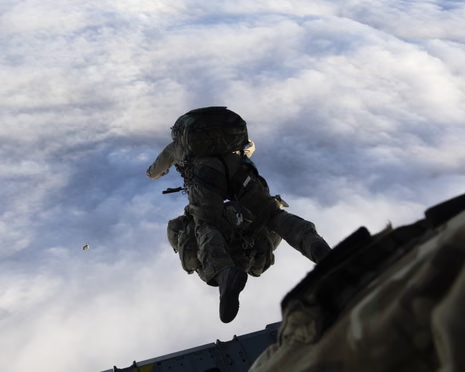
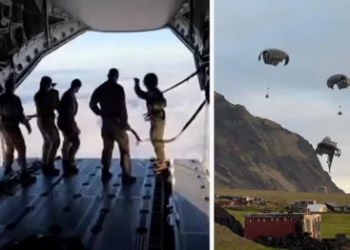
The hardest part of the parachute jump is falling backwards through the air. Captain George Lacey lead his squad of six brave paratroopers and two medics today. They leapt out of an RAF transport plane high over the south Atlantic Ocean. The paratroopers fell from a height of about two thousand five hundred metres. Lacey says the parachute can only go forward at a specific maximum speed. This means the jumper must pull the cord at the precisely right moment. You have to turn into the wind and fly backwards during the drop. It is a very weird sensation to fly through the air like that. Below the team was the volcanic peak of the island Tristan da Cunha. This island is the most remote of the British overseas territories on Earth. The small population of two hundred twenty one people lives in total isolation. Normally the island is only accessible by a long and slow boat trip. It takes six days to sail there from Cape Town or the Falklands. A resident was suspected of falling ill with the dangerous hantavirus recently. The patient had disembarked from the ill-fated MV Hondius cruise ship last month. Urgent medical treatment including oxygen was needed to save the sick resident now. Officials decided an airdrop was the only way to get supplies there fast.
Lacey and his team are Pathfinders from the famous sixteen Air Assault Brigade. They learned they were needed on the afternoon of Thursday of last week. The team flew first to Brize Norton and then to remote Ascension Island. Ascension Island is located two thousand miles north of the target landing zone. The six soldiers are all very experienced parachutists with many successful jumps. Lacey says he has personally completed nearly two hundred jumps in his career. A doctor and an intensive care nurse joined the soldiers for this mission. The medical staff were strapped to the jumpers for a tandem descent today. This added a necessary but very complicated element to the entire flight plan. The nurse had done a civilian tandem jump once before in the past. For the doctor this was apparently the first time jumping from a plane. They took a four and a half hour flight in an A400M transport. The plane refuelled midway through the long journey to the remote island site. Lacey knew the weather was good enough for the mission to proceed then. Calculations for the wind placed the team five kilometres off the coast.
The back of the aircraft opened to the vast brightness of the sky. There was very little time for the team to think about the jump. You are very focused when you leave the aircraft for a long drop. Lacey says his intense training meant he was not afraid during the exit. You think about exactly what you must do next to stay safe. There is an overload of information and sensation as you fall down. A film from a helmet camera shows the moment of no return. Eight thousand feet is not the highest jump these soldiers can perform. The descent took between five and ten minutes in the memory of Lacey. Two thousand feet of the drop was through thick and heavy white clouds. You have to follow each other closely during that period of the fall. Finally the ground became visible as they broke through the cloud layer. When you came out you saw the island waiting in the sea. Lacey knew they were going to make the land safely at last. We knew we were definitely going to be safe after that point. That is always a very nice thing to know during a mission.
The medical team went to deal with the patient after they landed. The soldiers coordinated more drops of equipment from the large transport plane nearby. They dropped oxygen canisters and protective gear for the medical staff to use. This allowed the staff to work with the patient for many weeks. The government of St Helena says the patient is in stable condition. They are monitoring the situation closely as the medical team works hard now. Lacey and his fellow paratroopers have been helping people on the island. They have spent time talking to local schoolchildren about their exciting military jobs. They also spoke to the media about the technical details of the jump. Airdrops in combat are actually very rare in modern military operations today. The last mass drop by British forces was at Suez in 1956. There was a Russian drop into Hostomel airport during the invasion of Ukraine. Some people speculate about a US airdrop into Iran in the future. Parachuting is a skill that does not get used very often in reality.
The army trains this skill for military and humanitarian emergencies around the world. Sometimes it is the only way to get somewhere in a hurry. Getting off Tristan da Cunha will have to wait for a while. Exit plans are in place for the team to leave the island. The team might board HMS Medway when it arrives from the Falklands. There is no way to parachute off the island into the sky. The paratroopers will enjoy the hospitality of the islanders for a few days. They have brought hope and life saving medicine to this remote community. The residents are very grateful for the brave actions of the British soldiers. Every person on the island knows the story of the falling heroes now. This mission shows the reach of the British military in times of crisis. The bond between the UK and its territories remains very strong today. Lacey and his men are true professionals in every sense of the word. They will remember this unique jump for the rest of their lives. The island of Tristan da Cunha is no longer quite so alone. A simple parachute made a world of difference for one sick person. The spirit of service continues to drive these men to great heights. We wish the patient a very speedy recovery in the coming days. The paratroopers have proven that no distance is too great for help. Their bravery is a testament to the high standards of the brigade. Soon they will return home to Colchester to prepare for the next. The world is a safer place with such dedicated individuals on call. This story will be told on the island for many generations to come. The day the sky opened and delivered help will not be forgotten. It is a proud moment for the Royal Air Force and Army. Everyone involved can be proud of this successful and vital life saving mission.
Related News:
 Capitol Attack Anniversary Sparks Deep Political Divide
 Saudi Officials Report Zubaidi Flee Before Yemen Peace Talks
 UK Targets in New York Bomb Threat Hoax: Man Jailed
 Gambia Supreme Court Hears Case to Overturn FGM Ban
 Trump targets Iran trade with 25% tariff warning
 US Senate rejects resolution limiting Trump military powers
 Gulf states warn Trump Iran strikes risk wider Middle East war
 Machado Trump medal gesture reshapes Venezuela power struggle
 Greenland defence seen as shared Nato duty amid troop arrivals
 Geopolitical football: Iran, Trump and the World Cup clash
 Canada-China trade gains momentum in new strategic partnership
 Syria President Declares Victory as Ceasefire Reached with SDF
 Shinzo Abe’s killer receives life sentence in Japan
 China General Under Investigation Amid Leadership Purge
 Philippines ferry disaster leaves 15 dead, dozens missing
 Cambridge Faces Scrutiny Over Arms Investment Transparency
 Epstein UAE Emails Shake British Royal Andrew’s Legacy
 Christchurch gunman seeks to vacate guilty plea
 Infantino Faces Russia Threat and Trump Concerns at Uefa Congress
 Concerns rise for Canberra boy amid Iran detention fears
 Ukraine Sends Drone Experts to Defend US Bases in Jordan
 Abramovich Chelsea Sale Cash Faces Jersey Probe
 Yvette Cooper: UK Must Follow Principles, Not US Pressure
 Slovenia Election: A Nation at a Crossroads
 Jury Rules Meta and YouTube Liable for Addictive Design
 Saudi Arabia Urging US to Keep Up Iran Attacks
 The Woman Guarding Earth From the Threat of Asteroids
 IMF Predicts Global Economic Crisis Due to Gulf Unrest
 Germany Grapples With AI Abuse Following TV Star Scandal
 Exiled Tycoon Warns of New Russian Attacks on UK Soil
 LA 2028: Millions of Affordable Olympic Tickets Announced
 Trump Slams Europe as Transatlantic Tensions Boil Over
 Inside the Deceptive Machine: A Former Producer Speaks Out
 Italy Faces Third Successive World Cup Absence After Loss
 Spain Faces Backlash Over Xenophobic Chants in Egypt Draw
 A Global Voice For Justice: Stephen Lewis Dies At Age 88
 Hope and Fear as Iranians Flee Across the Turkish Border
 Reform UK Pledges To Halt Visas Over Reparations Demands
 US and Iran Agree to Two-Week Provisional Ceasefire
 Starmer visits Gulf as US and Iran agree ceasefire
 Gaza Child Arrives in UK for Life-Changing Care
 Israel Defies Ceasefire as Lebanon Operations Persist
 Pakistan Brokers Historic Peace Deal Amid Rising Tensions
 UK Holds Firm on Strait of Hormuz Amid Trump Pressure
 Trump Signals Hope for New Iran Talks as Ceasefire Fades
 Reeves Slams Trump Over Iran War Lack Of Exit Plan
 US and Iran Pursue Extension of Ceasefire via Pakistan
 Trump’s Islamabad Gamble: The High Stakes of a New Iran Deal
 Ian Katz to Step Down as Channel 4 Content Chief
 The General’s Gambit: Pakistan’s New Role in Global Peace
 Mexico, Spain and Brazil call for Cuba dialogue amid crisis
 Pakistan’s Ambitious Bid for Middle East Peace
 Trump Starts $166bn Tariff Refund Process
 Israeli Soldiers Jailed Over Vandalism of Lebanese Statue
 Trump Weighs Sending Afghan Allies to the Congo
 Timor-Leste Faces Tough Questions Over Resort Proposal
 Pentagon Shakes Up Navy Leadership Amid Hormuz Blockade
 Trump Threatens UK With Big Tariff Over Tech Tax
 Prominent Voices Challenge Palestine Action Ban
 Security Scrutiny After Washington Shooting Incident
 Merz Criticises US Approach in Iran Conflict
 UK Envoy Sparks Controversy Over Special Relationship Claims
 Ukraine Urges UK to Seize Russian Oil Tankers
 US Calls Australia Media Law “Foreign Extortion”
 The Billionaire’s Secretary and the £1m Fraud
 Questions Remain Over The Tragic Bondi Massacre
 Ukraine strikes Tuapse as oil disaster worsens
 Brewing Tension: Taiwan Baristas Rebrand for World Stage
 Tensions Emerge in Netanyahu-Trump Alliance
 Mission to the World’s Edge: A Heroic Rescue in Tristan
 US and Mexico Face Heatwave as Floods Batter South Africa
 Mexico’s Missing: State Complicity in a Growing Crisis
 French Patient Told Hantavirus Was Just Anxiety
 The Long Way Home: Australia’s High-Stakes Virus Mission
 Putin Signals War End as Russian Momentum Stalls
 Romania’s Judicial Crisis: A System Under Siege
 Lee Lai Makes History with Landmark Stella Prize Victory
 Philippine Senator Flees After Days Under Senate Siege
 Alberta Separatist Bid Blocked by Canadian Court
 Canadian Court Blocks Alberta Independence Referendum Bid