Published: 04 June 2026. The English Chronicle Desk. The English Chronicle Online.
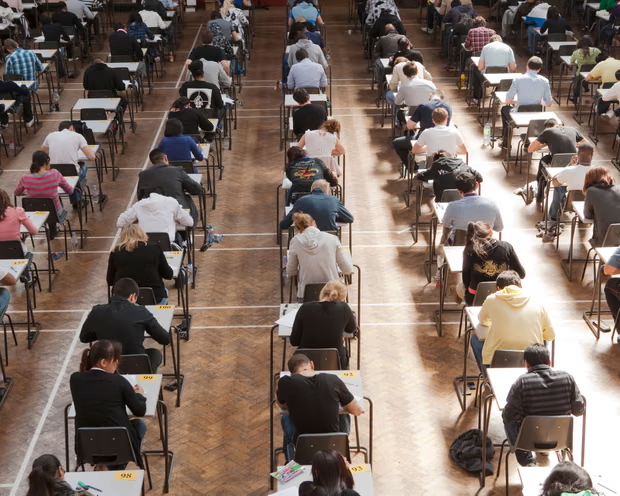
The integrity of our education system depends on fairness for every single student. Recent technological developments now threaten the traditional structure of public examination systems across England. High-tech wearable devices are rapidly becoming the latest weapons in the classroom battleground. Watchdogs now fear that sophisticated gadgets could completely transform the landscape of exam cheating. Traditional methods of supervision may no longer suffice against these advanced digital threats.
The Office of Qualifications and Examinations Regulation has raised serious alarms regarding this. Ian Bauckham currently leads the influential watchdog responsible for maintaining national assessment standards. He recently expressed deep concerns about modern devices during an official corporate podcast. Emerging tools like smartglasses and invisible earpieces pose completely unprecedented risks to examiners. These tiny devices allow students to access hidden information without attracting any suspicion.
Regulators must adapt incredibly quickly because consumer technology moves at an alarming pace. Mobile phones and smartwatches are already banned from every single British examination room. However, the next generation of wearable tech presents a much more sophisticated challenge. Internet-connected eyewear can seamlessly project text directly onto the inside of the lenses. Only the wearer can see this data, making detection almost impossible for invigilators.
Our national qualifications represent an incredibly valuable asset for the entire British public. We must protect this asset to ensure that hard work remains fairly rewarded. Letting technology undermine these certificates would ultimately harm the future of all young people. The watchdog is determined to stay ahead of these evolving digital consumer trends. They are currently reviewing security protocols to match these sophisticated invisible tools.
The advertisement of tiny earpieces targeted at students has already begun online. These minute devices fit deeply into the ear canal and remain completely hidden. Meanwhile, penalties for possessing connected devices inside exam rooms continue to rise annually. Last summer saw a significant surge in recorded instances of electronic device malpractice. Official figures showed over two thousand cases across GCSE and A-level examinations.
Smartphones and connected watches remain the most common tools for illicit exam assistance. This specific category of cheating has topped the official regulatory charts since 2018. Securing unfair advantages through digital means robs honest students of their rightful achievements. Students who cheat receive marks that absolutely do not reflect their actual knowledge. This dishonest behaviour fundamentally distorts the true purpose of the national assessment process.
The long-term consequences of this digital trend threaten the entire educational framework. Final grades might no longer accurately describe what a student has truly mastered. When qualifications lose their reliability, the public completely loses trust in the system. Employers and universities rely heavily on these grades to make critical future selections. Therefore, maintaining absolute trust in every single result remains a top priority.
Artificial intelligence also presents another massive headache for contemporary educators and school leaders. Teachers across the country are currently struggling to identify AI-generated student coursework. The quality of automated writing software has improved dramatically over the last year. This rapid improvement makes it incredibly difficult to distinguish genuine work from machine output. Consequently, the watchdog is currently reviewing how coursework is assessed in schools.
Stricter checks are highly likely to be introduced for future coursework submissions. This scrutiny comes as GCSE and A-level courses undergo routine national refresh cycles. Regulators are actively questioning whether traditional coursework can even survive in this climate. They need to guarantee that every submission represents the student’s own authentic effort. Several potential solutions are currently being discussed by academic experts and policy makers.
Scrapping coursework entirely represents the absolute nuclear option for the national qualifications regulator. Such a drastic move would shift all academic weight back onto traditional examinations. However, less extreme measures are also being considered to protect student assessment integrity. Teachers might be required to interview students regularly about their ongoing project research. This verbal verification would quickly reveal whether a student actually understands the material.
Enhanced referencing requirements could also help prove the authenticity of submitted school coursework. Students would need to document their reading journey and source material very precisely. This detailed tracking ensures that ideas were gathered through genuine independent study projects. Relying on simple automated prompts to generate massive essays remains completely unacceptable today. The watchdog expects clear transparency regarding how information is gathered and used.
The rise of these sophisticated technologies requires a united response from schools. Headteachers must ensure that invigilators receive proper training to spot hidden devices. Parents also play a vital role in discouraging the use of illicit technology. The pressure to succeed can unfortunately drive young people toward these risky methods. Open conversations about academic honesty can help reduce the appeal of cheating tools.
Technology should ideally serve as a tool for learning rather than a method for deception. Virtual reality and artificial intelligence offer incredible benefits within modern classroom environments. However, the boundaries between helpful study aids and outright cheating must remain distinct. Clear guidelines will help students navigate this complex digital landscape without risking their futures. The coming months will be crucial for establishing these new educational boundaries.
Ultimately, the value of a British qualification lies in its hard-earned reputation. Protecting this reputation requires constant vigilance from everyone involved in the education sector. As technology continues to evolve, our safeguarding methods must become equally sophisticated. Ensuring a level playing field remains the ultimate goal for the exam watchdog. With decisive action, the integrity of our national qualifications can be successfully preserved.
Related News:
 How Bringing Forests Into Preschools Boosts Children’s Health
 England Curriculum Review Recommends Major Changes
 Mortgages and AI Set to Feature in English Schools
 No link found between paracetamol in pregnancy and autism
 Government urges schools to ban phones to curb classroom disruption
 Higgs Donates Nobel Medal to His Beloved University
 Michele Dougherty Makes History as the UK’s First Female Astronomer Royal
 From ‘Skibidi’ to ‘Mouse Jiggler’: Cambridge Dictionary Expands with Modern Slang and Social Terms
 Six-Figure Tutors Teach Toddlers to ‘Be British’
 Is a two-week half-term a good deal? Some parents in England aren’t so sure
 Children to Learn Local History in Major Curriculum Overhaul
 UK Bans Fake Numbers: Scammers Lose Their Trick
 Top Christmas Books Reads: Classics to Cozy Romcoms
 Greta Thunberg Backs Student Facing UK Visa Revocation
 Audio Books deals and promo codes to explore in November 2025
 Experts Urge Legal Right to Timely Cancer Care
 Patients to Test Health at Home to Ease NHS Winter Pressure
 London’s Childlessness Crisis: Schools Closing as Families Shrink
 One of world’s last dinosaurs on sale for £3m
 North Sea oil workers must lose weight or face job loss
 Northern Lights May Illuminate UK Skies Amid Strong Solar Storm
 Northern Lights may illuminate UK skies this week
 England’s Special Needs Support Faces Breaking Point
 UK Schools Face Staff Exodus Amid Wellbeing Crash
 Coffins Now Too Large to Cremate Amid Rising Obesity Crisis
 UK Taskforce Unveils Plan to Streamline Nuclear Reactor Rules
 NHS paediatric leave parents waiting months for answers
 Ofcom urges platforms to limit abuse and curb online ‘pile-ons’
 Schools urged to trial four-day week to ease pressure on teachers in England and Wales
 Oxford Names ‘Rage Bait’ Word of the Year
 Starmer’s communications chief to outline media strategy overhaul
 UK Car Sales Pass 2 Million as Chinese Brands Surge
 AI Grok Sparks Child Safety Alarm in the UK
 Cambridge College Faces Backlash Over Private School Recruitment
 Glasgow rector cleared by watchdog in antisemitism case
 UK Launches First Town of Culture Competition
 Amazon Milton Keynes closure sparks concern for UK warehouse workforce
 AI will transform human jobs, enhancing skills, says minister
 UK Ministers Drop Foreign Student Targets for Global Education Push
 MPs warn AI financial risks threaten UK stability
 MPs warn AI financial risks threaten UK stability
 City & Guilds pay surge sparks backlash amid £22m cuts
 AI job losses UK: Britain faces sharper employment shock
 Pornhub blocks new UK users over age checks dispute
 UK New Car Discounts Near £6,000 as Prices Are Slashed
 Harvey Willgoose School Stabbing Red Flags Missed
 Childnet Censorship Row Over Teen Safety Speeches
 Kingsbury stabbing probe led by counter-terror police
 Send spending gap leaves deprived areas behind
 Revenge Porn Crackdown: 48-Hour Rule Warning
 UK Anti-Slavery Watchdog Urges Adult Sites Overhaul
 Facial Recognition Error Leads to Wrongful Arrest in Milton Keynes
 New Era for UK Special Needs Support
 UK Social Media Ban for Under-16s Gains Momentum
 Met police to trial handheld facial recognition checks in London
 UK Teen Social Media Ban Trials Begin
 Ministers Urged to Act Faster on Deepfakes Threat
 MPs Reject Ban on Social Media for Under-16s
 Scientists Unveil Heavier Proton at CERN LHC
 Charity Watchdog Warns Alan Turing Institute Over Conduct
 Keir Starmer Vows Strong Action Against Online Tech Giants
 The Night an AI Bot Threw a Party in Manchester
 OpenAI Halts Stargate UK Project Amid Energy Crisis
 Heavier SUVs Accelerate Britain’s Pothole Crisis
 Europe EV Demand Surges as Fuel Prices Rise
 Canadian astronaut French words ease language row
 NHS Safety Fears as Nurses Cover Doctor Gaps
 Reform UK funding: mystery billionaire revealed
 Older Than Dinosaurs: Secrets of Mayfly Dance Revealed
 Sussex Wins Landmark High Court Battle Against OfS Fine
 Tatooine Dreams: 27 New Worlds Found With Double Suns
 Virtual Racing Faces New Era of Anti-Doping Measures
 Tractor Breakdown Tests Lincolnshire Farmers
 Cambridge South Signals New Era for British Rail Travel
 Father’s diaries reveal doubts over Hawking
 UK rejects EV charging VAT cut amid Treasury clash
 UK firms accused of ‘AI washing’ boom
 British Paralympian Set to Make History in Earth Orbit
 Is a University Degree Still Worth the Cost?
 NHS Approves Landmark Ovarian Cancer Drug