Published: 12 June 2026. The English Chronicle Desk. The English Chronicle Online.
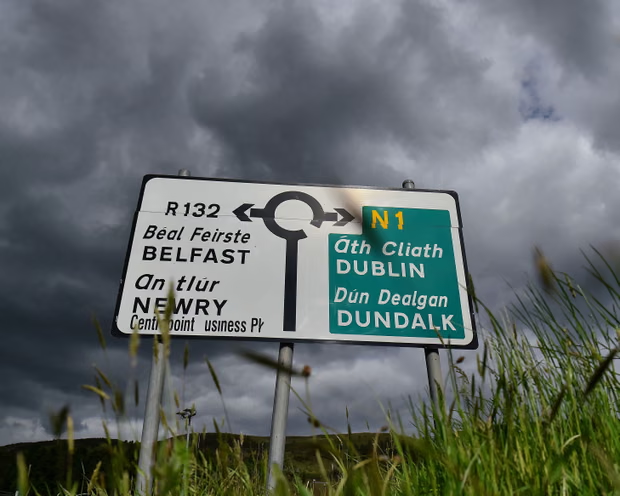
The open land border between Northern Ireland and the Republic of Ireland is facing fresh scrutiny today. Recent figures suggest a significant shift in how people seek asylum across these islands over the last three years. Up to ninety percent of asylum applicants in Ireland may have entered by crossing this open boundary. The latest government data shows that the long-standing Common Travel Area agreement is being used heavily. This arrangement allows free movement but seems more frequently utilized by those heading south than north.
The complex situation highlights the growing difficulty of managing an open border in a modern world. Overnight reports from the UK Home Office show that enforcement teams remain active in the area. British officials revealed they had intercepted more than nine hundred immigration offenders along the border recently. These individuals were found to be abusing the lack of physical checks between the two jurisdictions. The figures indicate that people are actively testing the limits of this historic freedom of movement.
Meanwhile, data from the Department of Foreign Affairs and Trade in Dublin offers a broader perspective. Their records show that sixteen thousand six hundred people sought international protection at Irish ports and airports. A very large portion of this specific group is believed to have taken a indirect route. They likely travelled from Great Britain to Belfast before making their way south across the border. This pathway allows travellers to bypass the stricter security checks usually found at major Irish transport hubs.
The management of the Common Travel Area has faced intense political and public debate this week. A distressing knife attack in Belfast on Monday has brought these border vulnerabilities into sharp focus. The suspect in the incident has been identified as a thirty-year-old Sudanese refugee named Hadi Alodid. Local police have officially charged him with attempted murder following the serious assault in the city.
The violent incident triggered two consecutive nights of rioting and unrest in parts of Belfast. Public anger grew rapidly when details of the suspect’s journey to the region were made public. Alodid originally travelled from Sudan to Paris before entering the Republic of Ireland through Dublin. He then boarded a standard passenger bus to Belfast where he formally lodged his asylum claim. The subsequent unrest forced British officials to send emergency police reinforcements to Northern Ireland on Thursday.
The current volume of asylum applications represents a massive change from previous decades for the country. Before the year 2019, the number of people seeking protection in Ireland was quite low. Annual applications averaged around five thousand, which was normal for a small nation on Europe’s edge. That stable pattern changed dramatically between the years 2022 and 2024 when numbers rose significantly. Total applications peaked at an unprecedented eighteen thousand five hundred during that turbulent two-year period.
During this peak, only ten percent of applicants arrived through an official airport or seaport. The vast majority of people chose to apply directly at the Dublin protection office instead. They walked into the International Protection Office in person to make their first official application. This trend has continued firmly into the current period according to the latest available statistics.
In 2025, the proportion of in-person applicants at the Dublin office remained at eighty-eight percent. The figure rose slightly to ninety percent during the first six months of this year. Because there are no physical border checkpoints, exact tracking of movement remains completely impossible. Neither the British nor the Irish government can verify precise numbers crossing the land border.
Despite the lack of official counts, senior politicians have previously acknowledged the scale of movement. In 2024, the former Irish Justice Minister Helen McEntee spoke openly about the border situation. She stated publicly that eighty percent of asylum seekers were arriving via the northern route. That assessment aligned closely with internal reports generated by civil servants working on the ground.
Last year, the Department of Foreign Affairs and Trade released a statement supporting this view. Their formal assessment was based on extensive interviews conducted by staff working with new arrivals. The gathered material strongly indicated that most first-time applicants had crossed the internal land border. This shared understanding has led to renewed diplomatic efforts between London and Dublin this week.
The Irish government expressed deep concern over the recent violence seen on the streets of Belfast. Officials confirmed they are working closely with British counterparts to address abuses of the system. There is a strong desire to revive a post-Brexit returns agreement between the nations. This specific trade and security mechanism has faced significant legal hurdles over the last few years.
So far, the existing agreement has resulted in only one asylum seeker being returned to Ireland. The original deal was struck in 2020 but suffered delays due to a High Court ruling. Irish judges decided the UK was not a safe country due to its Rwanda policy. That legal block has now been resolved following recent changes in British immigration legislation.
The Irish government is currently working to re-operationalize the returns deal with their UK counterparts. Dublin officials confirmed that the United Kingdom has now been redesigned as a safe third country. Diplomatic communication has increased significantly over the last forty-eight hours to resolve the matter. The Northern Ireland Secretary Hilary Benn has been leading these urgent discussions for the British government.
Benn held a productive telephone meeting with Ireland’s new Justice Minister Jim O’Callaghan on Wednesday. He also spoke at length with Helen McEntee, who now serves as the Foreign Minister. The Irish ministers have maintained close contact with their counterparts at the Stormont executive as well. All sides are anxious to show they are coordinating a firm and calm response.
A three-way call between Benn, O’Callaghan, and Naomi Long emphasized the value of close cooperation. The politicians agreed that protecting the Common Travel Area was vital for both neighboring nations. However, Northern Ireland’s Deputy First Minister Emma Little-Pengelly suggested that deeper systemic changes are required. She stated that the public has valid questions about current immigration policies across both islands.
Little-Pengelly specifically called for a closer examination of the checks taking place in Dublin ports. Critics of the current system have gone further, labeling the open border a back door. Gavin Robinson, the leader of the Democratic Unionist Party, has called for stricter border controls. He argued that physical checks might become necessary to restore public confidence in law enforcement.
Political experts warn that any talk of reinstating border controls remains highly sensitive in Ireland. Professor Katy Hayward from Queen’s University Belfast noted that border issues always generate intense debate. She explained that the post-Brexit political landscape has made these discussions much more dangerous. Unionist leaders must balance public anger with the practical realities of managing a complex border.
Ireland’s Taoiseach Micheál Martin sought to calm tensions during a press conference on Thursday afternoon. He reminded the public that the Common Travel Area brings immense benefits to ordinary citizens. The freedom to travel and work freely across these islands remains a historic privilege. However, Martin acknowledged that the system requires constant management because people will always abuse it.
Related News:
 Green Party Surges Past Labour in Latest UK Poll
 Trump’s UK Ambassador Urges North Sea Drilling to Strengthen US Ties
 French Taxi Driver Cleared in David Lammy Theft Case After Fare Dispute
 Millionaires group urge Reeves to introduce wealth tax to ‘lift kids out of poverty’
 Starmer Faces Growing Dissent as Labour MPs Weigh Leadership Challenge
 Reeves rejects £1bn plea for NHS redundancy payouts
 PM Condemns Leaks, Vows Loyalty to Ministers and Stability
 Major Rent Reform Ends No-Fault Evictions in England
 Peers Flood Assisted Dying Bill with 942 Amendments
 Most Tories Expect to Support a Farage-Led Government
 Labour MP claims devolution bill is ‘blatant discrimination’ against Cornwall
 Millions Face Higher Taxes Under Reeves New Budget
 Starmer Says Labour’s Economic Plan Needs Years to Deliver
 Culture secretary to review Telegraph takeover by Daily Mail owner
 UK Government Borrowing Drops to £11.6bn in December
 Labour Blocks Burnham as Party Rift Deepens Ahead of Polls
 Andy Burnham and the Labour Rift Over Power and Leadership
 Huge mistake: Labour blocks Burnham from byelection bid
 Artificial intelligence will cost jobs, admits Liz Kendall
 Labour targets Greens on drugs in Gorton Denton byelection
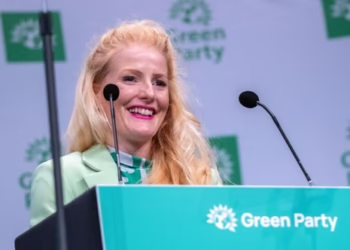 Greens nominate Hannah Spencer for Gorton and Denton byelection
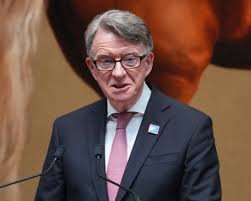 Mandelson Faces Police Inquiry Over Epstein Leak
 Labour Thinktank Row Deepens Over Journalist Probe Claims
 Morgan McSweeney downfall shocks Labour leadership
 Cabinet Secretary Shake-Up Triggers Due Diligence Warning
 Starmer Faces Inquiry Calls Over Thinktank Probe
 Royal Mail Delivery Crisis Deepens Amid Weather Chaos
 UK shelves £110m border project amid trade strain
 Farage Unveils Reform UK Frontbench Team
 California Democrats Vow Trump Reckoning
 Trump Tariffs Threat Spark UK and EU Alarm
 Wales Approves Assisted Dying Bill Consent
 UK EU Trade Reset Gains Public Backing
 Green Party Stuns Labour in Gorton and Denton Byelection
 Corbyn Leads Your Party in Coordinated Left-Flank Strategy
 Labour Together scandal sparks clean break vow
 Asylum Seekers to Work After Year-Long Wait
 Starmer Row as Greens Demand Apology
 Proposed Law Leaves Gap for Children of Convicted Paedophiles
 Gordon Brown urges court for crimes against children
 Starmer Praised for Stance on Trump and Iran Conflict
 Inquiry into HMRC child benefit errors launched by NAO
 NHS Plans to Cut Overseas Workers Labeled Overambitious
 Farage Faces Backlash Over Crypto Cameo Endorsements
 Army Probes Apache Flyover at Kid Rock’s Nashville Estate
 Relationship with Trump may be beyond repair, Starmer warned
 Unions Raise Concerns Over Doctors’ Pay Dispute
 UK Government Poised to Revive Stalled Hillsborough Law
 Starmer Faces Commons Test Over Mandelson Scandal
 UK Stands Firm on Falklands Amid US Rift
 Crackdown Backfires on UK Climate Protesters
 Welsh Labour Faces Potential Historic Election Defeat
 Starmer Survives Mandelson Rebellion
 Silent Tracks: Rail Line Without Passengers
 Major test for Labour as polls open in Great Britain
 Labour Members Doubt Starmer Future as Burnham Leads Poll
 Reform UK Faces Crisis as Newly Elected Councillors Resign
 Farage Faces New Questions Over Private Helicopter Use
 Keir Starmer Struggles to Secure His Grip on Downing Street
 Farage Faces Standards Probe Over Cash Property Purchase
 Green Party Makerfield Candidate Resigns Over Posts
 Secret Role of UK Security Services in Troubles Amnesty Law
 Farage and Reform UK Reshape British Politics
 Starmer Leadership Under Pressure After Setbacks
 Minister Criticises Police Guidance Amid Southampton Protests
 Makerfield Voters Demand Real Change as Election Looms
 The Hidden Crisis Eroding Trust in British Communities
 Deepfake Abuse on X Sparks Safety Concerns for Dissidents
 Modernising the Military: Carns Demands Urgent Procurement Reform
 UK Ministers Lobby Trump Over Under-16s Social Media Ban
 Starmer Resolves to Fight Burnham in Leadership Battle
 Starmer Resigns as Prime Minister Amid Internal Pressure
 MP Warning: Northern Rail Risks Repeating HS2 Failures
 Hollie Ridley to Step Down as Labour General Secretary
 New South Wales Premier Chris Minns Signals Tough Road Ahead for Labor
 Jarvis Urges Burnham to Secure 3.5% Defence Spending
 Farage Warns Sky News Following Financial Inquiry
 Reform UK Finances Face Deep NCA Probe
 Ann Widdecombe, Formidable Political Figure, Dies at 78
 Treasury Reform Urged After Tragic Loss