Published: 1 July 2026
The English Chronicle Desk
The English Chronicle Online
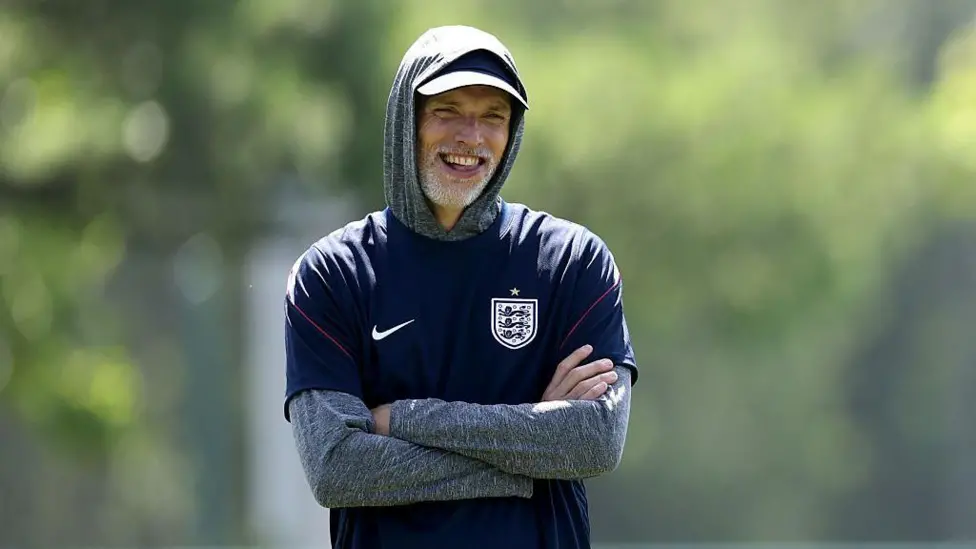
England manager Thomas Tuchel is expected to continue using many of the penalty preparation methods introduced during Gareth Southgate’s tenure, signalling a commitment to a strategy that transformed one of the national team’s most persistent weaknesses into a relative strength.
Penalty shootouts have long occupied a unique place in England’s football history. For decades, the national side developed an unwanted reputation for heartbreak from the spot, suffering a series of painful exits at major tournaments.
However, under Southgate, England adopted a far more structured and scientific approach to penalties, helping the team achieve greater success in high-pressure situations.

Now, despite bringing his own tactical ideas and leadership style to the role, Tuchel appears willing to preserve one of Southgate’s most widely praised innovations.
The decision reflects a growing recognition across elite sport that preparation, psychology and data analysis can significantly influence performance during moments of extreme pressure.
Rather than viewing penalties as a lottery, modern coaches increasingly regard them as a skill that can be trained and improved.
Southgate’s England became one of the most prominent examples of this philosophy.
His coaching staff invested considerable effort in understanding the psychological challenges associated with penalty shootouts.
Players were encouraged to practise penalties regularly, study goalkeepers and develop consistent routines.
Sports psychologists were also involved in helping players manage anxiety and pressure.
The approach appeared to produce results.
England won several important shootouts during Southgate’s time in charge, easing a burden that had weighed heavily on previous generations of players.
Many observers credited the success not only to technical preparation but also to a shift in mentality.
Rather than fearing penalties, players increasingly approached them with confidence.
Tuchel’s reported willingness to retain aspects of this system suggests he sees value in continuity.
While managers often introduce significant changes after taking over a national team, successful practices are rarely abandoned simply for the sake of creating a new identity.
Football analysts note that penalty preparation has become an essential component of tournament planning.
In knockout football, matches are often decided by the finest margins.
A single penalty shootout can determine whether a team progresses toward a title or heads home early.
As a result, managers are increasingly reluctant to leave outcomes to chance.
Tuchel has built a reputation throughout his coaching career as a meticulous tactician.
Known for detailed preparation and analytical thinking, he is widely regarded as a manager who embraces innovation when it offers a competitive advantage.
Retaining Southgate’s penalty framework therefore appears consistent with his broader approach.
The German coach is expected to make adjustments where necessary, tailoring methods to suit the current squad and his own management style.
However, the underlying principles are likely to remain familiar.
Sports psychologists argue that consistency can be particularly valuable in penalty situations.
Players who have practised specific routines repeatedly are often better equipped to remain calm under pressure.
Established habits can reduce uncertainty and allow athletes to focus on execution rather than emotion.
Research into performance psychology has repeatedly highlighted the importance of preparation in high-stress environments.
Elite athletes frequently rely on structured routines to maintain concentration and control nerves.
Penalty shootouts represent one of the clearest examples of this principle in football.
The pressure associated with taking a decisive penalty is immense.
Millions of viewers may be watching, careers can be defined by a single kick and national expectations often weigh heavily on players.
Anything that helps reduce that pressure is viewed as valuable by coaching staff.
Former England players have spoken openly about how attitudes toward penalties have changed over time.
Earlier generations often described shootouts as intimidating experiences accompanied by a sense of inevitability.
More recent squads, by contrast, have tended to approach them with greater confidence and preparation.
That cultural shift is widely regarded as one of Southgate’s lasting contributions to English football.
Supporters will hope Tuchel can build upon those foundations.
Although tactical systems, player selections and match strategies often dominate discussion, tournaments are frequently decided by moments that occur after 120 minutes of football.
A well-prepared penalty taker can therefore be just as important as a successful game plan.
Critics caution that no amount of preparation can guarantee success.
Even the best teams occasionally lose shootouts, while outstanding goalkeeping performances and unpredictable moments remain part of the sport.
Football’s inherent uncertainty ensures that penalties will always retain an element of drama.
Nevertheless, few experts believe preparation is anything other than beneficial.
The consensus among coaches and analysts is that structured planning increases the likelihood of success, even if it cannot eliminate risk entirely.
For England, maintaining a proven approach may be particularly important given the expectations surrounding the national team.

The country continues to search for major tournament success, and every competitive advantage is likely to be pursued.
Tuchel’s willingness to preserve Southgate’s penalty strategy suggests that, while a new era may be underway, some lessons from the previous one will remain firmly in place.
As future tournaments approach, England’s players can expect to continue practising one of football’s most demanding skills with the same level of detail and seriousness that has become a hallmark of the national team’s modern preparation.
Whether that preparation ultimately delivers silverware remains to be seen, but the message appears clear: when it comes to penalties, England no longer intends to leave anything to chance.
Related News:
 Rising World Cup Ticket Prices Spark Concern
 Southgate Calls for Different Approach to Boys
 Rivalry That Changed Modern Football Forever
 Can Vinicius Win Over Brazil at Last?
 Fifa Faces Backlash Over Ticket Payment Demand
 Fans Bring Flags and Fire to World Cup Scenes
 11 EFL Stars Ready to Shine at World Cup
 Arsenal Trio Named on Player of the Year List
 Three Arsenal Stars Make Award Shortlist
 Fans Invited to Share Scotland World Cup Stories
 Fans Angry Over US Visa Rules Before World Cup
 Iran Team Arrives in Mexico Amid US Visa Dispute
 “My Drinking Days Are Over” — How to Enjoy an Alcohol-Free World Cup
 Scotland Branded “Unprofessional” in World Cup Fallout as England Build Momentum
 Kane Enters Ballon d’Or Debate After Bayern Form, but World Cup Seen as Decisive Factor
 Football Regulator Contacts West Ham Over “Serious Allegations” Linked to Sullivan
 Chinese Football Fans Embrace Referee as Unexpected World Cup Figure
 David Sullivan Barred from Contact with West Ham Women’s and Youth Teams Since 2023
 Referee Controversy Raises Questions Over FIFA’s Control of the World Cup
 Nike Charges Fans Most for World Cup Replica Shirts
 Safeguarding Probe Limits West Ham Owner’s Role
 Saka Playing Through Pain As England World Cup Campaign Looms
 England Cruise Past Costa Rica as World Cup Warm-Up Sharpens Tuchel’s Vision
 Football Hopes to Outshine World Cup Drama in Mexico
 Tension Grips Mexico City Ahead of World Cup Opener
 Inside the Three Lions: Bellingham Reveals Euro 2024 Flaws
 Chaos and Celebration at the Historic Azteca Stadium
 ‘We all love him’: Henderson backs Bellingham for England success
 Real Madrid Sign Marc Cucurella From Chelsea
 Why Bringing Back Jordan Henderson Is Thomas Tuchel’s Masterstroke
 Can France Escape the Ghosts of their 2002 World Cup Nightmare?
 Deschamps Shields Mbappé From Fierce Political Storm
 World Cup Fury as Iran Coach Slams Fifa and US
 Messi Equals World Cup Record In Masterclass Victory
 Erling Haaland Double Fires Norway To Victory On Debut
 Tuchel’s England Mission Goes Beyond Football Success
 Iran Files Official Fifa Complaint Over World Cup Travel
 Historic Victory for Canada as They Defeat Nine-Man Qatar
 Heartbreak for Canada as Koné Suffers Horrific Injury
 New Premier League Fixtures Set Stage for Thrilling Season
 Declan Rice Facing Burnout as Tuchel Confronts Midfield Crisis
 Rodrygo Reflects On World Cup Pressure And Social Media
 How ‘Little Scotland’ Is Embracing the World Cup Spirit
 Cape Verde Hold Uruguay in Dramatic World Cup Clash
 World Cup 2026: Reclaiming the American Dream
 The Forgotten Hosts Making World Cup History Behind the Scenes
 Great Stories, Little Jeopardy – Does the New World Cup Format Really Work?
 Pampered, Protected and Primed – So Why Didn’t Scotland’s Players Perform?
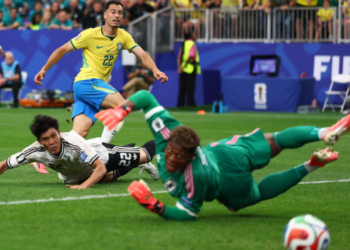 Martinelli Strikes Late as Brazil Edge Past Brave Japan
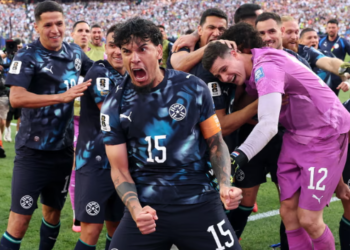 Paraguay Shock Germany in Historic Penalty Shootout
 Morocco Beat Dutch in Wild World Cup Penalty Drama
 London Set to Honour Euro 2025 Champions as Lionesses Take Victory Parade Through the Capital
 Tottenham Takes On Newcastle
 Rugby Confronts Safety Concerns with Smart Mouthguards at Women’s World Cup
 Premier League Supercomputer Predicts Tough Season for Man Utd Amid Three-Team Title Battle
 Mbappé Hat-Trick Powers Real Madrid to 5-0 Rout Over Kairat
 Chaos at Ibrox as Martin’s Rangers Era Comes to an End
 Wolvaardt’s Masterclass Fires South Africa into First World Cup Final
 Saka Solidifies Role as Tuchel’s Key England Lieutenant
 Tiny Curacao Makes History as Smallest Nation to Reach World Cup
 Australia Face Big Changes as Cummins and Lyon Ruled Out of Ashes
 Raducanu Battles Injury as Britain Exit United Cup
 Manchester United Fan Group Targets Jim Ratcliffe Over Club Chaos
 ALL GUNNS BLAZING: Arsenal vs Wigan LIVE SCORE – FA Cup Updates
 Swearing, Illicit Filming & Rule Changes – What Next in Curling Cheating Row?
 Hilary Knight speaks out on Trump’s recent hockey remarks
 Can Chelsea Kick‑Start Faltering Palmer?
 Scotland World Cup Party in Boston Gets Green Light After Security Breakthrough
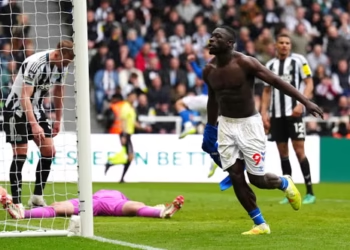 Sunderland Stun Newcastle as Brobbey Strikes Late Winner
 Eddie Howe Faces Seven Game Test to Secure Newcastle Future
 Tiger Woods: Golf Legend Steps Away to Seek Treatment
 Van Dijk Rallies Liverpool for Massive PSG Comeback
 Premier League Clubs Tense Over Regulator Costs
 Beyond the Swoosh: Anta Sports Overtakes Rivals to Become Global Top Three
 “Three-Wheeled Triumph”: Mayor of Erewash Completes 2,000-Mile European Charity Run
 Premier League drama defines crucial weekend
 Arteta urges Arsenal to step up in Atlético semi-final
 Champions at Last: Arsenal Conquer the Premier League
 The Battle for Wembley Sparking Unprecedented Legal Warfare
 Stokes Retirement Announcement Dominates Dramatic Fourth Day of Deciding Test