Published: 01 July 2026. The English Chronicle Desk. The English Chronicle Online.
A sudden shift in government spending has ignited a fierce political storm across the United Kingdom. Westminster is reeling after critical transport infrastructure projects were abruptly cancelled or delayed to fund national security. This unexpected reallocation of capital budgets is designed to bankroll a massive new defence investment plan. High-profile politicians from different parties have united in their shared anger over these regional cuts. The financial maneuver has reallocated vast resources originally meant for essential British road improvement schemes. These savings are now contributing directly towards a massive increase in nationwide military spending. Two major roads in the East Midlands are facing the brunt of these immediate cuts. The government intends to use these specific reductions to fund a fifteen-billion-pound defence uplift.
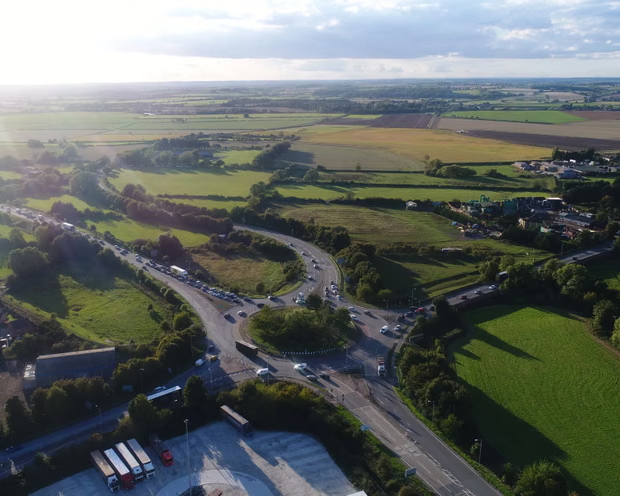
The sudden decision has caused a major rift within the governing Labour party itself. Hamish Falconer, the Member of Parliament for Lincoln, has voiced his deep disappointment publicly. He also serves as the Middle East minister within the current prime minister’s administration. Falconer has expressed intense frustration regarding the sudden uncertainty over local transport infrastructure plans. His particular concern centers on the heavily delayed A46 Newark bypass-widening scheme. The minister emphasized that he fully supports necessary funding for the new defence plan. However, he maintained that the A46 upgrade programme is already at a well-advanced stage. Local communities have long awaited this expansion to relieve intense daily regional traffic congestion. Falconer stated that the project represents excellent value for money for the British taxpayer. The bypass is also considered of vital strategic importance to both Lincoln and the surrounding region.
The timing of this announcement has complicated an already tense internal political landscape. The Labour party is currently navigating a competitive leadership contest to choose its next head. Falconer revealed his plans to address this infrastructure crisis immediately after the leadership vote. He intends to seek urgent meetings with the incoming prime minister and chancellor. The minister will also confront the incoming secretary of state for transport very soon. Falconer hopes to explore whether a credible route forward exists for the vital road. His unusually angry public statement highlights the severe pressure local representatives are currently facing. Constituents are demanding answers about why their long-promised transport improvements have been sacrificed so suddenly. The political fallout from these strategic budget trade-offs is expected to intensify over coming weeks.
Further political opposition has emerged from the newly realigned Reform United Kingdom party. Robert Jenrick, the Member of Parliament for Newark, has reacted with absolute fury online. Jenrick recently defected to Reform from the Conservatives earlier during this current calendar year. The Newark representative stated he is furious that an important local project faces disarray. He claimed that the government has snuck out a massive decision without any parliamentary debate. Jenrick believes this move makes a mockery of wider commitments to bring regional investment. The MP has already written to the transport secretary demanding an urgent, transparent explanation. He expressed deep concern for local residents who rely heavily on the regional road network. Jenrick promised his constituents that he will keep campaigning to get spades in the ground.
The infrastructure debate has quickly become a central platform for the Reform party leadership. Jenrick revealed he held urgent discussions with Nigel Farage regarding the road cancellations today. The Reform UK leader has reportedly promised to reverse these controversial cuts completely. This pledge is contingent on the populist party winning the next general election outright. Jenrick asserted that a future Reform UK government would get this crucial project built. He declared that local residents have had enough of lies and letdowns from Labour. The opposition intends to weaponize this infrastructure delay to win over disillusioned Midlands voters. This tactic highlights how local transport grievances can rapidly transform into major national political battlegrounds. The battle over the A46 bypass is now a symbol of wider regional discontent.
Regional leaders have also expressed deep anger over the complete lack of prior consultation. Claire Ward, the elected mayor of the East Midlands, felt completely blindsided by Westminster. She claimed she was entirely unaware of the forthcoming transport cuts until very recently. Ward only learned the truth while Keir Starmer delivered his defence investment plan speech. The prime minister outlined his vision for national security on a tense Wednesday afternoon. Ward stated that it is unacceptable to inform regional leaders at such a late stage. She argued that if mayors are respected partners, they must be treated like grownups. The mayor insists that regional leaders should be actively involved in difficult spending trade-offs. Her public comments reflect a growing friction between local authorities and central government power.
Despite her intense frustration, Ward acknowledged the complicated reality of national security demands. She stated clearly that she understands the difficult trade-offs facing the British cabinet. The mayor recognizes that increasing investment into defence means removing it from other areas. She accepts that every region must contribute to keep the nation safe today. The world has undeniably become a much less certain place over recent years. However, Ward cannot understand why her region is being singled out so unfairly. The East Midlands is currently slated to lose nine hundred million pounds of investment. The mayor believes this heavy financial burden is not equitable for her local constituents. She pointed out that decades of systemic underinvestment have preceded this painful decision.
The financial ramifications of this new defence plan extend far into the political future. Overall defence spending will officially rise from two point six percent of gross domestic product. This initial target is set for the fast-approaching fiscal year of twenty-seven. The budget will then climb to two point seven percent by thirty. This planned increase will represent an annual military spend of nearly eighty billion pounds. Starmer stated this trajectory puts the United Kingdom on track for three percent later. That ambitious goal would likely be achieved during the lifespan of the next parliament. However, this projected spending still remains well below the official North Atlantic Treaty target. The alliance has previously established a spending target of three point five percent by thirty-five.
The looming financial challenges will soon fall upon Andy Burnham’s political shoulders. The putative next prime minister faces an immediate trial regarding the national balance sheet. Burnham must find an extra four point seven billion pounds for defence very quickly. This massive funding gap must be addressed during his very first official budget presentation. The Guardian understands that the Makerfield MP was left completely in the dark initially. Burnham was apparently not told about this multi-billion-pound deficit during his initial briefings. This revelation has raised serious questions about transparency within the current transition team. Senior officials are quietly questioning how such a massive shortfall went unmentioned for months. The incoming administration will have to make incredibly tough choices to balance the books.
Reaction from the defence establishment and political rivals has been predictably sharp. A defence insider described the chaotic situation as absolute madness after months of wrangling. The source questioned the wisdom of leaving a massive black hole for someone else. Meanwhile, the Conservative opposition has seized on the financial revelation with political glee. Tory spokespeople described the secret funding gap as a delayed-action poison pill for Burnham. They claim the outgoing leadership has intentionally set up the next prime minister for failure. The total defence package will cost two hundred and ninety-eight billion pounds overall. This massive expenditure will be distributed over the course of the next four years. Fifteen billion pounds of that total sum was newly announced just this Tuesday.
The massive defense budget includes historic allocations for advanced military hardware technology. The government will spend forty-seven billion pounds specifically on new nuclear submarines. This investment is designed to maintain the continuous at-sea deterrent for future generations. An additional five billion pounds has been officially allocated for advanced drone technologies. This represents one billion pounds more than announced in last year’s strategic review. Modern warfare requires a significant pivot toward autonomous systems and enhanced aerial surveillance capabilities. Ministers have accepted capital budget cuts in transport and energy to fund this pivot. The British public must now weigh the heavy cost of national defense against local roads. This complex debate over national priorities will undoubtedly shape the future of British politics.
Related News:
 Reeves Faces Setback as Labour May Miss Homes Target
 Kate Winslet to Narrate Film Highlighting King’s Environmental Mission
 Trump’s UK Ambassador Urges North Sea Drilling to Strengthen US Ties
 UK Bans Fake Numbers: Scammers Lose Their Trick
 Millionaires group urge Reeves to introduce wealth tax to ‘lift kids out of poverty’
 Reeves rejects £1bn plea for NHS redundancy payouts
 PM Condemns Leaks, Vows Loyalty to Ministers and Stability
 Stroke Patient Mistaken for Drunk, Care Delayed
 Inside the Helpline Protecting Missing Children in the UK
 Boots Showstopper Beauty Bundle Outshines Many Advent Calendars This Holiday Season
 PlayStation PS5 Deals Hit Lowest Prices Ahead of Black Friday
 Five-Year-Old Dies After Rare Tonsil Surgery Complication
 Starmer Says Labour’s Economic Plan Needs Years to Deliver
 UK unemployment rises to four-year high of 5.1% before budget
 Wiltshire Police Use Lasso to Catch Rampaging Village Goat
 Coasting Drinks: The Trend Redefining Alcohol Enjoyment This New Year
 Rising Hate Crimes Threaten Safety on UK Public Transport
 Starmer Faces Parliamentary Battles Over UK-EU ‘Reset’ Plan
 Met Police Vetting Failures Let Serial Rapists Remain
 Google Employee Claims Redundancy After Harassment Report
 Fatal Bolton Taxi Crash Claims Three Teens and Driver
 ScottishPower Tops List of Worst UK Energy Suppliers
 Judi Dench Champions Fight to Save London’s Green Spaces
 Crowborough Camp Welcomes First Asylum Seekers
 BBC Funding Crisis: Tim Davie Warns of Jeopardy Ahead
 Storm Chandra floods Somerset, triggers major incident declaration
 Artificial intelligence will cost jobs, admits Liz Kendall
 Older Women Vanish from BBC Screens, Review Confirms Bias
 Mandelson Faces Police Inquiry Over Epstein Leak
 Streeting moves on doctor pay to end strike dispute
 UK reports baby formula toxin poisoning cases across the country
 Morgan McSweeney downfall shocks Labour leadership
 Send spending gap leaves deprived areas behind
 Hidden Crisis: Domestic Abuse Suicide Toll in UK
 UK Unemployment Rate Climbs to 5.2% Peak
 Farage Unveils Reform UK Frontbench Team
 BBC World Cup Presenting Duties Shared Among Trio
 Placenta Accreta Warning as Hunt Urges Action
 Wales Approves Assisted Dying Bill Consent
 CPS Updates Guidance on Honour-Based and Dowry Abuse
 Rolling Hills and Heritage: A Car-Free Break in Leicestershire
 Asylum Seekers to Work After Year-Long Wait
 Inquiry into HMRC child benefit errors launched by NAO
 Rising Costs Force Families to Rethink Days Out
 Scott Mills Sacked by BBC Over Personal Conduct Claims
 Palantir Boss Defends NHS Deal Amid Government Break Clause
 Relationship with Trump may be beyond repair, Starmer warned
 UK Government Poised to Revive Stalled Hillsborough Law
 Home Office Faces Legal Risks Over Asylum Hotel Living
 Crisis in NHS Surgery Scheduling Hits Patients Hard
 Blue Badge Abuse: The Rising Tide of Public Hostility
 Scott Parker Leaves Burnley After Premier League Drop
 Silent Tracks: Rail Line Without Passengers
 RFU Backs Borthwick Despite England’s Poor Six Nations
 Major test for Labour as polls open in Great Britain
 Keir Starmer Struggles to Secure His Grip on Downing Street
 Fear and Betrayal: The Chilling Case of Kouri Richins
 Farage Faces Standards Probe Over Cash Property Purchase
 Closing the Gap: UK Pensions Commission Demands Action
 Sun and Jams: Britain Braces for a Sizzling Bank Holiday
 Russian Electronic Attack Targets UK Defence Chief Jet
 UK Shoppers Face Prolonged Price Rises At Tills
 Tube Strike Brings Capital to a Standstill Over Shift Disputes
 Labour Denies Benefit Tax Hike Amid Mandelson Leak
 Makerfield Voters Demand Real Change as Election Looms
 US Condemns ‘Two-Tier’ UK Policing After Student Murder
 Millions in British Charity Funds Linked to Illegal Settlements
 Ryanair Faces Probe Over Mandatory Family Seating Fees
 Britain’s Crowning Butterfly Takes the Nation by Storm
 Labour MP Revives Blocked Assisted Dying Bill in Commons
 Starmer Set to Announce Exit Plan as Burnham Eyes No 10
 Stirchley Community Housing Scheme Faces Crisis
 Australia Social Media Ban Fails to Stop Under-16s
 Watchdog Warns Ministers to Pause Impending HS2 Reset
 EU Slashes Steel Quotas But Grants UK Favourable Rates
 US Airman Avoids British Court in Indecent Exposure Case
 Farage Warns Sky News Following Financial Inquiry
 Ann Widdecombe, Formidable Political Figure, Dies at 78
 UK Schools Struggle as Classrooms Top 40C
 Westminster Council Threatens Charing Cross Soup Kitchen