
Published: July 8, 2026 | The English Chronicle Desk | The English Chronicle Online
NATO member states have announced a landmark £37 billion joint missile project aimed at significantly strengthening the alliance’s collective defence capabilities amid growing security challenges across Europe and beyond. The ambitious programme, backed by multiple allied governments, represents one of the largest collaborative defence investments in NATO’s recent history and underscores the alliance’s renewed focus on military readiness, technological innovation and long-term deterrence.
The announcement was made following high-level discussions among NATO defence ministers and senior military officials, who agreed that evolving security threats require a coordinated response rather than fragmented national procurement programmes. The project is expected to enhance the alliance’s ability to detect, intercept and neutralise a broad range of missile threats while improving interoperability among member nations.
Alliance officials described the initiative as a strategic investment designed to protect NATO territory, military assets and civilian populations from increasingly sophisticated missile systems being developed around the world. They stressed that the programme is defensive in nature and intended to reinforce regional stability rather than escalate tensions.

According to NATO representatives, the project will involve the development, production and acquisition of advanced missile systems, modern interceptor technologies, integrated command-and-control networks and next-generation air defence capabilities. Member states participating in the initiative are also expected to invest in research, testing and infrastructure that will support future missile defence operations.
Officials say the programme will be implemented over several years, allowing participating countries to gradually integrate new systems into their national armed forces while maintaining compatibility with NATO’s existing defence architecture.
The announcement comes at a time when military planners across Europe are reassessing defence priorities in response to an increasingly complex global security environment. The rapid advancement of missile technology, including hypersonic weapons, long-range precision strike systems and advanced cruise missiles, has prompted governments to increase investment in air and missile defence capabilities.
NATO Secretary General Mark Rutte welcomed the agreement, describing it as a significant demonstration of allied unity and collective responsibility. He said the initiative reflects NATO’s commitment to ensuring that all member states remain capable of responding effectively to emerging security challenges.
“Collective defence remains the cornerstone of our alliance,” he said. “Investing together allows us to strengthen our capabilities, improve efficiency and ensure that NATO remains prepared for future threats.”
Military analysts believe the project could reshape Europe’s defence landscape by encouraging greater cooperation between national defence industries. Rather than each country independently developing similar technologies, the programme is expected to promote shared research, joint manufacturing and coordinated procurement, reducing duplication while improving operational effectiveness.
Defence economists also point to the potential industrial benefits of such a large-scale programme. Thousands of highly skilled jobs could be created across the aerospace, engineering, electronics and advanced manufacturing sectors as companies compete for contracts linked to missile production, radar systems, communications equipment and cyber security solutions.
Industry experts say collaborative defence projects often generate technological innovations that later find civilian applications, particularly in fields such as artificial intelligence, advanced materials, satellite communications and digital security.
While the overall budget of approximately £37 billion represents a substantial financial commitment, alliance officials argue that joint investment ultimately reduces costs for individual member states by allowing them to share research expenses, manufacturing capacity and maintenance infrastructure.
Several participating governments have emphasised that the funding will be spread over multiple years, limiting the immediate impact on annual defence budgets while providing long-term certainty for defence planners and industry partners.
The announcement has drawn mixed international reactions. Supporters argue that strengthening missile defence is a necessary response to changing geopolitical realities and serves as an important deterrent against potential aggression. They contend that effective defensive capabilities reduce the likelihood of conflict by discouraging adversaries from considering military action.
Critics, however, warn that continued expansion of military capabilities could contribute to an arms race if rival powers respond by accelerating their own weapons development programmes. Some security analysts have urged NATO to balance increased defence spending with sustained diplomatic engagement aimed at reducing regional tensions.
NATO officials insist that the alliance remains committed to dialogue wherever possible but emphasise that diplomacy is most effective when supported by credible defensive capabilities. They argue that modern missile threats require continuous adaptation as technology evolves and security risks become increasingly unpredictable.
The project is also expected to strengthen interoperability among NATO armed forces. Standardised equipment, shared operational procedures and integrated command systems will enable allied militaries to respond more quickly and effectively during multinational operations or collective defence missions.
Military planners believe enhanced coordination will be particularly important as the alliance continues expanding joint exercises designed to test readiness against a range of potential scenarios, including missile attacks, cyber threats and hybrid warfare tactics.
Experts note that recent conflicts have demonstrated the growing importance of integrated air and missile defence systems. Modern battlefields increasingly involve combinations of drones, ballistic missiles, cruise missiles and electronic warfare, requiring layered defence networks capable of responding simultaneously to multiple threats.

The new initiative is expected to address many of these evolving challenges by combining traditional missile defence technologies with advanced digital command systems, artificial intelligence-assisted threat detection and improved intelligence sharing among allied nations.
As implementation begins, NATO member states will establish detailed procurement schedules, industrial partnerships and operational timelines. Defence ministries are expected to coordinate closely to ensure the programme remains on budget while meeting ambitious capability targets.
For NATO, the £37 billion missile project represents more than a procurement initiative. It reflects the alliance’s broader strategy of maintaining military readiness through cooperation, technological innovation and collective investment. As global security dynamics continue to evolve, allied leaders believe that shared defence programmes will play an increasingly important role in safeguarding member states and preserving stability across the Euro-Atlantic region.
Related News:
 UK Prepares Aircraft Carrier for Middle East Crisis
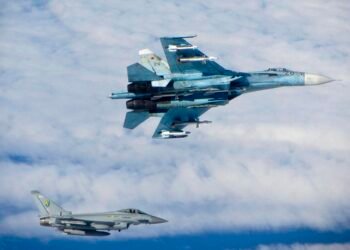 RAF Typhoons scrambled amid Russian drone threat near Nato
 Trump orders US troop pullout from Germany
 Trump likens US Navy actions to ‘pirates’
 Putin Declares Russia Victory at Scaled Victory Day Parade
 Zelenskyy warns over Oreshnik threat as Kyiv hit
 Discontent grows around Putin amid war strain
 BBC to Apologise Over Edited Trump Speech Amid Backlash
 Britain deploys RAF specialists to assist Belgium with drone threats
 US Justice Department Files Lawsuit Against California Over Partisan Voting Maps
 Greene Pushes Epstein Files Amid Trump Fallout
 Trump Deploys DHS to Charlotte in Major Arrest Operation
 December Run-Off in Chile as Election Produces No Winner
 Canada Passes Carney’s First Budget in Tight Parliamentary Vote
 Shadow Fleet at Sea: Europe’s Battle Against Illicit Oil Shipping
 Pentagon Officials in Ukraine to Discuss War End
 Venezuela Threatens Nobel Winner Machado with Fugitive Status
 Georgians Defy Government Crackdown After Year of Protests
 EU plans $105bn Ukraine aid using frozen Russian assets
 Russia losses Ukraine war peace talks intensify amid rising deaths
 Albanese Opens Door to Bondi Royal Commission Amid Rising Pressure
 Trump Escalates Minnesota Immigration Surge Amid Rising Tensions
 Iran Protesters Defy Crackdown as Violent Clashes Intensify
 Trump Threatens Strong Action If Iran Executes Protesters
 Machado Trump medal gesture reshapes Venezuela power struggle
 EU weighs response amid Greenland tariff crisis with Trump
 ICE street raids expose a chilling future for public freedoms
 EU Says US Ties Have Suffered ‘Big Blow’ After Greenland Crisis
 Andrew Hastie Emerges as Leadership Rival to Ley
 Starmer China visit raises human rights pressure on Beijing
 Israel Moves to Bar MSF From Gaza Operations
 Trump Praises ‘Terrific’ Petro After White House Talks
 Tarique Rahman’s Rise Toward Bangladesh’s Top Job
 Australian Families Leave Syrian Camp for Home
 Starmer Weighs Fast-Tracking Defence Boost
 Macron Rebuked in Franco-German Defence Row
 Trump Attacks UK-California Energy Pact
 Kim Jong-un Unveils Housing for War Families
 Trump and Chagos Deal Rift Over Iran Strikes
 Andrew Arrest Sparks Republic Debate in Australia
 Global corruption crisis: Who Washington shields
 Musk Cuts Starlink Access for Russian Forces – Giving Ukraine an Edge at the Front
 Farage Chagos Islands Row Sparks Fury
 Trump Speech Sparks Intense Debate Across Divided America
 Has Europe truly learned from the failures of 2022?
 Trump Faces Questions Over Iran Conflict Plan
 Herzog Asio meeting sparks security storm
 Minister Meets Crews Who Will ‘Take Out’ Iranian Drones
 Pete Hegseth Iran War Remarks Spark Alarm
 UK–US Tensions Ease as Starmer and Trump Hold First Call Since Iran Row
 Trump Pressures Congress Over Save America Act
 Iranian Football Squad Asylum Drama Shocks Australia
 Queensland Protest Laws Spark Free Speech Backlash
 Eswatini Deal Sparks Global Outcry Over US Deportations
 Yvette Cooper: UK Must Follow Principles, Not US Pressure
 Trump Iran War Stance Hardens as Conflict Widens
 Hormuz Strait Crisis: Trump Pressures Allies to Act
 Trump Nato threats expose Iran strategy vacuum
 Philippines energy emergency sparks coal power surge
 Trump Iran Plan Faces Doubts Amid Renewed Tensions
 Trump Facing Backlash from Epstein Survivors Over Files
 Report Says Pezzullo Acted ‘Recklessly’ in Dealings
 Is Britain Ready? Experts Warn of ‘Bizarre’ Military Delay
 Southeast Asia Turns to Russia Amid Energy Crisis
 US Calls Australia Media Law “Foreign Extortion”
 Capitalism ‘Suicidal’, Warns Petro at Climate Summit
 Cartel crackdown raises fears of fresh violence
 Ukraine strikes Tuapse as oil disaster worsens
 Trump Threatens UN Budget Cuts as US Pushes ‘Trade Over Aid’ Agenda
 US Court Restores Abortion Pill Access Temporarily
 “The Pivot to Pakistan”: Trump Pauses ‘Project Freedom’ in Hormuz Amid Iran Deal Hopes
 “The Strait Scramble”: Inside Trump’s ‘Project Freedom’ and the Hormuz Naval Escort
 “The New Silk Road”: India and Vietnam Forge Strategic Maritime Alliance to Counter Regional Volatility
 Tensions Emerge in Netanyahu-Trump Alliance
 US Awaits Iran Reply on New Ceasefire Proposal
 Farage and Reform UK Reshape British Politics
 UK Faces Most Dangerous Era, Military Chief Warns
 Trump’s Iran Legacy Hangs on Tehran Deal
 UK Government Cancels Higher Education Programme for Women and Girls
 Le Pen to Run for President Despite Embezzlement Conviction