Published: July 10, 2026 | The English Chronicle Desk | The English Chronicle Online
Spain’s march through the 2026 FIFA World Cup has reinforced the belief that Luis de la Fuente has quietly built one of the most complete international teams in modern football. Having already guided La Roja to European Championship glory, the Spanish head coach now stands within touching distance of another historic achievement as his side pursues the World Cup trophy with an unbeaten run that has become the envy of international football.
Victory in the tournament would make Spain only the fourth nation to simultaneously hold both the FIFA World Cup and UEFA European Championship titles, placing De la Fuente alongside some of the greatest national team managers the sport has ever known.
Yet while tactical systems, possession statistics and individual brilliance have attracted headlines throughout Spain’s campaign, those closest to the squad insist the team’s greatest strength lies elsewhere. Behind Spain’s success is a culture built on trust, discipline, consistency and collective responsibility—principles that De la Fuente has spent years developing long before becoming the senior national team manager.
Since taking charge in January 2023, the 65-year-old coach has transformed Spain into one of the most difficult sides to beat in world football. His team has suffered only a handful of defeats while assembling an extraordinary unbeaten run that has carried them into the latter stages of another major tournament.

For many observers, however, statistics tell only part of the story.
Unlike many modern coaches who arrive with revolutionary tactical ideas, De la Fuente inherited one of football’s richest footballing traditions and refined it rather than replacing it.
Spain remain committed to controlling possession, circulating the ball patiently and dominating matches technically. What has changed under De la Fuente is the team’s ability to adapt.
His Spain can patiently dictate possession against deep defensive blocks, but they are equally capable of attacking quickly through transitions, pressing aggressively without the ball and exploiting wide areas with greater directness than previous Spanish sides.
That tactical flexibility has made them considerably less predictable while preserving the identity that has defined Spanish football for more than two decades.
Football analysts frequently describe Spain as one of the easiest teams to analyse because their philosophy remains clear and consistent.
Stopping them, however, has become an entirely different challenge.
Opponents know Spain will seek possession, dominate midfield and control the rhythm of matches, yet few have discovered reliable methods of disrupting that approach over ninety minutes.
Much of that consistency stems from De la Fuente’s unique background.
Before becoming Spain’s senior coach, he spent nearly a decade managing the country’s youth national teams, winning European titles while working with many of today’s senior internationals long before they became household names.
That continuity has created rare levels of trust between manager and players.
Unlike many national team coaches who meet players only a few times each year, De la Fuente understands not only their footballing strengths but also their personalities, motivations and emotional characteristics.
That familiarity allows him to manage individuals while maintaining an exceptionally unified dressing room.
The Spanish coach repeatedly emphasises one principle above every other.
Football, he believes, is ultimately built by good people.
His definition of “good” extends beyond technical ability or public image.
Instead, he values generosity, humility, discipline, emotional intelligence and a willingness to sacrifice individual recognition for collective success.
Former players have frequently noted that dressing rooms succeed only when talented individuals place team objectives ahead of personal ambitions.
De la Fuente has made that philosophy central to Spain’s identity.
Every player, regardless of reputation, is expected to contribute defensively, support teammates and maintain emotional control under pressure.
His emphasis on character has become particularly valuable during high-stakes knockout matches.
International tournaments frequently hinge on moments of adversity rather than sustained brilliance.
Spain’s ability to remain composed under pressure has repeatedly distinguished them from opponents who lose discipline during emotionally charged encounters.
The coaching staff devote significant attention not only to tactical preparation but also psychological readiness.
Training sessions, match analysis and recovery programmes are carefully coordinated with sports psychologists and performance specialists to ensure players remain mentally resilient throughout the competition.
That preparation has been particularly evident during difficult matches where Spain have faced aggressive pressing, physical challenges and hostile atmospheres.
Rather than responding emotionally, the team has consistently remained faithful to its footballing principles.
Experience has also shaped De la Fuente’s own approach.
He openly acknowledges learning from disappointments earlier in his coaching career, recognising that emotional reactions often damaged performance during tense matches.
Today, he encourages calm decision-making, patience and concentration regardless of external circumstances.
His philosophy extends beyond the pitch.
Those who regularly attend Spain’s training camps describe a manager who values personal relationships as highly as tactical meetings.
He treats journalists respectfully, communicates openly with players and maintains close collaboration with every member of his coaching staff.
That atmosphere has helped foster a culture where trust replaces fear and accountability replaces blame.
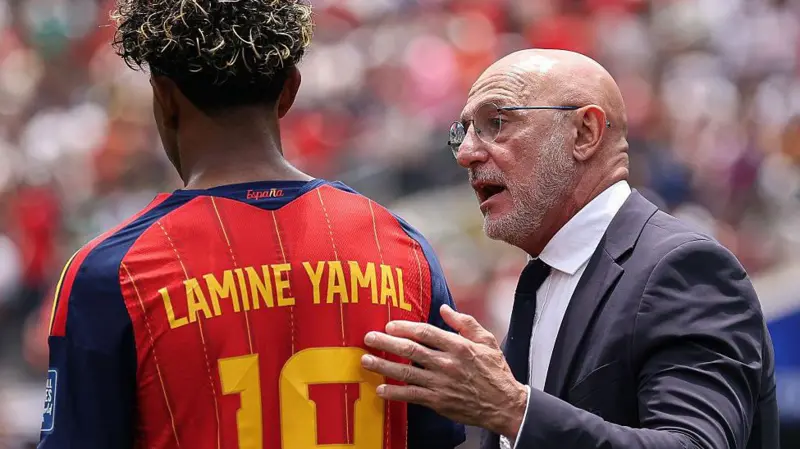
One of the biggest challenges facing De la Fuente has been managing the extraordinary rise of teenage sensation Lamine Yamal.
Already regarded as one of world football’s brightest young talents, Yamal entered the tournament carrying enormous expectations after recovering from injury shortly before joining the national squad.
Rather than placing excessive pressure on the teenager, De la Fuente has carefully managed both his workload and public expectations.
The coach has consistently stressed that Yamal’s greatest contribution extends beyond spectacular dribbles or memorable goals.
He values the youngster’s defensive work, tactical discipline and willingness to contribute for the team every bit as much as his attacking brilliance.
According to De la Fuente, true greatness develops gradually through maturity rather than individual moments of brilliance.
He believes decisive performances during major knockout matches ultimately define elite footballers far more than highlight-reel goals during routine fixtures.
Yamal appears increasingly comfortable embracing that responsibility.
His performances have demonstrated remarkable maturity despite his young age, combining creativity with disciplined defensive contributions rarely expected from teenage attacking players.
The Spain manager has shown similar appreciation for experienced players whose contributions often receive less public recognition.
Forwards such as Mikel Oyarzabal continue playing crucial tactical roles, pressing opponents, creating space and linking attacks even when they are not dominating headlines.
De la Fuente frequently argues that football rewards collective excellence before individual brilliance.
Only when both exist together, he believes, can teams achieve sustained success.
That philosophy has become visible throughout Spain’s current campaign.
Goals have arrived from different players, midfielders have shared creative responsibilities and defenders have contributed to both attack and defence.

Rather than depending on one superstar, Spain have functioned as a cohesive unit capable of adapting to different opponents and tactical situations.
Consistency remains another defining characteristic of De la Fuente’s leadership.
Away from football, he maintains a disciplined daily routine centred on physical fitness, preparation and continuous learning.
Friends and colleagues describe him as relentlessly committed, someone who pursues improvement with remarkable determination regardless of previous success.
That mindset has become embedded throughout the Spanish squad.
Players speak regularly about maintaining standards rather than celebrating past achievements.
Winning the European Championship, they insist, represented only another step rather than the final destination.
Now, with the World Cup entering its decisive stages, Spain once again stand among the tournament favourites.
Whether they ultimately lift football’s greatest prize remains uncertain.
What appears increasingly undeniable, however, is that Luis de la Fuente has succeeded in building far more than a talented football team.
He has created a culture rooted in discipline, humility, tactical intelligence and unwavering collective belief—a combination that may yet deliver another golden chapter in Spain’s remarkable footballing history.
Related News:
 Rising World Cup Ticket Prices Spark Concern
 Southgate Calls for Different Approach to Boys
 Rivalry That Changed Modern Football Forever
 Can Vinicius Win Over Brazil at Last?
 Fans Bring Flags and Fire to World Cup Scenes
 11 EFL Stars Ready to Shine at World Cup
 Arsenal Trio Named on Player of the Year List
 Three Arsenal Stars Make Award Shortlist
 Fans Invited to Share Scotland World Cup Stories
 Fans Angry Over US Visa Rules Before World Cup
 Iran Team Arrives in Mexico Amid US Visa Dispute
 “My Drinking Days Are Over” — How to Enjoy an Alcohol-Free World Cup
 Scotland Branded “Unprofessional” in World Cup Fallout as England Build Momentum
 Kane Enters Ballon d’Or Debate After Bayern Form, but World Cup Seen as Decisive Factor
 Football Regulator Contacts West Ham Over “Serious Allegations” Linked to Sullivan
 Chinese Football Fans Embrace Referee as Unexpected World Cup Figure
 David Sullivan Barred from Contact with West Ham Women’s and Youth Teams Since 2023
 Referee Controversy Raises Questions Over FIFA’s Control of the World Cup
 Nike Charges Fans Most for World Cup Replica Shirts
 Safeguarding Probe Limits West Ham Owner’s Role
 Saka Playing Through Pain As England World Cup Campaign Looms
 England Cruise Past Costa Rica as World Cup Warm-Up Sharpens Tuchel’s Vision
 Football Hopes to Outshine World Cup Drama in Mexico
 Tension Grips Mexico City Ahead of World Cup Opener
 Inside the Three Lions: Bellingham Reveals Euro 2024 Flaws
 Chaos and Celebration at the Historic Azteca Stadium
 ‘We all love him’: Henderson backs Bellingham for England success
 Real Madrid Sign Marc Cucurella From Chelsea
 Why Bringing Back Jordan Henderson Is Thomas Tuchel’s Masterstroke
 Can France Escape the Ghosts of their 2002 World Cup Nightmare?
 Deschamps Shields Mbappé From Fierce Political Storm
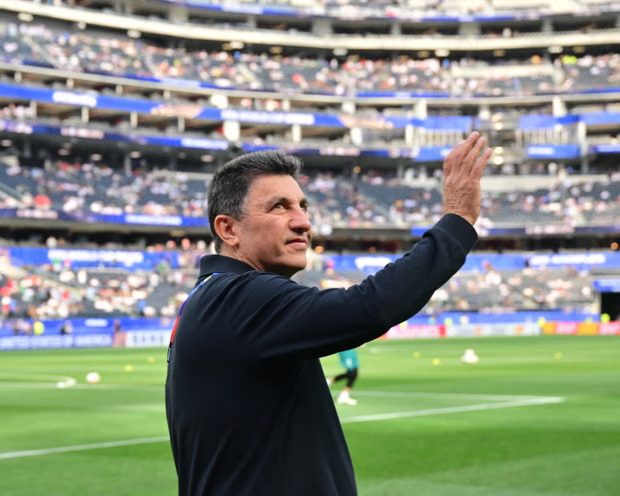 World Cup Fury as Iran Coach Slams Fifa and US
 Messi Equals World Cup Record In Masterclass Victory
 Tuchel’s England Mission Goes Beyond Football Success
 Iran Files Official Fifa Complaint Over World Cup Travel
 Historic Victory for Canada as They Defeat Nine-Man Qatar
 Heartbreak for Canada as Koné Suffers Horrific Injury
 New Premier League Fixtures Set Stage for Thrilling Season
 Declan Rice Facing Burnout as Tuchel Confronts Midfield Crisis
 Rodrygo Reflects On World Cup Pressure And Social Media
 How ‘Little Scotland’ Is Embracing the World Cup Spirit
 Cape Verde Hold Uruguay in Dramatic World Cup Clash
 World Cup 2026: Reclaiming the American Dream
 The Forgotten Hosts Making World Cup History Behind the Scenes
 Great Stories, Little Jeopardy – Does the New World Cup Format Really Work?
 Pampered, Protected and Primed – So Why Didn’t Scotland’s Players Perform?
 Paraguay Shock Germany in Historic Penalty Shootout
 Morocco Beat Dutch in Wild World Cup Penalty Drama
 Tuchel Set to Retain Southgate’s Penalty Strategy as England Focus on Tournament Success
 England Fans Praised for ‘Excellent’ Behaviour During World Cup Campaign
 France Dominate Sweden as Deschamps’ New Era Takes Shape
 Haaland Heroics Send Norway Into Historic Last 16 Knockout
 Kane Saves Tuchel as England Survive Dramatic Exit
 Ramos Sends Portugal into the Last 16
 Spain Dominates Austria to Reach Quarter-Finals
 VAR Drama: Portugal Win in Thriller
 Swiss Star Manzambi Shines in World Cup Victory
 Pubs Granted Permission to Stay Open Until 5am for England’s World Cup Clash with Mexico
 Taylor Swift and Travis Kelce Marry at Madison Square Garden
 Paul Seixas: French Cycling’s Teenage Hope at the Tour
 Trump Helps Clear Balogun for Belgium World Cup Clash
 Norway’s Stunning World Cup Victory Over Brazil
 England Triumph in Azteca World Cup Thriller
 Trump’s Red-Card Intervention Hurts the US World Cup
 Trump Intervenes in Fifa World Cup Balogun Ban
 Police Probe Claim of Missing £1.5m in Yes Scotland Campaign
 Trump Helps Clear Balogun for Belgium World Cup Clash
 England’s 10 Men Hold Firm in World Cup Thriller
 USA World Cup Heartbreak: Belgium Ends Their Dream
 Belgium Thrashes USA After Red Card Controversy
 Ronaldo Says Farewell to the World Cup Stage
 Kylian Mbappé Slams Paraguayan Senator Over Racist Attack
 Balogun Drama Overshadows USA’s World Cup Exit
 Trump Dance: How a Political Gesture Entered Sports
 Messi’s Tears and Triumph in Epic World Cup Escape
 Switzerland Advance in Penalty Thriller
 Egyptian Fury After Argentina World Cup Heartbreak
 World Cup 2026 Power Rankings: England on the Rise
 Mbappé Brilliance Leads France Into Semi-Finals
 Kane vs Haaland: Which Striker Would You Choose?