Published: 24 July 2026 | The English Chronicle Desk | The English Chronicle Online
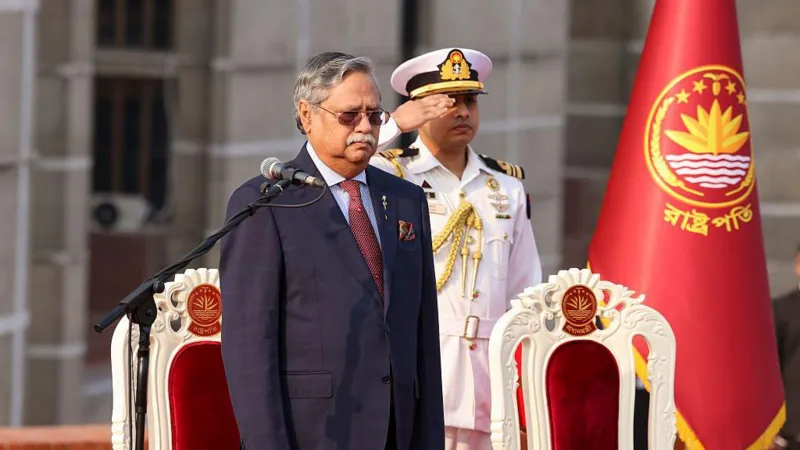
Bangladesh is set for a major political transition after President Mohammed Shahabuddin, a close ally of former Prime Minister Sheikh Hasina, agreed to step down from office, marking another significant development following the dramatic changes that reshaped the country’s political landscape.
The decision comes amid continuing efforts by Bangladesh’s interim authorities to restructure key state institutions after the political upheaval that led to Sheikh Hasina leaving power. The move has intensified discussions about the future direction of the country, the role of the presidency and the process of restoring political stability.
President Shahabuddin, who took office in 2023, had been closely associated with the Awami League government led by Sheikh Hasina. Before becoming president, he held several positions connected to the ruling party and public administration, including roles within the country’s legal and political institutions.

His departure is expected to further symbolise the changing balance of power in Bangladesh following the end of Hasina’s long tenure.
The presidency in Bangladesh is largely a ceremonial position, with executive authority traditionally concentrated in the office of the prime minister. However, the role of the president becomes politically significant during periods of transition, particularly when questions arise over government formation, constitutional procedures and national stability.
The decision for Shahabuddin to leave office follows months of political tension and public debate over the legitimacy and independence of state institutions. Critics of the previous government had argued that many institutions had become closely aligned with the ruling party, while supporters maintained that the government had delivered economic development and administrative stability.
The change in leadership has therefore become part of a wider debate about rebuilding public trust and ensuring political accountability.
Shahabuddin’s rise to the presidency was viewed by many observers as part of Sheikh Hasina’s broader political influence. A veteran figure within the Awami League’s political network, he had maintained longstanding ties with the party before assuming the country’s highest constitutional position.
His supporters described him as an experienced public servant with knowledge of law and governance. However, opposition figures frequently criticised his links to the ruling party and questioned whether the presidency could function independently under his leadership.
The decision to step down comes during a period of significant political uncertainty in Bangladesh. The country has experienced major changes following widespread protests and public dissatisfaction that challenged the previous government.
The political crisis created pressure on state institutions, with demands from opposition groups and civil society organisations for reforms, accountability and changes to the electoral system.
The interim administration has said its priority is creating conditions for a more credible political process and preparing the country for future elections. Supporters of the transition argue that institutional reforms are necessary to restore confidence among citizens.
However, critics warn that political uncertainty could create further instability if reforms are delayed or if competing groups fail to reach agreement over the country’s future direction.
The departure of a president closely linked to the previous ruling party is likely to be interpreted by many as another sign of the changing political environment.
The process of selecting a new president will now become an important issue. Under Bangladesh’s constitution, the president is elected by members of parliament, although the political circumstances surrounding the next appointment may be very different from previous transitions.
With the country undergoing political restructuring, questions remain over who will be chosen and what role the new president will play in shaping Bangladesh’s future.
Analysts say the next president’s ability to maintain neutrality and public confidence will be crucial. Although the position has limited executive power, the president serves as a symbol of national unity and plays important constitutional roles.
A president perceived as independent could help rebuild trust between political groups and strengthen confidence in democratic institutions.
The political changes have also attracted international attention. Bangladesh is strategically important in South Asia, with major relationships involving neighbouring India, China, the United States and other global partners.
International observers have closely followed developments in Bangladesh, particularly regarding democratic governance, human rights, economic stability and the protection of political freedoms.
The country has experienced rapid economic growth over the past decade, but political disputes and social tensions have increasingly shaped public debate. The challenge for future leaders will be balancing economic progress with stronger democratic institutions.
For supporters of reform, Shahabuddin’s departure represents an opportunity to move beyond the political structures associated with the previous government. They argue that new leadership should focus on transparency, accountability and restoring confidence in public institutions.
For supporters of the Awami League, however, the changes have raised concerns about political exclusion and the treatment of officials and leaders associated with the former government.
The future of Bangladesh’s political environment remains uncertain. While some citizens hope the transition will lead to a more inclusive political system, others fear prolonged instability and further divisions.
The resignation of a president is a rare event in Bangladesh’s political history and highlights the depth of the transformation currently taking place.
The country now faces the challenge of managing political change while maintaining economic stability, public order and international confidence.

The next steps taken by the interim authorities will likely determine whether the transition develops into a broader democratic reform process or becomes another period of political competition and uncertainty.
As Bangladesh prepares for a new chapter, the departure of Mohammed Shahabuddin marks a symbolic moment. A president who rose through the political system of Sheikh Hasina’s Awami League era is now stepping aside as the country moves toward an uncertain future.
For millions of Bangladeshis, the central question is not only who replaces him, but whether the changes underway will lead to stronger institutions, fairer politics and a more stable democratic system.
Related News:
 Nine Killed in Karachi Consulate Protest
 Victory or Compromise? Tehran’s Streets Erupt in Mixed Emotion Following Ceasefire
 Southeast Asia Turns to Russia Amid Energy Crisis
 Australia pushes Pacific security pact amid China tension
 BJP Sweeps West Bengal in Historic Breakthrough
 US Awaits Iran Reply on New Ceasefire Proposal
 One Nation Stuns Australia With Historic Farrer Win
 Hormuz Talks Near Critical Stage
 Discontent grows around Putin amid war strain
 Millions Gather for Khamenei’s Six-Day State Funeral
 Venezuela Quake Death Toll Surpasses 4,000
 Indian Police Crack Down on ‘Cockroach’ Protesters as Young Activists Respond With Memes
 ‘I Am Still Alive’: Indian Activist on 26-Day Hunger Strike Loses 11kg
 India’s ‘Cockroach’ Protesters Begin Talks With Government
 Why Violence Has Surged Before Kashmir Election
 BBC to Apologise Over Edited Trump Speech Amid Backlash
 Britain deploys RAF specialists to assist Belgium with drone threats
 US Justice Department Files Lawsuit Against California Over Partisan Voting Maps
 Greene Pushes Epstein Files Amid Trump Fallout
 Trump Deploys DHS to Charlotte in Major Arrest Operation
 December Run-Off in Chile as Election Produces No Winner
 Canada Passes Carney’s First Budget in Tight Parliamentary Vote
 Shadow Fleet at Sea: Europe’s Battle Against Illicit Oil Shipping
 Pentagon Officials in Ukraine to Discuss War End
 Venezuela Threatens Nobel Winner Machado with Fugitive Status
 Georgians Defy Government Crackdown After Year of Protests
 EU plans $105bn Ukraine aid using frozen Russian assets
 Russia losses Ukraine war peace talks intensify amid rising deaths
 Albanese Opens Door to Bondi Royal Commission Amid Rising Pressure
 Trump Escalates Minnesota Immigration Surge Amid Rising Tensions
 Iran Protesters Defy Crackdown as Violent Clashes Intensify
 Trump Threatens Strong Action If Iran Executes Protesters
 Machado Trump medal gesture reshapes Venezuela power struggle
 EU weighs response amid Greenland tariff crisis with Trump
 EU Says US Ties Have Suffered ‘Big Blow’ After Greenland Crisis
 Andrew Hastie Emerges as Leadership Rival to Ley
 Starmer China visit raises human rights pressure on Beijing
 Israel Moves to Bar MSF From Gaza Operations
 Tarique Rahman’s Rise Toward Bangladesh’s Top Job
 After the Landslide: Can India Reset Ties with BNP Bangladesh?
 Australian Families Leave Syrian Camp for Home
 Trump Attacks UK-California Energy Pact
 South Korea’s Ex-President Faces Death Penalty in Insurrection Trial
 Trump and Chagos Deal Rift Over Iran Strikes
 Andrew Arrest Sparks Republic Debate in Australia
 Global corruption crisis: Who Washington shields
 Farage Chagos Islands Row Sparks Fury
 Trump Speech Sparks Intense Debate Across Divided America
 Has Europe truly learned from the failures of 2022?
 Trump Faces Questions Over Iran Conflict Plan
 Herzog Asio meeting sparks security storm
 Nepal Holds First General Election Since Gen Z Protests Toppled Government
 UK Prepares Aircraft Carrier for Middle East Crisis
 Pete Hegseth Iran War Remarks Spark Alarm
 Trump Pressures Congress Over Save America Act
 China Moves to Enshrine ‘Ethnic Unity’ Law
 Iranian Football Squad Asylum Drama Shocks Australia
 Queensland Protest Laws Spark Free Speech Backlash
 Eswatini Deal Sparks Global Outcry Over US Deportations
 Yvette Cooper: UK Must Follow Principles, Not US Pressure
 Trump Iran War Stance Hardens as Conflict Widens
 Trump Nato threats expose Iran strategy vacuum
 Philippines energy emergency sparks coal power surge
 Trump Iran Plan Faces Doubts Amid Renewed Tensions
 Trump Facing Backlash from Epstein Survivors Over Files
 Report Says Pezzullo Acted ‘Recklessly’ in Dealings
 US Calls Australia Media Law “Foreign Extortion”
 Capitalism ‘Suicidal’, Warns Petro at Climate Summit
 Cartel crackdown raises fears of fresh violence
 Trump Threatens UN Budget Cuts as US Pushes ‘Trade Over Aid’ Agenda
 US Court Restores Abortion Pill Access Temporarily
 Tensions Emerge in Netanyahu-Trump Alliance
 Farage and Reform UK Reshape British Politics
 Trump-Netanyahu Call Fuels Iran Talk Crisis
 Xi Arrives in North Korea for Rare Summit
 Trump’s Iran Legacy Hangs on Tehran Deal
 UK Government Cancels Higher Education Programme for Women and Girls
 Bangladesh Balances China Ties as India Relations Improve
 Le Pen to Run for President Despite Embezzlement Conviction
 Le Pen’s Popularity Holds Despite Conviction