Published: 24 July 2026 | The English Chronicle Desk | The English Chronicle Online
Along Italy’s western coastline lies a stretch of breathtaking landscapes where ancient mythology, dramatic cliffs and Mediterranean beauty come together in a destination known as the Riviera of Ulysses. Connected by legend to the epic journey of Homer’s hero Odysseus, the region offers travellers a rare combination of history, nature and timeless coastal charm.
The Riviera of Ulysses, located in the Lazio region between Rome and Naples, is a spectacular area of beaches, rocky headlands, historic towns and archaeological treasures. For centuries, its landscapes have inspired stories, poets and explorers, with many believing that parts of the coastline were among the places described in The Odyssey, the ancient Greek epic about Odysseus’ long journey home after the Trojan War.
Today, the area attracts visitors seeking more than a traditional beach holiday. Its appeal lies in the connection between mythology and reality — a place where ancient legends exist alongside fishing villages, protected nature reserves and crystal-clear waters.
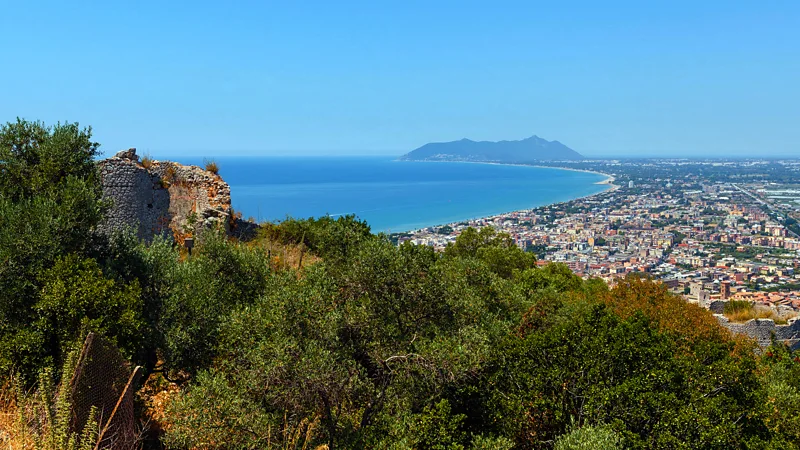
The coastline stretches along the Tyrrhenian Sea and includes destinations such as Sperlonga, Gaeta, Terracina and the Pontine Islands. Each location has its own character, from medieval streets and Roman ruins to quiet beaches surrounded by Mediterranean vegetation.

Among the most famous locations associated with the legend of Odysseus is the coastal town of Sperlonga. Built on a hillside overlooking the sea, the town is known for its whitewashed houses, narrow lanes and stunning views. Its connection to ancient mythology comes from a nearby Roman villa believed to have belonged to Emperor Tiberius.
Inside the villa complex, archaeologists discovered remarkable marble sculptures depicting scenes from Homer’s Odyssey. The artwork includes dramatic moments from Odysseus’ adventures, including his encounter with the sea monster Scylla and his struggle against the Cyclops Polyphemus.
The discovery has strengthened the connection between the coastline and the ancient epic, suggesting that Roman elites were deeply fascinated by the stories of Odysseus and his legendary voyage.
The nearby town of Gaeta offers another important chapter in the region’s long history. Positioned on a rocky peninsula, Gaeta has been shaped by Greek, Roman, medieval and maritime influences. Its historic centre features ancient churches, defensive walls and a medieval castle overlooking the sea.
According to legend, the town received its name from Caieta, the nurse of Aeneas, another legendary hero whose journey was described by the Roman poet Virgil. Like many places along the Riviera of Ulysses, Gaeta sits at the intersection of mythology and history.
The natural beauty of the region is equally impressive.
The coastline features dramatic cliffs, hidden coves and beaches surrounded by forests and hills. The protected Riviera di Ulisse Regional Park was created to preserve the area’s unique landscapes and biodiversity, offering visitors opportunities for hiking, wildlife observation and exploring untouched coastal areas.
One of the most popular natural attractions is the Monte Orlando promontory near Gaeta. Covered in Mediterranean vegetation, the area provides walking trails with spectacular views over the Gulf of Gaeta. Ancient Roman remains, including the famous Split Mountain sanctuary, add historical depth to the natural scenery.
The region’s beaches are another major attraction. Unlike some of Italy’s more crowded coastal destinations, parts of the Riviera of Ulysses maintain a quieter atmosphere, allowing visitors to enjoy the sea without the overwhelming crowds found elsewhere.
Sperlonga’s beaches are particularly popular for their clear waters and clean sands, while Gaeta is known for its long coastline and traditional seaside atmosphere. Terracina combines beach tourism with ancient history, featuring Roman ruins and a historic old town overlooking the sea.
Food is also an important part of the Riviera’s identity.
The coastal location means seafood plays a central role in local cuisine. Restaurants serve dishes featuring fresh fish, prawns, mussels and other Mediterranean ingredients. Visitors can enjoy traditional recipes that reflect centuries of fishing culture and regional agriculture.
One of the area’s most famous products is Gaeta’s small black olive, which is used in local dishes and has become a symbol of the region’s culinary heritage. Combined with olive oil, fresh vegetables and seafood, the cuisine reflects the simple but rich flavours of southern Italy.
Beyond food and scenery, the Riviera of Ulysses offers visitors a chance to experience a slower pace of life. Small towns maintain traditional rhythms, with residents gathering in historic squares, fishermen working along the coast and families enjoying evening walks beside the sea.
The connection to The Odyssey adds a sense of mystery to the landscape. While historians continue to debate the exact locations described by Homer, the coastline’s caves, islands and dramatic cliffs provide an environment that feels naturally suited to ancient myths.
One of the most famous stories associated with Odysseus is his encounter with the sorceress Circe, who transformed his companions into animals before helping him continue his journey. Ancient writers connected Circe’s island with areas near the Italian coast, particularly around Mount Circeo, which rises dramatically from the landscape north of the Riviera.
The promontory of Circeo remains one of the region’s most recognisable landmarks. Surrounded by beaches and wetlands, it combines natural beauty with archaeological importance. The area contains evidence of human settlement dating back thousands of years.
For modern travellers, following the route of Ulysses offers a different way to experience Italy. Instead of focusing only on famous cities, visitors can explore landscapes where mythology, archaeology and everyday life exist together.
The Riviera of Ulysses also demonstrates how ancient stories continue to influence tourism and cultural identity. Myths that were created thousands of years ago still shape the way people understand places today.
The appeal of the region comes from this combination of imagination and reality. A visitor can walk through Roman ruins in the morning, swim in Mediterranean waters in the afternoon and watch the sunset over the same coastline that inspired ancient storytellers.

As global travellers increasingly seek meaningful experiences rather than simple sightseeing, destinations connected to history and culture are becoming more popular. The Riviera of Ulysses offers exactly that: a journey through landscapes that have carried stories across generations.
Whether or not Odysseus truly sailed these waters, the legend has become part of the region’s identity. The cliffs, islands and ancient ruins continue to inspire visitors who arrive looking for beauty but leave with a deeper connection to history.
The Riviera of Ulysses remains one of Italy’s most captivating coastal treasures — a place where mythology meets the Mediterranean and where every view appears to carry a story from the past.
Related News:
 Singapore Offers to Set Up Single Americans with ‘Epic’ First Dates – There’s Just One Catch
 Germany’s Fairy Tale Route: The Real Places Behind the Grimm Stories
 Rare Glimpse of Historic Bridge Thanks to Low Tide
 Legacy of the Landscape: Vicar’s Gift Secures Future of South West Coast Path
 The Hidden Hoard of 1692: Glencoe Massacre Coins to be Displayed at Folk Museum
 “A Tonic for the Nation” Reimagined: Southbank Centre Marks 75 Years of Artistic Rebellion
 Spain Tourism Surges as Travellers Avoid Middle East
 Father Continues 10-Lake Swim Challenge for Son
 Photographers Capture Stunning Wildlife Moments
 Spain Sees Tourism Boom as Travellers Shift Away From Middle East
 England and Norway Fans Turn Miami Into World Cup Carnival
 South Africa’s Garden Route Gem Faces Looming Water Crisis
 The Victorian aristocrat who became Britain’s first Muslim lord
 Dolma: The Stuffed Dish the World Fell in Love With
 Revealed: The Billions Given to Charity by Ordinary Indians Every Year
 Toddlers in Finland Lead the Fight to Save Sámi Language
 ‘We Pray for Peace’: Indian Filmmaker From Troubled State Who Won a BAFTA
 BBC Apologises After Racial Slur Aired at BAFTAs by Guest With Tourette’s
 Man discovers £18k trading card stash in his loft
 Louvre Museum Director Resigns Months After High‑Profile Heist
 Spain Declassifies Files on 1981 Attempted Coup in Effort to Dispel Conspiracy Theories

 My One-Hour Flight Transfer Left Me Facing 10 Days Stuck in a City Under Attack
 Why Every Culture Has a Healing Broth

 Uzbekistan’s Natural Landscapes Take Centre Stage
 I’ve Lived in a French Village for 35 Years. This is Why They are So Special.
 National Treasure: Raja Ravi Varma Masterpiece Smashes Indian Art Record with $17.9m Sale
 Storm Dave Disrupts Travel but Conditions Set to Ease
 The Mosaic of 1926: Newly Released Census Shatters “Monocultural” Myth of Early Irish Free State
 ‘The Soul of Spain’: Politicians Clash Over Renewed Push to Move Picasso’s Guernica
 The ‘Svuota Londra’ Effect: Why the Super-Rich are Swapping Dubai for Milan
 Two Centuries of Steam: The Museum Train Embarking on a Bicentennial Journey
 Echoes of the Iron Horse: Exhibition Train Marks 200 Years of Rail
 Locked Away: The ‘Complete Nightmare’ Facing the Blair Mayne Archive
 ‘Significant and Poignant’: Families Gather for 35th Anniversary of IRA Musgrave Bombing
 Paws on the Wheel: Driver Facing Fine After Dog Photographed on Lap
 A Gentle Light Extinguished: Tributes Pour in for Sister Genevieve After Fatal Newport Collision
 The Lough’s Lament: Can Fiction Spark a ‘Seismic’ Rescue for Lough Neagh?
 Anchors Aweigh: Historic Ferry Service Enters Voluntary Liquidation
 The Planet Rock Sunset: Hip-Hop Architect Afrika Bambaataa Dies Aged 68
 The Heroes of Bondi: Eight to Receive National Bravery Awards Following Junction Tragedy
 The Freedom Hub: Can a Former Women’s Jail Unlock This City’s Potential?
 The Sinking Heritage: The Dutch Village at Risk of Being Demolished
 The Spectrum of Wit: All-Autistic Comedy Line-up Breaks ‘Seismic’ Ground
 Mediterranean Spirit in the Met: London’s Moroccan Jews Celebrate Mimouna
 Justice on Hold: Further Delay in Chloe Mitchell Murder Trial Sparks Local Frustration
 The ‘Machli’ Manifesto: Why Indian Politicians are Trading Rallies for Fish Markets
 ‘The Last of the Greatest’: UK’s Oldest WWII Veteran Passes Away Aged 109
 Shaken, Stirred, and Syncopated: 2026 BBC Proms Unveils Boldest Lineup Yet
 ‘The Kings of the Rave’: Carl Cox ‘Humbled’ by Towering Mural Marking Prodigy Tour
 Black Forest Tragedy Remembered 90 Years On
 Two Dead in Adelaide Airport Plane Crash Fire
 The “Invisible” Masterpiece: Banksy-Signed Statue Stuns London Commuters
 The Shadow of the Blitz: 1,200 Plymouth Homes Evacuated as “Very Large” WW2 Bomb Unearthed
 Border Chaos: UK Travellers Face Massive EU Delays
 The £3,000 License: Learners “Held Hostage” by Cancelled Tests and Shifting Goalposts
 The “Final Fence”: A Guide to Navigating the 2026 Badminton Horse Trials
 “The Garden of Time”: Surrealist Sculptures and Living Flora Dominate the 2026 Met Gala
 “From Tile to Vinyl”: How a Viral Kitchen Serenade Landed One TikToker in a Top LA Studio
 “The Sacred Bronze”: Guernsey Liberation Hero Peter Porteous Honoured in ‘Clinical’ New Sculpture
 France Faces Record Presidential Crowded Race Amid Far-Right Surge
 Bad Weather Threatens Hantavirus Cruise Ship Evacuation
 Whistler’s Mother and why its fame frustrated artist
 Hybrid village stores fight rural decline
 Sycamore Gap Artwork Chosen After Public Vote
 Pope Meets Families in Italy Toxic Waste Zone
 Thailand Tightens Visa Rules to Curb Tourist Misbehavior
 Everest Climber Recalls Guide’s Six-Day Survival
 Families Grieve Beyond Air India Crash Victims
 Dad Receives Baby Magazine 19 Years After Ordering
 “My Drinking Days Are Over” — How to Enjoy an Alcohol-Free World Cup
 Cancelled Cornwall Event Leaves Traders Facing Heavy Losses
 Russian Artist and Kremlin Critic Shot Dead in Poland
 Catherine Shares Emotional Family Reunion After Three Peaks Challenge
 Bayeux Tapestry Arrives at British Museum Overnight
 Dreyfus Statue Finally Gets Permanent Paris Home
 London Tube Heat Reaches Dangerous Levels
 Italy’s Beach Lunch Ban Sparks Holiday Backlash
 New EU Border System Could Triple Passport Control Waiting Times, Airport Chief Warns