Published: 30 July 2026 | The English Chronicle Desk | The English Chronicle Online
The number of excess deaths linked to heatwaves in England has almost doubled so far this year compared with the same period in previous years, according to new health analysis that has renewed concerns over the growing impact of extreme weather on public health.
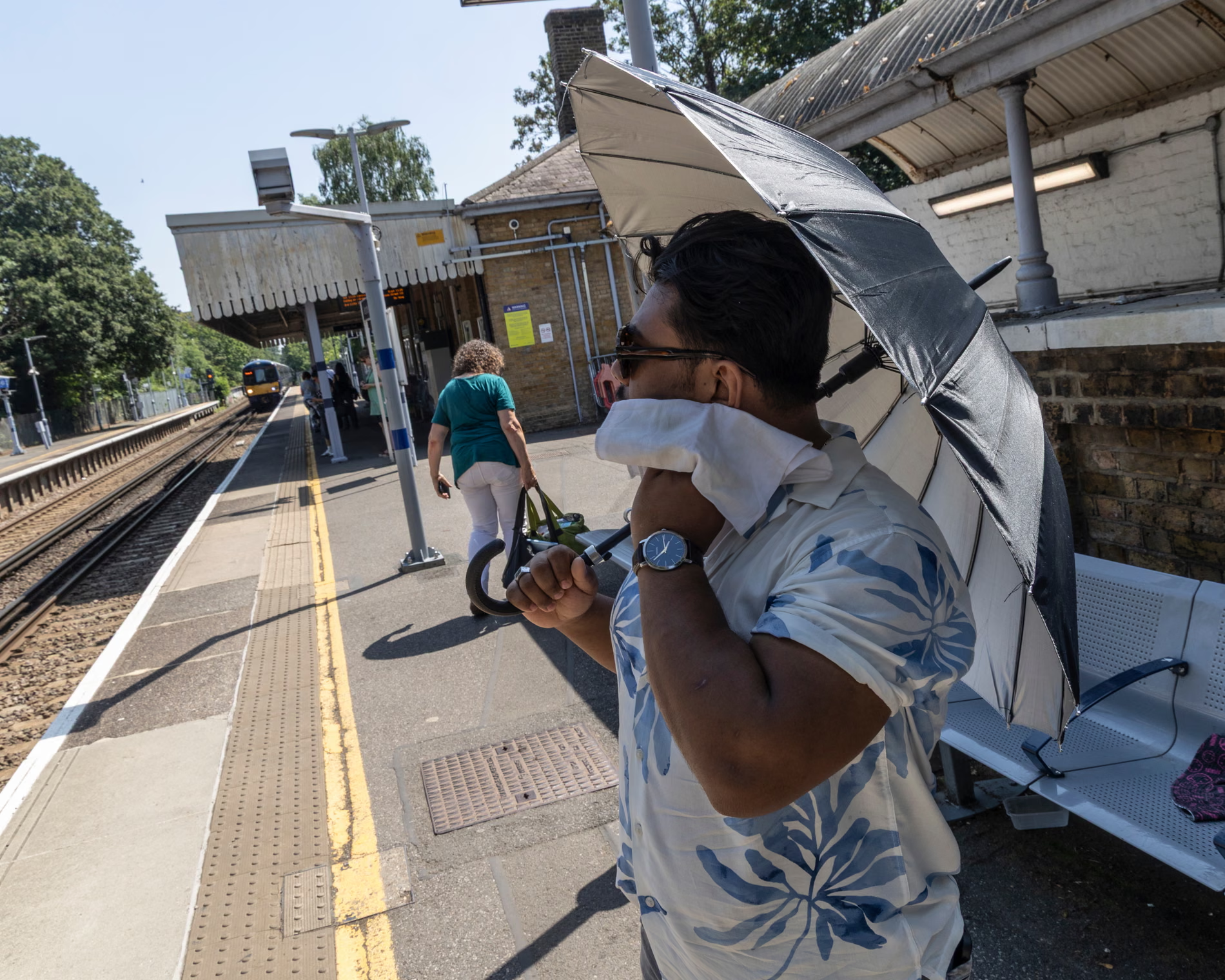
Experts say prolonged periods of unusually high temperatures are placing increasing pressure on vulnerable people, particularly older adults, those with chronic health conditions and individuals living alone. The findings come as much of England experiences another spell of exceptionally hot weather, with health authorities issuing amber heat-health alerts across several regions.
Public health specialists warn that climate change is making heatwaves more frequent, more intense and longer-lasting, increasing the likelihood of preventable deaths unless stronger adaptation measures are introduced.
Unlike storms or floods, heatwaves often develop gradually, making their health impacts less visible despite causing significant harm.
Medical experts explain that extreme temperatures place considerable strain on the human body. Prolonged exposure to heat can worsen existing heart disease, respiratory illnesses, kidney problems and other chronic medical conditions.
Many heat-related deaths do not occur because of direct heatstroke. Instead, excessive temperatures often aggravate underlying illnesses, increasing the risk of fatal complications.
Health researchers describe these as “excess deaths”—the number of deaths above what would normally be expected during a similar period.

The latest figures indicate that this year’s unusually warm weather has contributed to a sharp rise in mortality across England.
Health officials say elderly people remain the group most vulnerable to extreme heat.
As people age, the body’s ability to regulate temperature naturally declines. Many older adults also take medications that can affect hydration or make it harder to cope with prolonged hot weather.
Those living independently may be especially vulnerable if they have limited mobility or lack regular social contact.
Doctors have urged relatives, neighbours and carers to check regularly on older family members during periods of high temperatures.
Simple actions such as ensuring adequate hydration, keeping homes cool and recognising early symptoms of heat exhaustion can significantly reduce health risks.
The increase in heat-related illness has placed additional demands on hospitals, ambulance services and primary healthcare providers.
Emergency departments have reported higher numbers of patients suffering from dehydration, heat exhaustion, fainting and complications linked to cardiovascular disease.
Healthcare professionals also report that prolonged hot weather places extra pressure on staff, particularly during periods when hospitals are already operating near capacity.
Ambulance services have urged members of the public to seek medical advice early if vulnerable relatives begin showing signs of heat-related illness.
Health leaders say planning for extreme weather is becoming an increasingly important part of managing NHS resources.
Scientists say the increase in severe heatwaves reflects broader changes in the Earth’s climate.
Global average temperatures have continued to rise over recent decades, increasing the likelihood of prolonged periods of extreme heat across Europe, including the United Kingdom.
Climate researchers note that while individual weather events cannot always be attributed directly to climate change, warming temperatures make intense heatwaves more frequent and more severe.
The UK has already experienced several record-breaking temperature events during the past decade, prompting governments to review long-term climate resilience strategies.
Experts warn that without greater adaptation, heat-related deaths are likely to continue increasing.
Cities often experience significantly higher temperatures than surrounding rural areas due to the “urban heat island” effect.
Concrete buildings, roads and limited green spaces absorb and retain heat, causing temperatures to remain elevated well into the night.
Public health researchers say overnight cooling is essential because it allows the human body to recover from daytime heat.
Where nighttime temperatures remain high, vulnerable individuals face greater risks of dehydration and cardiovascular stress.
Local authorities are increasingly exploring measures such as tree planting, improved urban design and expanded green spaces to reduce excessive heat.
Health agencies have continued issuing advice encouraging people to take precautions during hot weather.
Officials recommend:
Drinking water regularly, even before feeling thirsty.
Avoiding strenuous outdoor activity during the hottest hours of the day.
Keeping curtains or blinds closed in direct sunlight.
Wearing lightweight clothing and using sunscreen outdoors.
Checking regularly on elderly neighbours, relatives and vulnerable individuals.
Never leaving children or pets inside parked vehicles.
Authorities also advise employers to protect outdoor workers by providing access to drinking water, shaded rest areas and regular breaks.
Extreme heat is also affecting infrastructure, agriculture and the wider economy.
Rail operators have introduced speed restrictions on some routes because high temperatures can cause tracks to expand.
Road surfaces have suffered damage in some areas, while electricity demand has increased as households and businesses rely more heavily on cooling systems.
Farmers continue monitoring crops affected by prolonged dry conditions, raising concerns about harvest yields if rainfall remains limited.
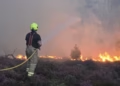
Environmental agencies have also warned of increased wildfire risks as vegetation becomes increasingly dry.
Public health organisations argue that England must prepare for hotter summers becoming the norm rather than the exception.
Experts have recommended several measures, including:
Better insulation and ventilation in homes.
Increased access to cooling centres during heatwaves.
Improved warning systems for vulnerable communities.
Greater investment in climate-resilient healthcare infrastructure.
Expanded public awareness campaigns about heat-related illness.
Many specialists believe preventing heat-related deaths requires coordinated action involving healthcare providers, local councils, emergency services and community organisations.
Community groups have also played an important role during recent heatwaves.
Volunteers have visited elderly residents, distributed drinking water and assisted people unable to leave their homes safely.
Health charities stress that social isolation significantly increases vulnerability during extreme weather.
A simple phone call or visit to an elderly neighbour can sometimes identify problems before they become medical emergencies.
Officials continue encouraging communities to support those most at risk during prolonged hot spells.

Meteorologists expect periods of unusually hot weather to remain a regular feature of British summers in the coming decades.
As temperatures continue rising, policymakers face increasing pressure to adapt public health systems and urban infrastructure to changing climate conditions.
Experts say reducing heat-related deaths will require both immediate public awareness and long-term investment in resilience measures.
For now, health authorities continue urging people not to underestimate the dangers posed by prolonged high temperatures.
While many enjoy sunny weather during the summer months, the latest analysis serves as a reminder that heatwaves are not merely seasonal events—they are increasingly becoming a significant public health challenge capable of claiming hundreds of lives each year if adequate precautions are not taken.
Related News:
 UK Braces for Prolonged Heatwave as Amber Alerts Issued
 UK Heatwaves May Have Claimed Thousands of Lives
 UK Heatwave Nears Two-Week Milestone as High Temperatures Continue Across the Country
 Fourth Heatwave Brings 35C Temperatures to UK
 Amber Heat Health Alerts Issued as UK Heatwave Set to Reach 35C Peak
 Dozens of Flood Warnings in England After Days of Non-Stop Rain
 UK Winter Nowhere Near a Record Breaker Despite Floods and Storms
 UK Records Warmest Day of the Year as Temperatures Exceed 18 °C
 Family Says Heatwave Drownings Reopen Grief
 Deadly Earthquake Hits Philippines
 Amber Heat Health Alerts Issued as UK Temperatures Expected to Exceed 30C
 Met Office Issues Amber Extreme Heat Warning as Temperatures Near 35C
 Temperatures Set to Fall This Week, But Forecasters Warn Heat Could Return Soon
 ‘Extreme’ Marine Heatwave Forecast for UK Waters
 Hospital Urges Public Never to Leave Dogs in Hot Cars
 UK Schools Struggle as Classrooms Top 40C
 London Tube Heat Reaches Dangerous Levels
 Rain Forecast to Return This Weekend as Parts of UK Edge Closer to Drought Conditions
 Concerns Mount Over Accuracy of At-Home Health Tests as Study Calls for Stricter Regulation
 The Ketamine Crisis in the UK is a Silent Epidemic Leaving Users with Lifelong Pain
 Why E-Bikes and E-Scooters Are Making Streets a ‘Nightmare’ for Blind People
 Millions in the UK at Higher Risk of Heart Failure and Stroke Due to Air Pollution, Study Warns
 Systemic Racism in Maternity Care Continues to Endanger Black Women in England, MPs Warn
 One in Three GPs in England Do Not Work in NHS, Raising Concerns Over Access to Care
 Questions Remain as Rugby Legend Lewis Moody Faces Motor Neurone Disease Diagnosis
 M&S and Morrisons Lead Christmas Supermarket Taste Test
 New Prostate Cancer Drug Set to Halve Death Risk in England
 Hospice Cuts Raise Alarm Across England Amid Funding Crisis
 Patients to Test Health at Home to Ease NHS Winter Pressure
 Shouting Works Best to Deter Gulls, UK Study Finds
 Reeves rejects £1bn plea for NHS redundancy payouts
 Stroke Patient Mistaken for Drunk, Care Delayed
 ‘Traumatic Wait’: Northern Ireland Women Face Breast Cancer Delays
 Five-Year-Old Dies After Rare Tonsil Surgery Complication
 Fibromyalgia Patients Struggle as NHS Fails to Provide Care
 More Patients Now Contacting GPs Online, Data Shows
 Children to Receive Home Vaccines as England Acts
 Local Fish Could Boost UK Health and Economy Significantly
 NHS Violence Crisis: Staff Face Daily Assaults
 Celebrity Campaign Highlights SMA Screening Failures
 UK Glaucoma Rise Signals Looming Eye Health Crisis by 2060
 Pneumonia Surge Pushes England Emergency Cases Higher
 Draft Severe Weather Plan Following Storm Flooding
 What is Groundwater Flooding and Why Dorset is Seeing ‘Historical Highs’
 Snow and Rain Warnings as Cold Snap Continues in the UK
 UK MPs Demand Ban on Brazilian Butt Lifts
 NHS Urges Nine Million People to Get Therapy
 Storm Hernando: Edinburgh Airport Flights Cancelled in US Travel Chaos
 Half of Britons Avoid GP When Ill, Survey Reveals Growing Concern
 UK’s First Geothermal Plant Powers 10,000 Homes
 50,000 People Waited Over 24 Hours in A&E Corridor Care
 New Infection Risk Alert at Glasgow’s Flagship Hospital
 Father Dies by Suicide Weeks After Wedding in Clitheroe
 ‘We can’t go back’: mother of six-year-old cancer survivor fears UK visa changes
 Palantir NHS Contract Sparks Fears Over Data Power
 Charity Watchdog Takes Control of Learning Disability Care Home
 The High Cost of Survival: How the 2026 Fiscal Outlook is Redefining British Life
 ‘Zoom Dysmorphia’ Explosion: BDD Patients Quadruple in Post-Pandemic UK
 ‘It’s Heartbreaking’: NHS Training Freeze Leaves Resident Doctors in Limbo
 The Miracle of Phoenix: ‘Half Dead’ Rescue Dog Defies the Odds in Worcestershire
 GSK cancer drug shows early promise in trials
 Toxic Trail: Dog Owners Warned Over ‘Vile’ Poisoned Meat Found in Parks
 The Waiting Ward: ‘Month of Worry’ as Doctor Strikes Trigger Seismic Surgery Delays
 Policy Stand-Off: Streeting Denies Any ‘System Update’ to Resident Doctor Pay Deal
 Crackdown Backfires on UK Climate Protesters
 The “Cancer Commute”: Patient Warns of Breaking Point Over 40-Mile Treatment Trek
 New Scan Offers Hope for Faster Endometriosis Diagnosis
 “Invisible Agony”: 98-Year-Old Woman Left in “Severe Pain” for Days Amidst Care Backlog
 “A Medicine Desert”: Why the Battle for Basic Prescriptions is About to Intensify
 The Pathogen Protocol”: Third British National Monitored for ‘Nasty’ Suspected Hantavirus
 NHS Drug Deal Faces Legal Threat Over US Trade Agreement
 Pope Meets Families in Italy Toxic Waste Zone
 Record Spending Highlights Growing Crisis In National Health Service
 NHS Approves Landmark Ovarian Cancer Drug
 Man Praised for Saving Neighbours After Lightning Strike Sparks House Fire
 Nursing Workforce Crisis Leaves Disabled Patients at Risk
 The Hidden Revival of a Fatal Infection on British Soil
 Europe Scorched as Record Heatwaves Grip the Continent
 Britain Set for ‘Bumper Year’ for Butterflies as Conservationists Predict Strong Season
 Wildfires Intensify in South-West France as Region Braces for 40C Heatwave