**Published: 28 August 2026. The English Chronicle Desk. The English Chronicle Online**
Families of missing British nationals have travelled to Nepal in an increasingly desperate search for relatives feared to have been caught in the devastating flash floods that swept through the Nepal-Tibet border region.
The disaster has left at least 475 people dead across Nepal and Tibet, while several hundred others remain unaccounted for. Among those reported missing are 537 tourists, many of whom had travelled to the mountainous region for trekking, pilgrimage and spiritual retreats.
Nepalese authorities released a list on Friday containing the names of known missing tourists. The list included 33 British nationals, among them a 13-year-old girl and a 14-year-old boy. The revelation has intensified concerns among families in Britain, several of whom have decided to travel to Nepal themselves as rescue teams continue searching remote areas affected by the flooding.
The scale of the disaster and the destruction of roads, bridges and telecommunications infrastructure have made it difficult for authorities and families to establish contact with people who were in the affected region when the flood struck.

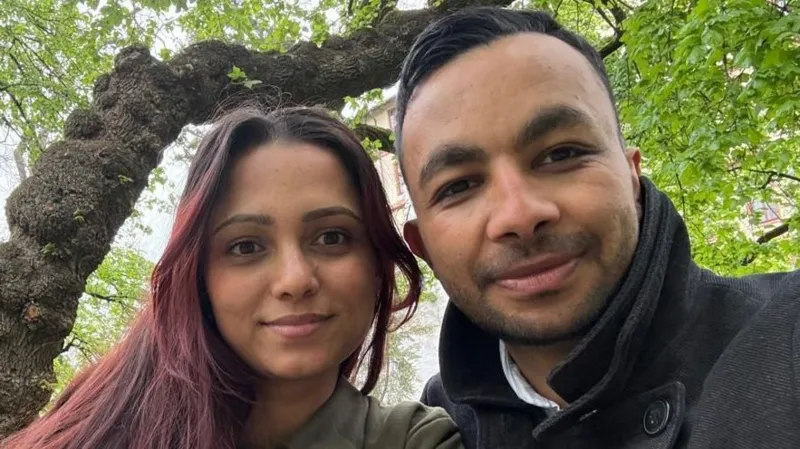
Among the British nationals whose whereabouts remain unknown is Leena Bector from Slough. Fishtail Tours and Travels confirmed that she was among 27 travellers connected with the company who remained unaccounted for.
Her husband, Bhupesh Bector, told The Times that he knew his wife was in Nepal and felt compelled to travel there himself.
“I know that she’s in Nepal for sure, so even if they find her today or tomorrow, I need to be there,” he said.
His decision reflects the anguish being experienced by families who have been left with little information about their relatives. With communications disrupted across parts of the disaster zone, many have been forced to wait for updates from tour companies, Nepalese officials and rescue agencies.
For some families, however, waiting from thousands of miles away has become unbearable.
Essex nurse Rajendra Pudasaini said several members of his family were swept away by the flood. He told PA Media that his wife’s aunt and uncle, their granddaughter and her husband, as well as his godson, were among those missing.
“They’re gone. The speed the water came, they couldn’t be saved, they were just swept away,” he said.
Sarada Simkhada, a senior nurse at Darent Valley Hospital in Kent, has also been reported missing, according to a local councillor. Simkhada was understood to have been travelling towards Mount Kailash, a sacred destination that attracts thousands of Hindu pilgrims.
The spiritual significance of the region has added another dimension to the disaster. Several British nationals were among international travellers making pilgrimage journeys or taking part in organised retreats when the flooding struck.
Tatajana Phillips, from Folkestone in Kent, said she had been unable to contact her sister Julija Jakovicka, who was believed to have been near the Nepal-Tibet border shortly before the flash flood.
Phillips said her sister was in the area for a yoga and meditation retreat and that her last known location was recorded roughly an hour before the disaster.
“Then there is no more news,” she said.
Phillips described the uncertainty as extremely difficult for the family. Her sister, a mother of two who lives in Germany, had travelled to Nepal expecting a spiritual and peaceful experience.
“We are terribly worried,” Phillips’ husband Ben said.
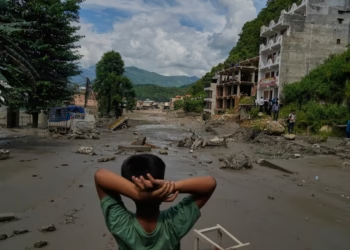
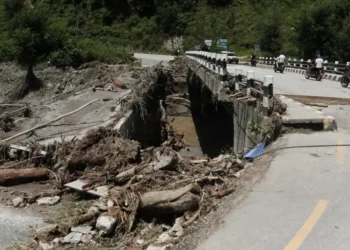
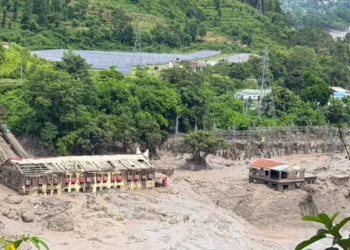
The families’ fears have been compounded by the extraordinary speed and force of the flooding. Entire sections of villages were destroyed, while roads and bridges disappeared beneath torrents of water, mud and debris.
Pramod Poudel, who lives in Uckfield in East Sussex, said his mother, wife, brother and uncle were among those missing. He has travelled to Nepal because he believes his family needs him at the scene.
“It’s a very, very difficult time for me and for my family and my country at this moment, but obviously I have to go and see what’s happening there,” he said.
Poudel, who is also known as Pedro, said his decision to travel home was driven by his concern for his relatives.
“My family needs me,” he said.
University of Kent graduate Nabhi Das, from Streatham in south London, has also been widely reported as missing.
Tour operators have provided further details about the number of British nationals caught up in the disaster. The Trekkers’ Society said nine Britons on one of its Mount Kailash tours were among those unaccounted for. The group included four males aged 14, 50, 50 and 54, and five women aged 40, 46, 50, 50 and 53.
Other companies, including Alpine Eco Trek, Himalayan Glacier US, Kailash Journeys and Fishtail Tours, have also reported missing British travellers.
Alpine Eco Trek said it had been unable to establish contact with 12 Britons booked on a Mount Kailash tour. Four Nepalese tour guides connected with the company were also missing.
The youngest person recorded among the company’s missing travellers was a 13-year-old girl.
The disaster struck early on Wednesday in Rasuwa, an area north of Kathmandu close to Nepal’s mountainous border with China. Initial reports suggested that an earthquake may have triggered the catastrophic event, but subsequent analysis by the US Geological Survey indicated that the seismic activity was associated with a landslide and glacial collapse rather than a conventional earthquake.
According to the US Geological Survey, a magnitude 5.2 seismic event occurred near the border at approximately 08:37 local time. The agency said the seismic energy was generated by a glacial collapse and debris flow.
Scientists believe the collapse sent enormous quantities of ice, rock and debris into a river system, creating a sudden surge of water that travelled rapidly downstream. The geography of the Himalayas, with steep valleys and settlements concentrated along river corridors, left communities and travellers with little time to respond.
The disaster has also raised fears of further flooding as authorities monitor unstable areas and water accumulating behind natural debris barriers.
Rescue operations have been severely complicated by the destruction of infrastructure. Some communities remain difficult to reach, while damaged telecommunications networks have made it difficult to contact people in remote areas.
Helicopters and emergency teams have been deployed to search for survivors and recover bodies. But the mountainous terrain, continuing risks from unstable ground and the possibility of further flooding have created significant challenges.
The British government has urged nationals in the region to follow instructions from local authorities and official travel advice.
Prime Minister Andy Burnham said the UK had offered £5m in assistance to the Nepalese government following the floods, describing the disaster as a “very distressing and devastating situation”.
The support is intended to assist Nepal as authorities continue rescue, recovery and humanitarian operations in the affected areas.
For families in Britain, however, the immediate priority remains locating their loved ones.
The release of the list of missing tourists has provided some families with confirmation that their relatives were in the affected region, but it has also deepened the uncertainty for those still waiting for news.
The fact that so many foreign tourists were in the area illustrates the international dimension of the disaster. Travellers from Britain, India, the United States, Canada, Australia and other countries were among those visiting Nepal and the surrounding Himalayan region.
The tragedy has also highlighted the risks faced by tourists travelling through remote mountain areas, where extreme weather, glacial instability and difficult terrain can turn a journey into a life-threatening emergency within minutes.

As search teams continue working across the flood zone, families are hoping that more survivors will be found and that authorities will be able to establish the whereabouts of those still missing.
For those who have already travelled to Nepal, the journey is not simply an attempt to obtain information. It is an effort to be close to the rescue operation, to find relatives and, where possible, to bring them home.
Until communications are restored and the search reaches more of the affected areas, many families remain caught between hope and fear.
The coming days are expected to be crucial as rescuers continue searching damaged communities and authorities assess the risk of further flooding. For the families waiting in Britain and those now travelling through Nepal, every confirmed sighting, phone call or rescue report could bring the news they have been desperately waiting for.
Related News:
 Australia Races to Find Tourists Missing in Nepal
 Nepal Flood Death Toll Tops 300 as Second Flood Feared
 Heavy Casualties Feared as Flash Flood Sweeps Nepal-Tibet Border
 Storm Leonardo Triggers Election Delay Calls in Iberia
 Nine Killed in Karachi Consulate Protest
 Middle East Airspace Crisis Strands Thousands
 North Korea Fires Missiles Amid US-South Korea Drills
 Anti-Regime Iranians Turn Anger Toward Trump
 Storm Dave Disrupts Travel but Conditions Set to Ease
 Cyclone Vaianu Forces Mass Evacuations in New Zealand
 Southeast Asia Turns to Russia Amid Energy Crisis
 Escobar’s Hippos May Be Moved to India Zoo
 Two Dead in Adelaide Airport Plane Crash Fire
 China Fireworks Factory Blast Kills 21 in Hunan
 Australia pushes Pacific security pact amid China tension
 BJP Sweeps West Bengal in Historic Breakthrough
 Bad Weather Threatens Hantavirus Cruise Ship Evacuation
 Search Intensifies for Missing Hiker on WA Bibbulmun Track
 US Awaits Iran Reply on New Ceasefire Proposal
 One Nation Stuns Australia With Historic Farrer Win
 Australia Welcomes the Iconic Michelin Guide
 France Quarantines Cruise Ship After Suspected Virus Death
 Hormuz Talks Near Critical Stage
 China mine blast death toll rises to 90
 Maldives Cave Diving Tragedy Raises Safety Alarm
 Discontent grows around Putin amid war strain
 Man killed in shark attack on Great Barrier Reef
 Thailand Tightens Visa Rules to Curb Tourist Misbehavior
 Millions Gather for Khamenei’s Six-Day State Funeral
 England and Norway Fans Turn Miami Into World Cup Carnival
 Venezuela Quake Death Toll Surpasses 4,000
 Olympus Awaits Unesco Heritage Recognition
 Houthis Strike Saudi Arabia as Middle East Tensions Rise
 Taliban global ties grow as rights fears mount
 Seoul proposes historic peace talks to replace Korean War armistice
 Powerful 7.7-Magnitude Earthquake Hits Eastern Indonesia
 Israeli Strike in Southern Lebanon Kills Seven
 Five Years of Taliban Rule Leave Afghanistan in Crisis
 Wildfires rage across Europe as hundreds arrested in France
 Vietnam Youth Rally Behind Hanoi ‘Justice Tree’
 China Probes Alleged Formaldehyde Use on Cabbages
 Shein targets $27bn valuation in Hong Kong debut
 Nepal-Tibet Flood Leaves 270 Dead and 1,400 Missing
 France Eases Cheese Rules as Drought Hits Farms
 UK Must Act with Courage and Clarity on Israel-Palestine Conflict, Says Foreign Affairs Committee Report
 Channel Crossings Surge: Over 1,000 People Arrive in the UK in Small Boats in a Single Day
 Macron Phones Trump Over Traffic Jam in New York
 Comey Indictment Deepens Fears of Political Retribution Under Trump
 Yvette Cooper Signals Global Momentum Towards Gaza Peace Deal Amid Humanitarian Crisis
 Chaos at Ibrox as Martin’s Rangers Era Comes to an End
 Russia’s Latest Push to Win US Favors Shows Deep Desperation
 BBC to Apologise Over Edited Trump Speech Amid Backlash
 Greene Pushes Epstein Files Amid Trump Fallout
 Zelenskyy Signs Fighter Jet Deal Amid Russian Drone Attacks
 Shadow Fleet at Sea: Europe’s Battle Against Illicit Oil Shipping
 US Suspends Afghan Immigration After White House Shooting
 ‘Extinct’ Antelope Returns to Sahara, Bringing Hope
 Irish Beach Tragedy: Irish Drown at Whitehaven Beach in Australia
 Greenland Crisis Forces Europe to Draw a Line With Trump
 UK and US Drop in Global Corruption Index Rankings
 Canberra Poster Seizure Sparks Free Speech Row
 Jacinda Ardern Move Sparks Kiwi Reflection
 Kelly Wilkinson Inquest Reveals Bail Failure
 Injured Mojtaba Khamenei Elevated as Iran Leader
 The Kill Line: A Shifting Vision of the American Dream
 Pakistan Targets Militant Hideouts in Afghanistan
 ICE detention warning sparks fear among immigrants
 Air Canada CEO Faces Outcry Over Recent Language Misstep
 Extreme Weather: Europe Shivers as Cyclone Narelle Hits
 Asia Turns Back to Coal Amid Middle East Energy Crisis
 Relationship with Trump may be beyond repair, Starmer warned
 Trump’s Six-Week Iranian War: The High Cost of Ignorance
 Battle of Britain Tower to House Tourists and Bats
 Ben Roberts-Smith Denies War Crime Allegations in First Statement
 RFU Backs Borthwick Despite England’s Poor Six Nations
 Trump Rejects Tehran Peace Plan as Regional Truce Crumbles
 Trump Sends 5,000 More US Troops to Poland
 Britain’s Crowning Butterfly Takes the Nation by Storm
 Fifa Official Under Investigation Over Hand Gesture Controversy
 Grief and Devotion Amidst the Rubble of Nabatieh