Published: 23 September 2026. The English Chronicle Desk. The English Chronicle Online.
A judge should not have heard a legal appeal from his bed while recovering from surgery, the Court of Appeal has ruled, although it concluded that the unusual arrangement did not cause injustice in the case before it.
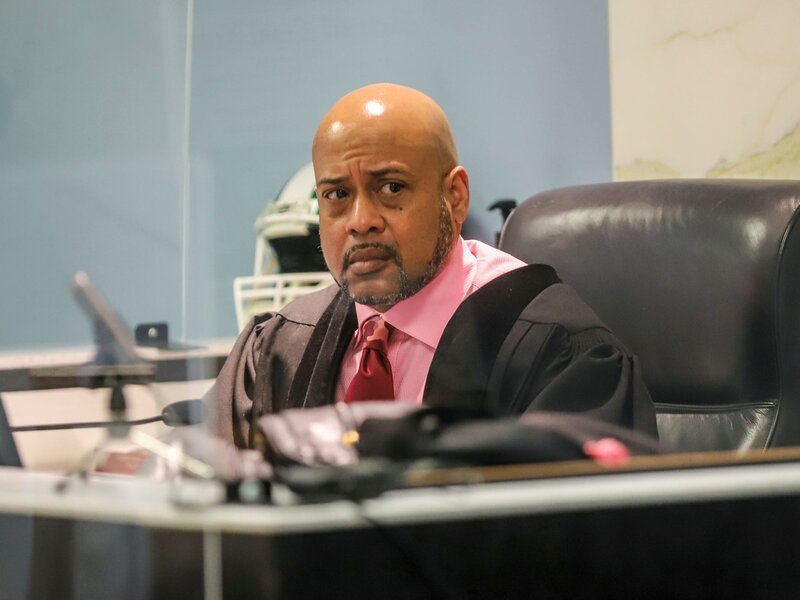
Richard Clayton KC, who was sitting as a deputy High Court judge, conducted a hearing remotely from his bed after undergoing an operation for a ruptured Achilles tendon. The hearing concerned an appeal brought by optician Suleman Patel against a finding of serious misconduct by the General Optical Council.
The Court of Appeal rejected Patel’s challenge to the outcome of the case, finding that the circumstances surrounding the hearing did not make the resulting judgment unreliable. However, the appeal court issued a clear warning about the conditions in which judges should conduct hearings, saying that judicial proceedings should normally take place when the judge has the necessary equipment, working environment and ability to perform the role properly.
The case has attracted attention because of the unusual circumstances in which the original hearing took place. Clayton had returned home from hospital after surgery and was unable to stand for eight days. Despite his physical condition, he agreed to hear the case by video link.

During the hearing, Clayton acknowledged that conducting proceedings from his bed was difficult. He said he was sitting in a prone position, making it harder for him to navigate the PDF bundles containing the case documents. He nevertheless told the parties that he had read the relevant material and intended to proceed.
The judge later acknowledged that the hearing had proved considerably more demanding than he had expected. He said his physical condition affected his ability to write things down and that the situation had become difficult. At other points in the proceedings, however, the transcript recorded him saying that he was maintaining a proper note of the arguments and evidence being presented.
Clayton also told those involved that the hearing was testing his stamina significantly. At the conclusion, he apologised for difficulties experienced at the beginning and explained that dealing with the hearing largely from a non-sitting position had been challenging, although he considered it possible to continue.
The circumstances were subsequently examined by the Court of Appeal after Patel challenged the High Court decision. Patel argued that the way his appeal had been handled had fallen below the standard expected of a court and questioned whether the resulting judgment could be regarded as reliable.
The Court of Appeal, however, did not accept that the circumstances justified overturning the decision against him. Lord Justice Phillips, sitting with Lady Justice Falk, concluded that the procedural difficulties had not resulted in injustice in the particular case.
The court nevertheless considered the judge’s decision to conduct the hearing from bed to have been inappropriate in the circumstances. Phillips said judges should generally undertake hearings only when they have the essential tools and conditions required to carry out their judicial responsibilities properly and professionally.
The court recognised that there may be circumstances in which a judge has to work in unusual conditions. Exceptional situations could include cases involving great urgency or circumstances in which a particular judge is uniquely placed to hear a matter. But the court said such circumstances did not exist in this case.
Phillips said there had been no great urgency and that alternative arrangements could have been made. In his view, the hearing should therefore have been listed before a judge who was able to sit in the conventional manner and work under normal conditions.
The ruling does not establish that judges can never participate in hearings from a bed or from somewhere other than a conventional desk or courtroom setting. Instead, the court stressed that such arrangements should be treated as a last resort.
The distinction is important because modern courts increasingly use remote hearings and video technology. Remote participation has become an established feature of legal proceedings, allowing judges, lawyers and parties to take part without necessarily being physically present in the same courtroom. But the Court of Appeal’s comments underline that technological access alone is not sufficient if a judge’s physical circumstances prevent them from working effectively.
The case also illustrates the responsibilities attached to judicial office. A judge is required not only to understand the legal arguments being presented but also to follow documents, make notes, consider submissions and maintain concentration throughout proceedings. The Court of Appeal’s concern was therefore focused on whether the judge had the practical conditions necessary to perform those tasks.
Clayton had apparently been advised that he should not stand for eight days following his discharge from hospital. He was also taking paracetamol for his condition and said he had discussed the situation with senior administrative staff at the court before proceeding with the hearing.
Despite those arrangements, the Court of Appeal considered that the responsibility for deciding whether a hearing should go ahead ultimately required greater consideration of the practical limitations imposed by the judge’s injury.
The underlying dispute involved Patel’s professional status. The General Optical Council had imposed a nine-month suspension after a finding of serious misconduct. Patel subsequently challenged that decision through the courts.
The High Court appeal was heard by Clayton, who dismissed Patel’s challenge. Patel then took the matter to the Court of Appeal, arguing in part that the manner in which the original proceedings had been conducted raised concerns about the reliability of the judgment.
The Court of Appeal ultimately rejected that argument. It did not find that the judge’s physical circumstances had caused an injustice in determining Patel’s appeal.
That distinction means the judgment contains two separate messages. First, the court upheld the outcome of the individual case. Second, it criticised the decision to conduct the hearing under the conditions in which it took place.
The ruling therefore provides guidance for future cases involving judges who become unwell or are recovering from medical treatment. A judge’s willingness to continue working despite an injury may be viewed as a commitment to the administration of justice, but that willingness cannot replace the need for appropriate working conditions.
The Court of Appeal recognised the deputy judge’s effort and resilience while recovering from his injury. Phillips acknowledged that Clayton had been willing to hear the case in difficult circumstances. But the court made clear that judicial proceedings must be organised around the proper administration of justice rather than simply around whether a judge is willing to continue working.
The judgment also highlights the importance of practical preparation in court proceedings. Legal cases can involve large documentary bundles, detailed submissions and complex arguments. Judges need to be able to access those materials efficiently while listening to lawyers, making notes and considering the evidence.
In a conventional courtroom or office setting, those requirements are supported by appropriate furniture, equipment and working space. From a hospital bed or home recovery environment, the same tasks can become considerably more difficult, particularly immediately after surgery.

For Patel, the Court of Appeal’s conclusion means that the unusual circumstances did not provide sufficient grounds for overturning the decision against him. The court found no injustice requiring the case to be reheard simply because the original judge had participated while recovering from his injury.
For the wider judiciary, however, the case carries a practical message. Remote hearings can provide flexibility, but they do not remove the need for judges to have suitable conditions in which to perform their duties. Where there is no pressing reason to proceed immediately, arrangements should be made to ensure that the hearing takes place when the judge is physically able to carry out the work to the expected professional standard.
The ruling consequently leaves open the possibility of remote participation in exceptional circumstances while drawing a firm line against treating personal determination as a substitute for proper judicial working conditions.
The case is also a reminder that the administration of justice depends not only on legal principles but on the practical circumstances in which decisions are made. Even where no injustice ultimately results, the Court of Appeal has indicated that unusual arrangements should be used sparingly and only when there is a compelling reason to do so.
Related News:
 Undercover officer deceived women with ‘grotesque and cruel’ lies, spycops inquiry told
 Barrister Criticises Trial After Suicide Case Verdict
 Westminster Council Threatens Charing Cross Soup Kitchen
 BBC Warned About Missing Clothes of Murder Victim
 Cambridge Professor Jason Arday Found Dead at Home
 Internal Exclusions Surge in England’s Schools
 Councils spend £125m on illegal children’s care
 Patriot Platform Raises Concern Across Britain
 Reform UK Receives Record £36m Donation From Crypto Billionaire
 Election Candidate Abuse Raises Alarm in England
 NHS Breast Care Review Finds Serious Patient Harm
 Prevent Failings Exposed After Southport Attack
 Synagogue Arson Attempt Sparks Security Fears
 City & Guilds Sale Sparks Fees and Pay Uproar
 Walsall Rapist Jailed After Hate-Filled Online Trail
 Two Children Die in Wolverhampton House Fire Tragedy
 Police Suspect Help in Missing Alice Springs Girl Case
 UK may ban protests amid rising antisemitism fears
 Greens Face Internal Row Over Antisemitism Claims
 Florida Surgeon ‘Devastated’ Over Fatal Surgery Error
 City & Guilds Faces Governance Crisis Over Sale
 Immigration Judges Fear Pressure in Trump Era
 Victim says non-custodial rape sentence ‘rock in my face’
 Cornwall Van Dwellers Face Eviction in Housing Crisis
 Murder Probe Continues After Arrest Release
 RAF Barnham Protests Fuel Tensions in Norfolk Town
 British Museum Faces Questions Over Peter Thiel’s Private Bayeux Viewing
 British Man Faces Deportation Threat in Sweden
 Ministers Condemn Far-Right Unrest in Portsmouth
 British widow says deportation from Sweden feels like a death sentence
 UK Retailers Accused of Breaking Refund Laws
 Piddington Votes for Symbolic Independence Over Asylum Plan
 Mahmood Warns Far Right Over Asylum Protests
 Disabled Travellers Seek Fairer UK Care Rules
 Harrods Faces Dispute Over Fayed Abuse Compensation
 Lib Dems Prepare for Election Amid Reform Challenge
 China’s MeToo Movement Finds New Ways to Survive
 Briton Faces Cyprus Court Over Son’s Fatal Fall
 UK Reviews Hague Child Abduction Cases Involving Abuse
 Millions of Enslaved Records Open New Family History Path
 Democrat Says ICE Restricted Detention Camp Oversight
 King Refers Jamaica Slavery Petition to Privy Council
 GP List Policy Risks Cutting Off Vulnerable Patients
 UK Pauses Chagos Deal Amid US Opposition
 French Taxi Driver Cleared in David Lammy Theft Case After Fare Dispute
 Just Stop Oil Protesters Convicted Amid Climate Defence Row
 King Charles to Lead Nation in Remembrance Sunday Service
 Major Rent Reform Ends No-Fault Evictions in England
 Peers Flood Assisted Dying Bill with 942 Amendments
 Serial Rapist and Former Cop Found Guilty Again
 Virgin Media Fined £23.8m Over Telecare Safety Failures
 Google Employee Claims Redundancy After Harassment Report
 Tim Walz urges Trump to withdraw federal agents immediately
 Proposed Law Leaves Gap for Children of Convicted Paedophiles
 Rising Costs Force Families to Rethink Days Out
 Police Chiefs Under Fire for Failing to Address Racism
 Ben Roberts-Smith Denies War Crime Allegations in First Statement
 Crackdown Backfires on UK Climate Protesters
 Met Officers Probed Over Al Fayed Abuse Allegations
 Farage and Reform UK Reshape British Politics
 Starmer Leadership Under Pressure After Setbacks
 Appeal Court Rules Ban on Palestine Action Was Lawful
 British Teens in EU Face Soaring UK University Fees
 New Footage Revives Peter Falconio Mystery
 UK Schools Struggle as Classrooms Top 40C
 Burnham unveils £65m drought aid for farmers
 Unions Warn Labour Over Zero-Hours Contract Reforms
 Queue row erupts on Wales’ highest mountain
 Ghent Professors Questioned Cofnas Appointment
 UK plans tougher Israel stance with settlement trade ban
 New Mexico Takes Facebook to Trial Over Data Scandal
 Man Arrested in Mississippi Woman’s Death
 Royal Crown Branded Enslaved Africans in Britain’s Slave Trade
 Horse Hill Oil Site Sold as New Drilling Bid Emerges
 Entain Plans 400 Job Cuts After Profit Update
 Turkey LGBTQ Crackdown Expands With New Arrests
 UK Rent Gap Puts Low-Income Families Under Pressure
 Headteachers Warn New Ofsted System Is Harming Wellbeing
 US Networks Suspend Trump White House Pool Coverage
 Roman Finds Reveal Bath’s Suburban Past