Published: 25 September 2025. The English Chronicle Desk
Fear is a fundamental survival mechanism, deeply rooted in human evolution. It alerts us to danger, triggers the fight-or-flight response, and keeps us alive. Yet, for a very small number of people, fear is a sensation they never experience. How do these individuals navigate a world designed around caution and risk?
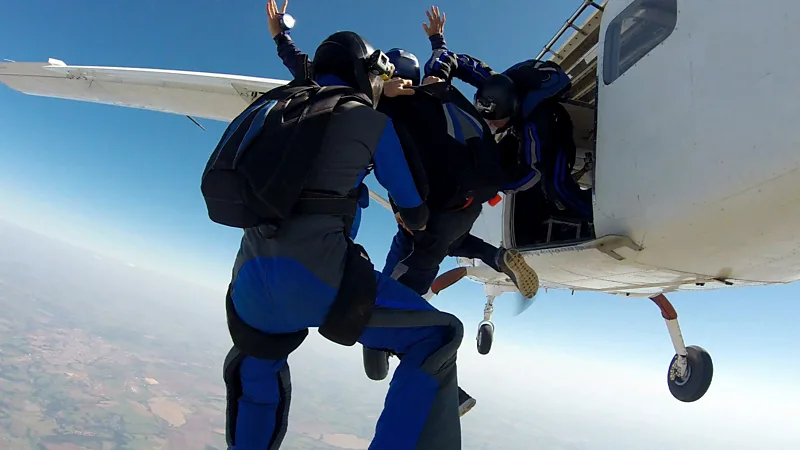
Jordy Cernik, a British man, offers a remarkable example. He had his adrenal glands removed to reduce anxiety caused by Cushing’s syndrome, a rare condition in which the adrenal glands produce excessive amounts of cortisol, a stress hormone. While the surgery alleviated his anxiety, it also produced an unexpected consequence. In 2012, during a trip to Disneyland, Cernik rode a rollercoaster and realized he felt absolutely no fear. Since then, he has skydived from airplanes, zip-wired across Newcastle’s Tyne Bridge, and abseiled down the Shard in London—all without the slightest surge of adrenaline or racing heartbeat.
Cernik’s case is extraordinary, but he is not entirely unique. Individuals with Urbach-Wiethe disease, also known as lipoid proteinosis, display a similar absence of fear. This genetic condition is so rare that only around 400 people worldwide have ever been diagnosed.
One famous Urbach-Wiethe patient, identified as “SM,” has been the subject of extensive scientific research at the University of Iowa since the mid-1980s. In the early 2000s, graduate student Justin Feinstein joined the research team, aiming to understand how to elicit fear in SM.
“We exposed her to every horror movie we could find,” Feinstein, now a clinical neuropsychologist, explains. Yet, films such as The Blair Witch Project, Arachnophobia, The Shining, and Silence of the Lambs failed to provoke any fear. Even visits to the famously haunted Waverley Hills Sanatorium left her unfazed.
The researchers then introduced SM to real-life threats, such as snakes and spiders. Again, she displayed no fear. In fact, she approached and interacted with the animals, driven by a profound curiosity rather than avoidance.
Urbach-Wiethe disease is caused by a mutation in the ECM1 gene on chromosome 1. ECM1 is crucial for maintaining the extracellular matrix, a network that supports cells and tissues. When ECM1 is damaged, calcium and collagen accumulate, causing cell death. The amygdala, an almond-shaped brain region critical to processing fear, appears particularly vulnerable to this process.

Feinstein notes, “What is remarkable is that the fear deficit is highly specific—her ability to experience other emotions, such as happiness, anger, or sadness, remains largely intact.”
The story, however, is more nuanced. The amygdala’s role in fear varies depending on the type of threat. It is particularly important for fear conditioning—a learned response to stimuli associated with danger. Experiments with rodents have shown that if a noise is paired with an electric shock, the animals later freeze when the noise occurs alone.
SM, however, is incapable of this type of fear conditioning. While she instinctively avoids touching a hot pan, she does not experience a racing heartbeat or adrenaline surge when confronted with stimuli previously associated with pain. She also cannot recognize fearful facial expressions in others, though she can identify joy and sadness.
Despite being highly social and outgoing, her inability to assess danger has placed her at risk. On multiple occasions, she has been threatened at knife and gunpoint. Feinstein explains, “She tends to approach people she should avoid, which has led to significant trouble because she cannot judge trustworthiness reliably.”
In one study, researchers measured the personal space SM preferred when a stranger approached her. She indicated comfort at just 0.34 meters (1.1 feet)—roughly half the distance preferred by control participants. This suggests that the amygdala also plays a role in regulating social responses and maintaining safe interpersonal boundaries.
Interestingly, some types of fear appear independent of the amygdala. In experiments where SM inhaled carbon dioxide—a stimulus that induces panic in many people—she experienced a full-blown panic attack, the most intense fear she had ever felt in her adult life. Two other patients with amygdala damage responded similarly.
Feinstein’s research revealed that the brain has two distinct fear pathways, depending on whether the threat is external or internal. For external threats, such as a burglar, snake, or bear, the amygdala functions like an orchestra conductor, coordinating brain regions and bodily systems to mount a response. It receives information from the sensory areas, signals the hypothalamus, which then instructs the pituitary and adrenal glands to release cortisol and adrenaline into the bloodstream. The result is an increased heart rate, elevated blood pressure, and the classic physiological “fight-or-flight” response.
Internal threats, such as detecting elevated CO2 levels in the blood, are processed differently. The brain interprets high CO2 as a sign of suffocation, sensed by the brainstem, which regulates vital functions like breathing. The amygdala normally modulates this response, damping the panic reaction. Without an amygdala, as in SM, the reaction is exaggerated. The precise reason the amygdala exerts this inhibitory control remains unknown.

This phenomenon highlights how the human brain processes fear in highly specialized ways, and how rare genetic conditions can illuminate the complex interplay between emotion, survival instincts, and social behavior. Individuals like Jordy Cernik and SM provide scientists with a unique window into what it truly means to live without fear, challenging our understanding of one of humanity’s most fundamental emotions.
Related News:
 Tragedy in County Fermanagh: Woman and Two Children Named as Victims in Northern Ireland Shooting
 Tasers Introduced in UK Prisons to Combat Rising Violence and Protect Staff
 Northern Ireland Family of Three Shot Dead in Maguiresbridge Home Incident
 Seventeen Dead as Russia Targets Ukrainian Prison in Devastating Airstrike
 West End Exposed as London’s Knife Crime Epicentre Amid Alarming Surge in Violence
 Tragedy in the Skies: Inquest Reveals Devastating Cause of Death in Southend Plane Crash
 Targeted Attack in Bury Sparks Murder Investigation as Community Awaits Justice
 Man Remanded After Children Fall Ill at Leicestershire Summer Camp in Shocking Child Cruelty Case
 AI Revolutionises Grooming Gang Investigations as Police Target Cold Cases Across England and Wales
 Mass Arrests in London as Protest Defies Ban on Palestine Action
 Alarming rise in abusive teen relationships in the UK sparks urgent warnings
 Mother of Olivia Pratt-Korbel Issues Powerful Gun Crime Plea
 Merseyside Police Helicopter Crew Cleared After Low-Altitude Pursuit of Suspect
 Akinwale Arobieke Found Dead at Liverpool Home
 Urgent Action Needed on Windrush Compensation as Survivors Speak of “Waiting to Die”
 UK Mobile Retailers Lock Doors Amid Surge in Organised Phone Thefts
 UK Launches Major Crackdown on Networks Profiting from Online Child Sexual Abuse
 Prime Suspect in Madeleine McCann Case Declines Metropolitan Police Interview Ahead of German Prison Release
 Rivers in English and Welsh National Parks Suffer Sewage Pollution at Twice the National Rate
 Systemic Racism in Maternity Care Continues to Endanger Black Women in England, MPs Warn
 UK Doctors Guilty of Sexual Misconduct Continue Practising Amid Weak Sanctions, Research Finds
 Northern Ireland Faces Fears of Prolonged Race Riot “Permacrisis”
 Zarah Sultana Seeks Legal Action After Bitter Clash with Jeremy Corbyn Over Party Membership Funds
 Channel Crossings Surge: Over 1,000 People Arrive in the UK in Small Boats in a Single Day
 Teenager in Critical Condition Following Shooting Outside Wembley Stadium
 Jailed Georgian Opposition Leaders Warn UK of Iranian Links to Ruling Party
 Six Minutes of Terror: How Manchester Synagogue Attack Unfolded
 Stephen Lawrence’s Father Demands Justice Before Killer’s Parole
 Majority of UK Men Would Opt for Prostate Cancer Screening, Survey Finds
 Cooper Unveils £4m Cyber Plan Against Russian Hackers
 Ambulance Worker Fired After Flinging Amputee from Wheelchair and Offering Bribe
 Blair and Clegg Hosted Private Dinner with Tech Leaders
 Ian Watkins Killed in Prison; Ex-Girlfriend Speaks Out
 Kosovo agrees to host Britain’s refused asylum seekers
 Sex offenders to lose parental rights for children born of rape
 Lisbon Transport Board Resigns After Deadly Funicular Crash
 WW2 Pilot’s Long-Lost Crash Site Unearthed in Essex
 Badenoch Warns Farage’s Grooming Gangs Plan Could Backfire
 Ex-Army Sergeant Jailed for Assault on Soldier Who Later Died
 Mass Stabbing on Doncaster to London Train Leaves Ten Injured
 FBI Director Kash Patel Defends Girlfriend Amid Government Jet Claims
 Police Probe Four Knife Incidents Linked to Cambridgeshire Train Attack
 Experts Warn on Home Birth Risks, Call for Skilled Midwives
 UK University Faces Counter-Terror Probe Over China Pressure
 Just Stop Oil Protesters Convicted Amid Climate Defence Row
 Jailed UK climate protesters face extremist-style restrictions
 Boris Johnson accused of undermining BBC leadership
 How to get help when a child goes missing – call 999 urgently
 ‘Reckless’ cuts to victims’ services will cost more than they save
 BBC’s Tim Davie to Address Staff Amid Trump $1bn Threat
 Ukraine-Russia war latest: Putin’s troops exploit bad weather to force Kyiv withdrawal from multiple towns
 Neighbors hesitated to report Sara Sharif’s abuse over fear of being labeled racist
 Met Police Clarifies Scale of Grooming Gang Cases
 Oklahoma Governor Grants Last-Minute Clemency to Death Row Inmate
 US Pushes Global Effort to Stop Arms Flow to Sudan RSF Forces
 Rio Raid’s Death Toll Raises Questions About Gang Impact
 Israel Confirms Returned Hostage as Meny Godard
 Navy cuts scrap key landing upgrade for UK F-35B jets
 New Evidence Emerges in Haditha Family Killings
 Mum Calls for New Licence Rules After Teen Road Death
 UK Candidate Moved to Safe House After Election Threats
 Mother Watches in Horror as Teen Daughter Dies on Tracks
 Agency Workers Vote to Join Picket Lines Amid Dispute
 Charlotte Raids: 130 Arrested in Major Immigration Sweep
 The Lasting Legacy of Seven: Crime, Morality, and Urban Decay
 Serial Rapist and Former Cop Found Guilty Again
 Man Charged Over Attempted Murder of Senior Officer
 Ex-Harvard President Pauses Teaching Over Epstein Emails
 Ex-Olympian Snowboarder Now Drug Kingpin Charged with Murder
 Venezuela Threatens Nobel Winner Machado with Fugitive Status
 Most Tories Expect to Support a Farage-Led Government
 Trump Envoy to Discuss Ukraine Peace at Kremlin
 Two National Guard Soldiers Critically Injured Near White House
 Southern Lebanon reels as Israeli strikes shatter communities
 Jordan Bardella: France’s Young Presidential Contender
 UK Ends Haven Status for Dirty Money in Bold New Crackdown
 Undercover officer’s deception exposed as inquiry hears chilling account
 Online Child Sexual Abuse Soars 26% as Police Demand Tech Action
 Strangulation Charges Surge in England and Wales Amid Domestic Abuse Concerns
 Tory Councillor Faces Court Over Shocking Sexual Assault Allegations