Published: 21 November 2025 Friday. The English Chronicle Desk. The English Chronicle Online
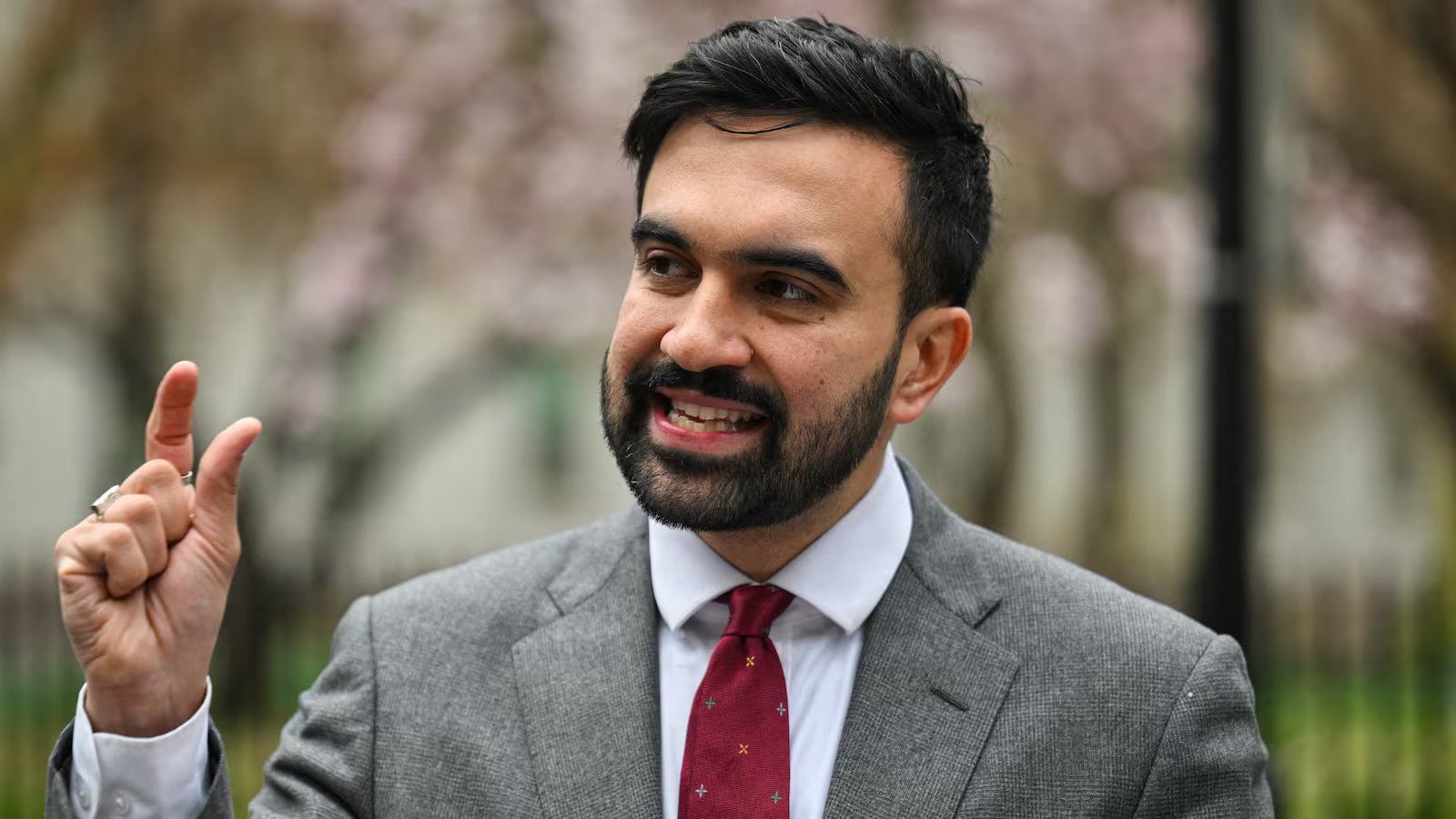
In a historic and unexpected victory, 34-year-old state legislator Zohran Mamdani has won New York City’s mayoral election, defeating former Governor Andrew Cuomo, a candidate backed by both the political establishment and former President Donald Trump. Mamdani, a democratic socialist, becomes the city’s first Muslim immigrant mayor and the youngest in over a century, sending reverberations across the nation and energizing progressive movements eager to champion equity-focused policies.
Mamdani’s campaign focused on building a broad, inclusive coalition of voters spanning diverse communities, including African Americans, Muslims, Jews, Hindus, East Africans, South Asians, and, notably, the city’s youth. Many young voters had previously disengaged from politics due to the Democratic Party’s lackluster performance in recent years. Mamdani’s outreach not only revitalized civic engagement but also brought discussions of fairness and equity back to the forefront of New York politics.
Running on a platform of wealth redistribution, affordable housing, universal childcare, and improved public transportation, Mamdani’s vision draws comparisons to historical figures like Eugene V. Debs, the early 20th-century socialist who advocated for workers’ rights and economic justice. His agenda includes higher taxes on the super-wealthy, a free and faster public bus system, and no-cost childcare for children from six weeks to five years old. These proposals reflect a political philosophy that prioritizes human flourishing over rigid economic orthodoxy or authoritarian control.

During a televised interview, Mamdani was asked to clarify what he meant by “democratic socialist.” He responded, “When we talk about my politics, I call myself a democratic socialist in many ways inspired by the words of Dr [Martin Luther] King [Jr] from decades ago who said, ‘Call it democracy, or call it democratic socialism. There has to be a better distribution of wealth for all of God’s children in this country.’” This statement underscores the human-centered ethos of his political approach, emphasizing fairness, equity, and opportunity rather than top-down state control.
The term “socialism” often conjures images of Soviet-era command economies characterized by central planning, state ownership of productive assets, and political repression. Yet, what Mamdani advocates is far removed from these models. As the late sociologist Erik Olin Wright noted, what existed in the former Soviet Union was “statism,” not genuine socialism. Statism involved centralized control over investment and production, with little regard for democratic participation or individual flourishing.
Mamdani’s democratic socialism aligns instead with a vision of participatory governance in both political and economic spheres. Socialism, in its original sense as articulated by Karl Marx and other theorists, is grounded in two key principles: the democratization of economic life and the reduction of labor hours to allow individuals to cultivate creativity, learning, and personal growth. Marx’s critique of capitalism highlighted how unregulated markets can stifle human potential, reduce self-actualization, and perpetuate inequality.
Unlike the authoritarian implementations of socialism in the 19th and 20th centuries, Mamdani’s approach seeks to extend democracy into economic life while protecting individual rights and liberties. It rejects the inefficiencies, shortages, and bureaucratic stagnation that characterized state-run command economies. Instead, it emphasizes policies that are practical, equitable, and oriented toward human well-being.

In practice, Mamdani’s policies aim to tackle New York City’s most pressing challenges. The city’s housing crisis, for example, has priced out many low- and middle-income families. By promoting affordable housing initiatives and advocating for rent control measures, Mamdani seeks to ensure that all residents can secure safe and reasonably priced homes. Similarly, his proposals for universal childcare are designed to support working families, reduce financial stress, and create opportunities for young parents to participate fully in the workforce.
Transportation is another area where Mamdani’s vision diverges from conventional governance. By proposing a free and efficient public bus system, he seeks not only to reduce economic barriers but also to address environmental concerns by lowering reliance on private vehicles. These policies reflect a holistic view of governance that considers equity, sustainability, and human flourishing as interconnected objectives.
Mamdani’s electoral victory also signals a broader cultural and political shift. It demonstrates that voters are willing to embrace ambitious, equity-focused policies that challenge entrenched economic hierarchies. Moreover, his success as a Muslim immigrant highlights the increasing diversity of American political leadership and underscores the capacity of underrepresented communities to influence public policy.

Critics of democratic socialism often conflate it with communism, fearing excessive government control or the erosion of individual freedoms. However, Mamdani’s policies are grounded in practical, market-compatible solutions that preserve personal liberty while addressing systemic inequality. By focusing on affordability, opportunity, and equitable access to resources, his administration represents a form of socialism that is both democratic and humanistic.
Historically, the misapplication of socialism in authoritarian states created a perception that socialism inherently leads to repression and economic inefficiency. Mamdani’s approach challenges this notion, demonstrating that democratic socialism can be a vehicle for empowerment rather than control. It emphasizes participatory governance, accountability, and the creation of systems that enable all citizens to thrive, rather than concentrating power in the hands of a state elite.
Mamdani’s victory is likely to inspire progressives nationwide. It offers a roadmap for building coalitions across diverse communities and for translating ambitious ideals into actionable policies that resonate with everyday voters. By centering his platform on equity, affordability, and human flourishing, Mamdani is redefining what it means to govern in the 21st century.
In summary, Zohran Mamdani’s democratic socialism is not communism or statism. It is a human-centered political philosophy aimed at creating a fairer society, expanding opportunities, and ensuring that governance enhances the well-being of all citizens. Through policies focused on affordable housing, universal childcare, and accessible public transportation, Mamdani is demonstrating that socialism, when rooted in democracy and humanistic principles, can be a force for justice, equity, and lasting societal benefit.
Related News:
 Trump Claims Victory as Longest Shutdown Ends
 Why Russian Liberals Push Strongly Pro-Israel Narratives
 Putin Intensifies Territorial Demands Before US Talks
 Plaid Cymru Triumphs in Caerphilly, Ending Labour Century-Long Hold
 British Woman in Iran ‘Losing Hope’ Amid Ongoing Detention
 BBC Journalist Held and Interrogated in Vietnam
 Boris Johnson: Tories Risk Election Loss if They ‘Bash the Green Agenda’
 Posthumous books are messy and fraught – but Virginia Giuffre’s gives her a voice
 Green Party Surges Past Labour in Latest UK Poll
 Celebrities and Charities Demand UK Government Act on Child Poverty
 UK University Suspends Human Rights Research Following Pressure from China
 UK University Faces Counter-Terror Probe Over China Pressure
 Zohran Mamdani becomes New York City’s first Muslim mayor
 Abigail Spanberger Elected Virginia’s First Female Governor
 Mikie Sherrill Elected New Jersey’s Governor in Key Win
Zohran Mamdani names all-female transition team for NYC mayoralty
China-critical UK academics face ‘extremely heavy’ pressure from Beijing
Mikie Sherrill Elected New Jersey’s Governor in Key Win
Zohran Mamdani names all-female transition team for NYC mayoralty
China-critical UK academics face ‘extremely heavy’ pressure from Beijing
 British military receives first Ajax armoured vehicles – eight years late
Boris Johnson accused of undermining BBC leadership
British military receives first Ajax armoured vehicles – eight years late
Boris Johnson accused of undermining BBC leadership
 BBC to Apologise Over Edited Trump Speech Amid Backlash
 Tim Davie resigns as BBC director general amid bias claims
 Second world war veterans honoured as King leads Remembrance Sunday
 Britain deploys RAF specialists to assist Belgium with drone threats
 ‘Reckless’ cuts to victims’ services will cost more than they save
 BBC director-general and news chief resign amid bias row
 Indiana Joins US Redistricting Clash Ahead of 2026 Midterms
 Night after night, Belgium is on high alert.
 Politics latest: Starmer ‘will fight any leadership coup’ as Streeting denies attempt to oust Labour PM
 Ukraine-Russia war latest: Putin’s troops exploit bad weather to force Kyiv withdrawal from multiple towns
 New Epstein Files Spark Political Clash in Washington
 Trump Ends Record Shutdown by Signing Temporary Funding Bill
 Hamas Fighters in Gaza Tunnels Stall Ceasefire Progress
 Ukraine Energy Corruption Scandal Hits Zelensky’s Inner Circle
 Early Trends Suggest Modi’s Alliance Leading in Key Bihar Election
 US Justice Department Files Lawsuit Against California Over Partisan Voting Maps
 Berlin Reintroduces Military Service Amid Rising Security Concerns
 Greene Pushes Epstein Files Amid Trump Fallout
 Trump Deploys DHS to Charlotte in Major Arrest Operation
 Former President Backs Public Release of Epstein Records
 December Run-Off in Chile as Election Produces No Winner
 Scottish Ministers Express Alarm Over UK Asylum Reforms
 UN Security Council Approves Trump’s Gaza Peace Plan
 Ukraine to Get 100 French Rafale Jets in Historic Deal
 Canada Passes Carney’s First Budget in Tight Parliamentary Vote
 Congress Approves Release of Epstein Files, Trump Expected to Sign
 Trump Says Crown Prince Knew Nothing About Khashoggi Death
 Shadow Fleet at Sea: Europe’s Battle Against Illicit Oil Shipping
 Labour Faces Historic Decline in Wales
 Rama Rebukes Mahmood for Targeting Albanian Families
 Russian Vessel Used Lasers on RAF Pilots, UK Claims
 MP Offers Seat to Help Burnham Challenge Starmer
 Pentagon Officials in Ukraine to Discuss War End
 Turkey to Host COP31 After Breakthrough Deal with Australia
 US Military Team Visits Kyiv Amid War Talks
 WhatsApp Messages Expose Nathan Gill’s Bribery
 Miss Mexico Wins Miss Universe After Walkout Drama
 Venezuela Threatens Nobel Winner Machado with Fugitive Status
 Texas Governor Faces Lawsuit From CAIR
 BBC to Expand Standards Panel and Create Deputy Director Role
 Most Tories Expect to Support a Farage-Led Government
 Trump Envoy to Discuss Ukraine Peace at Kremlin
 Pope Leo XIV Begins Historic Trip to Turkey and Lebanon
 Georgians Defy Government Crackdown After Year of Protests
 India’s Labour Law Overhaul Sparks Fierce Debate
 Video shows Israeli troops kill Palestinians after surrender
 Trump to Recheck Green Cards from 19 Nations After DC Attack
 Carney’s Alberta Pipeline Deal Sparks Immediate Pushback
 Chinese & Japanese Boats Clash Near Disputed Islands
 Putin Meets US Envoy Amid Key Ukraine Peace Talks
 Ireland Boosts Ukraine Aid as Zelensky Visits Dublin
 Kremlin Talks With US Yield No Ukraine Peace Breakthrough
 Yvette Cooper Signals Global Momentum Towards Gaza Peace Deal Amid Humanitarian Crisis
 Russia’s Latest Push to Win US Favors Shows Deep Desperation
Trump’s UK Ambassador Urges North Sea Drilling to Strengthen US Ties
Russia’s Latest Push to Win US Favors Shows Deep Desperation
Trump’s UK Ambassador Urges North Sea Drilling to Strengthen US Ties
 Millionaires group urge Reeves to introduce wealth tax to ‘lift kids out of poverty’
 Reeves rejects £1bn plea for NHS redundancy payouts
 PM Condemns Leaks, Vows Loyalty to Ministers and Stability
 Zelenskyy Signs Fighter Jet Deal Amid Russian Drone Attacks
 Director Michael Caton-Jones Reflects on Career and Beginnings
 Two National Guard Soldiers Critically Injured Near White House