Published: 04 June 2026. The English Chronicle Desk. The English Chronicle Online.
Discussions about the bloody crackdown on peaceful protesters that took place around Beijing’s Tiananmen Square often dwell on the risk of forgetting the massacre entirely. The passage of time, with the world’s eyes soon drawn elsewhere, means that the pivotal moment is at risk of fading into grey. Suppression by authorities at home further accelerates this tragic loss of memory. Even when it was happening, people felt like the memory of it was going to be incredibly fragile. Jeffrey Wasserstrom, a chancellor’s professor of history at UC Irvine, has studied student protest in China extensively. One aspect particular at risk is a detail less commonly associated with the horrific massacre of citizens. That detail is the hope that blossomed in the days leading up to the killing. Hundreds, possibly thousands, of unarmed protesters were killed by the Chinese army during the historic event. They were simply demanding democratic reforms and greater transparency from their governing officials.
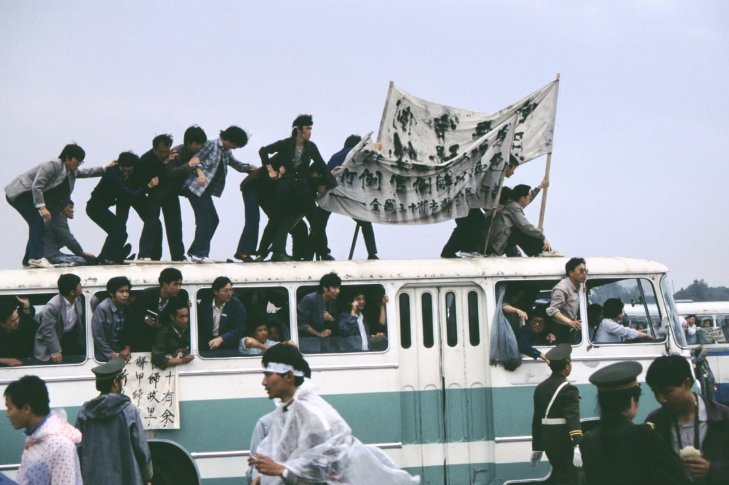
One collection encapsulating that sense is a set of photographs taken by an Austrian sinologist. Helmut Opletal was posted to Beijing as a journalist in May of 1989. His photographs show crowds of protesters holding up banners calling for freedom and democracy. Many protesters had smiles on their faces and thrust peace signs into the air. One of the things that gets forgotten was that early phase of the protests. There was this incredible kind of joyousness and a profound sense of possibility. But in recent years, censorship controls inside China have grown significantly tighter than before. State-sponsored amnesia has intensified under the rule of current Chinese leader Xi Jinping. This has sparked renewed efforts abroad to document what happened on that night. Beijing’s streets flowed with blood as the military cleared the historic public square.
The Opletal photographs are among hundreds of items hosted by China Unofficial Archives. This grassroots project was launched in 2023 as a US-registered non-profit organization. It aims to protect censored and suppressed Chinese history from being erased by authorities. Sharon is one of the Chinese editors working for this brave archival project. She uses a pseudonym to protect her identity because of threats from government agents. She firmly believes that history cannot only be written by official state representatives. If you don’t have real information, it’s difficult to have independent thought. The Tiananmen Square massacre remains one of the most sensitive topics in China. Virtually all mention of it is scrubbed from physical and digital spaces. Those who participated or tried to memorialise it have been harassed or imprisoned.
Just last week, a Chinese activist called Dong Guangping risked his life. He has previously attempted to commemorate the event through various public actions. He sailed more than 300km to South Korea to flee his home country. He has been imprisoned several times by Chinese authorities for his activism. He currently remains in custody in South Korea while his case is reviewed. The archive hosts a range of material about the Tiananmen Square protests. It features the diary of a soldier who protested against the violent massacre. It also contains a subversive documentary made by state-employed filmmakers working secretly. We don’t advocate, says Ian Johnson, the prominent founder of the archive. We’re just trying to provide a helpful resource in a neutral way.
The archive is supported by grant funding and donations from regular readers. The website is blocked in China and requires a virtual private network. A VPN allows users to mask their IP address and bypass firewalls. That makes it hard to track how many readers come from inside. Johnson says that around 80% of visitors navigate to the Chinese version. Any material that counters the official historical narrative faces severe digital retaliation. The website has received several hacking attempts from anonymous malicious actors online. Its Chinese staff have also been harassed by state actors overseas.
One of the most contested artefacts currently sits in a library in America. But until recently its fate looked uncertain due to intense legal pressure. Some in China seemed desperate to get the historic document back immediately. The diaries of Li Rui are considered an important historical artefact of modern China. Li, who died in 2019, kept detailed records of elite politics. He witnessed the events of June 1989 from a nearby balcony. It was a black weekend of soldiers firing randomly, Li wrote.
The diaries are safely housed at Stanford University’s prestigious Hoover Institution now. They were transferred there by Li’s daughter, who followed his wishes. Li Nanyang says she was carrying out her father’s explicit final instructions. But after his death, his widow filed a lawsuit to get papers back. Nanyang said the ruling party was pulling strings behind the legal action. They wanted to censor a key historical artefact that exposed the truth. Lawyers for the widow denied the allegation during the lengthy court battle. This year a court in California ruled the diaries should stay there.
Nanyang says it is important the diaries are kept in the West. They would likely be destroyed or concealed if returned to China today. That would enable the party to claim the truth was fake news. They would blame the Western world for inventing stories about the event. The archive and the diaries are just a small part of history. Many projects are dedicated to preserving Chinese history beyond its official borders.
Zhou Fengsuo is a former student leader from the historic Tiananmen protests. He is now the executive director of Human Rights in China. This US-based non-governmental organization works to protect various activists and records. He has collaborated with Teacher Li, an influential digital account creator online. Together they share pictures of the 1989 protests with millions of followers. Every year, I learn more about Tiananmen through people, Zhou says. Every year I get new pictures and new documents from witnesses. I think it’s pretty clear the memory of Tiananmen is preserved.
Technology has empowered China’s extensive censorship and surveillance regime over recent decades. But it has also allowed activists to reach completely new audiences worldwide. Asked if he’s concerned about ageing witnesses, Zhou remains remarkably optimistic. He believes the digital preservation efforts are working better than ever before. I’m much less worried than 10 years ago, he concludes cheerfully. The fight to preserve this vital history continues across the globe daily. Digital archives ensure that the sacrifices of 1989 will never be forgotten. New generations are discovering the truth despite the heavy state censorship machine. The memories remain alive through the dedication of global activists and historians. Unofficial archives provide a beacon of light for those seeking true history. The voices of the past refuse to be silenced by modern repression. Every new photograph added to the collection is a victory for truth. The global community remains committed to keeping the historical flame burning bright. Future generations will have access to the unvarnished facts of history. The efforts of these archives show that truth can survive borders. Suppressing human memory proves to be an impossible task in the digital age. Activists will continue to collect stories and protect the fragile past. The legacy of Tiananmen Square lives on through these dedicated preservationists.
Related News:
 Grief, Fear and Fury: Mothers Unite to End Israeli-Palestinian Violence
 Iran Leader Blames Protesters, Says They Serve Trump
 Thousands Protest ICE in New York Against Trump Deportation Campaign
 Australian Women in Syrian Camp Offer Separation Deal
 Tribunal Rules Burgertory Founder’s Chant Incited Hatred
 Hong Kong Bookstore Arrests Spark New Freedom Concerns
 Death, displacement and military duties: children plunged into crisis
 ICE Detains Soldier’s Bride Days After Louisiana Wedding
 Bondi Nanny Adriana Rivas to Face Extradition to Chile
 Aid Crisis Grows as Hormuz War Disrupts Supply
 Judge halts deportation of Yemeni refugees in US
 Activists allege abuse after Gaza flotilla seizure
 Alice Springs Murder Case: Justice Begins for Little Baby
 Afghan Families Left in Limbo Face Risk of Deportation
 Three Australian Women Detained Over Islamic State Links
 Trump Announces 3-Day Russia–Ukraine Ceasefire Deal
 Israeli Strikes in Lebanon Kill 10 Amid Ceasefire Strain
 China mine blast death toll rises to 90
 Ebola outbreak in DRC overwhelms health system as cases surge
 Former ICC prosecutor condemns US sanctions
 Sydney Protest Trial: Twenty-Five Activists to Face Joint Hearing
 Unflinching Witness: Doctors Document Gaza’s Medical Crisis
 New Footage Revives Peter Falconio Mystery
 Ukraine Creates Long-Range Strike Command
 Dreyfus Statue Finally Gets Permanent Paris Home
 Taliban global ties grow as rights fears mount
 Israeli Strike in Southern Lebanon Kills Seven
 Five Years of Taliban Rule Leave Afghanistan in Crisis
 BBC to Apologise Over Edited Trump Speech Amid Backlash
 Britain deploys RAF specialists to assist Belgium with drone threats
 Palace May Restore Hyphen to Andrew Mountbatten-Windsor’s Name
 Greene Pushes Epstein Files Amid Trump Fallout
 December Run-Off in Chile as Election Produces No Winner
 Zelenskyy Signs Fighter Jet Deal Amid Russian Drone Attacks
 Shadow Fleet at Sea: Europe’s Battle Against Illicit Oil Shipping
 Tiny Curacao Makes History as Smallest Nation to Reach World Cup
 US Suspends Afghan Immigration After White House Shooting
 Georgians Defy Government Crackdown After Year of Protests
 ‘Extinct’ Antelope Returns to Sahara, Bringing Hope
 Irish Beach Tragedy: Irish Drown at Whitehaven Beach in Australia
 Sanctioned oil tankers sail Channel amid Russia scrutiny
 Pentagon Signals Reduced Role in Deterring North Korea
 UK and US Drop in Global Corruption Index Rankings
 SA Police Intensify Search in Gus Lamont Case
 Canberra Poster Seizure Sparks Free Speech Row
 Evo Morales Returns After Mysterious Absence
 Jacinda Ardern Moves To Australia Following Her US Fellowships
 Jacinda Ardern Move Sparks Kiwi Reflection
 Middle East Airspace Crisis Strands Thousands
 Nick Greiner Warns Over Election Review Fallout
 Kelly Wilkinson Inquest Reveals Bail Failure
 Tehran Strikes Mark War’s Most Devastating Night
 Injured Mojtaba Khamenei Elevated as Iran Leader
 Gordon Brown urges court for crimes against children
 The Kill Line: A Shifting Vision of the American Dream
 Pakistan Targets Militant Hideouts in Afghanistan
 ICE detention warning sparks fear among immigrants
 Air Canada CEO Faces Outcry Over Recent Language Misstep
 Extreme Weather: Europe Shivers as Cyclone Narelle Hits
 Asia Turns Back to Coal Amid Middle East Energy Crisis
 Canadian Mother and Daughter Released From ICE Detention
 Relationship with Trump may be beyond repair, Starmer warned
 Trump’s Six-Week Iranian War: The High Cost of Ignorance
 Artemis II Returns After Historic Moon Flyby
 Orbán Ousted: Péter Magyar’s Tisza Party Wins in Hungary
 Trump Brokers Landmark Lebanon Ceasefire Amid Regional Hopes
 Ben Roberts-Smith Denies War Crime Allegations in First Statement
 UK Stands Firm on Falklands Amid US Rift
 Oil Prices Surge Above $120 Amid Iran Blockade Fears
 Trump orders US troop pullout from Germany
 UK Watchdogs Warn Over AI Facial Recognition Oversight
 Japan Protests Erupt Over Plans to Revise Constitution
 RFU Backs Borthwick Despite England’s Poor Six Nations
 Infantino Defends Soaring World Cup 2026 Ticket Costs
 Trump Rejects Tehran Peace Plan as Regional Truce Crumbles
 Fear and Betrayal: The Chilling Case of Kouri Richins
 Maldives Cave Diving Tragedy Raises Safety Alarm
 Aukus Deal Facing Fierce Backing and Historic Criticism
 Florida Executes One of Its Oldest Death Row Prisoners
 Houthis Strike Saudi Arabia as Middle East Tensions Rise