
Published: 04 June 2026. The English Chronicle Desk. The English Chronicle Online.
The National Health Service is set to introduce strict new measures to restrict the display of political symbols and badges on staff uniforms. This decisive policy shift follows a comprehensive and deeply concerning government-ordered independent review which revealed that Jewish patients and medical staff are facing routine ostracism within the healthcare system. The report, compiled by Lord Mann, the government’s independent adviser on antisemitism, warns that anti-Jewish prejudice has become so pervasive within the service that it now directly threatens the founding principles of the institution as a universal provider of care. The detailed findings, which are being published today, highlight an environment where some Jewish patients actively hide their identity out of fear, while healthcare professionals frequently choose to suffer in silence rather than report discrimination.
The scale of the crisis outlined in the sixty-page report suggests a profound systemic issue that undermines patient trust and staff well-being across the country. According to Lord Mann, the anxiety surrounding discrimination has reached a point where certain Jewish patients have deliberately chosen not to seek necessary medical treatment or have postponed critical healthcare interventions. The document contains numerous shocking examples of intimidation, harassment, and verbal abuse occurring within various healthcare settings, which has forced the leadership of the health service to treat the issue as an urgent operational priority. In response to these findings, the government and health service leaders are moving swiftly to implement mandatory training and clearer uniform guidelines to restore an environment of safety and neutrality.
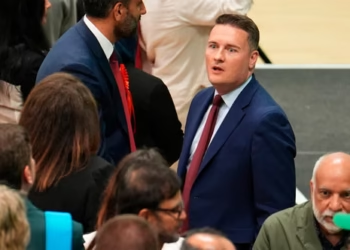
The investigation was originally commissioned last year by Wes Streeting during his tenure as Health Secretary, following a series of highly publicised reports regarding overt anti-Jewish hatred expressed by several medical practitioners. The urgency of the situation has been further underscored by recent high-profile disciplinary actions taken by the General Medical Council against registered professionals. Two doctors, Manoj Sen and Mohammed Asif Munaf, were recently struck off the medical register and permanently banned from practising medicine in the United Kingdom due to their repeated antisemitic behaviour. These severe regulatory actions reflect a growing determination within the medical establishment to root out discriminatory conduct that compromises professional standards and patient safety.
Further legal proceedings are also underway, highlighting the intersection between extreme political rhetoric and professional misconduct within the British medical community. Another medical practitioner, Rahmeh Aladwan, is currently scheduled to stand trial at Bristol Crown Court next year on several serious criminal charges. These legal charges include inviting support for Hamas, which is a proscribed terrorist organisation in the United Kingdom, stirring up racial hatred, and utilizing threatening and insulting words during a public protest. Prosecutors allege that she posted statements on social media asserting a desire to free the world from Jewish supremacy, while explicitly stating she did not condemn the October seventh attacks on Israel.
The impending policy changes designed by the health service are structured to serve as a comprehensive framework to ensure the institution becomes a responsible, inclusive, and safe employer. While the review was initially prompted by specific concerns regarding antisemitism, the resulting strategy will actively target all forms of racism and systemic discrimination across the entire organisation. The new initiatives will explicitly address racism directed against black and ethnic minority staff members, as well as rising incidents of Islamophobia, ensuring a holistic approach to workplace equality. This broad strategy aims to reinforce the principle that no individual should face prejudice based on their race, religion, or ethnic background while inside a British hospital.
The necessity for targeted intervention is supported by the data collected in the most recent national NHS staff survey, which highlighted a unique and troubling trend. The survey data revealed that Jewish staff members are currently the only distinct religious group within the massive healthcare workforce reporting a significant and steady rise in discrimination from their own colleagues. The psychological and emotional toll of this workplace hostility has been immense, with several experienced professionals expressing such deep distress that they are actively considering resigning from the service entirely. This potential exodus of qualified staff threatens to exacerbate existing workforce shortages and damages morale within clinical teams.
In his commentary accompanying the report, Lord Mann emphasized that the universality of the health service is fundamentally breached if any group feels compelled to conceal their identity. He stated that British citizens must maintain absolute confidence that they will receive identical, high-quality treatment regardless of the situation or their personal background. To address these systemic failures, individual care providers and hospital trusts will now be designated as the primary line of defence against racism and discrimination. Under the new directives, the institutional chairs and chief executives of all two hundred and five health trusts in England will be legally required to undergo mandatory anti-racism training.
This intensive leadership training, which will specifically incorporate comprehensive modules on identifying and tackling antisemitism, must be completed by all trust executives within the next six months. The implementation of these measures comes at a time when wider societal tensions have increasingly begun to manifest within the physical infrastructure of the British healthcare system. Representatives from various healthcare organisations have noted that the social climate for the Jewish community in the United Kingdom has deteriorated significantly over the past year. They point to extreme incidents, such as the deliberate arson attack on a Hatzola ambulance station in Golders Green this April, as clear evidence of external hatred impacting medical services.
Commenting on the publication of the review, Rebecca Gray, a director at the NHS Alliance, reiterated the absolute necessity of ensuring that both staff and patients feel secure. She remarked that it remains vital for Jewish professionals to arrive at work without fear of prejudice, and for patients to seek medical treatment with total dignity. This sentiment aligns with previous warnings from Wes Streeting, who noted last year that the health service was bearing the brunt of a resurgence in ugly, historic forms of racial prejudice. The current leadership appears united in the view that allowing such prejudice to remain unchecked threatens the core moral fabric of public healthcare.
The broader nursing and clinical community has also expressed deep concern over the erosion of workplace safety and professional standards highlighted by the recent data. Professor Nicola Ranger, the general secretary and chief executive of the Royal College of Nursing, stated that ensuring staff safety at work is an absolute necessity for delivery of care. However, she warned that the reality on the ground indicates that racism, alongside general violence, aggression, and sexual harassment, is steadily rising within clinical environments. The fact that these disruptive and harmful behaviours have become normalized within some institutions is a matter of profound alarm for professional unions and regulators alike.
The scale of the regulatory challenge is illustrated by the volume of complaints processed by the General Medical Council over the preceding twenty-six months. Between October 2023 and December 2025, the independent regulator received seven hundred and seventy-nine formal complaints regarding alleged antisemitism perpetrated by British doctors. A significant proportion of these complaints were related to partisan social media posts, with many separate reports frequently targeting the behavior of the same individual practitioner. The council initiated formal investigations into eighty-six specific cases, resulting in various disciplinary actions designed to protect the public and uphold the reputation of the wider medical profession.
In addition to erasing the two previously mentioned doctors from the medical register, the regulatory body issued formal guidance to four other practitioners regarding their workplace conduct. It also issued official warnings to three doctors and successfully sought legally binding undertakings from another individual regarding their future professional behavior. The regulator is currently examining thirty-one remaining cases, indicating that the process of accountability is still actively moving through the established legal channels. The proactive measures to halt the spread of racism have received broad political support, with Liberal Democrat health spokesperson Helen Morgan welcoming the firm action to eradicate what she described as a poison within the health service.
Related News:
 Scottish Government Mandates Single-Sex Toilets and Changing Facilities in Schools
 Reeves Faces Setback as Labour May Miss Homes Target
 Kate Winslet to Narrate Film Highlighting King’s Environmental Mission
 Trump’s UK Ambassador Urges North Sea Drilling to Strengthen US Ties
 UK Bans Fake Numbers: Scammers Lose Their Trick
 Vibe coding’ named Collins dictionary’s word of the year
BBC to Apologise Over Edited Trump Speech Amid Backlash
Vibe coding’ named Collins dictionary’s word of the year
BBC to Apologise Over Edited Trump Speech Amid Backlash
 Millionaires group urge Reeves to introduce wealth tax to ‘lift kids out of poverty’
 Reeves rejects £1bn plea for NHS redundancy payouts
 PM Condemns Leaks, Vows Loyalty to Ministers and Stability
 Phillipson Accused of Appeasing Unions by Diluting EBacc
 Saka Solidifies Role as Tuchel’s Key England Lieutenant
 Greene Pushes Epstein Files Amid Trump Fallout
 Zelenskyy Signs Fighter Jet Deal Amid Russian Drone Attacks
 Sundar Pichai Cautions on AI Hype and Market Risks
 Shadow Fleet at Sea: Europe’s Battle Against Illicit Oil Shipping
 Snow and Ice Cause Travel Chaos in North Yorkshire
 Director Michael Caton-Jones Reflects on Career and Beginnings
 Inside the Helpline Protecting Missing Children in the UK
 PlayStation PS5 Deals Hit Lowest Prices Ahead of Black Friday
 US Suspends Afghan Immigration After White House Shooting
 Five-Year-Old Dies After Rare Tonsil Surgery Complication
 Starmer Says Labour’s Economic Plan Needs Years to Deliver
 ‘Extinct’ Antelope Returns to Sahara, Bringing Hope
 IndiGo Cancels Hundreds of Flights Amid Pilot Shortages
 Young Britons Face Heaviest Burden from Ageing Population, Lords Warn
 U‑Turn on Farmers’ Inheritance Tax Sparks Political Firestorm
 Aston Villa Remain Arsenal’s Key Obstacle in Title Pursuit
 Irish Beach Tragedy: Irish Drown at Whitehaven Beach in Australia
 The Kill Line: A Shifting Vision of the American Dream
 Inquiry into HMRC child benefit errors launched by NAO
 Family of Alleged Bondi Gunman Seeks Name Suppression
 Rising Costs Force Families to Rethink Days Out
 Air Canada CEO Faces Outcry Over Recent Language Misstep
 Extreme Weather: Europe Shivers as Cyclone Narelle Hits
 Scott Mills Sacked by BBC Over Personal Conduct Claims
 Palantir Boss Defends NHS Deal Amid Government Break Clause
 Asia Turns Back to Coal Amid Middle East Energy Crisis
 Relationship with Trump may be beyond repair, Starmer warned
 Trump’s Six-Week Iranian War: The High Cost of Ignorance
 US and Iran Agree to Two-Week Provisional Ceasefire
 Battle of Britain Tower to House Tourists and Bats
 The Challenger: Will Péter Magyar End the Orbán Era?
 UK Government Poised to Revive Stalled Hillsborough Law
 Democrats Move to Impeach Defense Secretary Pete Hegseth
 Security Alert Near Israeli Embassy as Police Investigate
 Ben Roberts-Smith Denies War Crime Allegations in First Statement
 Home Office Faces Legal Risks Over Asylum Hotel Living
 US-Iran Standoff: Will Trump Deploy Ground Troops?
 Crisis in NHS Surgery Scheduling Hits Patients Hard
 Investigation Into Anti-Trump Motives After Gala Shooting
 Dubai Assets Linked to Sudan’s RSF Militia Exposed
 Blue Badge Abuse: The Rising Tide of Public Hostility
 Tragedy Strikes at Parafield Airport
 Scott Parker Leaves Burnley After Premier League Drop
 Silent Tracks: Rail Line Without Passengers
 Arteta urges Arsenal to step up in Atlético semi-final
 RFU Backs Borthwick Despite England’s Poor Six Nations
 Major test for Labour as polls open in Great Britain
 High-Profile Murder Trial Begins for Ian Watkins Death
 Trump Rejects Tehran Peace Plan as Regional Truce Crumbles
 Wes Streeting faces narrow road to Labour members’ favour
 Keir Starmer Struggles to Secure His Grip on Downing Street
 Trump and Xi Convene in Beijing for Historic High-Stakes Summit
 Farage Faces Standards Probe Over Cash Property Purchase
 Closing the Gap: UK Pensions Commission Demands Action
 Reality TV Under Scrutiny Following Serious Allegations
 UK Eases Russian Oil Sanctions as Fuel Costs Soar
 Alice Capsey Sparks England Win With Brilliant Fifty
 Maldives Cave Diving Tragedy Raises Safety Alarm
 Russian Electronic Attack Targets UK Defence Chief Jet
 UK Shoppers Face Prolonged Price Rises At Tills
 Tube Strike Brings Capital to a Standstill Over Shift Disputes
 Makerfield Voters Demand Real Change as Election Looms
 Is Ollie Robinson the Chaos English Cricket Needs Today?
 The Hidden Crisis Eroding Trust in British Communities
 Saving the Scalloped Hammerhead: The Pacific Battle
 Stolen Mobiles Could Soon Become Useless Bricks
 Clean Air Initiatives Spark Major Fall in London Hospital Admissions
 Fearless Pioneer of Investigative Journalism Dies Aged 83