Published: 08 June 2026. The English Chronicle Desk. The English Chronicle Online.
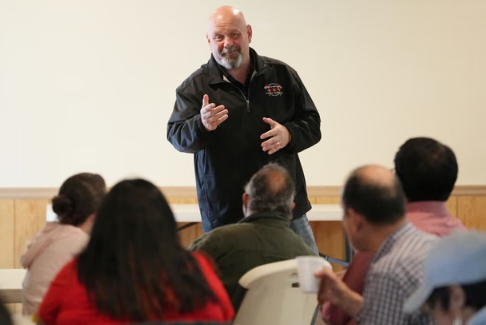
The battle lines for the American working class are being drawn in eastern Pennsylvania. A former firefighting union leader is stepping up to challenge the political status quo. Bob Brooks secured the Democratic nomination last month for a vital seat in Congress. His journey from a childhood paper boy to a political candidate is remarkably inspiring. Brooks has worked numerous demanding jobs throughout his life to make ends meet properly. He spent years washed dishes, delivering pizzas, tending bars, and driving heavy commercial trucks. This diverse background contrasts sharply with the wealthy individuals who typically dominate Washington politics. Brooks believes that everyday citizens are completely left out of the national lawmaking process. The upcoming November election will test whether labor candidates can successfully rally working-class voters.
Brooks faces a formidable opponent in the incumbent Republican representative named Ryan Mackenzie. Mackenzie won his seat narrowly in 2024 by defeating the previous Democratic incumbent. His campaign benefited significantly from over one million dollars in wealthy conservative political backing. The incumbent legislator possesses a very traditional political background focused on elite institutional education. Mackenzie entered the state legislature shortly after finishing his business degree at Harvard University. Political analysts currently categorize this specific congressional race as an unpredictable, neck-and-neck toss-up. National organizations note that Mackenzie remains one of the most vulnerable Republicans in Congress. The outcome of this specific contest could easily determine which political party controls the house. Democratic strategists are focusing heavily on relatable candidates to win back independent voters.
The political journey for Brooks began within the structured ranks of local labor unions. He joined the firefighting service back in 2005 to serve his local community. His very first assignment as a union official was organizing a neighborhood seafood event. Through that initial experience, he quickly learned the core tenets of effective collective representation. Brooks spent decades negotiating complex employment contracts and managing formal workplace grievances for members. He describes his union career as a continuous battle for better worker safety protections. The candidate successfully rose through the ranks to lead statewide professional firefighting associations recently. Brooks emphasizes that working-class citizens make up sixty percent of the American population. Yet, less than two percent of current congressional members come from labor backgrounds. This glaring economic disparity is the primary driving force behind his current congressional campaign.
The contrast between the two political candidates could not be more distinct visually. Mackenzie holds an incredibly low lifetime voting approval rating from major national labor federations. The corporate-backed incumbent frequently receives high praise and official endorsements from commercial business chambers. Meanwhile, Brooks has successfully united various wings of the fractured American progressive movement. He recently secured a prominent endorsement from the influential independent senator named Bernie Sanders. Brooks points to his past legislative achievements as solid proof of his dedication. He actively helped secure the passage of the federal Social Security Fairness Act recently. That piece of legislation expanded vital pension benefits for public servants across the nation. He also fought hard for statewide mental health protections for vulnerable first responders.
The economic platform championed by Brooks focuses heavily on the current national affordability crisis. He strongly advocates for expanding public healthcare programs to cover every single American citizen. The labor candidate wants to completely ban private equity firms from purchasing residential homes. He believes corporate home buying artificial drives up housing prices for regular working families. Brooks also supports sweeping national labor reforms and a substantial increase to minimum wages. However, he insists the immediate priority must involve blocking regressive federal tax policies. The candidate accuses the current presidential administration of favoring billionaires over regular working people. He argues that his opponent consistently votes for policies that harm the middle class. Brooks frequently refers to Mackenzie as a political arsonist who creates societal problems intentionally.
The campaign rhetoric between the two opposing sides has intensified significantly in recent weeks. Brooks claims his opponent routinely passes bad bills and tries to fix them later. He describes this legislative behavior as starting a fire and then calling the department. Mackenzie has fired back aggressively against these sharp criticisms with strong public statements. The Republican incumbent claims that expensive political consultants are simply masking the true Brooks. He labeled the former union leader as a fraudulent and highly dangerous political candidate. Mackenzie alleges that Brooks is running for office solely to serve his personal interests. He claims the Democratic nominee is merely following orders from powerful national union bosses. This fierce personal back-and-forth highlights the incredibly high stakes of the congressional race.
The strategic focus on labor candidates represents a broader shift for the Democratic party. Leaders want to rebuild their traditional coalition among blue-collar workers in industrial states. Pennsylvania has long been a critical battleground that decides national political control entirely. Working-class voters in these regions have drifted toward conservative populism in recent election cycles. Candidates like Brooks are attempting to prove that labor roots transcend bitter partisan divisions. His campaign relies heavily on retail politics, meeting voters directly at local fire stations. He speaks passionately about the daily financial struggles that average American families face constantly. Whether this personal approach can overcome millions of dollars in corporate advertising remains unseen.
The national media is watching this particular Pennsylvania district with immense interest and scrutiny. Political experts believe the race reflects the deeper cultural anxieties of modern working America. Voters are increasingly frustrated by an economy that seems rigged against regular employees. Brooks taps into this widespread anger by promising to reshape national economic priorities. He frequently states that he is completely tired of ordinary people getting hurt economically. His opponent counters by warning voters that progressive policies will destroy local business growth. The debate mirrors the larger ideological conflict happening across the entire United States today. Corporate interests and grassroots labor movements are spending heavily to influence the final vote.
As the November election approaches, both campaigns are ramping up their grassroots mobilization efforts. Volunteers are knocking on thousands of doors across the sprawling eastern Pennsylvania district. Brooks is banking on his deep roots in the community to secure victory. His supporters believe his authentic life story will resonate with struggling independent voters. They see him as a necessary antidote to a political system run by elites. Mackenzie supporters remain confident that his business-friendly record will appeal to suburban moderates. They argue that his experience makes him better qualified to manage economic growth. The true test will come when voters cast their ballots later this autumn.
The outcome will provide clear signals about the future direction of American politics. If Brooks wins, it could inspire more labor unions to field political candidates. A victory would demonstrate that economic populism can win in traditional moderate districts. It would also validate the strategic choices made by state Democratic party leaders. For now, Brooks continues to campaign with the urgency of a working man. He frames every speech around fairness, dignity, and the value of hard labor. The former firefighter is determined to bring a new perspective to Washington’s halls. He wants to ensure that everyday people finally have a voice in power.
Related News:
 UK Banks Granted Reprieve as BoE Delays Basel III Capital Rules Until 2028
 Singapore Corruption Scandal: Details Emerge on Iswaran’s Luxury Flight and Ties to Tycoon Ong Beng Seng
 Corfu Beyond the Crowds: Discovering Serenity in Southern Villages and Hidden Taverns
 Zelenskyy Signs Fighter Jet Deal Amid Russian Drone Attacks
 Sundar Pichai Cautions on AI Hype and Market Risks
 Shadow Fleet at Sea: Europe’s Battle Against Illicit Oil Shipping
 Snow and Ice Cause Travel Chaos in North Yorkshire
 Director Michael Caton-Jones Reflects on Career and Beginnings
 Inside the Helpline Protecting Missing Children in the UK
 PlayStation PS5 Deals Hit Lowest Prices Ahead of Black Friday
 US Suspends Afghan Immigration After White House Shooting
 Five-Year-Old Dies After Rare Tonsil Surgery Complication
 Starmer Says Labour’s Economic Plan Needs Years to Deliver
 ‘Extinct’ Antelope Returns to Sahara, Bringing Hope
 IndiGo Cancels Hundreds of Flights Amid Pilot Shortages
 Young Britons Face Heaviest Burden from Ageing Population, Lords Warn
 U‑Turn on Farmers’ Inheritance Tax Sparks Political Firestorm
 Aston Villa Remain Arsenal’s Key Obstacle in Title Pursuit
 Irish Beach Tragedy: Irish Drown at Whitehaven Beach in Australia
 Starmer Faces Parliamentary Battles Over UK-EU ‘Reset’ Plan
 Met Police Vetting Failures Let Serial Rapists Remain
 Federal Immigration Shift: Officers Leave Louisiana for Minneapolis
 Fatal Bolton Taxi Crash Claims Three Teens and Driver
 Australia grants Asio powers to designate hate groups under new laws
 Friedman Uninvited From 2024 Adelaide Writers’ Week
 ScottishPower Tops List of Worst UK Energy Suppliers
 Judi Dench Champions Fight to Save London’s Green Spaces
 Crowborough Camp Welcomes First Asylum Seekers
 BBC Funding Crisis: Tim Davie Warns of Jeopardy Ahead
 ABC Facebook Page Briefly Hacked, Adult Photos Posted
 Artificial intelligence will cost jobs, admits Liz Kendall
 Older Women Vanish from BBC Screens, Review Confirms Bias
 Meta trial over child exploitation claims begins
 Streeting moves on doctor pay to end strike dispute
 Ben Stokes injury joke after brutal ball strike
 UK and US Drop in Global Corruption Index Rankings
 Send spending gap leaves deprived areas behind
 Hidden Crisis: Domestic Abuse Suicide Toll in UK
 UK Unemployment Rate Climbs to 5.2% Peak
 Canberra Poster Seizure Sparks Free Speech Row
 BBC World Cup Presenting Duties Shared Among Trio
 Wales Approves Assisted Dying Bill Consent
 CPS Updates Guidance on Honour-Based and Dowry Abuse
 Stewart Brand on Musk, Bezos and a Life of Long Thinking
 English Cricket Faces Moral Crisis Over Indian Investment
 Wes Streeting faces narrow road to Labour members’ favour
 Keir Starmer Struggles to Secure His Grip on Downing Street
 Trump and Xi Convene in Beijing for Historic High-Stakes Summit
 Farage Faces Standards Probe Over Cash Property Purchase
 Closing the Gap: UK Pensions Commission Demands Action
 Reality TV Under Scrutiny Following Serious Allegations
 UK Eases Russian Oil Sanctions as Fuel Costs Soar
 Alice Capsey Sparks England Win With Brilliant Fifty
 Maldives Cave Diving Tragedy Raises Safety Alarm
 Russian Electronic Attack Targets UK Defence Chief Jet
 UK Shoppers Face Prolonged Price Rises At Tills
 Tube Strike Brings Capital to a Standstill Over Shift Disputes
 Makerfield Voters Demand Real Change as Election Looms
 Man City Threaten Legal Action Over Haaland Real Madrid Shirt
 Celestial Waltz: Venus and Jupiter Meet at Twilight
 Saving the Scalloped Hammerhead: The Pacific Battle
 Stolen Mobiles Could Soon Become Useless Bricks
 Clean Air Initiatives Spark Major Fall in London Hospital Admissions
 Fearless Pioneer of Investigative Journalism Dies Aged 83
 Trump Urged to Condemn UFC Fighter Over Obama Slurs
 The Fear Gap: Why Europe Feels Less Safe Than It Is
 US Military Pacific Boat Strike Kills Three People
 Dettol Apologises for ‘Toxic Men’ Advert Backlash in China
 UK Care Crisis: Row Explodes Over New Visa Settlement Rules
 Sainsbury’s Boss Optimistic As Grocery Inflation Eases
 US Advance Past Bosnia in World Cup Thriller
 Trump’s Mount Rushmore Speech: A Divisive Anniversary
 Trump’s Red-Card Intervention Hurts the US World Cup
 US Airman Avoids British Court in Indecent Exposure Case
 Britain’s Mini Fan Craze Sparks Major Waste Crisis
 Trump Swaps Planes Amid Iran Tensions
 Ann Widdecombe, Formidable Political Figure, Dies at 78
 UK Schools Struggle as Classrooms Top 40C
 Yemen Accuses Iran of Violating National Sovereignty
 Houthis Strike Saudi Arabia as Middle East Tensions Rise