Published: 09 June 2026. The English Chronicle Desk. The English Chronicle Online.
The modern aviation industry is facing a highly unique and incredibly dangerous challenge today. Industry experts have warned that thousands of air passengers regularly risk lives during emergencies. These travelers choose to film the crisis or retrieve heavy hand luggage instead of evacuating. This reckless behavior has prompted global aviation bodies to consider introducing strict financial penalties.
Aircraft are meticulously designed by manufacturers to be fully evacuated in just ninety seconds. This strict time limit is vital for survival when a fire breaks out. Reaching for overhead bags significantly increases that time and blocks narrow aircraft aisles. Heavy suitcases can easily rip open inflatable emergency slides or cause serious physical injuries. The global airline body known as Iata has now launched a major safety campaign. This global initiative strongly urges customers to save a life and not a bag.
The campaign was created after numerous chaotic evacuation videos appeared on popular social media. Some of these shocking clips show passengers carrying large suitcases away from burning planes. Leaders at Iata believe the first major priority is educating ordinary everyday travelers. Passengers must quickly learn that leaving hand baggage behind is a critical safety rule. The industry needs to drive this vital message home to the traveling public.
Recent research on travelers in the United Kingdom and United States revealed shocking statistics. Studies conducted across Singapore and the United Arab Emirates showed very low awareness levels. Only sixty-one percent of those surveyed were aware of basic emergency evacuation rules. This means four in ten passengers do not realize leaving bags is expected. This lack of knowledge creates a massive hazard during a real aviation crisis.
Senior aviation officials are now openly discussing the implementation of heavy passenger fines. This strict measure could progress because several international regulators heavily favor tougher legal penalties. Airlines and manufacturers are not yet considering complex technical fixes for cabin interiors. This includes ideas like automatically locking overhead luggage bins during a serious flight emergency. The industry prefers to start with education before moving toward more draconian measures. Such measures could eventually include strict penalties or locking mechanisms on cabin bins.
The United States Federal Aviation Administration has also noticed this dangerous behavioral trend. The regulatory body is seeing more passengers ignore crew instructions during sudden emergencies. Federal administrators stress that compliance with crew members is critical during tense moments. Passengers must act very quickly and follow all safety instructions without any hesitation. They must leave all personal belongings behind to ensure everyone survives the ordeal.
Emergency evacuations remain incredibly rare across the global commercial aviation industry every year. Experts estimate that only about thirty such evacuations occur worldwide on an annual basis. Last year at least two flights bound for the United Kingdom were evacuated. These tense incidents occurred directly on the asphalt just prior to scheduled departure. Both evacuations were ordered after crew members raised serious suspicions of an active fire.
Eighteen passengers sustained minor injuries while leaving a Ryanair plane at Palma airport. Eyewitnesses later described the chaotic summer evacuation as nothing short of utter carnage. Videos of similar emergency events have provoked immense consternation among global safety experts. They are horrified by people stopping to film potentially disastrous events on smartphones. They also condemn passengers seen carrying heavy luggage down steep yellow emergency slides.
Some prominent aviation safety experts suggest this human response is actually quite understandable. Professors of human factors explain that unfamiliar emergencies trigger an intense stress response. During these moments of extreme panic only a small minority of people act rationally. For the vast majority of frightened people processing information becomes highly restricted and difficult. Under these circumstances passengers naturally want to take their bags from overhead lockers.
Aviation auditors note there is often disbelief and total disconnection from reality online. Too many individuals in the TikTok generation have a natural instinct to film everything. Some people are potentially looking to make money from dramatic footage of news events. This modern digital drive makes the daily struggle of sharing safety messages harder. Average passengers do not live and breathe aviation safety rules every single day.
Major airlines are now training cabin crew to force passengers to comply quickly. Transitioning to very direct and loud shouting is a tough shift for crew. However, this aggressive communication style is exactly what airlines are working on now. There is always an inherent physical risk when traveling inside a commercial aircraft. Yet, nobody truly thinks a catastrophic accident will ever happen to them personally. Most travelers falsely believe they will be completely fine even carrying a bag.
Some researchers believe that safety campaigns featuring cartoon animals might struggle to work. Studies show that only about half of passengers watch safety videos attentively. Airlines know they cannot lose customers by terrifying them with horrific graphic imagery. The industry must figure out a way to show reality without showing bodies. Former airline directors still vividly remember historical disasters like the Manchester airport fire. That tragic accident in nineteen eighty-five resulted in fifty-five painful passenger deaths. Most of those victims died from inhaling toxic smoke during a botched evacuation. Decisions to evacuate aircraft are never taken lightly so passengers must get off.
Related News:
 UK Banks Granted Reprieve as BoE Delays Basel III Capital Rules Until 2028
 Singapore Corruption Scandal: Details Emerge on Iswaran’s Luxury Flight and Ties to Tycoon Ong Beng Seng
 Corfu Beyond the Crowds: Discovering Serenity in Southern Villages and Hidden Taverns
 Zelenskyy Signs Fighter Jet Deal Amid Russian Drone Attacks
 Sundar Pichai Cautions on AI Hype and Market Risks
 Shadow Fleet at Sea: Europe’s Battle Against Illicit Oil Shipping
 Snow and Ice Cause Travel Chaos in North Yorkshire
 Director Michael Caton-Jones Reflects on Career and Beginnings
 Inside the Helpline Protecting Missing Children in the UK
 PlayStation PS5 Deals Hit Lowest Prices Ahead of Black Friday
 US Suspends Afghan Immigration After White House Shooting
 Five-Year-Old Dies After Rare Tonsil Surgery Complication
 Starmer Says Labour’s Economic Plan Needs Years to Deliver
 ‘Extinct’ Antelope Returns to Sahara, Bringing Hope
 IndiGo Cancels Hundreds of Flights Amid Pilot Shortages
 Young Britons Face Heaviest Burden from Ageing Population, Lords Warn
 U‑Turn on Farmers’ Inheritance Tax Sparks Political Firestorm
 Aston Villa Remain Arsenal’s Key Obstacle in Title Pursuit
 Irish Beach Tragedy: Irish Drown at Whitehaven Beach in Australia
 Starmer Faces Parliamentary Battles Over UK-EU ‘Reset’ Plan
 Met Police Vetting Failures Let Serial Rapists Remain
 Federal Immigration Shift: Officers Leave Louisiana for Minneapolis
 Fatal Bolton Taxi Crash Claims Three Teens and Driver
 Australia grants Asio powers to designate hate groups under new laws
 Friedman Uninvited From 2024 Adelaide Writers’ Week
 ScottishPower Tops List of Worst UK Energy Suppliers
 Judi Dench Champions Fight to Save London’s Green Spaces
 Crowborough Camp Welcomes First Asylum Seekers
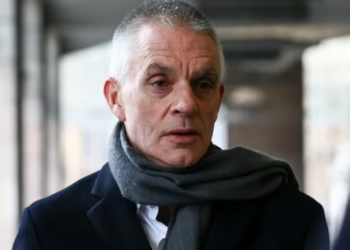 BBC Funding Crisis: Tim Davie Warns of Jeopardy Ahead
 ABC Facebook Page Briefly Hacked, Adult Photos Posted
 Artificial intelligence will cost jobs, admits Liz Kendall
 Older Women Vanish from BBC Screens, Review Confirms Bias
 Meta trial over child exploitation claims begins
 Streeting moves on doctor pay to end strike dispute
 Ben Stokes injury joke after brutal ball strike
 UK and US Drop in Global Corruption Index Rankings
 Send spending gap leaves deprived areas behind
 Hidden Crisis: Domestic Abuse Suicide Toll in UK
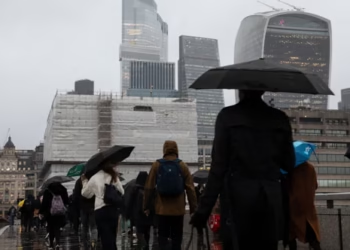 UK Unemployment Rate Climbs to 5.2% Peak
 Canberra Poster Seizure Sparks Free Speech Row
 BBC World Cup Presenting Duties Shared Among Trio
 Wales Approves Assisted Dying Bill Consent
 CPS Updates Guidance on Honour-Based and Dowry Abuse
 Stewart Brand on Musk, Bezos and a Life of Long Thinking
 English Cricket Faces Moral Crisis Over Indian Investment
 Wes Streeting faces narrow road to Labour members’ favour
 Keir Starmer Struggles to Secure His Grip on Downing Street
 Trump and Xi Convene in Beijing for Historic High-Stakes Summit
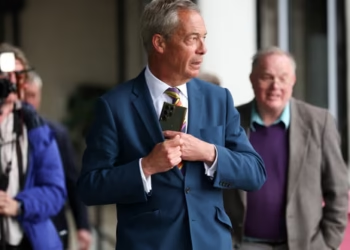 Farage Faces Standards Probe Over Cash Property Purchase
 Closing the Gap: UK Pensions Commission Demands Action
 Reality TV Under Scrutiny Following Serious Allegations
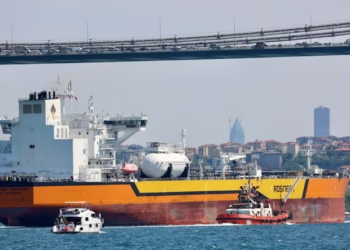 UK Eases Russian Oil Sanctions as Fuel Costs Soar
 Alice Capsey Sparks England Win With Brilliant Fifty
 Maldives Cave Diving Tragedy Raises Safety Alarm
 Russian Electronic Attack Targets UK Defence Chief Jet
 UK Shoppers Face Prolonged Price Rises At Tills
 Tube Strike Brings Capital to a Standstill Over Shift Disputes
 Makerfield Voters Demand Real Change as Election Looms
 Man City Threaten Legal Action Over Haaland Real Madrid Shirt
 Celestial Waltz: Venus and Jupiter Meet at Twilight
 Saving the Scalloped Hammerhead: The Pacific Battle
 Stolen Mobiles Could Soon Become Useless Bricks
 Clean Air Initiatives Spark Major Fall in London Hospital Admissions
 Fearless Pioneer of Investigative Journalism Dies Aged 83
 Trump Urged to Condemn UFC Fighter Over Obama Slurs
 The Fear Gap: Why Europe Feels Less Safe Than It Is
 US Military Pacific Boat Strike Kills Three People
 Dettol Apologises for ‘Toxic Men’ Advert Backlash in China
 UK Care Crisis: Row Explodes Over New Visa Settlement Rules
 Sainsbury’s Boss Optimistic As Grocery Inflation Eases
 US Advance Past Bosnia in World Cup Thriller
 Trump’s Mount Rushmore Speech: A Divisive Anniversary
 Trump’s Red-Card Intervention Hurts the US World Cup
 US Airman Avoids British Court in Indecent Exposure Case
 Britain’s Mini Fan Craze Sparks Major Waste Crisis
 Trump Swaps Planes Amid Iran Tensions
 Ann Widdecombe, Formidable Political Figure, Dies at 78
 UK Schools Struggle as Classrooms Top 40C
 Yemen Accuses Iran of Violating National Sovereignty
 Houthis Strike Saudi Arabia as Middle East Tensions Rise