Published: 11 June 2026. The English Chronicle Desk. The English Chronicle Online.
A major legal battle has surfaced in Australia following an intense demonstration against a prominent international leader. Twenty-five political activists are now scheduled to face a massive joint trial in Sydney next year. This development comes after a highly publicised demonstration against the official visit of Israeli President Isaac Herzog. The legal proceedings have drawn significant attention from international observers and civil rights advocates across the globe.
Lawyers representing the large group of demonstrators recently gathered at the Downing Centre Local Court. They successfully argued that individual trials would create unnecessary repetition within the Australian judicial system. The legal team firmly maintained that the core issues of the cases are fundamentally linked. Acting Deputy Registrar Soly Najm ultimately agreed to the formal request for a combined legal hearing. The court has now scheduled a week-long pre-trial hearing to begin early in March 2027.
The main six-week trial is officially set to commence on the nineteenth of July 2027. Legal experts suggest this extended timeframe reflects the immense complexity of the upcoming constitutional arguments. Nine separate defence lawyers appeared in the Sydney courtroom to represent the various accused individuals. Prominent barrister Felicity Graham took the lead in presenting the arguments for the protest group. She explicitly told the court that top law enforcement figures would be called to testify.
The defence team expects New South Wales Police Commissioner Mal Lanyon to be the first witness. Assistant Police Commissioner Paul Dunstan is also highly likely to face intense questioning during the trial. Furthermore, several prominent political figures have been named as potential witnesses for the upcoming proceedings. Greens Members of Parliament Sue Higginson and Jenny Leong may be called to give evidence. The defence is currently considering whether to summon other government ministers and members of parliament.
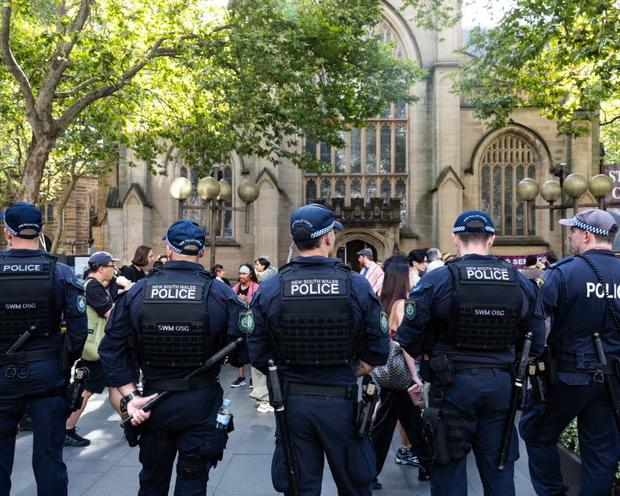
The entire legal controversy stems from a chaotic evening outside the Sydney Town Hall in February. A total of thirty individuals were initially arrested and charged during the anti-war demonstration. However, the police prosecution department officially withdrew all charges against one demonstrator just last month. The intense law enforcement response during that specific evening is currently facing an independent investigation. The Law Enforcement Conduct Commission is thoroughly examining serious allegations of widespread police brutality at the scene.
The decision to hold a joint trial was fiercely resisted by the Australian police prosecutors. Police Prosecutor Sergeant Adrian Walsh argued that a combined trial would create significant logistical issues. He stated that while some witnesses are common, many relate strictly to individual arrest matters. The prosecution believed that managing twenty-five separate cases simultaneously would overwhelm the local courtroom resources. Despite these strong objections, the defence successfully established that a single trial was entirely appropriate.
The overarching defence strategy relies heavily on a recent landmark ruling by the Court of Appeal. The original protest was deemed unauthorised by police due to strict public assembly restriction declarations. These emergency public restrictions were rapidly introduced by the government following the tragic Bondi terror attack. The temporary law effectively banned all forms of public protest marches within designated urban areas. However, the Court of Appeal officially struck down that specific legislation this April as unconstitutional.
The successful constitutional challenge against the anti-protest law was led by two active advocacy groups. The Blak Caucus and the Palestine Action Group successfully argued against the validity of the law. Felicity Graham argued that this judicial finding means the February protest was legally authorised after all. The demonstrators had properly submitted a formal notice of intention to hold a public assembly. This standard regulatory document clearly detailed their peaceful intention to march towards the state Parliament House.
The defence team argues that the subsequent police operation unlawfully prevented citizens from exercising their rights. Activists maintain they were acting entirely within the boundaries of conventional democratic expression and assembly. In addition to the constitutional point, the defence plans to challenge another major police declaration. Law enforcement officials had implemented a special major event declaration during the high-profile presidential visit. This specific legal mechanism is typically reserved for massive international sporting events or cultural festivals.
The major event declaration vastly expanded the statutory powers available to police on the streets. Officers were granted increased authority to search citizens and demand identification within the area. The defence team intends to aggressively question the validity of using this law for political visits. They argue that expanding police powers in this manner set a dangerous precedent for civil liberties. Additionally, shared arguments regarding the admissibility of key evidence will be raised during the trial.
The twenty-five individuals currently face a diverse range of criminal charges under New South Wales law. These specific legal offences include assaulting police officers, resisting arrest, and failing to obey directions. Many activists argue these charges were fabricated or exaggerated during the chaotic scuffles with police. Video footage from social media platforms appears to show conflicting accounts of the arrests that night. The contrasting visual evidence will undoubtedly play a crucial role during the six-week trial.
This upcoming legal battle has sparked a broader debate about the right to protest in Australia. Many international observers are watching the case closely to see how democratic freedoms are upheld. Civil liberties groups have expressed deep concern over the initial use of counter-terrorism laws against protesters. They argue that national security measures should never be used to suppress legitimate political dissent. The final outcome of this trial could redefine the legal boundaries for future Australian demonstrations.
The extensive delay before the trial starts in 2027 gives both sides ample time to prepare. The prosecution must meticulously organise their vast array of witnesses and individual police statements. Meanwhile, the defence will continue refining their sophisticated constitutional arguments regarding the freedom of assembly. The involvement of sitting members of parliament ensures the trial will remain highly politicised throughout. The English Chronicle will continue to provide detailed updates as this landmark case develops further.
Related News:
 Grief, Fear and Fury: Mothers Unite to End Israeli-Palestinian Violence
 Iran Leader Blames Protesters, Says They Serve Trump
 Thousands Protest ICE in New York Against Trump Deportation Campaign
 Australian Women in Syrian Camp Offer Separation Deal
 Tribunal Rules Burgertory Founder’s Chant Incited Hatred
 Hong Kong Bookstore Arrests Spark New Freedom Concerns
 Death, displacement and military duties: children plunged into crisis
 ICE Detains Soldier’s Bride Days After Louisiana Wedding
 Bondi Nanny Adriana Rivas to Face Extradition to Chile
 Aid Crisis Grows as Hormuz War Disrupts Supply
 Judge halts deportation of Yemeni refugees in US
 Activists allege abuse after Gaza flotilla seizure
 Alice Springs Murder Case: Justice Begins for Little Baby
 Afghan Families Left in Limbo Face Risk of Deportation
 Three Australian Women Detained Over Islamic State Links
 Trump Announces 3-Day Russia–Ukraine Ceasefire Deal
 Israeli Strikes in Lebanon Kill 10 Amid Ceasefire Strain
 China mine blast death toll rises to 90
 Ebola outbreak in DRC overwhelms health system as cases surge
 Former ICC prosecutor condemns US sanctions
 Preserving the Fragile Memories of Tiananmen Square
 Unflinching Witness: Doctors Document Gaza’s Medical Crisis
 New Footage Revives Peter Falconio Mystery
 Ukraine Creates Long-Range Strike Command
 Dreyfus Statue Finally Gets Permanent Paris Home
 Taliban global ties grow as rights fears mount
 Israeli Strike in Southern Lebanon Kills Seven
 Five Years of Taliban Rule Leave Afghanistan in Crisis
 BBC to Apologise Over Edited Trump Speech Amid Backlash
 Britain deploys RAF specialists to assist Belgium with drone threats
 Greene Pushes Epstein Files Amid Trump Fallout
 December Run-Off in Chile as Election Produces No Winner
 Zelenskyy Signs Fighter Jet Deal Amid Russian Drone Attacks
 Shadow Fleet at Sea: Europe’s Battle Against Illicit Oil Shipping
 Tiny Curacao Makes History as Smallest Nation to Reach World Cup
 US Suspends Afghan Immigration After White House Shooting
 Georgians Defy Government Crackdown After Year of Protests
 ‘Extinct’ Antelope Returns to Sahara, Bringing Hope
 American Mother Extradited From UK to U.S. on Murder Charges
 Irish Beach Tragedy: Irish Drown at Whitehaven Beach in Australia
 Sanctioned oil tankers sail Channel amid Russia scrutiny
 US and UK Withdraw Personnel as Middle East Tensions Rise
 Half the World’s Largest Cities Face Rising Water Stress
 Pentagon Signals Reduced Role in Deterring North Korea
 UK and US Drop in Global Corruption Index Rankings
 SA Police Intensify Search in Gus Lamont Case
 Canberra Poster Seizure Sparks Free Speech Row
 Evo Morales Returns After Mysterious Absence
 Jacinda Ardern Moves To Australia Following Her US Fellowships
 Jacinda Ardern Move Sparks Kiwi Reflection
 Middle East Airspace Crisis Strands Thousands
 Nick Greiner Warns Over Election Review Fallout
 Kelly Wilkinson Inquest Reveals Bail Failure
 Tehran Strikes Mark War’s Most Devastating Night
 Injured Mojtaba Khamenei Elevated as Iran Leader
 Gordon Brown urges court for crimes against children
 The Kill Line: A Shifting Vision of the American Dream
 Pakistan Targets Militant Hideouts in Afghanistan
 ICE detention warning sparks fear among immigrants
 Air Canada CEO Faces Outcry Over Recent Language Misstep
 Extreme Weather: Europe Shivers as Cyclone Narelle Hits
 Asia Turns Back to Coal Amid Middle East Energy Crisis
 Canadian Mother and Daughter Released From ICE Detention
 Relationship with Trump may be beyond repair, Starmer warned
 Trump’s Six-Week Iranian War: The High Cost of Ignorance
 Artemis II Returns After Historic Moon Flyby
 Trump Brokers Landmark Lebanon Ceasefire Amid Regional Hopes
 Ben Roberts-Smith Denies War Crime Allegations in First Statement
 UK Watchdogs Warn Over AI Facial Recognition Oversight
 RFU Backs Borthwick Despite England’s Poor Six Nations
 Infantino Defends Soaring World Cup 2026 Ticket Costs
 Trump Rejects Tehran Peace Plan as Regional Truce Crumbles
 Fear and Betrayal: The Chilling Case of Kouri Richins
 Maldives Cave Diving Tragedy Raises Safety Alarm
 Farage and Reform UK Reshape British Politics
 Aukus Deal Facing Fierce Backing and Historic Criticism
 Thai Princess Bajrakitiyabha Passes Away at 47
 Le Pen to Run for President Despite Embezzlement Conviction
 Florida Executes One of Its Oldest Death Row Prisoners
 Houthis Strike Saudi Arabia as Middle East Tensions Rise